
How do you find your creative spark when every blank sheet of paper looks more like a challenge than an opportunity? Whether you are navigating a rainy weekend indoors or searching for a mindful habit to ground yourself during a busy season, starting an art journal provides a private, low-stakes space for expression. You do not need to be a trained artist to fill these pages with color, meaning, or even just your daily to-do lists. Keep reading to discover how simple techniques make art journaling an accessible, pressure-free practice for everyone.
Quick Questions and Answers
Question: Why do beginners struggle to start an art journal urgently? Answer: Beginners often struggle because they feel intimidated by the blank page or lack drawing skills. They may also not know what prompts to use, leading to procrastination. Starting with simple doodles, collages, or tracing helps overcome this fear and builds confidence quickly.
Question: Can you make an art journal if you cannot draw well today? Answer: Yes, you absolutely can create an art journal even if you cannot draw well. Focus on techniques like collage, using stamps, stickers, watercolor washes, or pasting found objects and photos. Many artists use abstract shapes, patterns, and text instead of detailed drawings to express themselves.
Question: Do art journal ideas for beginners require expensive supplies often? Answer: No, beginner art journal ideas do not require expensive supplies at all. You can start with basic items like pencils, markers, old magazines, glue, and a simple notebook. Using household ephemera like receipts, tickets, or fabric scraps works great for freeform creativity without high costs.
Key Takeaways
- Focus on the process of creation rather than the final aesthetic outcome.
- Small formats, such as index cards, lower the barrier to beginning.
- Using structured prompts reduces decision fatigue and keeps the habit sustainable.
Selection Criteria for Choosing Your First Art Journal Prompt

When you start, the goal is sustainment, not perfection. As noted by Mindful Art Studio, the process matters far more than the final result. I prioritize prompts that allow for messy, uninhibited experimentation.
I find that selecting surfaces like loose construction paper or index cards makes a daunting task feel small and manageable. You can also use cardboard scraps from shipping boxes to build a sturdy, free base. If you ever feel stuck, look for established systems like the Wonder31 series to give your hand a direction. These starting points exist specifically to remove the “fear of the blank canvas” that stops most beginners dead in their tracks.
Low-Pressure Warm-Up Ideas
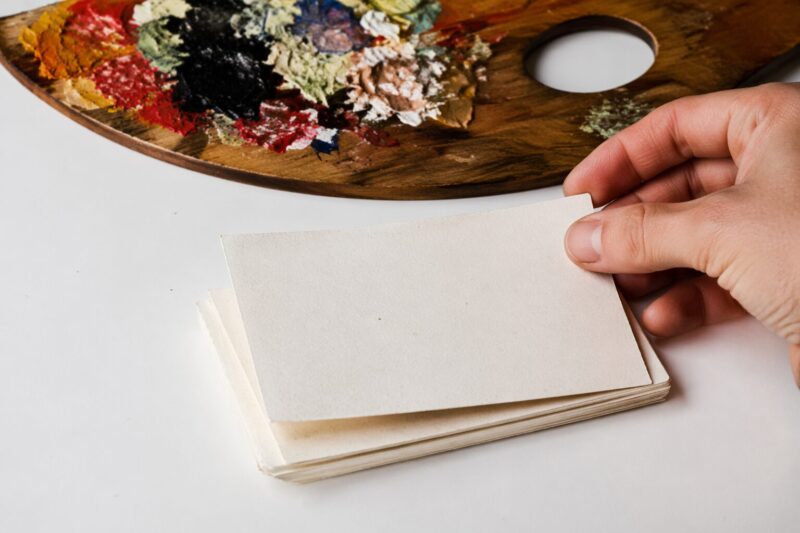
Color swatching serves as the ultimate “icebreaker” for a new session. Before you commit to a complex scene, grab a brush and test your colors in a series of squares or circles. It helps you understand your materials while ensuring the page no longer looks empty.
A quilt grid offers a similarly structured way to begin. Paint a simple geometric grid across your page, focusing only on filling the spaces with different acrylic colors or patterns. Blind contour drawing acts as a third option for loosening up. By drawing an object without glancing down at your hand, you effectively silence your inner perfectionist. If you want to try practicing a specific shape before diving into complex subjects, you could look at how to draw a dove: a simple, step-by-step guide to build your confidence.
Creative Techniques to Mix and Match

The Mix and Match method, recommended by the creative team at Daisy Yellow Art, remains my favorite way to bypass indecision. By creating a column of prompts and a separate list of techniques, you can pick one from each at random. This forces you to experiment with combinations you might never choose on your own.
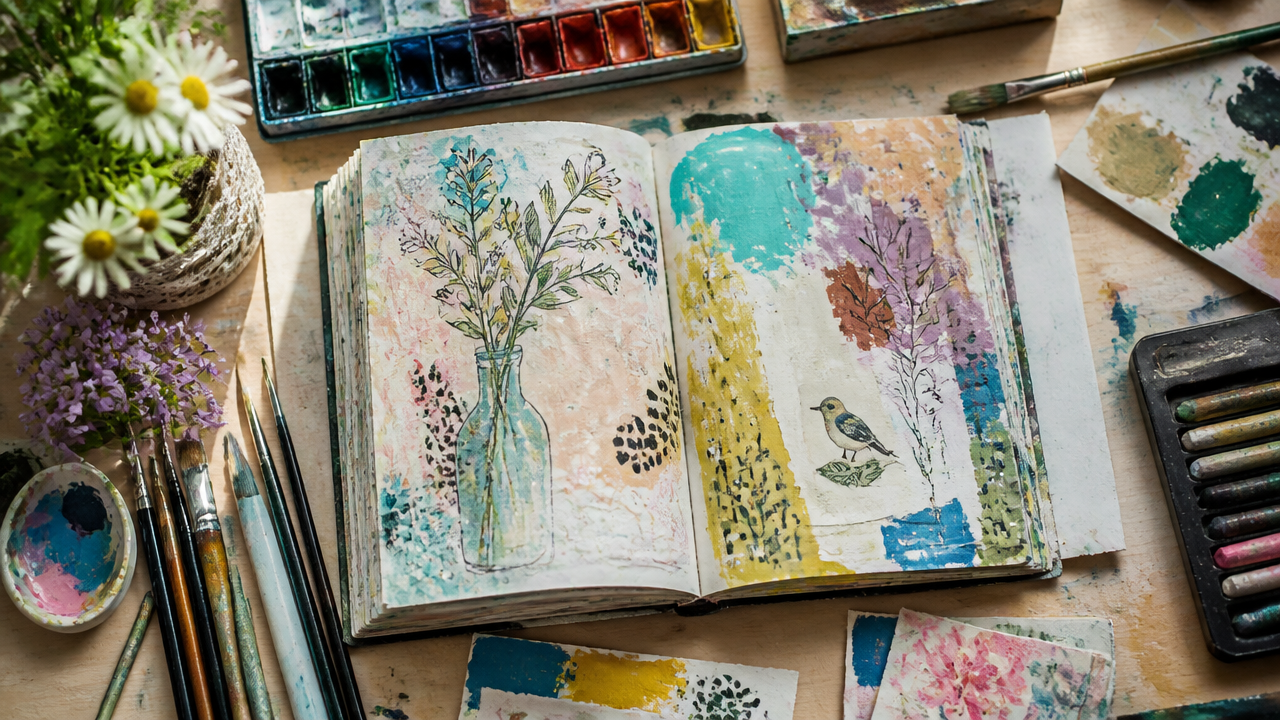
Visual background layering works wonders for hiding a “boring” page. Use a watercolor brush to create a series of dots or small circles, layering colors until you form a mandala. If you feel like sketching but lack a subject, pick three random scenes from a film you love. It does not need to look realistic—just quick, expressive marks that capture the mood of the moment. If you prefer working with character shapes, checking out how to draw anime characters: a simple step-by-step guide for beginners might offer a fun technical challenge to add to your journal.
| Method | Supply Focus | Best For | Complexity |
|---|---|---|---|
| Color Swatching | Paint & Pens | Busy days | Low |
| Quilt Grid | Acrylics | Geometric lovers | Low |
| Blind Contour | Pencil | Releasing tension | Medium |
| Mix & Match | Mixed Media | Creative blocks | High |
Reflective and Personal Expression Ideas

Dividing a page into a “Past, Present, and Future” layout turns your journal into a road map of your personal growth. Use the left section for where you have been, the center for your current state, and the right for your goals. This structure provides a clear, logical way to process emotions.
A letter to your younger self allows for a blend of writing and collage. Use old stickers or ribbons that reflect the decade of your childhood to decorate the border. Manifestation colleges serve a similar purpose when you want to focus on the future. Snip images from magazines or use your own drawings to create a vision board that represents your current aspirations and dreams.
Functional Utility Ideas for Overwhelmed Minds

Art journaling does not have to be purely abstract. Use your pages as a brain-dump space to organize to-do lists that feel cluttered in your head. When you decorate a list with doodles or bright borders, it turns a chore into a creative session.
Nature observation offers a quiet, calming alternative. Collect reference photos of plants or local garden scenes, then attempt to capture their shapes. It trains your eye to see details you might otherwise overlook during a standard walk. If you just want to focus on small details like eyes or expressions, studying how to draw eyes for beginners step by step easy can add a useful skill to your repertoire if you decide to draw portraits of people you see in nature.
Recommended Tools and Books for Further Guidance

Emily K. Neuburger’s book, Journal Sparks, stands as a primary resource for anyone struggling to find a path forward. Her philosophy emphasizes spontaneous art and wild writing, which helps you move past the “should” in your head.
Small-format journals are another secret weapon for beginners. A palm-sized sketchbook feels less like an imposing project and more like a playful accessory you can tuck into any bag. You can make your own with folded paper and a stapler, which immediately removes the “preciousness” of an expensive store-bought notebook.
FAQ
Q: Are there quick art journal prompts for lazy or busy people?
Yes, there are many quick prompts designed for lazy or busy people, such as drawing three things you see right now, listing your top five favorite songs, or making a single-color doodle page. These take minutes, require minimal effort, and help maintain a creative habit without burnout. You can simply jot down your thoughts or use colored pencils to fill a small corner of a page if you have no time for a full-scale art project.
Q: How do you choose art journal themes for your personal mood?
Choose themes by reflecting on your current emotions or daily experiences, such as ‘calm,’ ‘anxiety,’ ‘joy,’ or ‘change.’ Use colors, textures, and symbols that match your mood, like blue for calm or jagged lines for stress. Let your intuition guide the selection of prompts and materials. If you feel overwhelmed, pick one color and stick to it for the entire page to keep your focus sharp and your creative process simple.
Q: Does using mixed media in art journals help beginners become creative?
Yes, using mixed media significantly helps beginners become more creative by breaking the fear of perfection. Combining paint, ink, paper, and photos allows for experimentation without strict rules. This freedom encourages expression, helps process emotions, and makes the journaling process more engaging and fun. You do not need to choose just one medium, and often the best pages are the ones where ink meets vintage paper scraps or leftover paint.
Q: Will starting an art journal improve your mental health and relaxation?
Starting an art journal can improve mental health by providing a safe space to express feelings and process stress. The focused act of creating helps reduce anxiety, promotes mindfulness, and boosts self-esteem. Many use it as a form of therapy to track progress and celebrate small victories consistently. According to the National Institute of Mental Health, finding outlets for stress is an essential part of maintaining your overall well-being throughout the year.
Q: When is the best time to start an art journal routine daily?
The best time to start an art journal routine is when you feel most relaxed and focused, often in the morning before work or at night before bed. Consistency matters more than timing, so pick a moment that fits your schedule, like during coffee or after dinner, to build a sustainable habit. If you wait for the “perfect” time, you might never start, so just treat it as a quiet appointment with yourself.
Q: Is digital art journaling a good option for beginners without space?
Yes, digital art journaling is a great option for beginners who lack physical space or supplies. Apps and tablets allow you to create collages, draw, and write without clutter. It offers undo features, endless color palettes, and easy storage, making it accessible and convenient for continuous creative practice. You can use a stylus to practice your strokes and enjoy the freedom of a clean workspace every time you log on.
Q: What are the most easy art journal ideas for total beginners?
The easiest ideas include filling a page with doodles, creating a collage from old magazines, drawing your favorite food, or listing things you love. Simple tasks like coloring pre-drawn shapes, writing a single sentence, or pasting a photo remove pressure and make starting intuitive and enjoyable for everyone. You are just playing with materials, so let yourself make mistakes as you learn what you like to do most on the paper.
My Experience With 13 Art Journal Ideas for Beginners to Spark Creativity
I remember my first attempt at art journaling; I bought a fancy, expensive notebook that felt too pretty to touch. I stared at the first page for an entire month, terrified that a single stray ink mark would “ruin” it. It was, frankly, a total waste of time. Once I started using cheap index cards and scrap paper, everything changed. That shift in perspective was my biggest breakthrough. You have to remove the stakes to let the creativity breathe.
I’ve found that using the “Mix and Match” method is the best way to handle those days when my brain feels like static. Taking an index card and just committing to drawing lines for five minutes is better than having a perfect journal that stays closed on a shelf. The secret isn’t better supplies; it is lower standards—at least at the start. If you’re making a mess, you’re doing it right. Which of these ideas do you think you’ll test out first on your own desk this weekend?
Latest Updates
As of 2026, the trend in art journaling has shifted heavily toward “mini-journaling,” where the focus is entirely on portability and rapid, daily documentation. Many practitioners have moved away from complex supplies in favor of single-pen or single-palette setups to maximize ease of use during travel.
Final Recommendations for Beginners
Keep your entry point simple. Start on loose paper or small index cards to minimize the fear of making a mistake. If the inertia feels heavy, just pick one of the 106 Mix and Match prompt pairings and let the cards decide your activity for the day. Remember that your journal is a private tool, not a gallery exhibition. The primary goal remains your own creative expression and mental clarity, not the creation of a masterpiece.
References
- Joyful Art Journaling. (n.d.). 57 Art Journal Prompts. https://joyfulartjournaling.com/57-art-journal-prompts
- Mindful Art Studio. (n.d.). How to Start an Art Journal. https://mindfulartstudio.com/how-to-start-an-art-journal
- National Institute of Mental Health. (n.d.). Caring for your mental health. https://www.nimh.nih.gov/
- Daisy Yellow Art. (n.d.). Art Journaling 101. https://daisyyellowart.com/aj101
- iHanna’s Blog. (2026). 50 art journaling ideas to try this year. https://www.ihanna.nu/blog/2026/01/50-art-journaling-ideas-to-try

A Teacher with 5 years of experience. Our Expertise, is reliable to meet your full Academic development needs . Worked on many crafts and construction projects offering services from design to development to deployment over the years. You will find many of my works in my business portfolio on request.