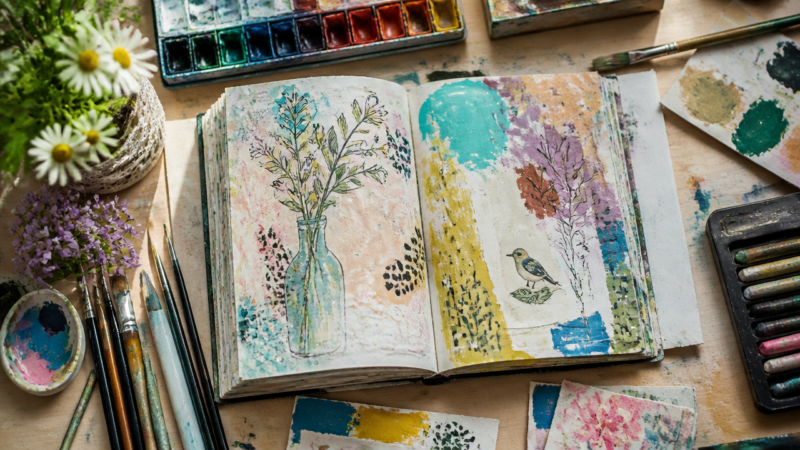
Starting a doodle journal was one of the best creative decisions I ever made, though I’ll admit I was intimidated at first. I remember staring at that first blank page, pen hovering uncertainly, wondering if my simple scribbles were “good enough” to deserve their own dedicated journal. What I’ve learned over the years is that doodle journals aren’t about creating museum-worthy masterpieces – they’re about developing a personal visual language, processing thoughts and emotions through mark-making, and creating a safe space where creativity can flourish without judgment or pressure.
The beauty of a doodle journal lies in its complete freedom from rules and expectations. Unlike other art forms that might have technical requirements or traditional approaches, doodle journaling is entirely personal and intuitive. Some days I fill pages with intricate patterns that take hours to complete, while other days I make quick, gestural marks that capture a fleeting mood or moment. Both approaches are equally valid and valuable in the journey of creative self-discovery.
What I love most about doodle journaling is how it becomes a visual diary of your creative evolution. Looking back through old pages, I can see not just artistic growth, but emotional states, preoccupations, interests, and life phases reflected in the marks, patterns, and imagery I was drawn to at different times. Your doodle journal becomes a unique record of who you were, who you’re becoming, and how your inner world expresses itself through simple marks on paper.
Table of Contents
Choosing Your Journal and Tools
Setting Up Your Creative Space
Overcoming the Blank Page Fear
Basic Doodling Techniques and Warm-ups
Establishing a Regular Practice
Finding Your Personal Doodle Style
Incorporating Text and Words
Using Doodles for Emotional Processing
Drawing from Life and Observation
Creating Themed Pages and Series
Building Confidence Through Experimentation
Connecting with the Doodle Community
Body
1. Choosing Your Journal and Tools
The first step in starting your doodle journey is selecting the right journal and tools, though I want to emphasize that the “perfect” setup is far less important than simply beginning. I’ve created beautiful doodles in everything from expensive art journals to cheap spiral notebooks, and while quality materials can be enjoyable to use, they’re not necessary for meaningful creative expression.
When choosing a journal, consider size, paper quality, and binding style based on how you plan to use it. Smaller journals (around 5″x8″) are portable and less intimidating to fill, while larger formats give you more space for elaborate compositions. I personally prefer journals that lie flat when open, as this makes it easier to draw across page spreads without fighting against the binding.
Paper quality matters more for some techniques than others. If you plan to use wet media like markers or watercolors, look for heavier paper (at least 140gsm) that won’t bleed through. For pen and pencil work, standard journal paper works perfectly fine. Dot grid or lightly lined pages can be helpful for beginners who want some structure, while blank pages offer complete freedom.
As for tools, start simple! A basic black pen (like a fine-tip marker or gel pen) and a pencil will take you incredibly far in doodle journaling. As you develop preferences, you might add colored pens, markers, or other tools, but beginning with just one or two tools helps you focus on mark-making rather than getting overwhelmed by options.
2. Setting Up Your Creative Space
Creating a dedicated space for doodle journaling, even if it’s just a corner of a table, helps establish the ritual and routine that support regular creative practice. Your space doesn’t need to be elaborate or permanent – sometimes I doodle curled up on my couch, other times at my kitchen table – but having your materials easily accessible and organized makes it much more likely that you’ll actually use them.
Consider lighting carefully, as good lighting reduces eye strain and makes your work more enjoyable. Natural light is ideal when available, but a good desk lamp works well for evening sessions. Make sure your seating is comfortable enough to support longer drawing sessions without creating physical discomfort that might discourage regular practice.
Keep your journal and basic tools in a consistent, easily accessible location. I have a small basket that holds my current doodle journal, favorite pens, and a few other supplies, and I can grab it and start creating wherever I am in the house. This portability is crucial for maintaining a regular practice, especially when you’re just establishing the habit.
The psychological aspect of your creative space is just as important as the physical setup. Try to choose a location where you feel relaxed and free from judgment – this might mean finding a private spot where others won’t comment on your work, or it might mean embracing the social aspect and doodling where family or friends can appreciate your process.
3. Overcoming the Blank Page Fear
That first blank page can feel impossibly intimidating, like it’s demanding something profound or perfect from you. I’ve learned that the best way to overcome this fear is to deliberately make that first mark imperfect and playful. Start with something silly, simple, or completely meaningless – just get ink on the page and break that pristine white barrier.
One technique I love for first-page anxiety is to start with your name, the date, and a simple doodle border around the page edges. This immediately claims the page as yours while providing structure for future additions. You’re not creating a masterpiece – you’re just marking the beginning of your creative journey in this particular journal.
Remember that doodle journals are personal documents, not public art exhibitions. No one else needs to see your pages unless you choose to share them, which means you can make mistakes, experiment wildly, and create things that are purely for your own enjoyment and growth. This privacy removes much of the performance pressure that can inhibit creative expression.
Develop a “warm-up” routine that helps you transition into creative mode. This might involve drawing simple shapes, repeating patterns, or making random marks while you settle into the creative mindset. These warm-up exercises serve the same function as stretching before exercise – they prepare your mind and hand for the creative work ahead while lowering the stakes of those initial marks.
4. Basic Doodling Techniques and Warm-ups
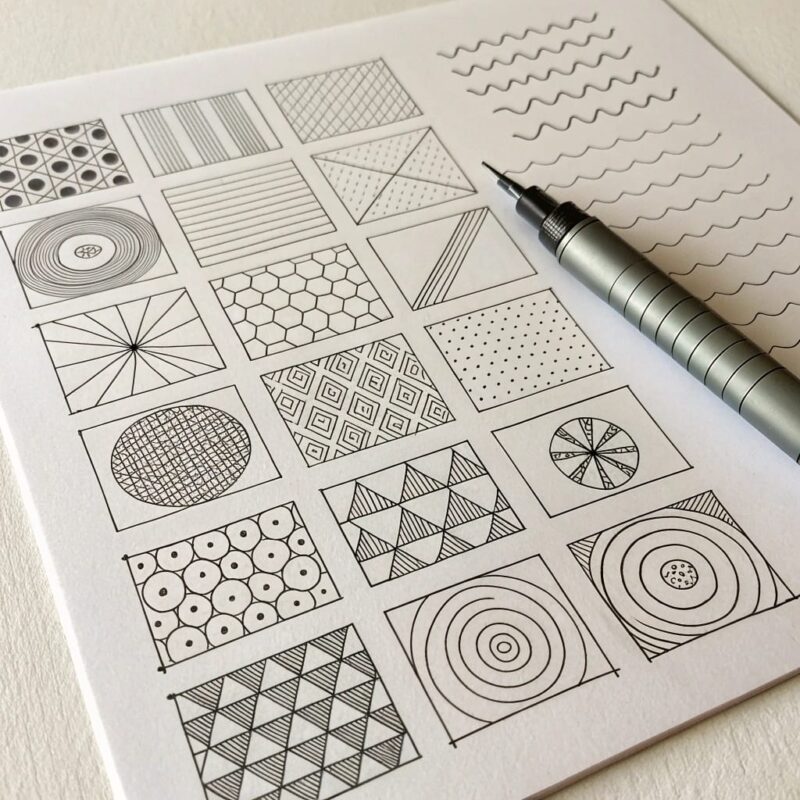
Building a foundation of basic techniques gives you a vocabulary of marks and approaches to draw from when inspiration strikes. Start with fundamental elements like lines (straight, curved, wavy, dotted), basic shapes (circles, squares, triangles), and simple patterns (spirals, grids, radial designs). These building blocks can be combined in infinite ways to create complex and beautiful compositions.
Practice different line qualities by varying pressure, speed, and rhythm. Heavy, confident strokes create bold, dramatic effects, while light, delicate lines suggest subtlety and elegance. Experiment with broken lines, continuous flowing lines, and rhythmic patterns that create visual texture and movement across your page.
Develop a repertoire of simple pattern elements that you can use to fill spaces or create texture. Dots of varying sizes, hatching and cross-hatching, simple geometric repeats, and organic flowing patterns all serve as useful “filler” techniques when you want to add visual interest without complex planning or design work.
Shading and dimension techniques can add depth and sophistication to even simple doodles. Practice creating gradients with dots (stippling), lines (hatching), or solid areas. Learn to suggest three-dimensional form through strategic placement of highlights and shadows, even in simple shapes like spheres or cubes.
5. Establishing a Regular Practice
Consistency matters more than duration when it comes to developing a sustainable doodle journaling practice. Fifteen minutes of daily doodling will produce more growth and satisfaction than occasional three-hour marathon sessions. Start with a commitment you know you can keep – maybe just five minutes a day – and build from there as the habit becomes established.
Find natural connection points in your existing routine where doodle time can fit organically. Many people enjoy morning pages as a way to ease into the day, while others prefer evening sessions as a way to unwind and process the day’s experiences. Some find that doodling during lunch breaks provides a refreshing creative interlude in their work day.
Don’t aim for perfection in your practice schedule. Life happens, and there will be days when doodling doesn’t happen – that’s completely normal and acceptable. The goal is establishing a general rhythm of regular creative engagement, not perfect adherence to a rigid schedule. When you miss days, simply return to your practice without self-judgment or elaborate catch-up plans.
Consider pairing your doodle practice with other activities you already enjoy. Doodling while listening to music, podcasts, or audiobooks can create pleasant multi-sensory experiences that you’ll look forward to repeating. Some people find that doodling helps them focus during meetings or lectures, though be mindful of social contexts where this might be inappropriate.
6. Finding Your Personal Doodle Style
Your personal style will emerge naturally through regular practice and experimentation – it’s not something you need to force or define prematurely. Pay attention to what types of marks, patterns, and subjects you gravitate toward repeatedly. These natural preferences are clues to your developing artistic voice and aesthetic sensibilities.
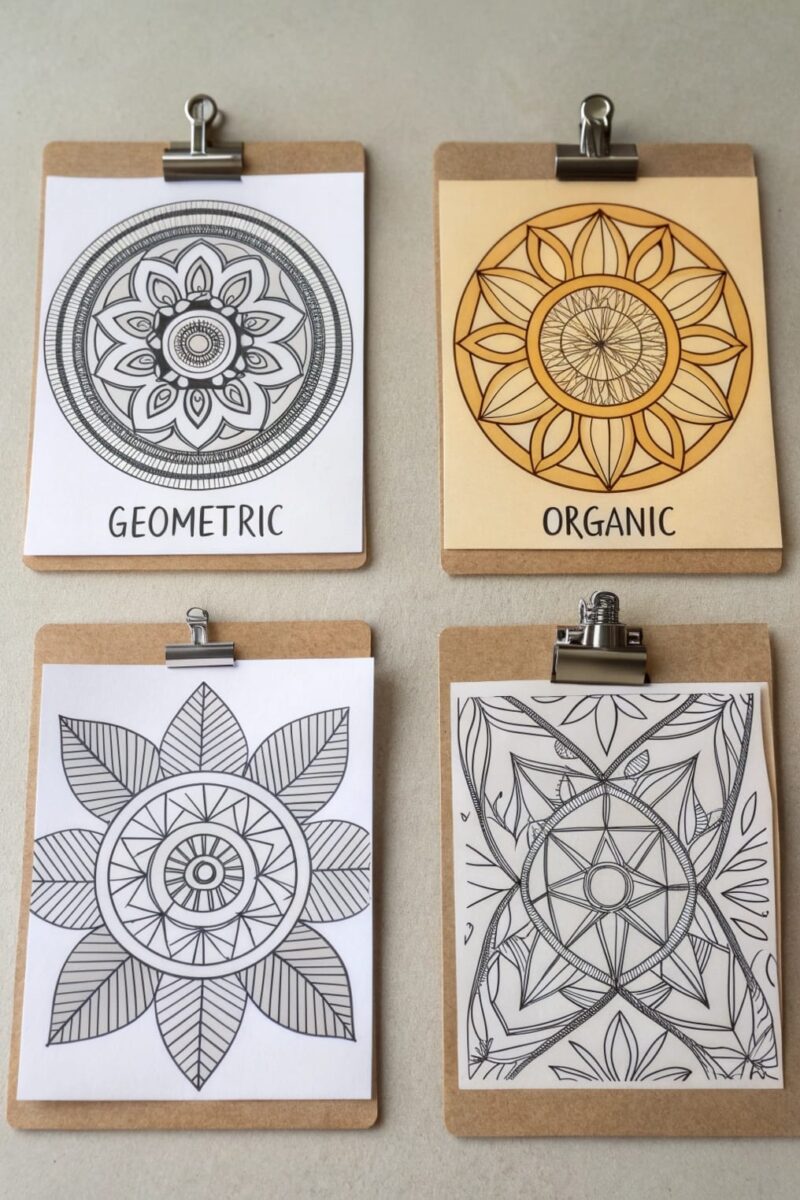
Experiment with different approaches and techniques without committing to any single style too early. Try geometric patterns one day, organic flowing forms the next, detailed realistic observations another day, and completely abstract expressions after that. This exploration phase is crucial for discovering what resonates with your creative spirit and what feels natural under your hand.
Notice what conditions and subjects inspire your best work. Some people thrive on structured, planned compositions while others prefer spontaneous, intuitive mark-making. Some are drawn to detailed, time-intensive pieces while others prefer quick, gestural expressions. There’s no right or wrong approach – only what works for you.
Don’t be afraid of influence and inspiration from other artists. Looking at others’ work, trying their techniques, and adapting their approaches to your own sensibilities is a natural part of artistic development. Over time, these influences will blend with your own preferences and experiences to create something uniquely yours.
7. Incorporating Text and Words
Adding words and text to your doodle journal creates opportunities for deeper self-expression while practicing decorative lettering skills. Words can serve as inspiration for visual elements, provide context for your drawings, or simply add another layer of creative expression to your pages.
Start with simple approaches like writing single words in decorative lettering styles, creating visual representations of word meanings, or using text as design elements within your compositions. You might write your mood, the weather, or random thoughts and then doodle around or in response to these words.
Experiment with different relationships between text and image. Sometimes words inspire the visual elements, other times drawings suggest words or phrases to add. You might create illustrated definitions where you draw your interpretation of word meanings, or use text as pure visual pattern without emphasis on readable content.
Practice various lettering styles from simple print to flowing scripts to bold block letters. Each style conveys different moods and energy levels, giving you more tools for expression. Don’t worry about perfect lettering – hand-drawn imperfection often has more character and charm than mechanical precision.
8. Using Doodles for Emotional Processing
Doodle journaling provides a powerful outlet for processing emotions and mental states that might be difficult to express in words. The abstract nature of many doodle forms allows for emotional expression without the need for literal representation or verbal articulation, making it accessible even when you’re feeling overwhelmed or confused.
Experiment with translating different emotions into visual forms. Anger might manifest as sharp, jagged lines or explosive burst patterns, while sadness could become flowing, drooping forms or gentle, melancholic curves. Happiness often expresses itself through light, bouncing patterns or radiant, sun-like designs, while anxiety might appear as tight, repetitive patterns or chaotic, overlapping elements.
Use color (if you’re working with colored materials) or different line weights and patterns to suggest emotional intensity and character. Heavy, dense marks might represent overwhelming feelings, while light, delicate work could suggest subtle or emerging emotions. The physical act of making these marks can be therapeutic in itself, providing a release valve for emotional energy.
Don’t feel pressure to analyze or understand every emotional doodle you create. Sometimes the act of expression is more important than the meaning, and some doodles might not make sense until you look back at them later with new perspective or emotional distance.
9. Drawing from Life and Observation
Incorporating observational drawing into your doodle journal connects you with the world around you while developing important artistic skills. You don’t need to create perfect realistic representations – the goal is engaging with your environment and translating what you see into your personal visual language.
Start with simple subjects: a coffee cup on your table, a houseplant, your pet sleeping, or the view from your window. Focus on capturing the essence and basic shapes rather than perfect proportional accuracy. These observational exercises train your eye and hand coordination while building confidence in your drawing abilities.
Quick gesture drawings are perfect for doodle journals because they emphasize energy and character over detail and precision. Try capturing the essential characteristics of moving subjects like people walking, trees swaying in wind, or animals in motion. These rapid sketches often have more life and vitality than labored, detailed studies.
Use observation as a starting point for creative interpretation rather than an end goal of accurate representation. Once you’ve captured the basic characteristics of your subject, feel free to exaggerate, stylize, or embellish in ways that reflect your personal aesthetic and creative interests.
10. Creating Themed Pages and Series
Working with themes provides structure and continuity while encouraging deeper exploration of specific subjects or concepts. Themes can be as broad as “nature” or as specific as “things that make me happy” – the key is choosing topics that genuinely interest and inspire you.
Develop series of related doodles that explore different aspects of your chosen theme. A “faces” series might include realistic portraits, abstract interpretations, emotional expressions, or character studies. A “patterns” series could explore geometric designs, organic textures, cultural motifs, or invented decorative schemes.
Seasonal themes provide natural structure and keep your doodle practice connected to your current environment and experiences. Spring might inspire growth patterns, fresh colors, and renewal themes, while winter could encourage cozy interiors, geometric ice patterns, or holiday imagery.
Personal themes reflecting your interests, hobbies, or life circumstances create meaningful connections between your art practice and daily experience. Food lovers might explore culinary themes, music enthusiasts could translate sound into visual form, or new parents might document their child’s development through doodle interpretations.
11. Building Confidence Through Experimentation
Confidence in doodle journaling comes through experimentation and accumulated experience rather than perfect technique or immediate success. Give yourself permission to try new approaches, make mistakes, and create things that don’t work out as planned. These “failures” are actually valuable learning experiences that inform future creative decisions.
Set up low-stakes experiments where success and failure are equally acceptable outcomes. Try using your non-dominant hand, working with closed eyes, or creating doodles based on random word prompts. These exercises remove performance pressure while expanding your creative vocabulary and problem-solving skills.
Compare your current work with older pages periodically, not to criticize past efforts but to recognize growth and development. This backward-looking perspective helps you see progress that might not be apparent in day-to-day practice, building confidence in your artistic journey and encouraging continued exploration.
Celebrate small victories and interesting discoveries rather than waiting for major breakthroughs. Notice when you create a particularly pleasing pattern, successfully capture an emotion, or solve a compositional problem. These incremental successes accumulate over time to build genuine confidence and artistic competence.
12. Connecting with the Doodle Community
Engaging with other doodle artists, whether online or in person, provides inspiration, encouragement, and valuable learning opportunities. The doodle community is generally welcoming and supportive, with artists of all skill levels sharing techniques, inspiration, and mutual encouragement.
Social media platforms offer numerous doodle-focused communities where artists share their work, participate in challenges, and offer feedback and support. Look for hashtags like #doodleart, #sketchbook, or #artjournal to discover other artists whose work inspires you. Many artists also share process videos and tutorials that can expand your technical knowledge and creative approaches.
Participate in online challenges and prompts when they appeal to you, but don’t feel obligated to join every event or maintain perfect participation records. These challenges can provide inspiration and motivation while connecting you with other participants, but they should enhance rather than stress your creative practice.
Consider starting or joining local art groups, sketch meetups, or doodle circles in your community. In-person creative connections offer different benefits than online communities, including immediate feedback, shared materials and techniques, and social accountability that can support regular practice.
Attached Video
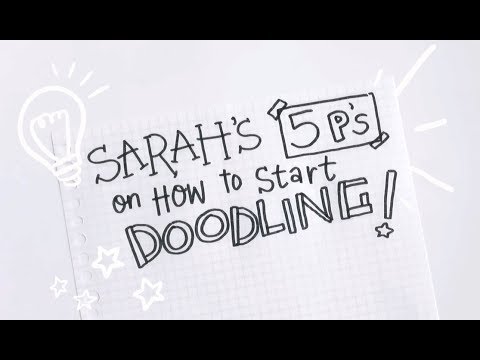
This inspiring tutorial by Doodles by Sarah offers excellent motivational advice and practical tips for beginning your doodle journey. It perfectly complements this article with encouraging perspective and actionable advice.
Conclusion
Starting a doodle journal has been one of the most rewarding creative practices I’ve ever undertaken. It’s taught me that artistic expression doesn’t require formal training, expensive materials, or perfect technique – it just requires willingness to make marks on paper and see where they lead. Your doodle journal will become a unique record of your creative growth, emotional journey, and artistic discoveries over time.
The most important thing I’ve learned is that there’s no “wrong” way to doodle journal. Whether you prefer structured patterns or intuitive scribbles, detailed illustrations or simple gestures, daily practice or occasional binges – your approach is valid as long as it brings you joy and serves your creative needs. The key is starting and continuing, not perfecting.
Remember that every expert doodle artist started exactly where you are now – with a blank page and uncertainty about their abilities. What separated those who developed into confident artists from those who gave up wasn’t superior natural talent, but persistence and willingness to experiment without judgment. Your doodle journal is a safe space for this experimentation and growth.
Don’t wait for inspiration or the perfect setup to begin your doodle journaling practice. Grab whatever pen and paper you have available right now and make your first mark. It doesn’t have to be meaningful, beautiful, or planned – it just has to exist. That first mark is the beginning of your creative journey, and every subsequent mark will teach you something new about your artistic voice and creative preferences.
Your doodle journal will evolve along with you, reflecting your changing interests, developing skills, and shifting life circumstances. Embrace this evolution as part of the beauty of the practice. The journal you create in your first year will look different from the one you develop in your fifth year, and both are equally valuable records of who you were at those particular moments in your creative journey.
A Teacher with 5 years of experience. Our Expertise, is reliable to meet your full Academic development needs . Worked on many crafts and construction projects offering services from design to development to deployment over the years. You will find many of my works in my business portfolio on request.