
When I first started sketching, I often found myself staring at a blank page, unsure of where to begin. The truth is, starting doesn’t need to feel intimidating—it just takes a few simple ideas to get your creativity flowing. Sketching is all about practice, observation, and letting your hand explore shapes on paper without pressure. Whether you’re brand new or just looking for easy inspiration, these beginner-friendly sketching ideas will help you gain confidence and enjoy the process.
Below are 10 simple sketching ideas that anyone can try. Each idea is straightforward, yet gives you plenty of room for creativity and practice.
1. Everyday Objects Around You
One of the easiest ways to practice is by drawing items you see every day. Grab something simple, like your coffee mug, your favorite pair of glasses, or even your keys. The beauty of sketching everyday objects is that they’re right in front of you—you can study the shapes, shadows, and tiny details.
When I began sketching, my first attempts at my water bottle were far from perfect, but each try improved my eye for proportions. Don’t worry about perfection. Focus on noticing curves, edges, and how light reflects off the object.
2. Leaves and Flowers
Nature is always a friendly subject for beginners. Pick a single leaf or flower and really look at it. Notice the veins in the leaf, or how the petals overlap. Start with the outline, then add small textures inside.
For flowers, daisies or tulips are excellent choices because their shapes are straightforward. Leaves, too, are great for practicing symmetry and curves. The more you draw them, the easier it becomes to capture organic forms.
3. Chess Pieces
Chess pieces make fascinating sketch subjects because each one has a unique design. A pawn, for example, is just a sphere on a pedestal. The knight looks more like a horse, while the rook resembles a castle tower.
Begin by sketching the simplest piece—a pawn. Start with the basic shapes: a circle on top, a cylinder beneath, and a slightly wider base. Once you get comfortable, move on to more complex pieces like the knight. This is a fun way to practice combining geometric shapes into more intricate objects.
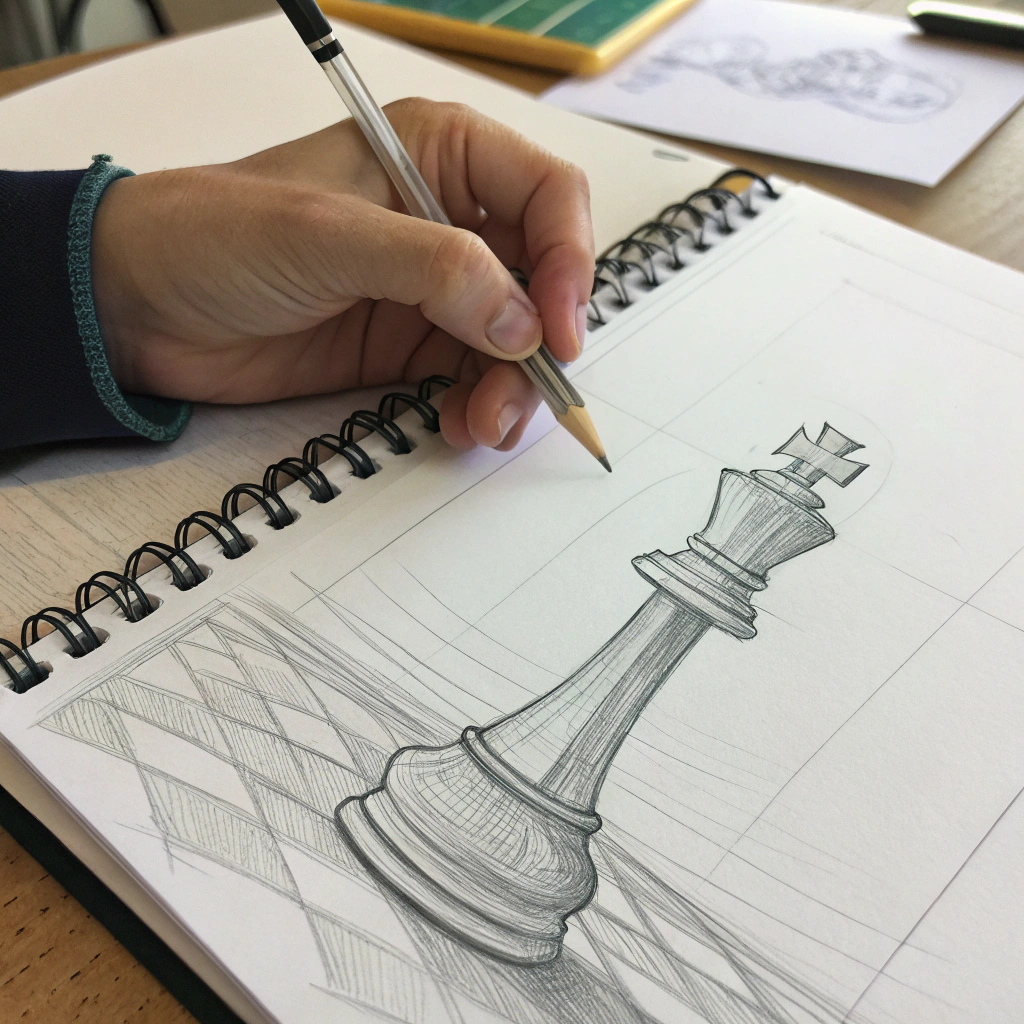
What I love about sketching chess pieces is how it teaches balance and symmetry. They’re elegant yet simple, perfect for a beginner’s study.
4. Fruit and Food
Sketching fruit is a classic beginner exercise because it’s both simple and rewarding. An apple, for instance, is just a round form, but with shading, it suddenly looks three-dimensional. Bananas, oranges, and grapes are also great choices.
If you want to add some fun, try sketching your lunch or a slice of cake. Food sketching not only sharpens observation skills but also gives you colorful opportunities if you choose to add shading or later watercolor.
5. Animals in Simple Forms
Animals can feel intimidating, but breaking them into simple shapes makes them beginner-friendly. Start with something easy, like a cat or a fish. Draw circles, ovals, and triangles to outline the body, head, and ears before adding details.
When I first drew my dog, I started with three circles: one for the head, one for the chest, and one for the hips. Connecting them turned into a surprisingly decent outline. Even if your first animal sketches feel cartoony, that’s perfectly fine—you’re learning structure and proportion.
6. A Face Showing Crying Emotion
Faces can be tricky, but focusing on emotions helps you avoid overthinking. A crying face, for example, lets you practice expressive details rather than perfect anatomy. Begin with a simple oval for the head, then add large eyes with tears streaming down.
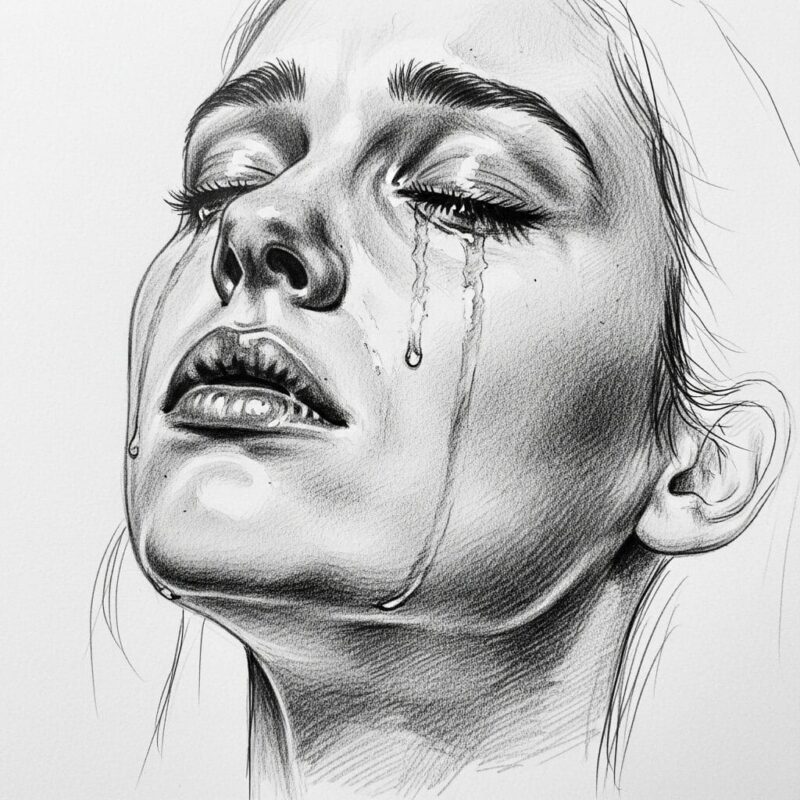
The emotion comes alive with a trembling mouth, furrowed eyebrows, and drops of tears falling down the cheeks. You don’t need to make it photo-realistic—just capturing the mood is enough. Practicing emotional sketches like this helps you explore storytelling through your art, which makes sketching more powerful.
7. Simple Buildings and Houses
Buildings are excellent for practicing straight lines and perspective. Start with a small house—just a square with a triangular roof. Add a rectangle door, a few windows, and some light details like bricks or roof tiles.
As you get comfortable, try sketching parts of your neighborhood. A streetlamp, a shop front, or even a park bench can make great practice. What I find fun here is how you can exaggerate proportions—make the windows huge or the roof super tall—just to see how playful your sketches can be.
8. Patterns and Mandalas
Sometimes, sketching doesn’t have to be about objects—it can be about patterns. Draw repeating shapes like circles, waves, triangles, or spirals across the page. For a calming exercise, try doodling a mandala: start with a circle and fill it with layers of repeating patterns.
This type of sketching is great when you just want to relax and let your pen move without thinking too much. I often do this while listening to music, and it feels almost meditative.
9. Everyday Scenes
Sketching little scenes can be both fun and rewarding. For instance, draw a person sitting on a park bench, or someone holding an umbrella in the rain. Keep the details loose—just focus on capturing the gesture or mood.
You could even sketch from memory: your kitchen table, your favorite café, or your bedroom. These sketches are less about accuracy and more about storytelling. They also give you practice in putting multiple objects into one composition.
10. Hands and Gestures
Hands are notoriously challenging, but they’re one of the best exercises for beginners. Start with simple gestures: a hand holding a pencil, an open palm, or a fist. Break the hand into shapes: a rectangle for the palm, ovals for the fingers, and lines for the joints.
What’s fascinating is how expressive hands can be. Even without a face, a hand gesture can tell a story—whether it’s waving, pointing, or clasped together. Don’t get discouraged if they look odd at first; every attempt improves your sense of anatomy and proportion.
Final Thoughts
Sketching doesn’t require fancy materials or advanced skills—it simply requires the courage to start. From chess pieces to a crying face, from everyday objects to patterns, these 10 sketching ideas are perfect stepping stones for beginners.
Remember: sketching is less about creating a masterpiece and more about developing your eye, hand, and confidence. Some drawings will look awkward, and others will surprise you with how good they turn out. Each one is part of the journey.
So grab your pencil, pick one of these ideas, and fill a page today. The more you sketch, the more natural it becomes—and soon, you’ll find your own favorite subjects and style.

A Teacher with 5 years of experience. Our Expertise, is reliable to meet your full Academic development needs . Worked on many crafts and construction projects offering services from design to development to deployment over the years. You will find many of my works in my business portfolio on request.