10 Cute Anime Drawing Ideas That Are Perfect for Beginners
Master the art of manga with these 10 cute anime drawing ideas perfect for beginners. Start your creative journey with simple tips and easy techniques.
[pinch_desc]Master the art of manga with these 10 cute anime drawing ideas perfect for beginners. Start your creative journey with simple tips and easy techniques.[/pinch_desc]
What defines a truly iconic anime character, and why do these specific designs work so well for artists starting their first sketchbook? Mastering anime drawing remains a challenge for many, but picking the right subjects makes the process manageable and fun. Whether you want to sketch a classic hero or experiment with modern chibi styles, building a solid foundation is essential for success. When you practice these 10 cute anime drawing ideas, you gain the confidence to create your own unique work. Preparing your art space for a casual weekend session or a dedicated practice block is the best way to start.
Quick Questions and Answers
Question: Why are chibi anime characters good for beginners?
Answer: Chibi characters have oversized heads and simple, rounded features, making them perfect for learning basic proportions. Their exaggerated expressions and minimal details let new artists focus on capturing emotion without complex anatomy. This style helps beginners build muscle memory for smooth, confident lines before tackling more realistic, human-proportioned manga figures.
Question: Can beginners draw anime eyes easily?
Answer: Yes, beginners can draw anime eyes by starting with a large circle for the iris and adding a smaller pupil. Include highlights and reflections to create the sparkling effect typical of anime art, keeping the shape simple first. As How to Draw Eyes for Beginners Step by Step easy suggests, focusing on these light spots brings your characters to life quickly.
Question: Do I need to know anatomy to draw anime?
Answer: No, you don’t need advanced anatomy knowledge to start drawing anime. Focus on basic shapes like circles for the head and ovals for the body. As you progress, you can gradually add more detailed muscle and bone structures. Keeping things simple allows you to enjoy the process rather than getting stuck on technicalities.
Selection Criteria for Beginner Anime Art
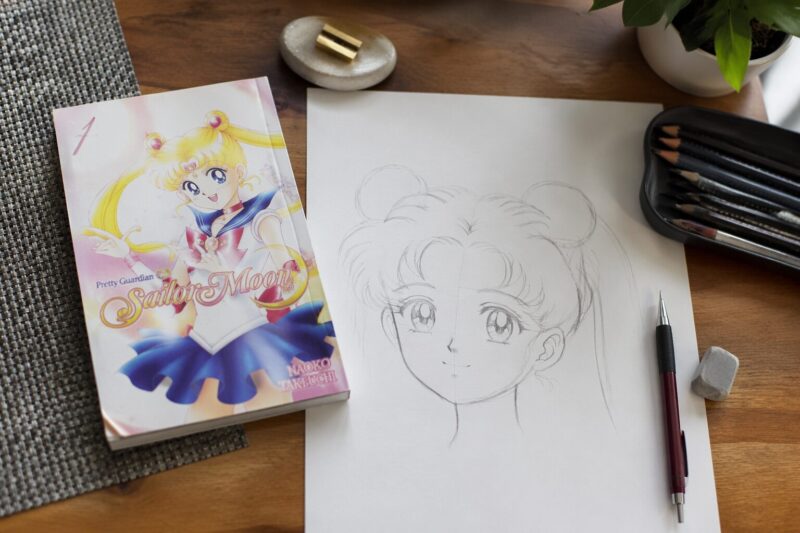
Mastering core proportions requires referencing established characters like Goku from Dragon Ball Z or Sailor Moon to understand traditional structure. When you study these industry giants, you identify the standard ratios that make anime art look authentic.
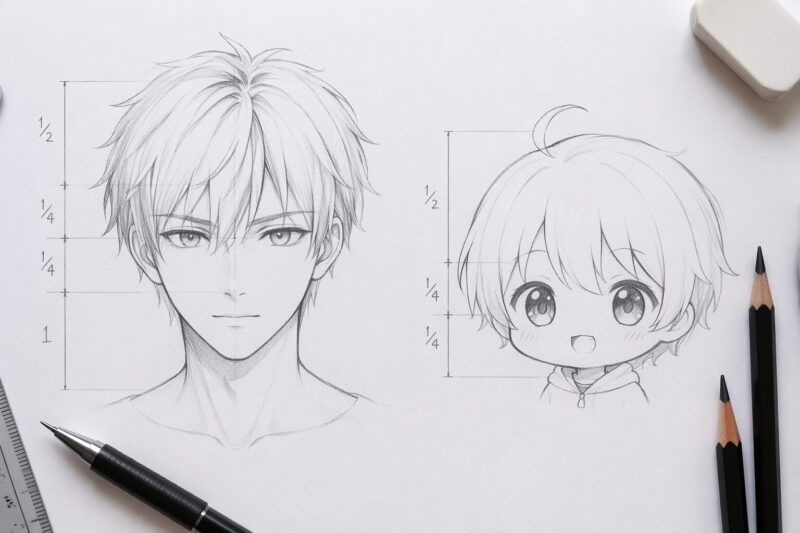
Prioritize styles with simplified geometry, such as Chibi, which uses exaggerated heads and oversized eyes. This aesthetic allows a margin of error that is absent in more realistic character designs.
Focus on technical repetition, specifically drawing circular head shapes and inward-curving face lines to avoid stylistic “fatness.” Improving your craft is about creating consistent, smooth curves that define the classic manga look for How to Draw Anime Characters: A Simple Step-by-Step Guide for Beginners.
10 Cute Drawing Ideas to Start Your Journey
1. Classic Proportions
Study recognizable characters to learn standard anime anatomy. By tracing the basic shapes of a hero like Goku, you begin to see how an artist constructs a head tilt or a dynamic stance.
2. Chibi Characters
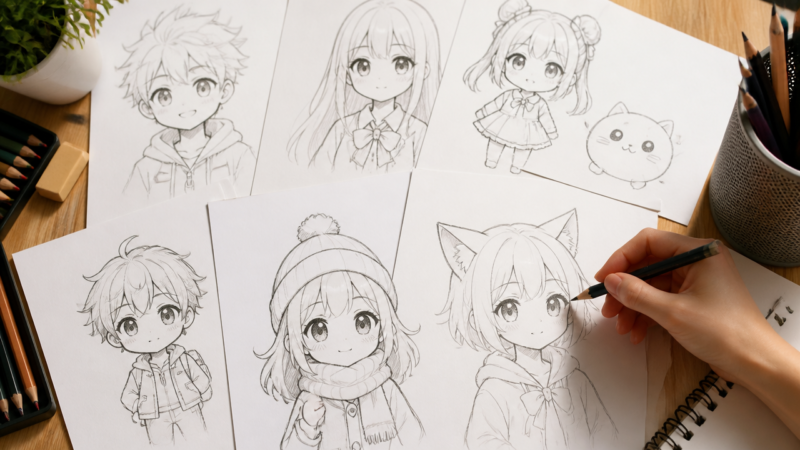
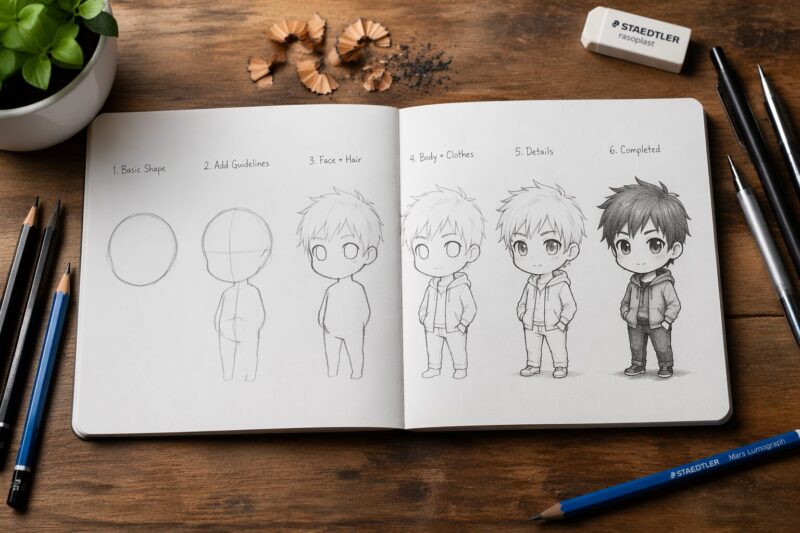
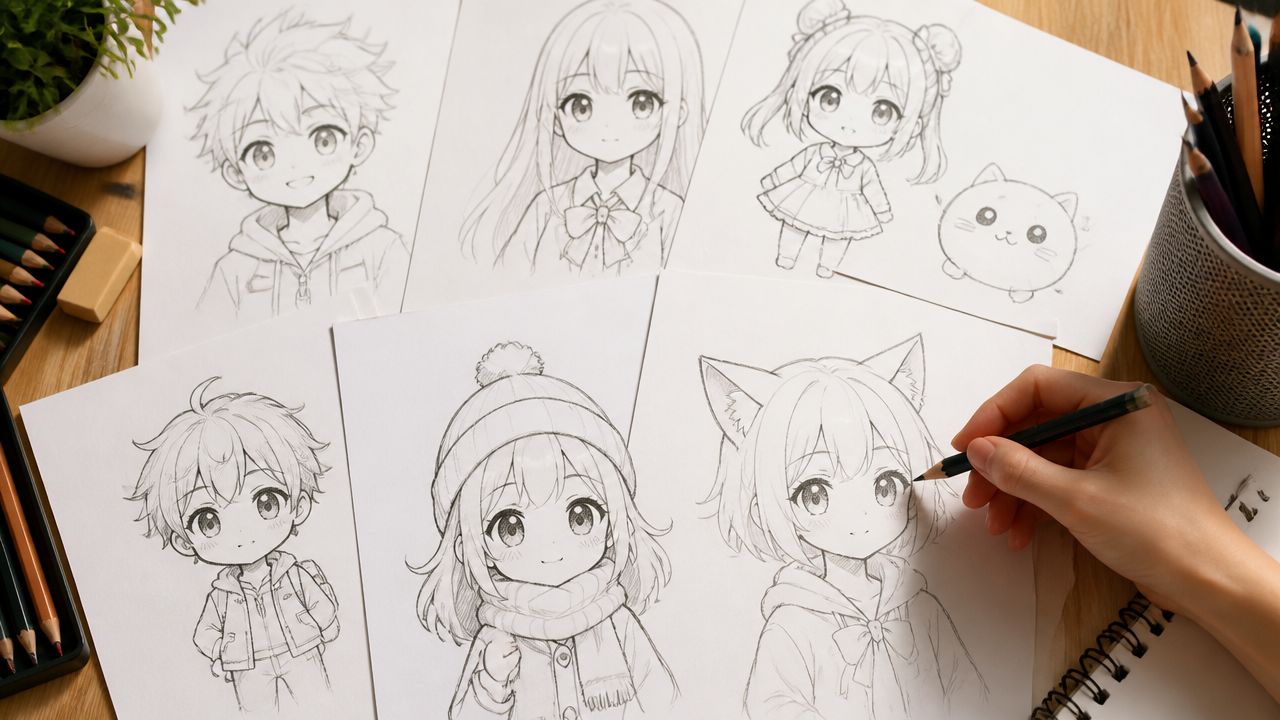
Practice oversized heads and expressive facial features. Chibi art is the most forgiving style for novices, as the lack of realistic limbs means you can focus entirely on making your character look adorable.
3. Specific Eye Studies
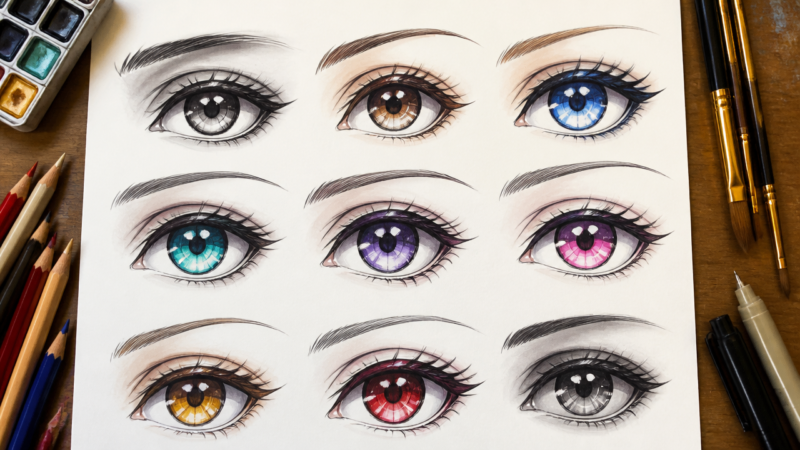
Dedicate practice sessions solely to anime-style female eyes. Because these features are both complex and vital for expression, isolating them prevents you from feeling overwhelmed while trying to draw an entire face.
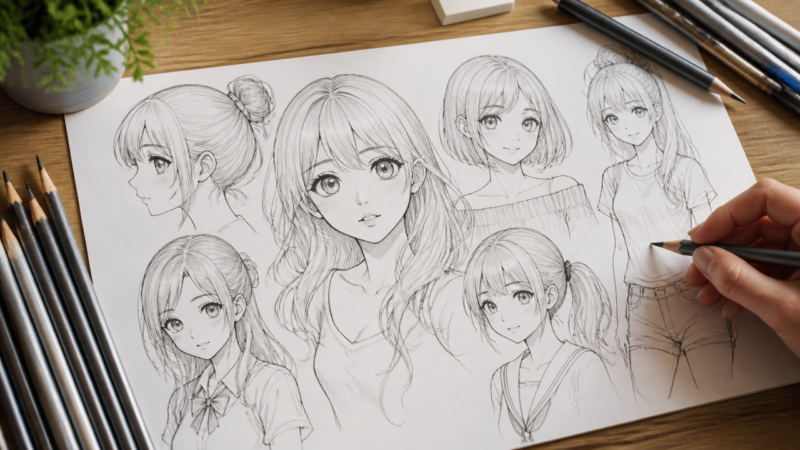
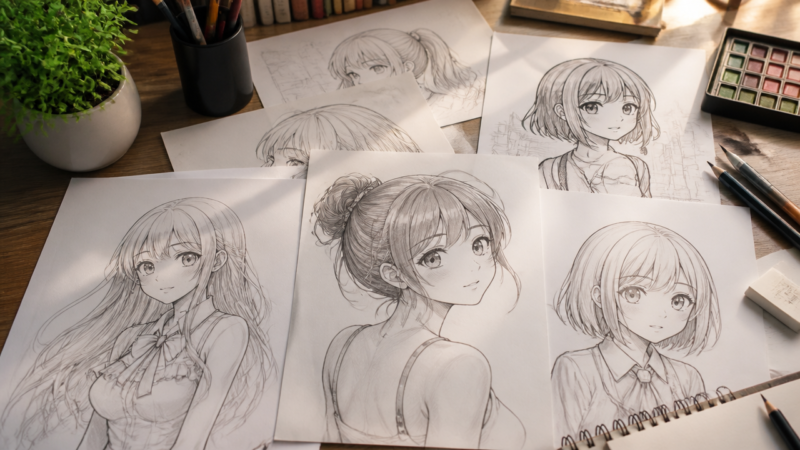
4. Short Hairstyles
Replicate hair movement with simple short-hair character designs. Short hair consists of fewer segments than long, flowing locks, making it easier to manage when you are first learning how to apply line weight.
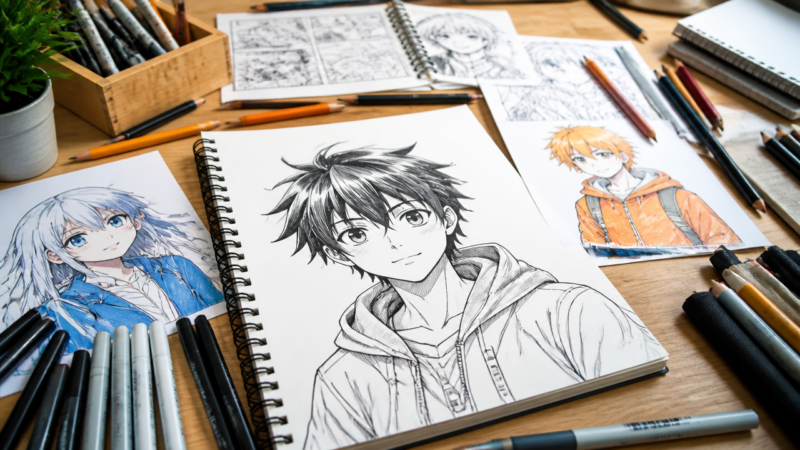
5. Hooded Characters
Draw figures wearing hoodies to simplify anatomy. The fabric of a hoodie conveniently hides the neck and shoulder area, which are areas that often trip up beginners when trying to place a head correctly on a torso.
6. Pets & Companions
Experiment with placing animals like cats on heads to learn character interactions. Adding a smaller, rounder animal companion makes any scene look immediately cozy and adds a narrative element to your practice sketches.
7. Sci-Fi Helmeted Faces
Practice combining human facial features with mechanical elements. Drawing a helmet allows you to focus on the eyes and mouth while obscuring the rest of the head, which is great for those who find hair or skull structure difficult.
8. Expressive Faces
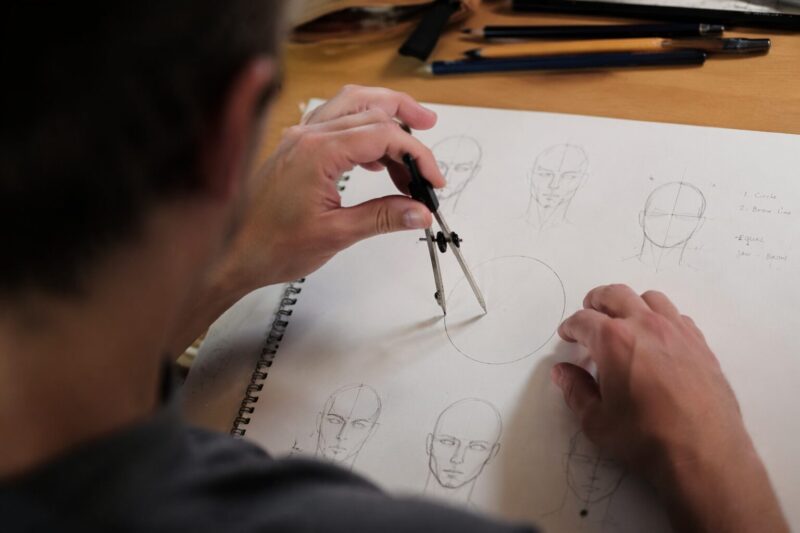
Sketch various face shapes after mastering the base circle structure. Change the jawline from narrow to wide to see how it alters the final look of your character, keeping the core circle consistent each time.
9. Duo Sketches
Practice composition by drawing two characters together on a single page. This forces you to think about spacing and how two distinct forms relate to one another in terms of size and depth.
10. Stylized Accessories
Add simple items like fish-print hoodies or specific props to personalize beginner sketches. Small details give your character personality without requiring the high-level drawing skills needed for detailed backgrounds or complex armor.
Comparison of Style Options
Option
Feature
Best For
Notes
Chibi
Oversized features
Absolute beginners
Forgiving of mistakes
Classic
Standard anatomy
Building a foundation
Requires patience
Fragmented
Eye/Hair study
Targeted skill growth
Very efficient practice
Tools and Materials for Beginners
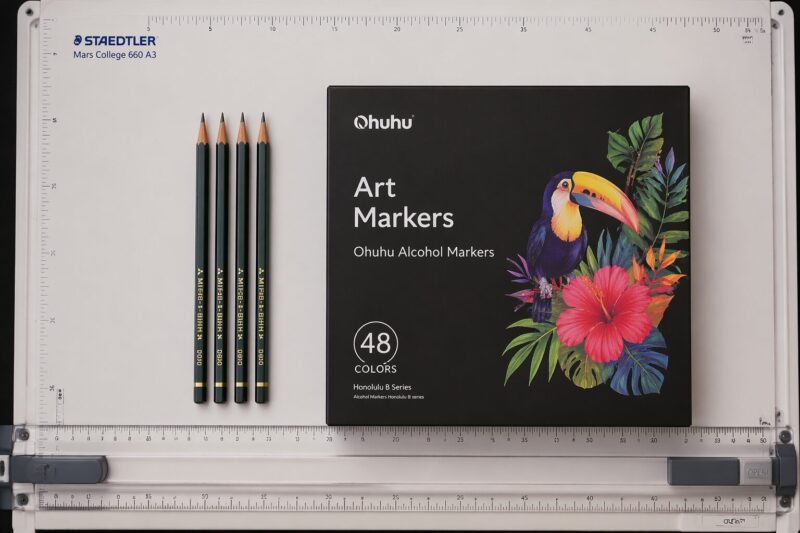
Use 4B grade pencils like the Mitsubishi Uni-4B for smooth, dark lines during sketching. The softness of a 4B lead allows you to achieve dark marks with very little pressure, which is ideal if you are trying to minimize hand fatigue. According to Domestika, choosing the right pencil makes a noticeable difference in how your initial sketches flow.
Utilize marker pens such as Ohuhu pens for crisp, final outlines. These pens provide a bold, permanent line that makes your drawings look clean and complete immediately after you finish inking over your pencil work.
Always begin with a basic circle, repeating this step until the shape is consistent. Consistency in your base structure is the hallmark of professional-looking art, so treat the circle as the most important part of your toolbox.
Choosing Advice: How to Improve Faster
Repetition is the secret to progress; watch where you apply the inward curve on the chin to ensure it remains smooth. Drawing a jaw too wide is one of the most common mistakes, so keep your pencil light and be ready to reshape that curve until it balances with the head.
Look for reputable resource hubs like AnimeOutline for ongoing step-by-step guidance. Professional tutorials often break down complex anatomy into bite-sized components that are much easier to digest compared to guessing the proportions on your own.
Don’t aim for immediate perfection; focus on making your character parts look visibly identical while you refine your muscle memory. As noted by AnimeOutline, focusing on the process of creation rather than the final result allows you to learn from your mistakes instead of just getting frustrated by them.
FAQ
Q: How do I fix a face that looks too fat?
If your character’s face looks too wide, you likely haven’t applied enough of an inward curve at the jawline. Draw a light vertical guide line through the center of the head to help you mirror the curves on both sides. Gradually nudge the jaw inward until the face narrows to your preferred style, ensuring the lines flow naturally from the bottom of the circle toward the chin.
Q: What should I practice first?
Start by mastering the basic circular head construction before moving to complex features like hair or hands. Being comfortable with the core shape ensures that your later details, such as the eyes and mouth, always have a stable foundation. If you cannot draw a consistent circle, the rest of the character proportions will likely suffer, so treat this as your primary daily warm-up exercise.
Q: Is it better to draw characters or body parts?
Beginners benefit from both approaches, as parts like eyes and hair sharpen your technical skill while whole characters improve your sense of artistic structure. Isolating difficult limbs or features allows you to drill down into specific mechanics without the distraction of a full pose. Meanwhile, sketching full figures helps you understand the relationships between different body segments, such as how the head sits on the neck.
My Experience With 10 Cute Anime Drawing Ideas That Are Perfect for Beginners
I remember staring at a blank sheet of paper, absolutely convinced that my first chibi character was going to look like a lopsided potato. Honestly, it kind of did. The most relieving thing I learned early on was that anime relies on deliberate, simple geometry. If you can draw a circle and a slightly squashed oval, you have already cleared the largest hurdle. My biggest mistake was trying to jump straight into detailed hair layers without mastering the skull shape first. It’s like painting a house before building the frame—it just won’t stand up.
I’ve found that dedicated eye studies are the true game-changer. You don’t need to commit to a five-hour masterpiece if you spend twenty minutes just practicing the arc of an eyelid or the placement of an iris. It feels boring at first, but your sketches reach a level of “professionalism” much faster when the eyes look intentional rather than accidental. Do you find that you struggle more with character proportions or with the tiny details like expression lines?
Conclusion
2026 Trends
Minimalist and sketch-heavy styles are gaining ground, favoring simple outlines over heavy shading. Many artists in 2026 are shifting toward “quick-form” drawing, where the focus remains on capturing personality through fluid, expressive lines rather than perfectly polished, hyper-detailed figures.
A Teacher with 5 years of experience. Our Expertise, is reliable to meet your full Academic development needs . Worked on many crafts and construction projects offering services from design to development to deployment over the years. You will find many of my works in my business portfolio on request.