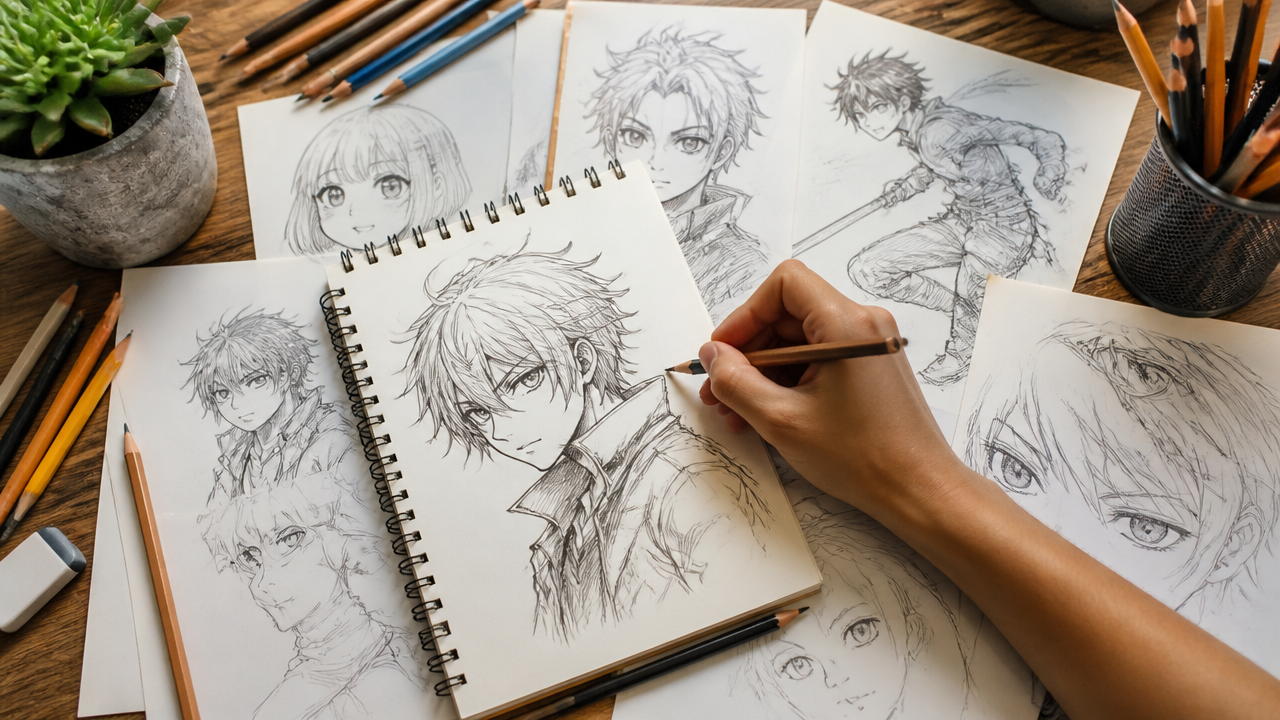
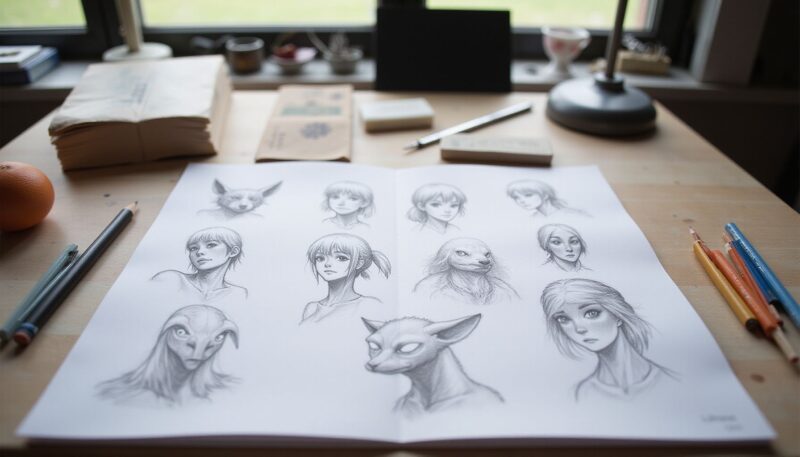
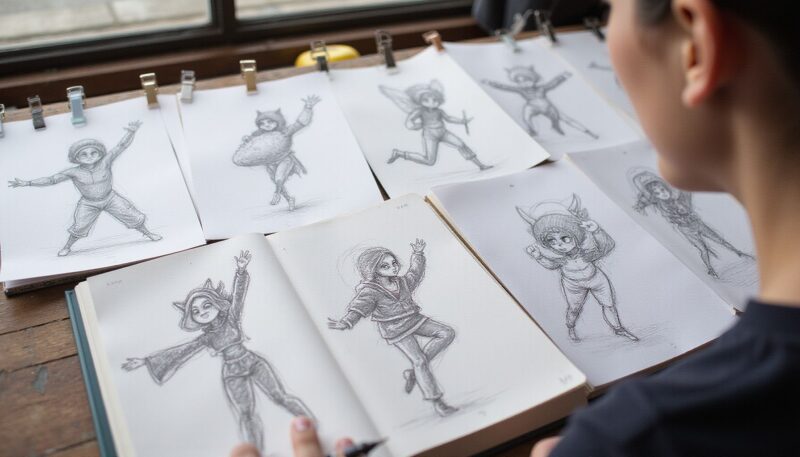
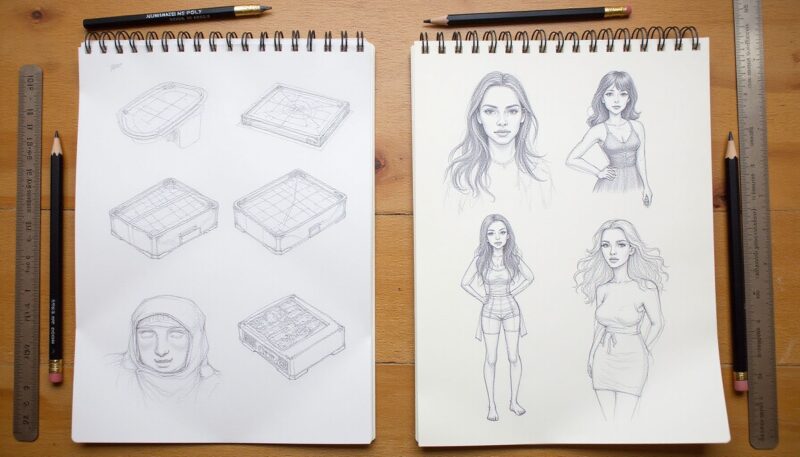
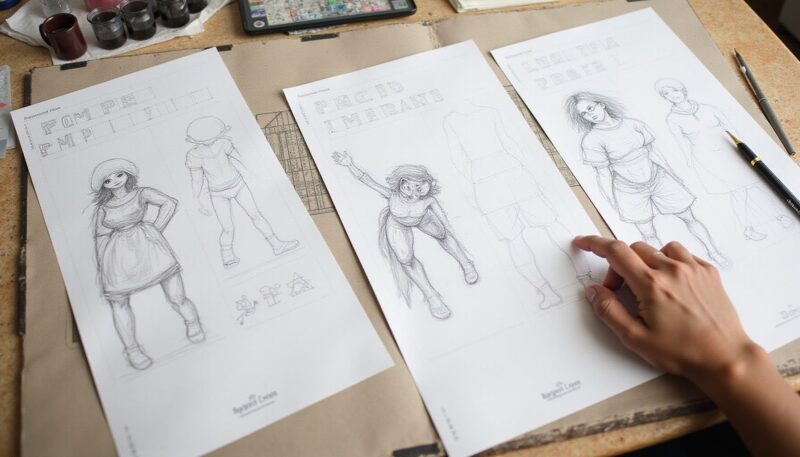
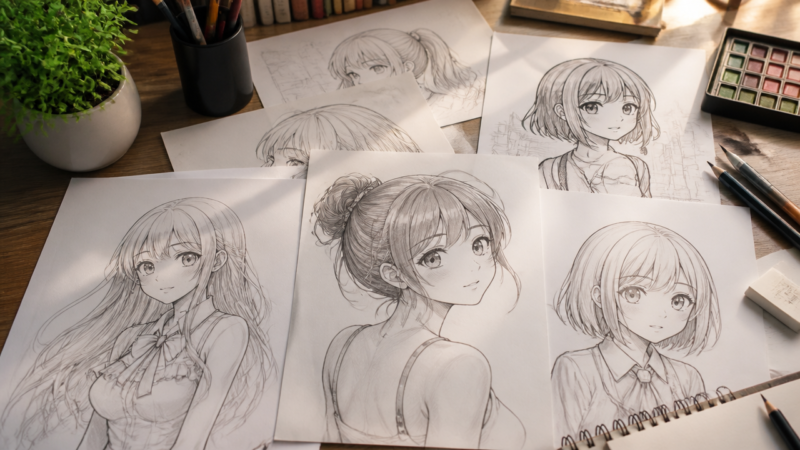
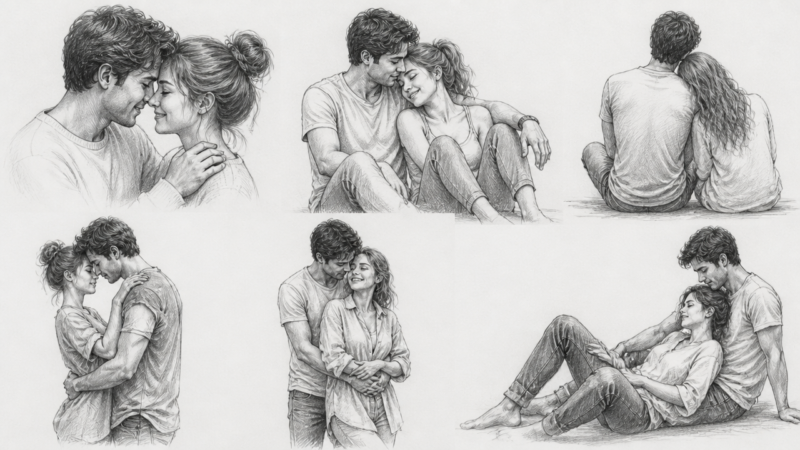
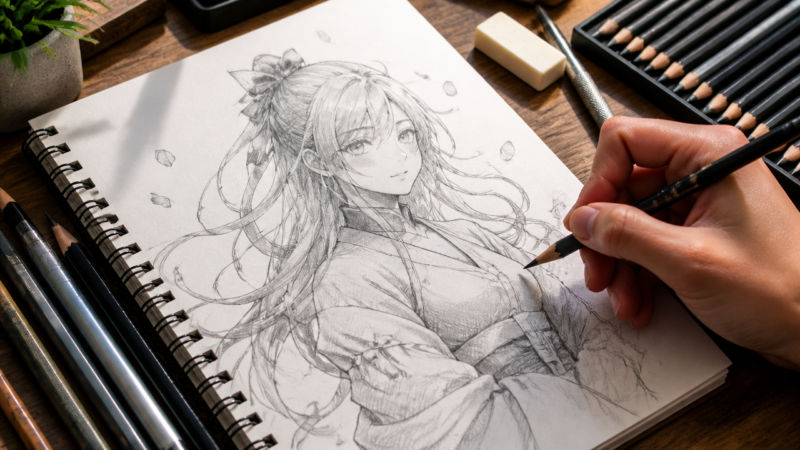
What makes anime sketch ideas feel more expressive than regular character drawings—especially when you try anime character sketch ideas or dynamic action pose sketches? If you’re leveling up anime art fast, these 12 anime drawing prompts blend line work, shape construction, perspective grids, and values so your sketches look intentional. Winter break afternoons, rainy-day mood sketches, and even a quick evening warmup can all benefit from better lighting and cleaner silhouettes. Anime sketch practice works best when you rotate structured fundamentals with fun, non-traditional character concepts. Let’s pick ideas you can draw today.
Quick Questions and Answers
Question: why do anime sketches look more expressive than regular drawings?
Answer: Anime sketches emphasize large eyes, dynamic facial expressions, and exaggerated emotions to convey feelings clearly. This style uses sharp lines and bold contrasts to make characters appear more vivid and emotionally engaging than realistic drawings.
Question: can beginners draw anime sketches without advanced art skills?
Answer: Yes, beginners can start anime sketches by practicing basic shapes like circles and lines for heads and bodies. Simple guides help with proportions, and focusing on one element at a time, like eyes or hair, builds confidence quickly.
Question: do anime sketch ideas help improve overall drawing technique?
Answer: Drawing anime sketches repeatedly improves line control, proportions, and understanding of movement. These focused exercises train artists to observe details better, leading to stronger skills across all drawing styles, including realistic art.
Selection Criteria for Effective Anime Practice
The 12 ideas below follow a simple rule: each one pushes a specific skill while still giving you enough creative room to enjoy the process. I’m not chasing “perfect anime”—I’m chasing repeatable improvement.
Focus on fundamentals (so practice sticks)
Line control, shape construction, perspective grids, and value distribution are the backbone of strong anime character sketches. When you practice these pieces on purpose, you stop relying on luck, and your drawings start looking consistent even when the subject changes. A lot of anime tutorials stress starting with basic shapes and proportions, then adding light and shadow structure as you go, because that workflow keeps your sketch readable (and faster).
Incorporate variety (so you don’t stall)
If every sketch is the same head-on portrait pose, your brain learns one trick and then feels bored. I design these ideas to mix technical drills with playful, non-traditional prompts so you keep momentum. Research-backed drawing habits from creators like Domestika also push the idea of rotating different anime drawing prompts to keep your creativity moving while your fundamentals improve.
Dynamic movement (so gestures feel alive)
Anime reads as “alive” because motion and expression are part of the drawing, not an afterthought. You’ll see that in ideas built around action constraints, force lines, and posture. Tutorials that focus on better anime drawing consistently point you back to dynamic poses and line work, since gesture is what makes limbs feel like they belong in a story rather than a mugshot.
Comparison of Practice Methods
Practice can feel confusing because you’re usually choosing between “serious drills” and “fun drawings.” This table helps you sort those choices quickly.
Practice method
What it trains
Best for
Trade-off
Head angle study (same subject, new perspectives)
Proportions and consistency
Character design and re-drawing the same character cleanly
Can feel repetitive without a time limit
Dynamic action pose sketching
Gesture, flow, readability
Energy, action scenes, better limb direction
You still need structure if results look chaotic
Lighting and shadow mapping
Values and contrast
Moody scenes and clearer focal points
You might neglect details unless you simplify first
Art style mimicry
Rendering decisions and shape language
Developing a personal look and learning from great choices
Copies can become a crutch if you never iterate
Silhouette challenge (black shapes only)
Posture and design clarity
Clear silhouettes, faster thinking
Few artists stay patient with minimal detail
12 Creative Anime Sketch Ideas for Skill Growth
1. The Head Angle Study
Pick one character (even stick-figure brave) and draw the head from five angles: front, 3/4, profile, up-tilt, and down-tilt. Keep the construction simple: circles plus intersecting guide lines for the head angle. This idea is basically training your “character consistency muscle,” so when you redraw later in the same week, the face stops drifting.
Key way to make it work
Limit yourself to the head and neck shape. If you add hair texture every time, you’ll hide proportion errors.
Best for
You should use this if your anime sketch heads look good in one view but collapse in other angles. It’s also great for beginners because it’s shape-first and expression-second.
Quick pro tip
Try switching your paper orientation for one angle. Drawing sideways forces you to notice the actual structure.
2. The Dynamic Action Pose
Sketch a character mid-air, mid-combat, or in a dramatic dodge. Push limbs into stretched positions and draw simple force lines to show motion direction. The point isn’t anatomy perfection yet; it’s capturing the “why the pose works” feeling. When gesture improves, your anime sketches stop looking stiff fast.
Key way to make it work
Use “S” curves for limbs to give them rhythm. Straight lines make poses look like mannequins.
Best for
This is the one I reach for when your sketches feel static or like they’re frozen between frames.
Cost and tools
You can do it with pencil only. A basic fineliner helps for clearer silhouette edges, but neither is required.
3. Texture Exploration
Choose one unconventional item and draw your character wearing it: a patterned hoodie, a wet-looking scarf, or an oddly specific hat. Texture practice forces you to observe surface logic, not just character outlines. You’ll also learn how to keep textures readable at anime simplification levels.
Key way to make it work
Start with three texture zones: shadows, mid-tones, highlights. Then place the pattern. If you pattern first, values get messy.
Best for
Use this when your characters look smooth but uninteresting. Texture gives you instant variety without changing the character design.
Who it helps most
Intermediate artists who already have decent proportions often level up fastest by improving how materials sit on the form.
4. Animal-Person Hybrid
Combine human features with an animal companion idea, like a character with a cat on their head or a pet holding a tiny accessory. This is not just “cute”—it trains design decisions. Animals force different silhouettes, head shapes, and fur or ear logic, which makes your brain practice faster problem-solving.
Key way to make it work
Design the hybrid silhouette first. Then add facial expression last. If expression comes first, the structure tends to fall apart.
Best for
You should pick this when you feel bored drawing humans and want concept creativity without abandoning anime-style clarity.
Quick prompt
Draw the animal as the “main focal point,” then make the character react to it. That tiny narrative trick improves expression.
5. Lighting and Shadow Mapping
Draw a flat anime scene with one clear light source. Then place values like a map: darkest darks for shadow areas, mid-tones for forms, highlights for edges and hair shine. Keep backgrounds minimal at first. This drill trains contrast and makes characters pop even when you don’t render everything.
Key way to make it work
Pick one light direction and commit. “Some light from everywhere” kills clarity.
Best for
If your sketches look evenly shaded or flat, this will give you depth quickly.
Research-shaped workflow
Drawing-focused tutorials often stress paying attention to lighting and shadows and simplifying values before adding detail, because it keeps you from getting lost.
6. Art Style Mimicry
Pick an anime with a distinct look and recreate a portrait in that style. Cyberpunk-style visuals are a fun example because neon palettes and bold shapes push you to think about color and line rhythm. Mimicry helps you learn what changes from “anime general” into a specific signature: line thickness, shape language, and lighting choices.
Key way to make it work
Don’t copy every detail. Copy the “rules” you notice: how eyes are shaped, how highlights are placed, and how shadows sit.
Best for
Advanced students benefit when they can already build form. Beginners can do it too, but you’ll grow faster by keeping mimicry simple.
Source note
Anime art style rankings often point out how different shows vary line and rendering style, which makes this drill feel less random.
7. The Close-Up Emotion Study
Focus on eyes and mouth only. Practice the same character expression twice: once with a calm “neutral” look and once with a strong emotion. You’ll explore how anime emotion reads through asymmetry, eyelid angles, and mouth tilt, without worrying about the whole head.
Key way to make it work
Draw from “expression keywords” like annoyed, determined, surprised. Treat them like instructions your face follows.
Best for
This is for when your characters look similar across emotions. Small facial changes make a huge difference in anime expressiveness.
How it builds technique
Frequent focused facial studies improve your ability to observe and re-draw features accurately, especially head angles and expression shapes.
8. Silhouette Challenge
Sketch a full-body character using only black ink or solid black shapes. No internal details. Focus on posture, limb direction, and overall design read. If the silhouette reads, the character will usually look “anime” even before details.
Key way to make it work
Lightly block the pose first as simple shapes, then commit to black. If you fight the silhouette with tiny details, you’ll lose readability.
Best for
This is great when you want your drawings to read quickly from far away, like thumbnails or quick study sheets.
Practice style
This drill is also a confidence builder because you’re allowed to simplify hard.
9. Perspective Grid Practice
Draw a character standing on a steep staircase, or look up from a bird’s-eye view angle. Use a perspective grid to place head height, shoulders, and feet logically. Perspective drills fix composition problems that make anime scenes feel “off,” even when the character art looks nice.
Key way to make it work
Start with the environment perspective lines, then place the character. If you place the character first, perspective won’t magically snap into place.
Best for
Pick this when your backgrounds look flat or your characters drift out of the scene.
Clear benefit
Perspective grids help you keep spatial relationships accurate, which improves overall composition.
10. Clothing Fold Studies
Use one simple mannequin base (even a stick figure plus a head) and draw clothing folds for different fabric behaviors: drapery, tight-fit, and heavy armor. Anime clothing is a big part of the stylized look. Learning how fabric “moves” on the body makes everything else easier.
Key way to make it work
Match fold types to fabric stiffness. Soft fabric compresses and bunches; tight fabric follows form edges.
Best for
This helps when your characters’ outfits look like floating shapes rather than materials attached to the body.
Time-saver
Limit each study to one outfit section (collar and shoulders, sleeves, or skirt front). Depth beats covering everything.
11. Minimalist Line Art
Use only continuous lines to sketch a character. No erasing, no lifting the pen, no “fix it later” addiction. Minimal line art forces steadiness, better observation, and cleaner stroke rhythm.
Key way to make it work
Outline the biggest shapes first: head, torso, hips, then limbs. Let smaller details be “suggested,” not rendered.
Best for
Use this when your line confidence is shaky or your sketches look tense.
Fun twist
Draw the same pose twice: once slow and controlled, once with faster speed. Compare which version reads better.
12. Cross-Genre Fusion
Sketch a classic anime archetype in a completely different aesthetic: magical girl in Noir, shonen protagonist in Steampunk, or school hero in fantasy courtwear. Cross-genre fusion forces design thinking because you must translate costume silhouettes, lighting mood, and props into a new visual language.
Key way to make it work
Pick one genre element to stay strict about: lighting style, prop shapes, or fabric type. Then let everything else be anime.
Best for
This is ideal when you want creativity without losing anime clarity. It also breaks boredom on weeks when you’re doing the same fundamentals.
10.5 Additional quick guidance: how I choose what to draw next
Some days you need a structure drill. Other days you need a concept spark so you’ll actually draw. I keep a tiny “rotation rule”: alternate one skill-focused sketch with one playful prompt. That rhythm keeps your learning consistent without turning art into homework.
Choosing the Right Exercise for Your Skill Level
Beginners should start with exercises that remove uncertainty. If you don’t know what to fix, you’ll keep drawing the same parts you already feel good about. So you’ll want prompts that guide structure and values while staying simple.
Beginners
Use Ideas 1, 5, and 10. Head angle practice builds proportion awareness, lighting and shadow mapping improves depth, and clothing fold studies teach how materials sit on a form. This combo reduces the two biggest beginner problems: inconsistent heads and flat shading.
Intermediate
Use Ideas 2, 7, and 9. Action pose practice strengthens gesture and motion, close-up emotion studies make your character faces more varied, and perspective grid practice keeps scenes coherent. You’re ready for complexity now, so push it in a controlled way.
Advanced
Use Ideas 6, 8, and 12. Style mimicry helps you refine a personal rendering language, silhouette challenges lock in readability, and cross-genre fusion builds confident design choices. At this level, the fun is in selecting what rules you adopt and what rules you change.
Common Mistakes
Even smart artists stall when they do the wrong kind of practice. These are the mistakes I see most in anime sketch sessions, including my own when I’m tired.
Mistake 1: Copying without isolating the skill
If you try to render everything perfectly while practicing perspective, you’ll mix goals and get stuck. Keep the drill focused: head angle should stay shape-first; lighting should stay value-first.
Mistake 2: Skipping gesture when drawing action
Action poses need strong line of action and motion direction. If you treat the pose like a static portrait, the energy disappears. Gesture comes before detail.
Mistake 3: Over-texturing too early
Texture looks great, but it can hide proportion mistakes. Start with value blocks and shape areas. Then add texture last, only where it reinforces the form.
Mistake 4: No value plan in lighting studies
Lighting practice fails when you randomly shade. Pick one light direction and place darks and highlights intentionally.
Mistake 5: Avoiding perspective because it feels “hard”
Perspective grids can feel mechanical until you use them to place the character. Once you see how much they clean up composition, you’ll wonder why you waited.
Mistake 6: Using mimicry as a replacement for original work
Style mimicry is a teacher, not a prison. If you never redraw your own characters in your own style choices, you won’t develop a signature.
FAQ
Q: are there specific anime sketch ideas for rainy day themes?
Rainy day anime sketches often feature characters with flowing hair, school uniforms, and puddles reflecting light. Artists use vertical lines or dots for raindrops and add wet ground effects to create a moody, dynamic atmosphere.
Q: how do you draw magical circles in anime character sketches?
Magical circles in anime sketches use simple geometric shapes like circles and stars, with sparkles or swirls added for energy. These glowing runes float around hands or bodies, often paired with staffs or robes flowing from magical force.
Q: what makes chibi anime sketches different from standard character drawings?
Chibi anime sketches have heads about half the character’s total height and bodies only two heads tall, creating cute proportions. Artists use circle guides for heads and bodies to maintain these signature small, stylized features.
Q: which anime sketch ideas work best for action poses?
Action poses in anime sketches show characters with strong lines of action, motion lines, and flowing hair or clothing. These elements highlight movement direction and speed, while dynamic camera angles enhance the sense of energy and flexibility.
Q: when should artists use perspective grids for anime sketch practice?
Artists use perspective grids when drawing buildings, landscapes, or scenes with depth to ensure accurate spatial relationships. This practice helps place characters and objects correctly in 3D space, improving overall composition and realism in anime art.
Q: is drawing from song lyrics a good way to get anime sketch ideas?
Drawing from song lyrics inspires unique, creative anime sketches by translating emotions or stories into visual art. This approach helps artists break art blocks, explore abstract concepts, and create pieces with personal meaning and emotional depth.
Q: why do anime artists copy famous illustrations for sketch practice?
Copying famous anime illustrations helps artists analyze details like line work, shading, and expression techniques used by experts. This method builds muscle memory, improves observation skills, and accelerates learning by directly applying proven artistic strategies.
My Experience With 12 Creative Anime Sketch Ideas to Level Up Your Art
I’ve tried “just sketch more” advice, and my sketchbook still looked like the same person in the same pose with slightly different hair. The fix wasn’t more time. It was better prompts. When I did the head angle study (same head, multiple perspectives), my characters stopped drifting. That drill felt boring for the first few minutes, then suddenly I understood why certain faces always looked off. Later, lighting and shadow mapping saved me from flat shading: one light direction, darks placed on purpose, and suddenly the drawing had depth even before I added detail.
My funniest failure: I attempted silhouette challenge and got a shape that looked like a coat hanger wearing shoes. Instead of panicking, I redid it and focused only on posture and limb direction. Readability improved instantly.
If you want one expert-ish rule: isolate one variable per sketch. Head angle teaches structure. Emotion studies teach facial logic. Perspective grids teach space. What sketch prompt helped you most when you hit a wall?
A Teacher with 5 years of experience. Our Expertise, is reliable to meet your full Academic development needs . Worked on many crafts and construction projects offering services from design to development to deployment over the years. You will find many of my works in my business portfolio on request.