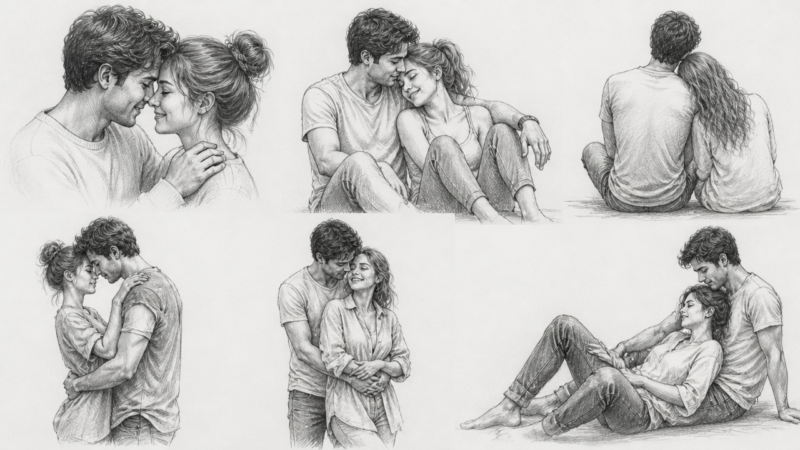

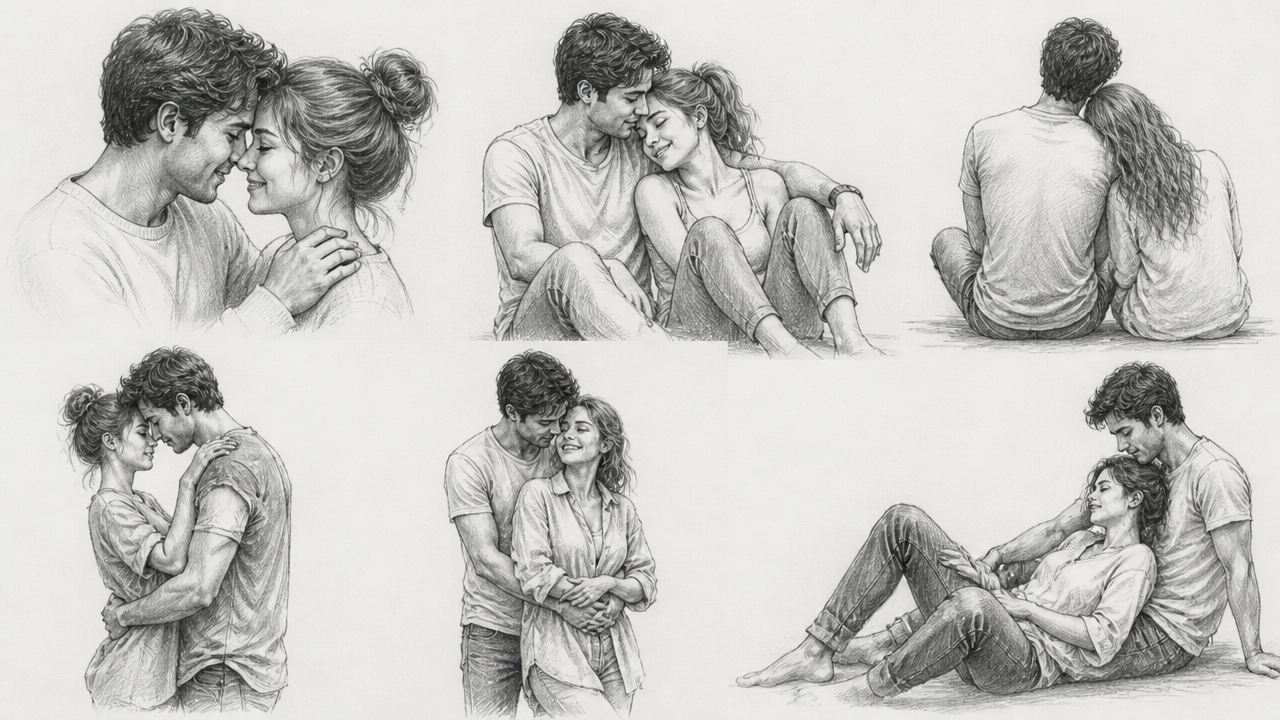
What makes a truly great couple poses drawing stand out from every other couple pose reference you’ve tried? If you’re searching for easy couple pose ideas or a more creative approach to couple drawing poses, you’re in the right place. I’ll walk you through couple poses drawing ideas that range from cozy hugs to dynamic, challenging angles. Whether you’re practicing OC couple poses or sketching for Valentine’s Day, the right pose choice keeps your figures connected. You’ll find beginner-friendly couple poses drawing ideas plus tougher couple pose drawing challenges that actually build skill.
Quick Questions and Answers
Question: What are some easy couple poses for beginners to draw? Answer: Beginners can start with holding hands while walking, cozy hugs, playful ambushes from behind, or sitting back-to-back. These foundational poses emphasize connection through simple contact points like joined hands or leaning shoulders, making them ideal for learning emotion and balance in couple drawings[1][7].
Question: Why are height differences important in couple pose drawings? Answer: Slight height variations create natural visual variety and charming compositional opportunities, preventing figures from appearing rigid or identical. Artists often offset heights or use subtle torso turns to add interest and realism, ensuring the pose feels genuine rather than stiff[1][5].
Question: Can you draw intimate couple poses without showing faces? Answer: Yes, intimate poses like lying side by side under stars, foreheads touching with eyes closed, or back-to-back sitting convey deep connection through body language alone. Small details such as hand placement, head tilts, and overlapping forms express emotion without needing facial expressions[1][5].
Key Takeaways
Pick poses by how hard the structure is: overlapping limbs, perspective angle, and weight balance decide difficulty fast. Start with intimate but simple connection points (joined hands, leaning shoulders, heads close) if you’re learning. When you want growth, move toward asymmetrical support and tangled limbs, but only after your silhouettes read cleanly. Use gesture-first thinking so the pose feels like it’s happening, not posed like mannequins. And yes, references help—especially those that show soft movement, not just stiff snapshots.
10 Creative Couple Pose Ideas for Artists
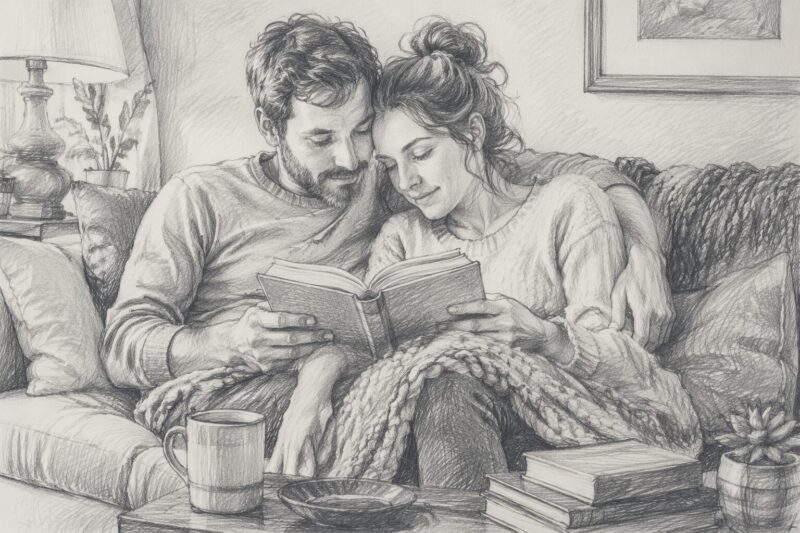
1. The Resting Head (Cozy Forehead-Near Hug)
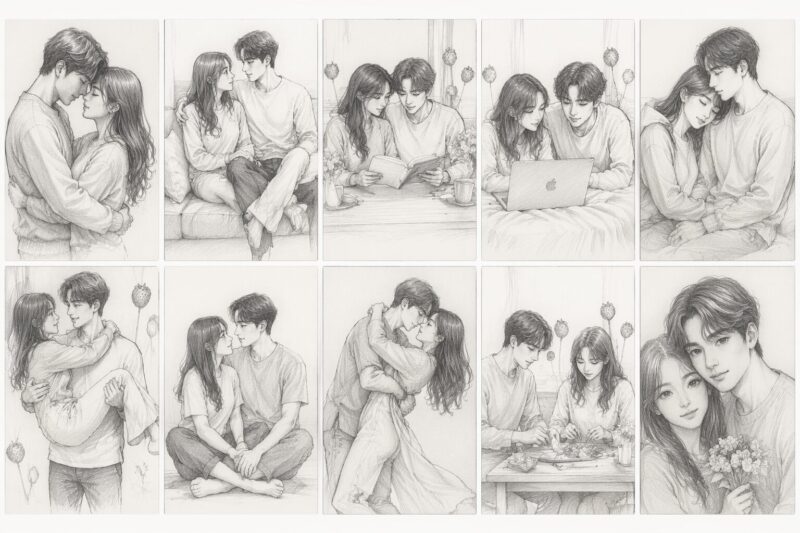
This pose is built around a simple rule: keep heads close and let the arms do the comforting work. One person leans in while the other receives the weight through a shoulder or upper arm wrap, so you practice small shifts in posture without fighting heavy perspective. It’s perfect for learning emotional proximity—your eye lands on the “quiet” contact point first.
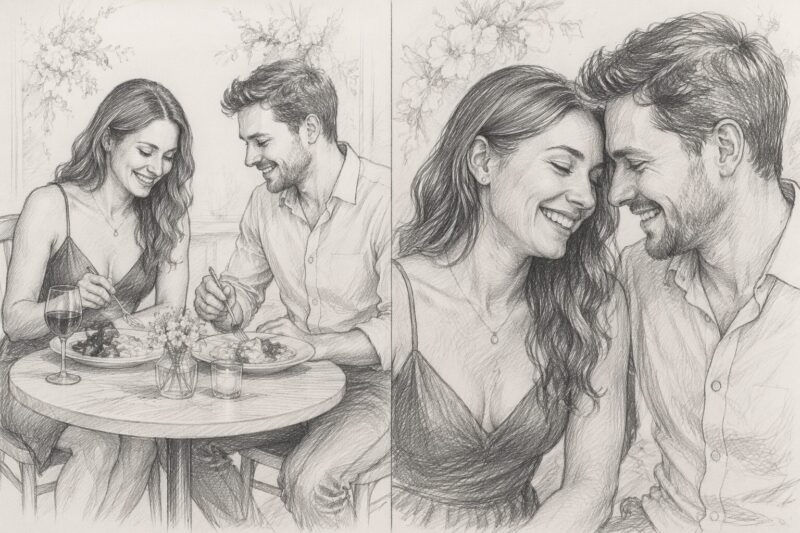
2. The Shared Table Moment (Eating, Reading, or Idle Chat)
Two people sitting at a table feels easy, but it teaches big lessons about hand placement and overlapping objects. Draw a cup, book, or snack between them and align the gesture lines so each person’s torso still has its own volume. You’ll practice how hands travel in relationship to each other, not just to the table. If your figures always look disconnected, this is one of the fastest fixes.
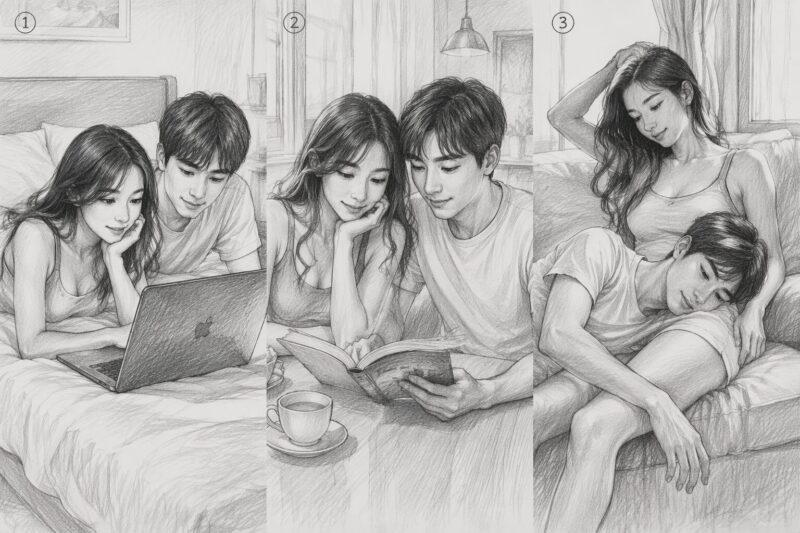
3. Bedtime Laptop or Phone Focus (Hands as the Focal Point)
A couch or bed setup gives you a natural “anchor” for the pose: the laptop or phone creates a clear focal plane. Both characters can lounge at angles that don’t force perfectly symmetrical bodies, and you can practice how shoulders sink into fabric. I like this pose for beginners because it’s forgiving—your hands and forearms tell the story, while your perspective stays manageable.
If you want more references for cozy, relaxed styling, try mixing this with 14 Manga Art Ideas You’ll Want to Draw Right Now.
4. Holding Hands While Walking (Charming Motion + Clean Silhouettes)
Walking couple drawings are sneaky: they look casual, but they demand timing and weight shift. Make one person lead slightly so the stride lines don’t mirror perfectly. Hands stay connected, but hips and legs vary just enough to keep the bodies believable. This is a strong starting point if you want easy couple pose ideas with movement that still reads clearly.
According to Love Drawing Podcast (Pose difficulty), pose difficulty comes down to how the figures interact—simple contact beats complicated limb tangling when you’re learning.[2]
5. Back-to-Back Sitting (Trust Without Face Dependence)
Face-to-face intimacy isn’t the only way to show closeness. Back-to-back sitting creates trust through shared posture and the gentle curve of shoulders. You can add intimacy by touching a hand behind a thigh, resting a head at an angle, or letting one person lean a little closer. This is great when you want intimate couple poses without relying on facial expressions.
Research from drawing communities also points to intimate proximity “contact points” as the simplest way to communicate connection while keeping structure readable.[1][5]
6. Playful Ambush from Behind (Gesture-First Comedy Pose)
An ambush pose gives you a built-in story beat: one character startles, the other grins. Use a clear torso turn and separate limb silhouettes so your viewer understands who’s where instantly. The joy here is the overlap—your arms and hands cross at different depths, which is excellent practice for depth control without forcing complicated foreshortening. It’s also a fun way to practice couple drawing poses with expressive body language.
7. Asymmetrical Support (One Character Carries the Other)
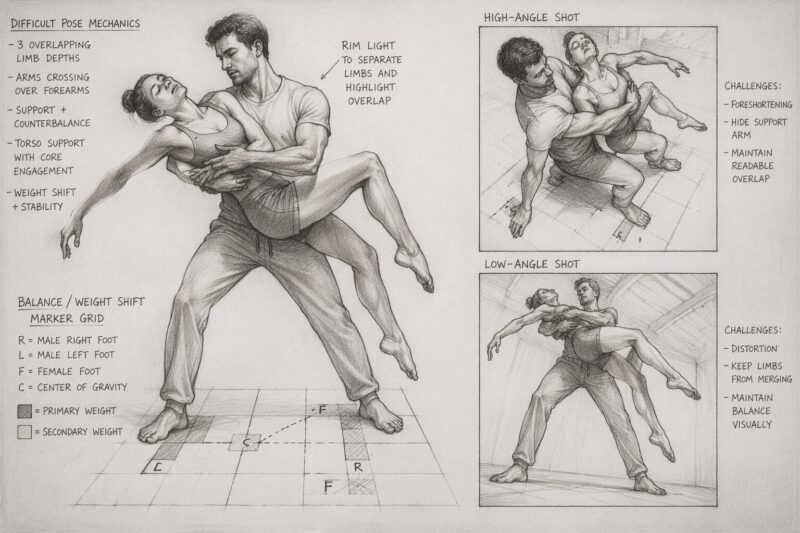
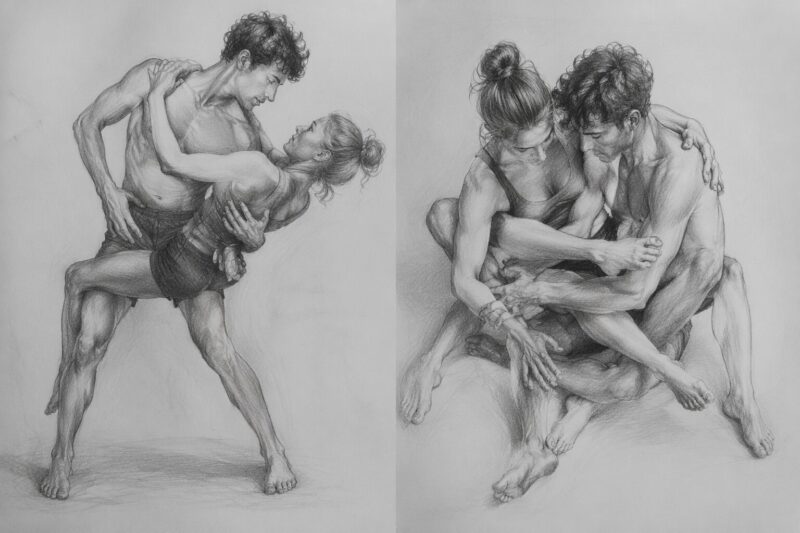
This is where the drawing turns into a real skills test. One person supports weight through legs and hips, while the other character’s posture follows that support. Keep the “gravity line” clear: where is pressure landing, and which joints bend to absorb it? When you get this right, your couple drawings look physically believable even if the pose is stylized.
According to Love Drawing Podcast, overlapping limbs and balance of weight are common factors behind harder poses.[2]
8. Complex Tangled Limbs (Sitting on the Floor, Cuddled Close)
Tangled limbs sound romantic, but they’re also structural training. When your figures interlock at multiple depths, you learn to draw hand and forearm volumes without losing them in the clutter. I recommend starting with block shapes first: pelvis positions, shoulder points, then arms as tubes. Only after you map centers of gravity should you refine fingers and hand angles.
If you want inspiration, Pinterest pose references often cluster these kinds of partner dynamics in collections you can study step-by-step.[3][8]
9. The Close-Up Portrait (Heads Near, Partial Crops, Hands in Frame)
A close-up portrait reduces the number of body parts you must draw accurately. That makes it perfect when you want emotional intensity but don’t want to wrestle with full-body perspective. Keep the composition tight: overlap hair shapes, show one or two hands, and use head tilts for emotion. You’ll practice foreshortening lightly, without committing to a full complex angle.
10. Unusual Camera Angle Pairing (Looking Down or Up)
Camera angle is the cheat code for making a pose feel dynamic. A high or low angle changes how shoulders and torsos “stack,” and it forces you to draw in a way that’s more believable than flat, front-facing pairs. Try a gentle tilt rather than a dramatic one at first. When you’re ready, stack that with slight height differences so the figures don’t look rigid or identical.[1][5]
For more pose brainstorming ideas you can apply to this kind of angle work, I also use 12 Anime Sketch Ideas That Level Up Your Art Without Getting Stuck.
Selection Criteria for Difficult Poses
When you decide which couple poses drawing idea to try, ignore “vibes” and look at structure. Overlapping limbs is a big one: crossing arms, hands behind backs, or a cuddle where one shoulder hides the other forces you to manage depth and layering. Complex perspective follows next—looking down at the pair or drawing from a low angle changes how you place heads, shoulders, and hips.
Balance and weight make the biggest difference between “looks cute” and “looks real.” If one character supports the other, your drawing must show where pressure lands and which joints bend to absorb it. According to Love Drawing Podcast, pose difficulty varies based on factors like overlapping limbs, perspective, and how each figure carries weight.[2] Treat those factors like a checklist, and your practice stops feeling random.
Intimate & Cozy Pose Ideas
Cozy couple poses draw well because they keep the emotional story simple: heads close, shoulders touching, hands near. The Resting Head pose trains you to draw subtle leaning and micro-contacts—where the cheek hovers, where the forehead rests, how arms wrap without looking stiff. That closeness is also easy to compose because your viewer’s eye reads it instantly.
Shared Quiet Activity adds a “mundane anchor” that makes the pair feel like real partners. Sitting at a table gives you a stable platform to draw from, and it teaches you how to stage hands around food, books, or cups without turning everything into a noodle pile. Cozy Lounge poses—like bed with a laptop or phone—work the same way: the object creates a clear focal plan, and fabric support hides some perspective mistakes.
Research from couple reference collections frequently points to “soft movement” and intimate proximity as a go-to for expressive couple art, which is exactly why cozy poses feel rewarding early.[4][7]
Dynamic & Challenging Pose References
Dynamic and challenging couples drawings usually have two things in common: more interlocks and more camera pressure. Asymmetrical balances are the cleanest version of this. One character carries, leans, or stabilizes the other, which forces you to draw weight distribution honestly. If your lines look “pretty” but bodies don’t touch correctly, you’re usually missing that pressure logic.
Complex tangled limbs push your overlap skills hard. Floor-sitting cuddle poses give you layered arms, legs, and torsos in close proximity, often with multiple depth ranges. Start loose with gesture shapes first, then refine contact points only after the structure makes sense. Finally, the Close-Up Portrait gives advanced artists a focused way to practice proximity and expression with less clutter—faces optional, hands and head tilts still doing the emotional heavy lifting.
According to pose-difficulty discussions from drawing communities, challenging poses tend to include complex limb tangling and unusual camera angles that look down at or up at subjects.[7]
| Pose Type | Complexity Driver | Best For | Common Win |
|---|---|---|---|
| Simple Gesture (easy contact) | Minimal overlap | Beginners | Clear silhouettes and readable emotion |
| Static Interaction (table/sit) | Moderate overlap | Skill-building | Natural hand placement and stable staging |
| Dynamic Tangled Poses | High overlap + depth | Advanced | Realistic weight and believable interlocking forms |
| Camera-Angle Variants | Perspective shifts | Everyone | Fresh composition without changing the story |
| Object-Anchored Cozy Poses | Hands + focal plane | Beginners to mid | Easy focal point keeps the pose coherent |
Who These Poses Are Best For
Beginners do best when their figures keep clear shapes and their silhouettes don’t fight the viewer. That’s why simple connection points—like holding hands while walking, cozy hugs with heads close, or sitting back-to-back—help you learn emotion and balance without overwhelming perspective.[1][7] Start here and focus on readable volume.
OC designers benefit from interaction-heavy poses because chemistry is body language. Use shared table moments, the resting head hug, or the ambush-from-behind pose to clarify roles in your story. The viewer should understand who initiates contact and who reacts, even if you barely sketch clothing details.
Advanced artists should lean into partner drawing challenges and tough angles. Poses involving complex limb tangling, asymmetrical balances, or camera angles looking down or up train your ability to draw bodies in 3D rather than 2D.[6][7] If your goal is to level up fast, choose references that force you to draw awkward perspectives and commit to weight logic.
Buying & Choosing Advice for References
Your best references aren’t always the prettiest ones. Look for reference libraries with gesture-focused movement, not only stiff stock-like images. Collections that show soft motion help you “read” how the bodies shift and where tension hides, which makes your line work feel more alive. According to drawing reference curators, you can find pose references that prioritize expressive posture and soft movement—use that quality when you pick what to study.[4]
Platforms like Pinterest work well because you can build mood boards with related cues: lighting mood, color palettes, and small thematic details. A lot of couple pose reference pins also include whimsical background motifs, like floral styling or playful elements, which helps you plan your final composition beyond just the figures.[6][7]
Also, draw from real life when you can. A report from artists discussing partner drawing references often notes that observing how a partner’s weight shifts against another body helps you understand structure better than relying only on polished stock poses.[5] If you’re practicing alone, use photos from life, then compare them to pose libraries to see what you’re missing.
Common Mistakes
Your first sketches fail in a few repeating ways, and you can fix them quickly if you spot the pattern. First: copying the pose without mapping centers of gravity. If you don’t decide where weight lands, your pair will feel “floating together” instead of touching naturally. Second: ignoring asymmetry. Many reference poses look similar to each other because artists render both characters as mirrors. Slight height differences and torso turns keep the pair from looking rigid.[1][5]
Next mistake: drawing overlaps as flat shapes. When one limb crosses another, you need depth control—decide which form sits in front and which sits behind. Finally: over-detailing too early. If you spend 40 minutes on fingers while your hips are wrong, the pose never recovers. Do gesture first, block shapes next, then refine only after the structure reads.
FAQ
Q: How do you make couple poses look more natural and not stiff?
Avoid overly symmetrical arrangements by using natural asymmetry, varying leg directions, and shifting weight so one foot bears more pressure. Focus on body language first—like leaning toward each other or hands meeting—to create fluid, believable intimacy rather than rigid side-by-side positioning[5].
Q: What are some romantic couple poses for Valentine’s Day art?
Romantic Valentine’s poses include couples smiling close together, sharing sweet kisses, or holding hands while walking. These scenes capture love and joy, often enhanced with symbolic elements like hearts or flowers to reflect the special celebration of the day[1][4].
Q: Are dancing couple poses good for practicing dynamic movement?
Yes, dancing poses are flowy and fun, requiring opposition to create dynamic energy that helps artists overcome stiffness. Mastering dance improves understanding of how to draw couples with contrasting personalities and fluid motion, making it essential for dynamic couple art[6][7].
Q: Do couple poses work better when figures overlap or stand apart?
Overlapping forms, such as a hand on a shoulder or a shared embrace, show closeness and add depth to the composition. Standing apart can feel disconnected, so artists use interaction points like linked arms or leaning to guide the viewer’s eye and emphasize emotional bonds[1][5].
Q: Which couple poses are best for showing trust and unity?
Holding hands while walking together symbolizes unity and trust, as it shows two people choosing the same direction. This simple yet powerful pose captures partnership by highlighting their joined hands as the warm center of the entire composition[1][4].
Q: How can I use references to improve my couple pose drawings?
Use Pinterest boards, art assets, or TV/movie references to find inspiration for new angles and styles. Creating a mood board with references helps visualize moods, and shrinking a reference image on your canvas (without drawing over it) aids in understanding anatomy and pose structure[5][6].
Q: What are some hot or sensual couple poses for advanced artists?
Advanced artists can explore passionate kisses, cuddling on a bed, or sensual Yuri poses that highlight female connection. These intimate scenes show deep bonds, intensity, and relaxed togetherness, perfect for adding heat and emotional complexity to your sketchbook[4][7].
My Experience With Couple Poses Drawing ideas
I used to treat couple poses like a “two-person placement problem.” I’d draw two figures, line them up, then wonder why the scene looked like they were attending the same event but not actually sharing it. The fix came fast once I started judging poses by structure instead of aesthetics. If the pose had clear overlapping limbs and a believable weight shift, my drawings suddenly looked connected—even when the anatomy was still rough. That Resting Head idea taught me how much emotion lives in small contact points, not big dramatic gestures.
Also, I learned that symmetry is a trap. When both characters match each other’s posture, your viewer feels the stiffness. A tiny torso turn, a slight height difference, or one leg bearing more pressure makes everything feel alive, like the pose is happening right now. When I want a bigger challenge, I switch to asymmetrical support or tangled-limbs references and force myself to block centers of gravity before I touch details.
Which couple pose did you struggle with most, and what reference helped you crack it?
Final Picks for Your Sketchbook
For quick wins, stick to short gesture rounds: 2-minute sketches where you focus on the main action line and the first contact point. For example, do Holding Hands While Walking as a warm-up and call it done after 6 sketches. That speed teaches your brain what “readable” means.
When you want finished pieces, commit to time where it matters. Plan 5+ hours for a complex foreground/background couple drawing, especially if you’re using detailed light and color palettes. Tangled-limbs, close-up portraits, and unusual camera angles reward patience because they punish sloppy structure—so your final image feels earned when it works.
Common Mistakes
Overthinking the face instead of the body language is a common snag. If your hands and torso angles don’t communicate closeness, facial expressions won’t rescue it. Another frequent problem is choosing a “cool” pose that’s too hard for your current skill level. If overlapping depth and perspective are both new to you, pick one challenge at a time. Start with a simpler interaction, then upgrade.
References can also mislead you if you copy them blindly. Use pose references for structure cues—hand placement, shoulder contact, weight shift—then redraw the pose in your own style. That way, you practice actual drawing decisions rather than tracing.
Latest Updates or ## 2026 Trends
For 2026, I’m seeing more artists share couple pose reference collections that stress gesture and soft movement over stiff, static shots. That shift matters because you’re not just drawing bodies—you’re drawing how bodies travel through space. If you’re using couple poses drawing ideas from Pinterest-style boards or short reels, watch how the reference communicates opposition, balance, and intimacy through body language, not just how it looks in one frozen frame.
References
- Love Drawing Podcast. (n.d.). Love Drawing Podcast 14: Pose difficulty. https://www.lovelifedrawing.com/love-drawing-podcast-14-pose-difficulty
- Pinterest. (n.d.). Couple Poses Drawing. https://www.pinterest.com/ideas/couple-poses-drawing/925189438051
- TikTok. (n.d.). Drawing Ideas for Couples: Pose References and Art Duo. https://www.tiktok.com/@..stupid_simp/video/7152443577228987653
- Instagram. (n.d.). These drawings focus on expressive posture, soft movement, and intimate proximity. https://www.instagram.com/p/DWj7e1Uie2Z
- Instagram. (n.d.). 🌸🌃Couple Poses🌃🌸. https://www.instagram.com/reel/DaeSnsyIRDB
- Pinterest. (n.d.). Partner Drawing Challenge. https://www.pinterest.com/ideas/partner-drawing-challenge/922273231009
- Facebook Group post. (n.d.). What are challenging poses for couple OCs to practice… https://www.facebook.com/groups/1106838863654712/posts/1735657257439533
- Pinterest. (n.d.). Female Couple Poses Drawing Reference. https://www.pinterest.com/ideas/female-couple-poses-drawing-reference/949368617893

A Teacher with 5 years of experience. Our Expertise, is reliable to meet your full Academic development needs . Worked on many crafts and construction projects offering services from design to development to deployment over the years. You will find many of my works in my business portfolio on request.