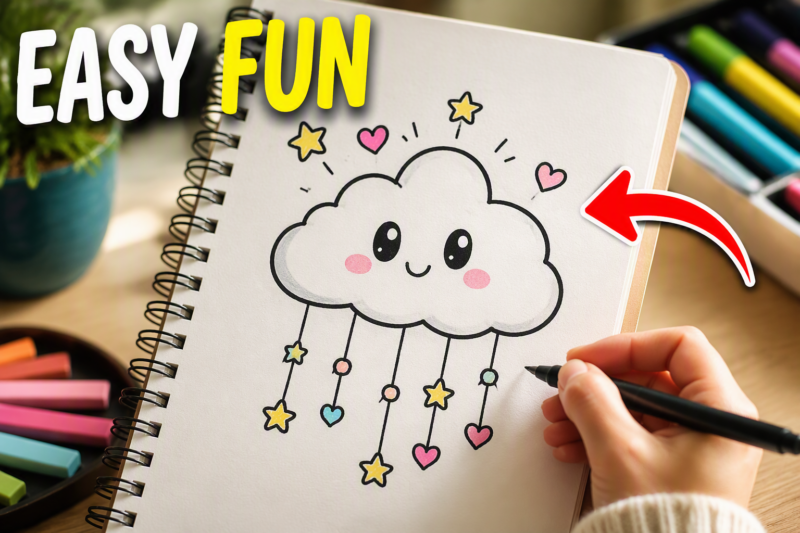
Master 11 easy whimsical drawings perfect for beginners. Stars, moons, bottles with bunny ears, jellyfish, and more—simple shapes, big personality. Start d
Want to fill your sketchbook with playful, charming drawings that actually look good, even if you’ve never taken an art class? Whimsical drawings—the kind that combine simple shapes with unexpected personality—are built for beginners. A shooting star with a sweeping tail, a glass bottle sprouting bunny ears, a jellyfish with a goofy grin. These aren’t complicated pieces. They’re quick wins that feel magical because you add one small twist to something ordinary. Whether you’re sketching before bed, prepping holiday cards, or just looking for a creative break, whimsical drawings deliver charm without pressure. Let’s explore the easiest ones to start with.
Quick Questions and Answers
Question: What are easy fun whimsical drawings for beginners?
Easy whimsical drawings for beginners are simple subjects with a playful twist, such as stars, moons, jars, bottles, polaroids, and cute animals. The best options use basic shapes, minimal perspective, and a few decorative details so the drawing stays approachable while still feeling charming. Lists in the search results range from 24 to 57-plus ideas, which suggests there are many beginner-friendly choices to pick from.
Question: Which whimsical drawings are simplest to start with?
The simplest starting points are subjects built from circles, ovals, rectangles, and triangles, such as a moon, star, heart, bottle, or house. Sources also highlight objects like a polaroid frame and a jar because their outlines are easy to recognize and decorate. These subjects are good when you want a quick win with low drawing pressure.
Question: How do you make simple drawings look whimsical?
Add one unexpected element to an ordinary object, such as bunny ears on a bottle, wings on a heart, or stars around a moon. The sources also suggest using soft pastel colors, glowing accents, metallic markers, or glitter pens to create a dreamy feel. Whimsical style usually comes from the combination of simple shape plus playful detail.
Quick Overview
Before jumping into each drawing, here’s what makes them work. Every item on this list uses a core principle: start with a recognizable base shape, then add something unexpected. A bottle becomes playful when you give it bunny ears. A teapot gains personality through a tilted lid. A heart transforms when you attach feathered wings. The materials matter less than the idea itself—pencil, pen, colored pencils, watercolors, or even markers will do. And the time commitment? Most of these take 5 to 15 minutes once you’ve sketched the outline.
1. Shooting Star
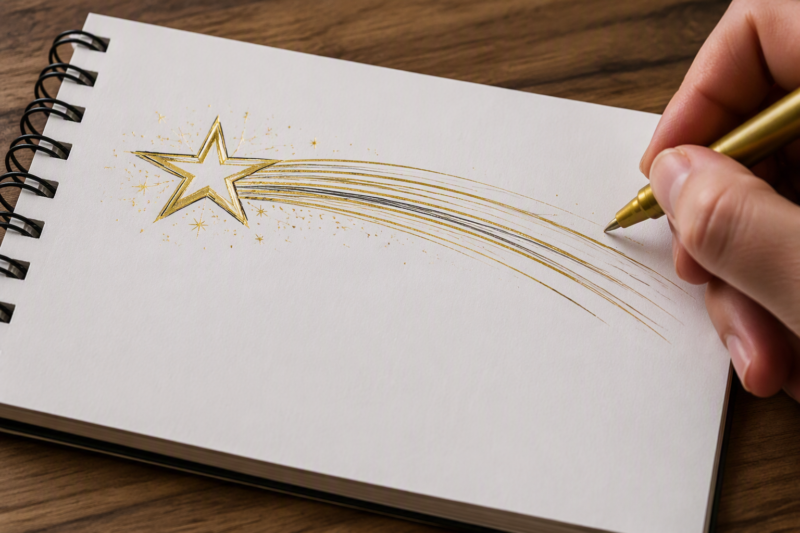
A shooting star is one of the most satisfying whimsical drawings because it combines a familiar geometric shape with instant motion. Start with a standard five-pointed star, then extend a long, sweeping tail trailing behind it. The tail is what sells the magic—make it curve slightly, as if the star is streaking across the night sky. Add two or three smaller secondary stars nearby to create a sense of depth and celestial activity around your main star.
To finish, use metallic markers or glitter pens to add a glowing effect. This small detail transforms the drawing from simple to genuinely magical. Even if the rest of your sketch is just graphite and ink, that metallic shimmer changes everything. According to Shihori Obata’s whimsical drawing guide, the shooting star ranks high on beginner lists because it teaches you how to use line direction and scale to convey movement—skills that transfer to dozens of other drawings.
2. Polaroid Frame
A polaroid frame is deceptively simple yet endlessly customizable. Sketch a square border with clean, straight lines—this is your frame. Leave the interior blank for now. Inside that square, draw a tiny landscape, a small cluster of flowers, or any whimsical object you want to tell a story about. The beauty here is that you’re not creating a complex scene; you’re creating a framed moment. A single tree, floating hearts, a crescent moon, or a tiny house all work beautifully.
The key is keeping the frame itself sharp and clean so the interior illustration pops. Add a small white space at the bottom of the polaroid—classic polaroid photos have that thick white border—and you’ve instantly nailed the format. Tidals Magazine’s collection of whimsical ideas positions the polaroid as a gateway drawing because it teaches composition in miniature. You’re learning to place objects thoughtfully within a bounded space, which builds foundational design skills.
3. Bunny-Eared Bottle
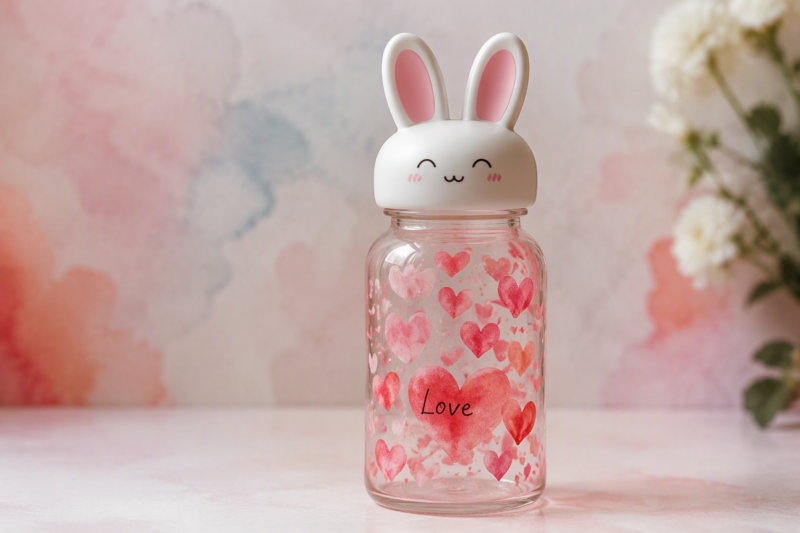
This drawing works because it takes something ordinary—a glass bottle—and gives it personality through one simple addition. Start by sketching a basic glass bottle shape with a slight curve to suggest the glass is transparent and has weight. Keep it simple: a rounded body, a narrow neck, and a simple cap or cork at the top.
Now add the twist: long, soft bunny ears emerging from the cap. Make the ears symmetrical and gently curved, as if they’re drooping slightly from the weight. Use pastel colors to fill the interior of the glass—think soft blues, pinks, or lavenders—to create a dreamy, translucent appearance. This combination of realistic bottle shape plus fantastical bunny ears is exactly what whimsical means. The contrast between the familiar and the unexpected creates instant charm.
4. Cat With a Hat
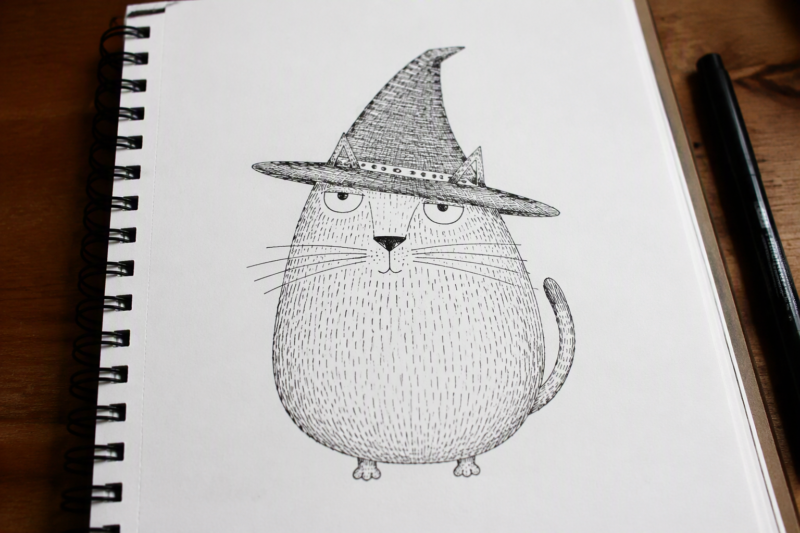
A cat wearing an oversized hat is endlessly entertaining and requires almost no advanced drawing skill. Begin with a large oval for the body—this keeps the anatomy simple and immediately recognizable. Add a small circle for the head, positioned at the top of the oval. Keep the face minimal: two dots for eyes, a small line for a nose, and perhaps a curved line for a smile.
The magic happens with the hat. Draw a wide, tilted triangular hat balanced on the cat’s head. Tilt it at an angle rather than placing it straight—this single choice adds personality and humor. Per FineBrushes’ guidance, once you’ve inked your outline, wait at least five minutes for the ink to dry completely before erasing your pencil guidelines. This prevents smudging and keeps your final drawing clean. The five-minute wait feels like nothing compared to the polished result.
5. Dream House
A dream house is pure geometric freedom. Forget realistic perspective and architectural rules. Construct the entire structure using only basic shapes: triangles for roofs, rectangles for walls and windows, circles for doorknobs. Stack them, rotate them, and overlap them however feels right. A triangle can sit at an angle. Windows can be oversized. Doors can be wonky.
The beauty of this drawing is that breaking the rules is the whole point. Add exaggerated features—windows as big as the roof, a chimney that twists and spirals, doors stacked vertically, or towers that defy gravity. Classpop’s 2026 collection of fun drawing ideas explicitly notes that dream houses can be as simple or as advanced as you like, which makes this a perfect exercise for any skill level. Beginners get a confidence boost by breaking architectural norms, while experienced artists can layer in more complex details.
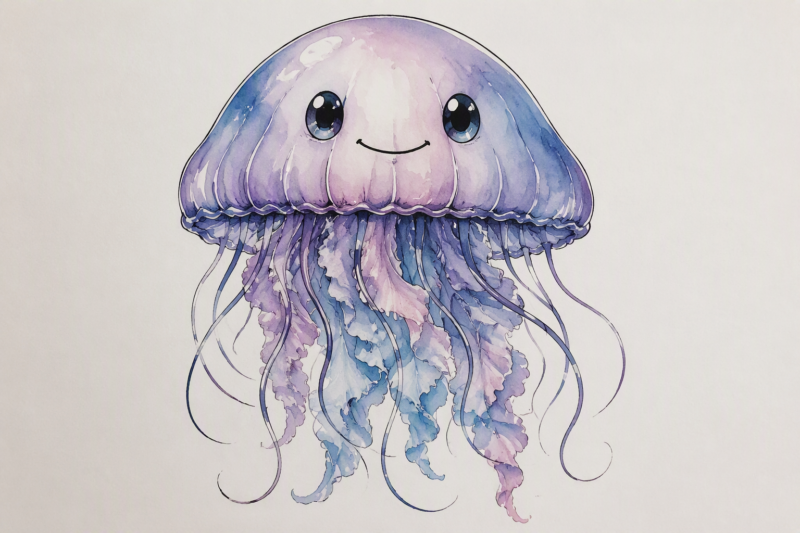
6. Smiling Jellyfish
Jellyfish are ideal for beginners because the form is forgiving. The body requires just a simple dome or bell shape—think of an upside-down umbrella. The tentacles are simply curved lines extending downward from the edges of the bell. No anatomical accuracy needed.
What makes a jellyfish whimsical is the face. Add shiny, oversized eyes—make them bigger than they should be. Draw a curved smile across the face. Use high-contrast ink lines so the eyes really pop. Add light shading at the edges of the bell with a soft pencil or watercolor to give the jellyfish a gentle, aquatic glow. According to Tidals Magazine, the smiling jellyfish is a go-to whimsical subject because the exaggerated expression immediately conveys personality and friendliness. It’s a great drawing to practice when you want an instant mood boost.
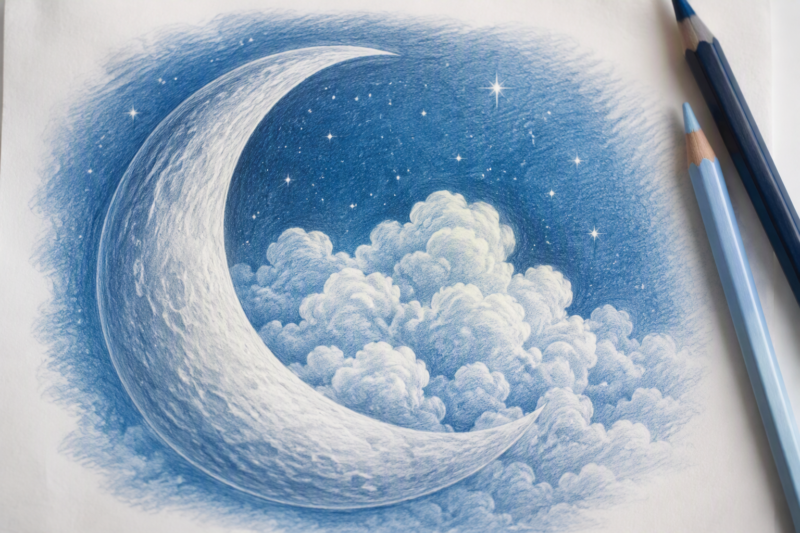
7. Crescent Moon With Clouds
Start with a crescent moon shape—think of a thin banana or a curved parenthesis. Keep the outline sharp and clean. Then add small, puffy cumulus clouds nestled into the curve of the moon, as if the clouds are cradling it. Keep the cloud edges soft and rounded, contrasting with the sharper moon outline. The interplay between the defined crescent and the softer clouds creates visual interest.
Use watercolors or light blue colored pencils to create a night-sky aesthetic around the composition. Add pale yellows, soft purples, or deep blues around and behind the shapes. This drawing is straightforward but incredibly effective for creating a dreamy, restful mood. It works beautifully in a sketchbook because it’s small enough to fit anywhere but impactful enough to draw the eye.
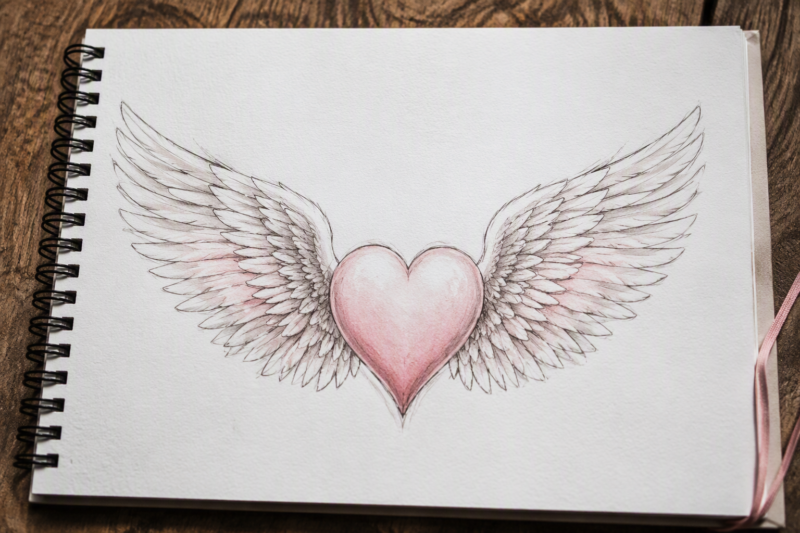
8. Heart With Wings
A heart with wings teaches symmetry and balance while delivering maximum charm. Sketch a symmetrical heart shape as your base—take your time here because a wonky heart will throw off the whole piece. Once the heart is solid, attach feathered wings to each side. Practice drawing individual feathers with delicate line work so the wings feel textured, not just solid shapes.
Apply soft pastel shading to the center of the heart to create depth and make the wings appear to lift off the page. Use warm colors like rose gold, coral, or dusty pink for the heart and softer grays or whites for the wing feathers. This drawing combines basic geometry with fine-detail work, giving you practice across different techniques. According to 12 Creative Watercolor Craft Ideas for Beginners, watercolors are particularly forgiving for this piece because soft washes blur naturally and enhance the dreamy aesthetic you’re after.
9. Decorated Teapot
A teapot is an underrated whimsical subject because it’s instantly recognizable but offers tons of room for customization. Focus on a simple rounded teapot body with a curved, elegant spout. The lid should sit on top with a small knob. Keep the proportions playful rather than realistic—maybe make the spout slightly too long or the knob disproportionately large.
Now comes the fun part: cover the surface with whimsical patterns. Polka dots, stripes, stars, swirls, tiny flowers, or abstract marks all work. Give the lid a slightly lopsided angle to enhance the hand-drawn, playful character. This doesn’t need to be perfectly symmetrical. The irregularity is what makes it charming. Add color with whatever medium you prefer—colored pencils, markers, or watercolor. The patterning teaches you that decoration and personality matter as much as accurate form.
10. Bird With a Crown
Start with a standard, recognizable bird profile, keeping the silhouette simple. A small head, a body, a tail, and a thin leg or two. Don’t overcomplicate the feather details. Draw a small, multi-pointed crown resting atop the bird’s head—imagine a simple royal crown with three to five points. Make the points sharp and regal-looking.
Focus on high-contrast ink lines to differentiate the crown from the bird’s feathers. The crown should visually pop off the page. Use bold, dark lines for the crown and slightly lighter or thinner lines for the bird body if you want the crown to be the star of the show. This drawing teaches you how simple accessories can completely transform a subject’s personality. A plain bird becomes a noble character with just the addition of a crown. It’s a great lesson in how small details drive whimsy.
11. Magical Hourglass
An hourglass provides structure and a clear concept: the passage of time, reimagined. Draw a classic hourglass shape with a narrow center that represents where sand would normally flow. But instead of sand, fill the top bulb with whimsical elements—floating stars, tiny flowers, small hearts, or even miniature moons. The bottom bulb can be left empty or partially filled.
Add subtle hatching lines on the glass to suggest reflection and depth. A few curved lines or light shading on one side of the glass will make it appear three-dimensional. This drawing combines simple geometry with imaginative content, making it fun for both sides of your brain. It also works beautifully as a standalone piece or integrated into a larger composition. The hourglass reminds us that time doesn’t have to be serious—it can be magical and playful.
Comparison Table: Choosing Your Starting Point
Drawing
Complexity
Best For
Finish Time
Materials
Shooting Star
Very Easy
Learning line direction and motion
5–8 mins
Pencil, pen, metallic markers
Polaroid Frame
Easy
Practicing composition in miniature
8–12 mins
Pencil, pen, colored pencils or markers
Bunny-Eared Bottle
Easy
Adding unexpected personality to objects
8–15 mins
Pencil, pen, pastels or colored pencils
Cat With a Hat
Very Easy
Quick confidence-building practice
5–10 mins
Pencil, pen, optional color
Dream House
Medium
Breaking rules and exploring creative freedom
10–20 mins
Pencil, pen, markers or watercolor
Smiling Jellyfish
Very Easy
Practicing expressive facial features
5–10 mins
Pencil, pen, light shading materials
Crescent Moon With Clouds
Easy
Creating dreamy, restful compositions
10–12 mins
Pencil, watercolor or colored pencils
Heart With Wings
Medium
Combining geometry with fine detail work
12–18 mins
Pencil, pen, soft pastels or watercolor
Decorated Teapot
Medium
Exploring surface patterns and personality
10–15 mins
Pencil, pen, markers or colored pencils
Bird With a Crown
Easy
Understanding how accessories change character
8–12 mins
Pencil, pen, optional color for contrast
Magical Hourglass
Medium
Blending structure with imaginative content
12–15 mins
Pencil, pen, light shading materials
Common Mistakes
The most common mistake beginners make is overthinking the pencil sketch. You don’t need it to be perfect. Light, loose pencil lines are all you need—just enough to see the basic shapes. Erase too much and you’ll waste time; sketch too dark and you’ll leave visible graphite under your ink or color.
Another frequent slip-up is rushing the ink stage. If you’re using a pen or marker, let the ink dry fully before erasing pencil marks or adding color on top. FineBrushes recommends at least five minutes, but patience here prevents smudging and keeps your work clean. Wet ink on top of wet ink also causes bleeding and muddiness.
Don’t underestimate the power of one small detail. Beginning artists often think they need to fill every inch of the drawing with patterns, shading, or color. A shooting star gains its magic from the tail, not from a dozen surrounding elements. A teapot becomes charming through surface patterns, not because every curve is perfectly shaded. Restraint often reads as sophistication.
Finally, many sketchers avoid color entirely because they’re nervous about “ruining” the drawing. But soft pastels, colored pencils, and watercolors are forgiving and can always be layered or adjusted. Color transforms a sketch into something finished and polished. Don’t skip it out of fear.
FAQ
Q: Can kids draw whimsical doodles easily?
Yes. Kid-friendly drawing ideas rely on simple shapes and limited detail, which fits children’s developing abilities perfectly. Subjects like butterflies, balloons, ice cream, stars, and jellyfish are especially accessible because they can be simplified without losing their identity. Kids often add their own unique flair to these drawings, making them even more charming. The key is choosing subjects that have recognizable silhouettes so children feel like they’re succeeding from the start.
Q: What should I draw if I want a cute sketchbook page?
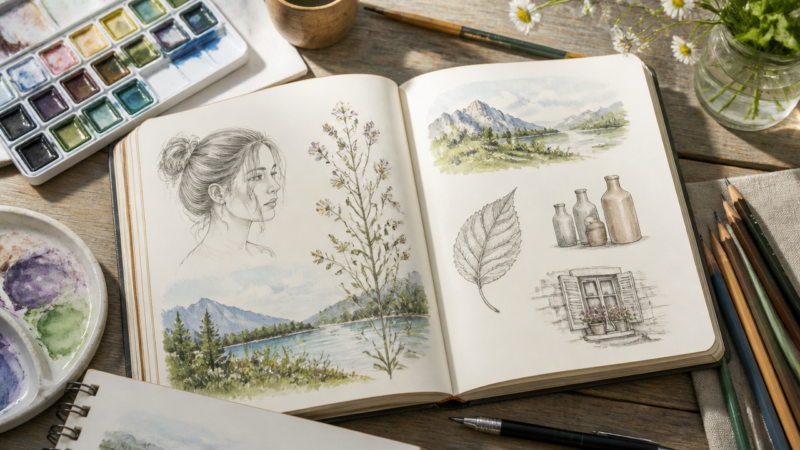
A page of small, repeating subjects works beautifully—stars, moons, flowers, jars, books, or tiny landscapes inside frames. Combine a familiar object with sparkles, clouds, hearts, or other tiny embellishments to create a cohesive page feel. Clustering three to five small drawings around the margin of a page makes it look curated without requiring a complex central composition. This approach also builds confidence because you’re repeating shapes you’ve already mastered.
Q: Are whimsical drawings better in color or black and white?
Both work, but color accents push the whimsical aesthetic significantly. Soft pastels, watercolors, colored pencils, and glowing details all enhance the dreamy quality. Ink-only drawings still feel whimsical if they use clean line work and decorative elements, but adding even one or two colors elevates the result. Color is helpful but not required—it’s a way to increase impact without increasing complexity.
Q: Why do people like drawing stars and moons?
Stars and moons are popular because they’re easy to draw, instantly recognizable, and naturally connected to dreamy or magical themes. Shooting stars, crescent moons, and night-sky motifs are go-to whimsical ideas because they already feel magical before you add anything else. They also work beautifully as background elements around other drawings, which makes them endlessly versatile. Adding stars or a moon to any composition immediately shifts the mood toward wonder.
Q: Where can I find lots of whimsical drawing ideas?
The largest idea collections available include Shihori Obata’s 35-item list, Classpop’s 51-item 2026 article, and 99designs’ 57-plus-image gallery. These sources let you compare many subjects quickly and choose ideas that match your skill level and mood. Scrolling through large collections helps you identify patterns in what feels whimsical to you—whether you’re drawn to celestial themes, cute animals, or playful objects. Starting with a curated collection also removes decision fatigue when you’re staring at a blank page.
Q: Do whimsical drawing ideas need advanced art skills?
No. Classpop explicitly notes that fun drawing ideas can be as simple or advanced as you like, and most beginner-focused lists are built around straightforward subjects. A simple silhouette with one imaginative detail is usually enough to make something feel whimsical. This accessibility makes the style perfect for people who are still learning basic drawing control. The magic comes from ideas and personality, not technical skill.
Q: What materials work best for whimsical sketching?
Start with a pencil for light sketching, a fine-liner pen for clean outlines, and colored materials like pastels, colored pencils, watercolors, or metallic markers for finishing. FineBrushes recommends waiting at least five minutes for ink to dry before erasing, which keeps the final drawing neat and prevents smudging. The best material choice depends on whether you want a sketchy doodle or a polished illustration—both approaches work beautifully for whimsical drawings.
My Experience With 11 Easy Whimsical Drawings Everyone Can Master
I started sketching whimsical drawings on a lazy Sunday morning with nothing but a pencil and old notebook, thinking it would be a quick distraction. Three hours later, I’d filled twelve pages with shooting stars, jellyfish, and absurd teapots. The real revelation wasn’t that the drawings were easy—it’s that they feel easy. No pressure to get anatomy perfect, no anxiety about proportions. A bunny-eared bottle doesn’t need to look realistic; it needs to make you smile.
The five-minute ink-drying rule saved my work more times than I can count. I was impatient at first, wanted to erase and color immediately. Then I ruined a decent jellyfish by smudging wet ink everywhere. After that, I set a phone timer. Sounds trivial, but that one practice changed my finished product from sketchy to polished.
What surprised me most is how much personality emerges from tiny choices. A teapot lid tilted two degrees to the left, a cat hat angled slightly wrong—these “mistakes” are what make the drawings feel alive. That’s the real skill here: knowing when imperfection is actually the point. Do you have a favorite whimsical drawing from the list, or is there a subject you’ve been wanting to sketch?
A Teacher with 5 years of experience. Our Expertise, is reliable to meet your full Academic development needs . Worked on many crafts and construction projects offering services from design to development to deployment over the years. You will find many of my works in my business portfolio on request.