What separates a stressful face painting experience from a genuinely fun one? The right easy face paint ideas, of course. Whether you are gearing up for a Halloween party, a birthday celebration, or just a rainy afternoon at home, having a few simple designs in your back pocket changes everything. These are not complicated art projects. They are beginner-friendly, quick to execute, and designed to make both the painter and the painted kid smile. I have curated seven ideas that require minimal tools, build on basic shapes, and can be finished in under one minute — because nobody wants to spend half an hour on one cheek.
Quick Questions and Answers
Question: Why are easy face paint ideas good for beginners?
Answer: Easy face paint ideas work well for beginners because they rely on simple shapes and minimal tools, delivering fast results without advanced skills. Designs like unicorns, butterflies, or cats only need a couple of brushes and a few colors, which makes them approachable for kids and novice painters looking to build confidence and have fun.
Question: Can kids do easy face paint designs safely?
Answer: Yes, kids can paint easy designs safely when they use non-toxic, water-based face paints labeled for children. Parents should check for skin allergies, avoid the eye area, and use clean brushes. Simple designs like stars, flowers, or animal faces take under five minutes and keep kids occupied without risk.
Question: Do easy face paint ideas need special tools?
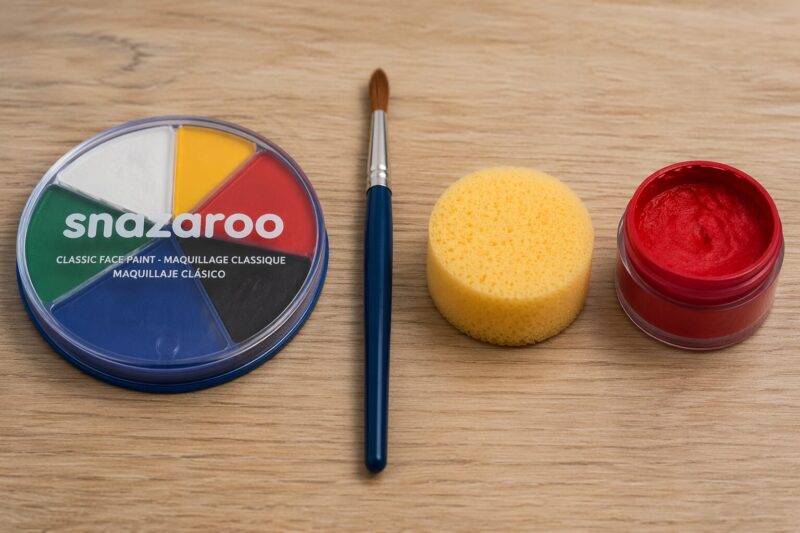
Answer: Not at all. Most easy ideas only need a sponge, a couple of brushes, and water-based face paint. Stencils can help but are not required. Designs like butterflies or unicorns use household items and standard paints, keeping the whole setup affordable and accessible for beginners.
Key Takeaways
Stick to designs that can be done in under a minute — they keep kids engaged and prevent frustration.
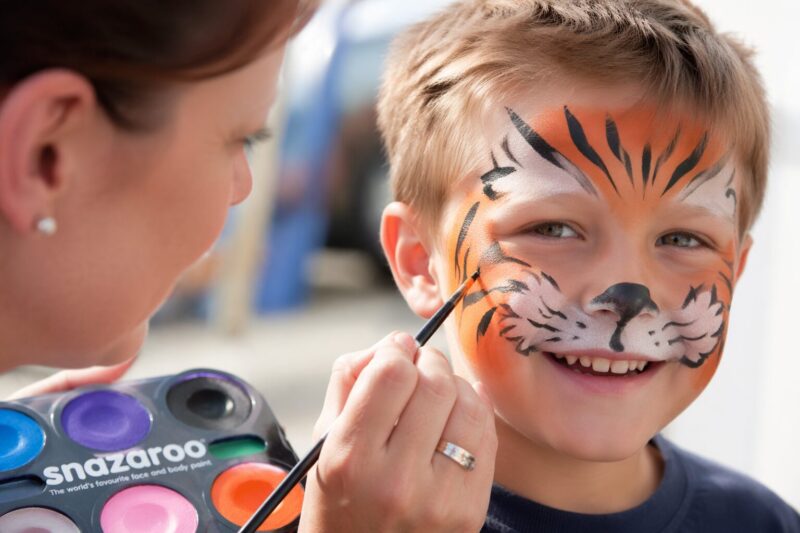
Use professional-grade, water-based face paints such as Snazaroo to minimize skin irritation and make cleanup easy.
Master a few core techniques like the teardrop stroke and symmetrical dots to unlock dozens of designs.
Practice on paper or a volunteer before the event to build speed and confidence.
Buy paint bundles (sets of 3–10 items) to save 10–20% when stocking up for parties or events.
Selection Criteria for Stress-Free Face Painting
Not every face paint design belongs in a beginner’s lineup. The best easy face paint ideas share a few traits. First, they are achievable in under one minute. Long, complex designs test a child’s patience and your steady hand. Second, they use professional-grade, wash-off water-based paints. Cheap paints often leave rashes or refuse to blend, as parents on forums like NellieBellie have pointed out repeatedly. Third, categorize designs by difficulty. Start with simple spots and stripes before moving to symmetrical butterflies or layered unicorns. Finally, look for designs built on basic graphic design principles — symmetrical lines, simple geometric shapes, and repeating patterns. These fundamentals make the painting predictable and forgiving.
8 Simple Design Ideas for Beginners
1. Cat Face
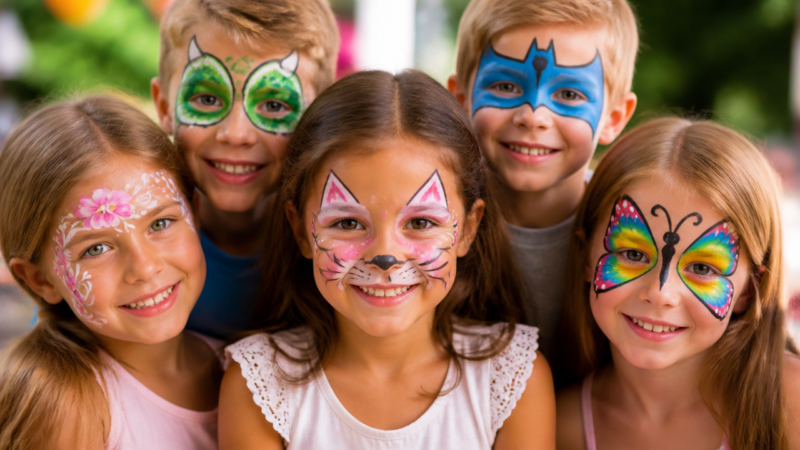
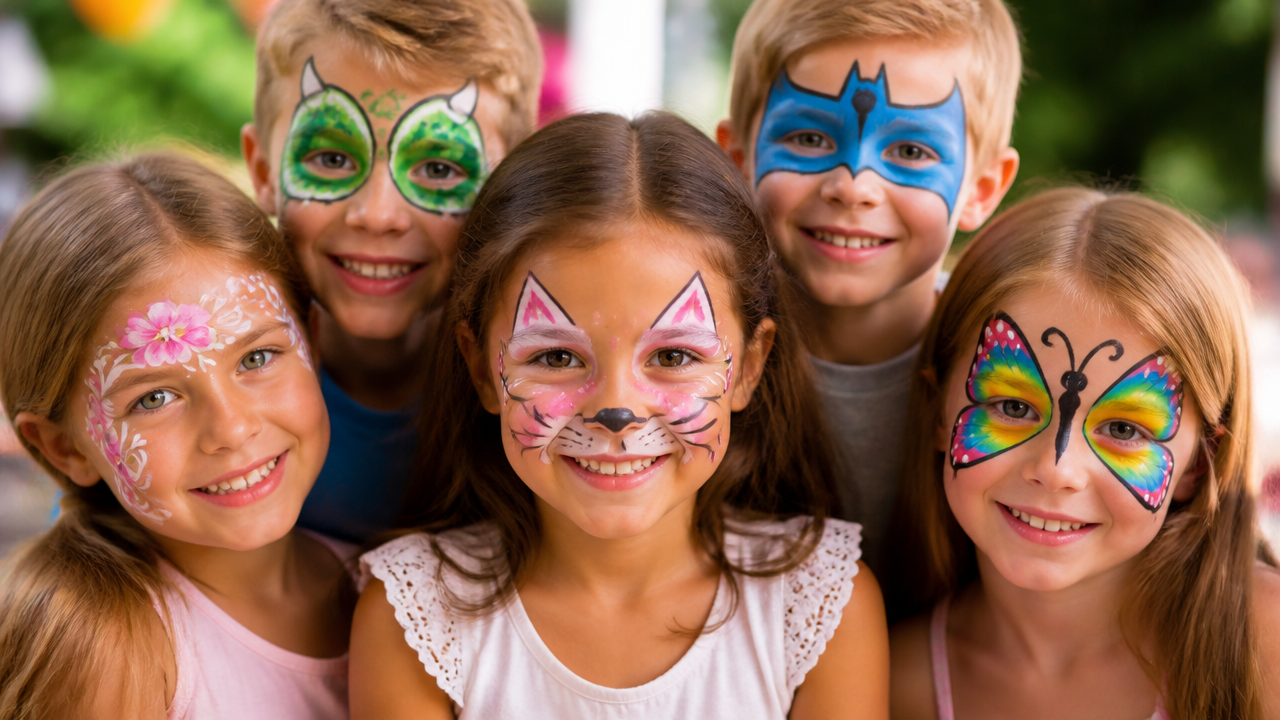
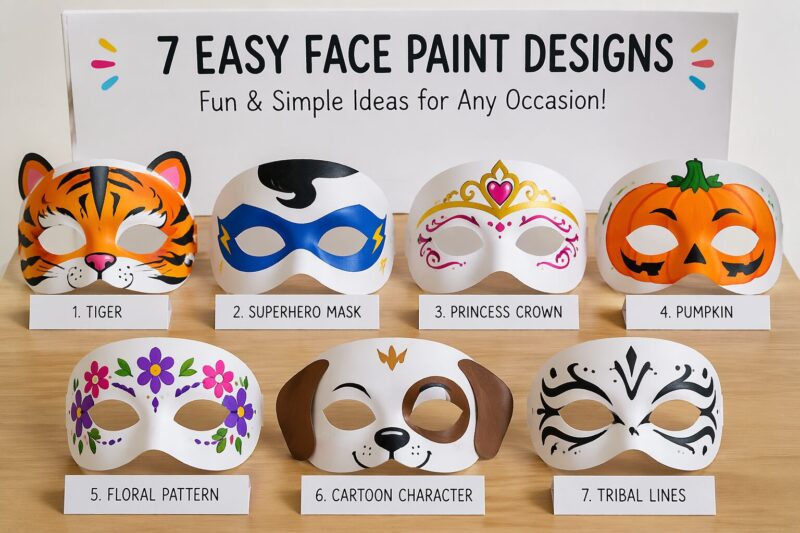
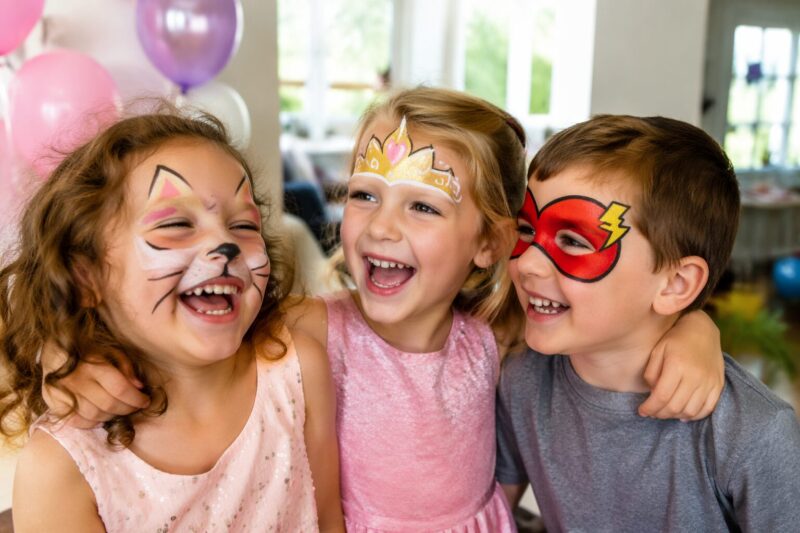
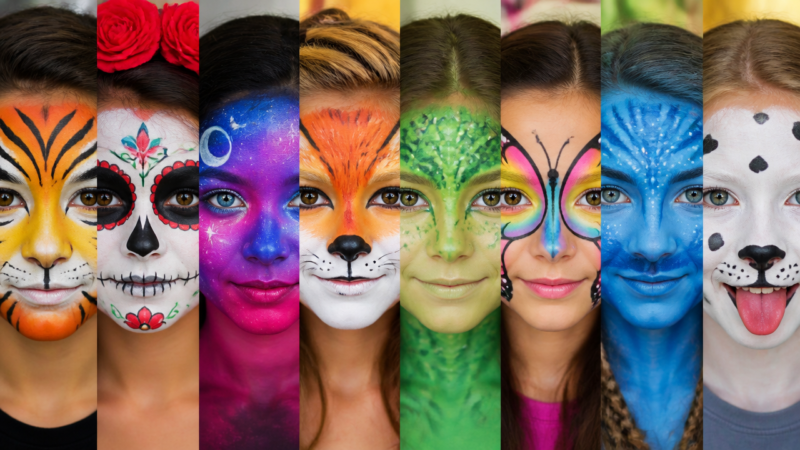
The cat face is the gold standard for beginner face painters. You need a sponge, a small brush, and three colors: white, black, and your chosen base shade. Apply a white base over the nose and upper lip area. Use black to draw a triangular nose at the tip of the nose, then dots on the upper lip for whisker spots. Add three thin whisker lines on each cheek. Finish with a black outline around the white base to shape the face. Total time: 45 seconds to 1 minute. Best for: kids who want a recognizable animal look without sitting still for long. One study from the American Academy of Dermatology notes that water-based face paints are the safest option for children’s sensitive skin.
2. Butterfly
Butterflies look complicated but rely on symmetry and the teardrop brush stroke. Start by applying a base color around one eye, extending outward to the temple. Load a medium brush with a contrasting color and press down, dragging slightly to create a teardrop shape for each wing. Repeat on the other side of the face. Add a thin black outline around the wing edges for definition. A dot of glitter or a small circle in the center finishes it. Time: about 1 minute once you get the teardrop stroke down. This design works well for kids who love princesses and fairies. According to Snazaroo’s face paint guide, the teardrop technique is the most versatile stroke for beginners.
3. Superhero Mask
Superhero masks hide many mistakes. You are essentially painting a band of color across the upper half of the face, so symmetry errors are less obvious. Choose the child’s favorite hero color — red, blue, black. Use a sponge to apply a wide stripe from temple to temple over the eyes. Let the stripe follow the natural curve of the brow bone. Add a black outline along the top and bottom edges. A small star or lightning bolt on the forehead adds personality. Time: 30–45 seconds. Best for: kids who cannot agree on an animal or princess and want to feel powerful.
4. Princess Crown
A princess crown is one of the easiest designs to execute. Use a sponge to apply a yellow or gold base on the forehead, roughly 2 inches wide and pointing upward. With a small brush and white paint, draw a series of connected V shapes along the top edge to form the crown points. Add dots of any color — pink, blue, purple — between each point for jewels. A few small sparkles near the crown give the look some pop. Time: 30–40 seconds. Best for: little ones who want to feel regal without a full-face coverage.
5. Tiger
The tiger is a simple animal design that uses the same placement as the cat but with more dramatic stripes. Paint a white base over the nose, upper lip, and cheeks. Use orange to cover the rest of the face, leaving the white area visible. Add black stripes: a nose triangle on the tip of the nose, whisker dots, and three bold stripes on each cheek that curve outward. Add a stripe down the center of the forehead. Time: 1 minute. This design works particularly well for groups because the orange base hides small imperfections.
6. Unicorn Horn
A unicorn horn on the forehead gets huge reactions with very little effort. Start by painting a white triangle pointing upward between the eyebrows. Fill it with a gradient: pink at the base, purple in the middle, blue at the tip. Use a thin brush to outline the horn in white or silver. Add a few small stars or sparkles around the horn. That is it. Time: 30–45 seconds. Best for: kids who want the unicorn look but do not want their whole face covered. Pair it with a simple rainbow cheek for extra effect.
7. Floral Cheek Art
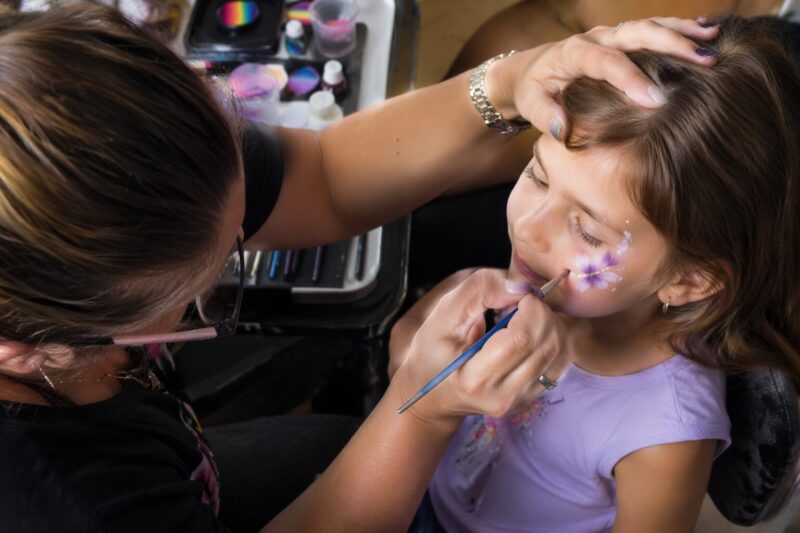
Floral designs use only one repeated brush stroke — the teardrop. Choose any color flower. Paint a small dot in the center of the cheek. Around it, paint five teardrops radiating outward. Each teardrop starts from the center dot, presses down, and drags outward. Use green for a stem and leaf if you want. Add a small white dot in the center of the flower for definition. Time: 30 seconds per flower. You can paint two or three flowers in under 2 minutes. Best for: girls and boys who want something pretty without an animal or character.
8. Pumpkin (Seasonal Favorite)
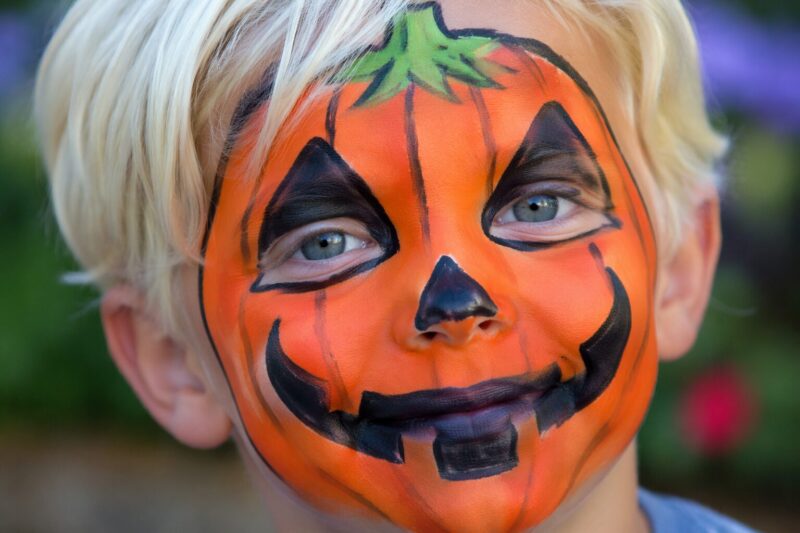
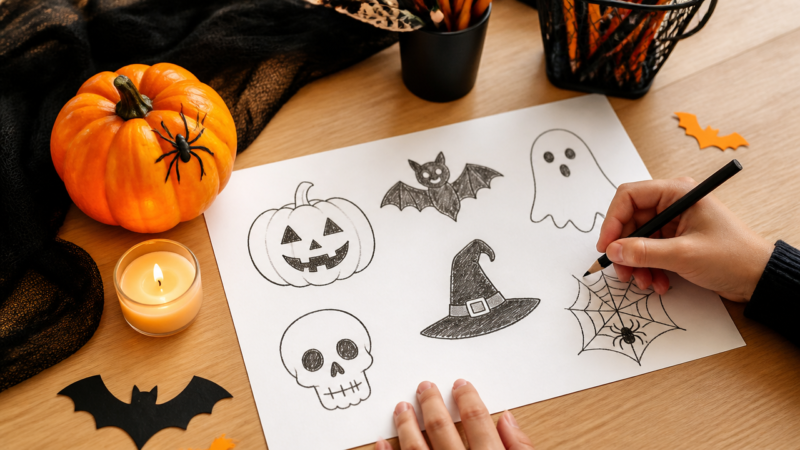
A pumpkin design works for Halloween and autumn events. Use a sponge to apply orange paint on one cheek or the forehead. The shape is just a circle or oval. Use a small brush and black paint to draw vertical curved lines from top to bottom, dividing the pumpkin into segments. Add a small green stem at the top. That is the entire design. Time: 20–30 seconds. You can also paint a white ghost or black bat using the same logic: a simple shape with a few defining details.
Comparison of Tool and Paint Types
Tool/Paint Type
Best Use
Pros
Cons
Snazaroo water-based paint
Full-face designs, sensitive skin
Washable, low allergy risk, vibrant colors
Can dry out if left open
Supercheap craft paint
Small details, quick tests
Inexpensive, widely available
Likely to cause rashes, hard to blend
Sponges
Base color application, large areas
Fast coverage, even layer, child-friendly
Absorbs paint, needs regular replacing
Synthetic brushes
Fine details, outlines, teardrops
Precise strokes, easy to clean
Requires practice for steady lines
Stencils
Stars, crowns, repeating patterns
Foolproof symmetry, quick results
Limits creativity, can smudge if wet
According to bulk buying guides from Snazaroo, purchasing sets of 3 to 10 items saves 10% to 20% compared to buying individual tubes. This matters when you are painting a birthday party or school event. Sponges are your best friend for speed. Brushes are for precision. Stencils are useful training wheels until you are comfortable freehanding.
Who These Designs Are Best For
These easy face paint ideas serve three types of people. Nervous parents planning a birthday party need designs that deliver reliable results under pressure. A cat face or unicorn horn does not require artistic talent — just a steady sponge and a couple of brush strokes. First-time event painters working a school fair or Halloween party need low-effort designs that keep the queue moving. Spending more than 3 minutes per child creates a bottleneck. Quick-turnover artists who work public events value designs that can be done in under 60 seconds. A superhero mask or pumpkin cheek fits that window perfectly.
Expert Advice for Face Painting Success
Invest in high-quality paint first. Cheap alternatives often leave rashes or refuse to blend, which NellieBellie’s face painting tutorials emphasize repeatedly. Snazaroo and similar water-based professional brands are the standard for a reason. Practice before the event. Use a paper practice board or a willing family member to test your brush stroke speed. Mastering the teardrop technique alone unlocks about 80% of floral and animal designs, according to professional face painters. Sanitary practices matter too. Keep two separate water cups — one for rinsing brushes, one for activating new paint. Use a fresh sponge for every child to prevent cross-contamination.
Common Mistakes
The biggest mistake beginners make is using too much paint. A thin layer covers well, dries faster, and does not crack. Another common error is skipping practice. Watching a YouTube tutorial once and assuming you can execute it live is risky. Time yourself. If the design takes longer than planned under ideal conditions, remove it from your lineup. Finally, do not underestimate the importance of clean tools. A brush with dry paint residue produces jagged lines and muddy colors.
FAQ
Q: Are easy face paint designs quick to finish?
Yes, easy designs are typically quick to finish — most take under 5 minutes, and many take under 1 minute. Tutorials from face painting schools show designs like cats, butterflies, and unicorns completed in under 60 seconds per face. Simple shapes, bold colors, and minimal detailing allow fast results for parties, events, or last-minute fun.
Q: How do I start painting easy face designs on cheeks?
Start by cleaning the cheek, then apply a base color with a sponge. Use a brush to draw simple outlines like hearts, stars, or animal shapes. Fill with bright colors, add details like dots or lines, and let the paint dry. Cheek designs work well for beginners because they cover a small area and require minimal precision.
Q: Will easy face paint work for Halloween parties?
Yes, easy face paint works great for Halloween parties. Simple designs like bats, ghosts, and pumpkins take only minutes, need few tools, and appeal to all ages. They keep kids engaged without long setup times, making them ideal for last-minute party prep or group activities where speed matters.
Q: When is the best time to practice easy face paint?
Practice before events like birthdays, school parties, or summer camps. Start with simple designs on paper or a mirror to build confidence. Practice in a well-lit area with all supplies ready, and try on a family member or volunteer to refine your technique. A dry run helps you spot problems before the real event.
Q: What are the easiest face paint designs for kids?
The easiest designs include unicorns, butterflies, cats, and stars. These use simple shapes and bold colors that require only basic brushes and a few paints. Tutorials show they can be completed in under 5 minutes, which keeps kids happy and entertained while building the painter’s confidence.
Q: Which brush size is best for easy face painting?
A medium brush about 1/4 inch wide works best for both outlining and filling shapes. For smaller details like dots or thin lines, use a small round brush. Sponges help apply base colors quickly. Most beginner kits include these sizes, making them versatile for simple designs like animals or flowers.
Q: Who can learn easy face paint ideas quickly?
Anyone can learn these ideas quickly — parents, teachers, party hosts, and kids. Simple designs like unicorns, butterflies, and cats use only basic shapes and colors, requiring no prior experience. A few practice runs and online tutorials let even complete beginners create fun, confident results in minutes.
My Experience With Face Paint Ideas Easy
I have painted more cat noses than I care to count, and I still mess up the symmetry sometimes. That is fine. Kids do not care if the left whisker is half an inch longer than the right. They care that they look like a tiger. My best face painting advice is simple: stop overthinking. Pick two designs. Practice them three times each on paper. Pack your kit with quality water-based paint, a sponge, and one small brush. That is enough. Every time I have tried to get fancy — adding layers, mixing colors, attempting a detailed butterfly — I have regretted it. Kids get restless. The queue builds. Stick to the basics and you will be the hero of the party. What easy face paint idea saved the day for you?
A Teacher with 5 years of experience. Our Expertise, is reliable to meet your full Academic development needs . Worked on many crafts and construction projects offering services from design to development to deployment over the years. You will find many of my works in my business portfolio on request.