Want to create Halloween art that actually looks good without years of training? Easy Halloween drawings let you skip the complicated anatomy lessons and jump straight to the fun part—making something festive in minutes. Whether you’re decorating for October parties, making invitations, or just need a creative break, these beginner-friendly Halloween drawing ideas work for kids and adults alike. The secret is that most spooky subjects are built from circles, triangles, and simple curves. Ready to draw something seasonal that doesn’t require special tools or talent?
Quick Questions and Answers
Question: Why are easy Halloween drawings good for beginners?
Easy Halloween drawings are ideal for beginners because they use simple shapes like circles, ovals, and triangles to create recognizable icons like ghosts and pumpkins. Techniques such as starting with a plus sign for spiderwebs or an upside-down U for ghosts reduce the need for complex artistic skills. These doodles help build confidence while allowing anyone to create festive art quickly without worrying about perfection.
Question: Can kids draw Halloween doodles without help?
Yes, kids can easily draw Halloween doodles without help by following step-by-step guides that break images into basic shapes. Activities like drawing a ghost from a teardrop or a pumpkin from a circle are designed for young artists. Classroom ideas include drawing spooky gravestones, mummies, or skeletons doing yoga, which encourage creativity while remaining simple enough for children to manage independently.
Question: Do easy Halloween drawings need special tools?
Easy Halloween drawings do not require special tools; a pencil, paper, and basic markers or crayons work perfectly. Artists often start with pencil to erase mistakes, like removing the line where a ghost’s arms join the body. Adding color, glitter, or sequins can enhance the look, but simple black ink or colored pencils are sufficient for classic spooky doodles like bats or candy corn.
Essential Selection Criteria for Your Halloween Art
Choosing the right drawing to start with depends on what you’re making it for and how much time you have. Match the complexity to your experience: if you’re completely new to drawing, grab a pencil and start with silhouettes and simple characters. If you’ve drawn before, you can tackle architectural scenes or textured elements like tree bark and fabric folds.
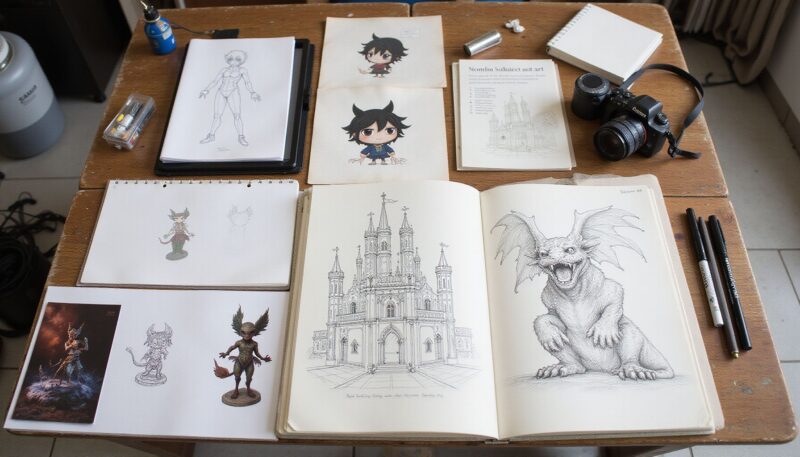
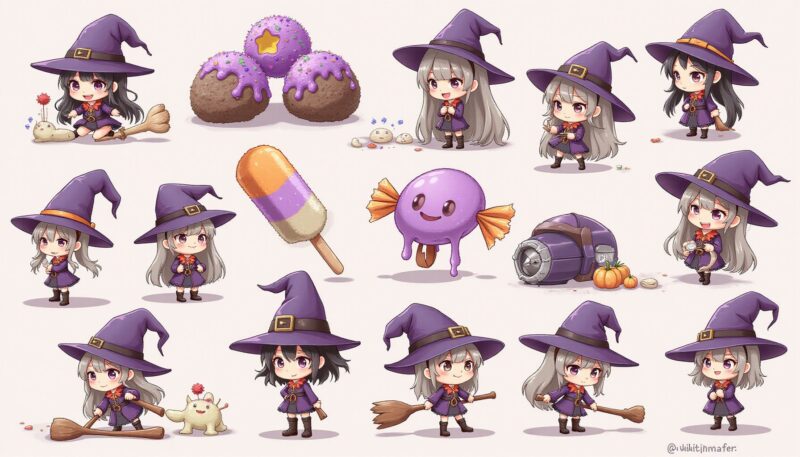
Think about adaptability too. The beauty of Halloween subjects is that they work in cartoon style, realistic style, or anywhere in between. A witch hat, for example, becomes creepy on a realistic character or adorable on a chibi figure—same subject, totally different vibe.
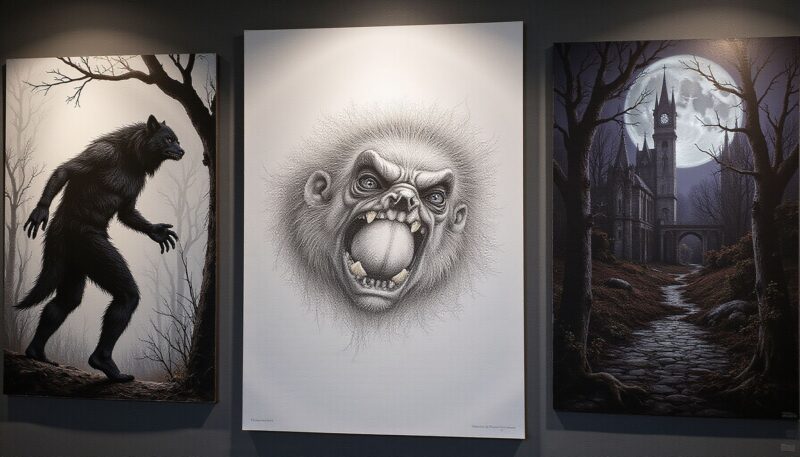
Consider the end result as well. Are you making a standalone piece, a stamp for greeting cards, a social media post, or a poster? Simple cartoon drawings work best for stickers and digital assets. Realistic studies of gargoyles or werewolves look great blown up as prints. Quick thematic icons—like a ghost hiding behind a moon—perfect a bulletin board or a handwritten invitation.
Beginner-Friendly Spooky Icons
The Classic Ghost
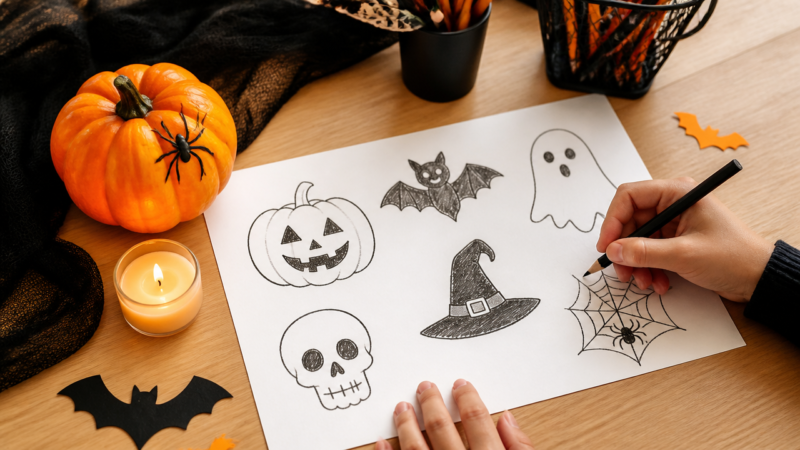
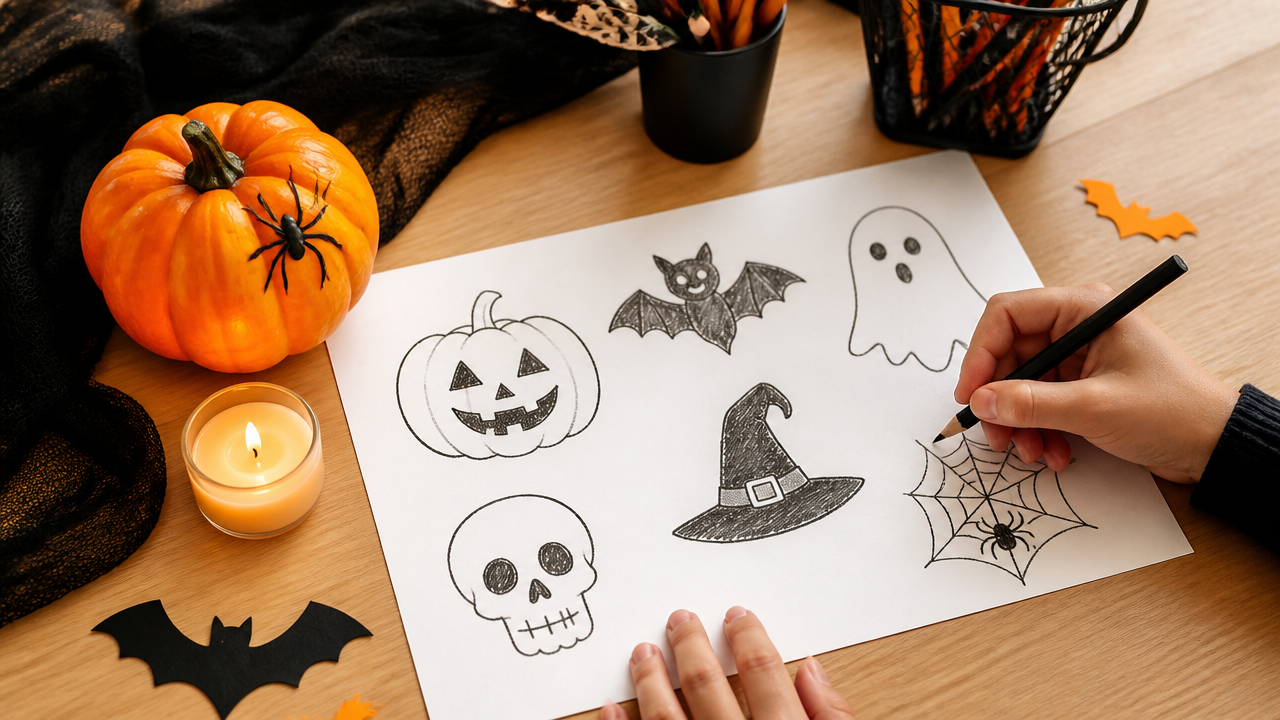
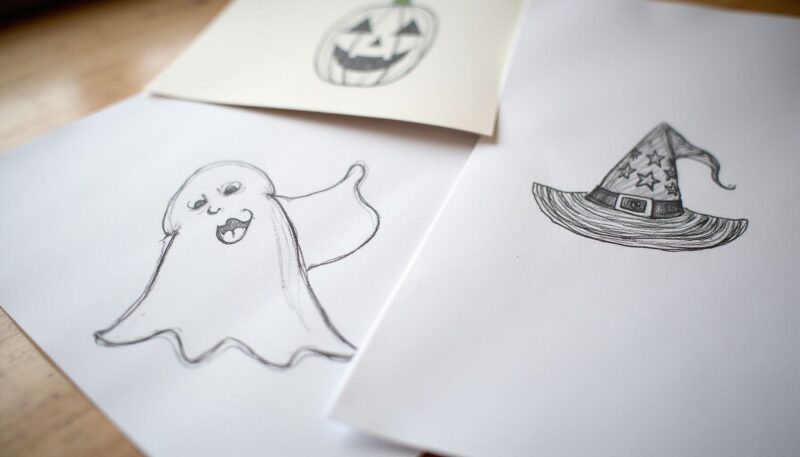
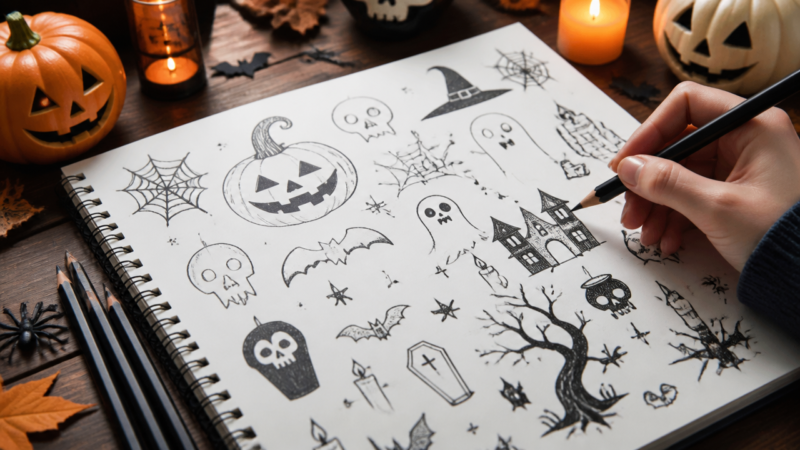
A ghost is arguably the easiest Halloween drawing on the planet. Draw a white floating sheet with wavy bottom edges instead of a straight line. Add big oval eyes and a small O-shaped mouth, and you’ve got personality instantly. The wavy edges matter because they suggest movement and fabric draping—they make it look intentional, not rushed.
The real trick is the eyes. Round dots read as blank. Oval eyes tilted slightly inward look friendlier. Eyes tilted the other way look sinister. Eyes crossed make it goofy. You control the entire mood just by changing the eyeballs. Try sketching three versions with different expressions on the same sheet to see what I mean.
The Beginner’s Pumpkin
Start with a series of vertical arcs—think of parentheses stacked on top of each other—to build the pumpkin body. Once you’ve got the ribbed shape, carve out basic triangular eyes and a jagged smile for the jack-o-lantern face. Fill in the triangles with black marker or colored pencil, and you’re done.
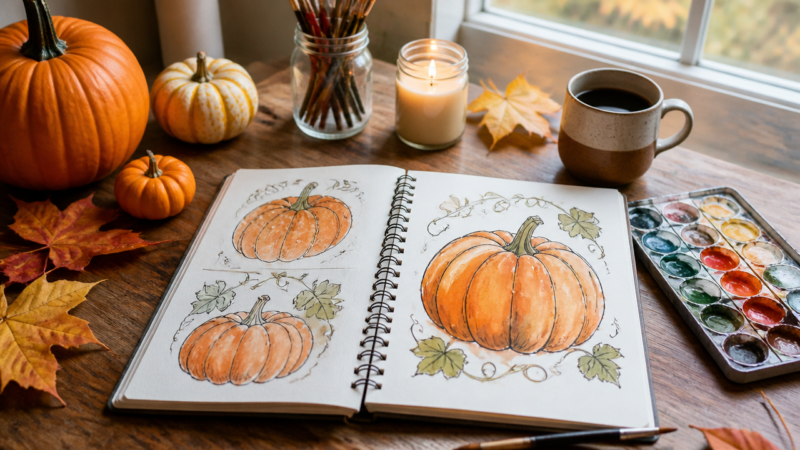
The stem is just a small rectangle on top. Some artists add a curly vine or two coming off the side for extra flair, but it’s optional. If you want to get fancy, shade the left side of each rib with a darker orange to suggest rounded depth. Even without shading, a simple pumpkin reads clearly and looks Halloween-ready.
Seasonal Witch Hats
Here’s a cheat code: a crooked hat with stars or moons decorating it instantly turns any drawing into Halloween content. Draw a wide brim (like a thick oval), then add a tall pointed crown on top with a slight lean. The lean is important—it looks more playful than a perfectly straight hat.
This technique works on literally anything. Draw a cat and add a witch hat? Now it’s a spooky cat. Draw a pear and add a witch hat? Spooky pear. It’s the fastest way to Halloween-ify a drawing when you’re running short on ideas or time. The stars and moons on the hat can be tiny doodles or simple filled shapes.
Cute and Whimsical Drawing Concepts
Chibi-Style Witches
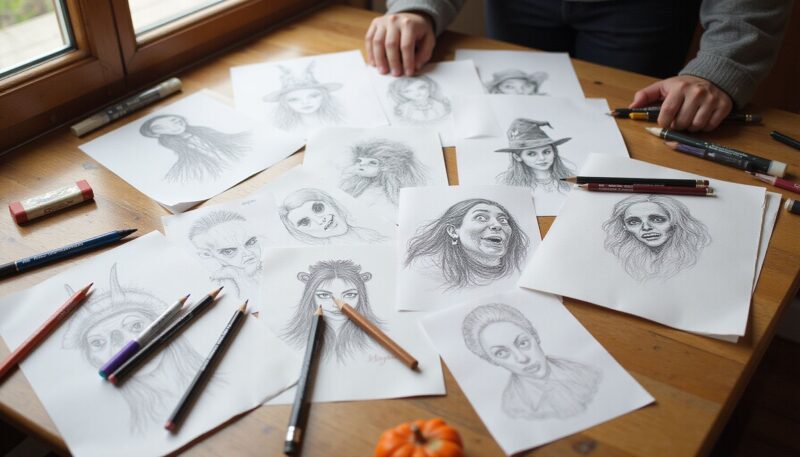
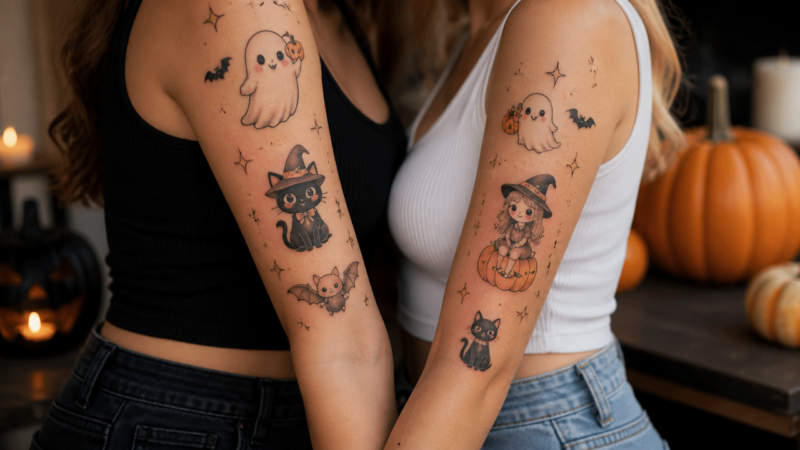
Chibi style makes everything cuter, even witches. Draw a tiny figure with an oversized hat, big round eyes, and a petite body. The proportions are exaggerated—the head takes up almost half the figure’s height, and the hat is comically large compared to the face. This style works beautifully because the big hat and small body read as endearing rather than creepy.
You can also focus just on the head and the witch’s hat, which makes a perfect little stamp for stickers or small illustrations. Add rosy cheeks, a tiny smile, and maybe a wand, and you’ve got something that’s spooky and sweet at the same time. Chibi designs are ideal if you’re planning to turn your drawings into digital assets or printed stickers.
Halloween Popsicles
A modern twist that’s surprisingly fun to sketch: draw popsicles with dripping edges and Halloween colors—orange and black, or deep purple with white drips. The melting texture is just wavy, drooping lines hanging off the main popsicle shape. Add a stick underneath and you’re set.
What makes this idea work is the high contrast. The bright popsicle pop against the dark drips creates visual interest without any complicated shading. You can draw a whole pack of them in different Halloween flavors (black licorice, witch’s brew, zombie green), and they’re fun to color in.
The Lunar Ghost
A minimalist concept that looks more sophisticated than it actually is: draw a ghost silhouette peering from behind a crescent moon. The ghost is basically a teardrop shape with two small ovals for eyes. The moon is a curved crescent arc. Layer them so part of the ghost hides behind the moon, creating depth.
This one works beautifully in black and white or with a night sky background (dark blue or black with tiny white stars scattered around). The simplicity is its strength—it feels intentional and artistic rather than like you ran out of ideas.
Complex Scenes for Artistic Growth
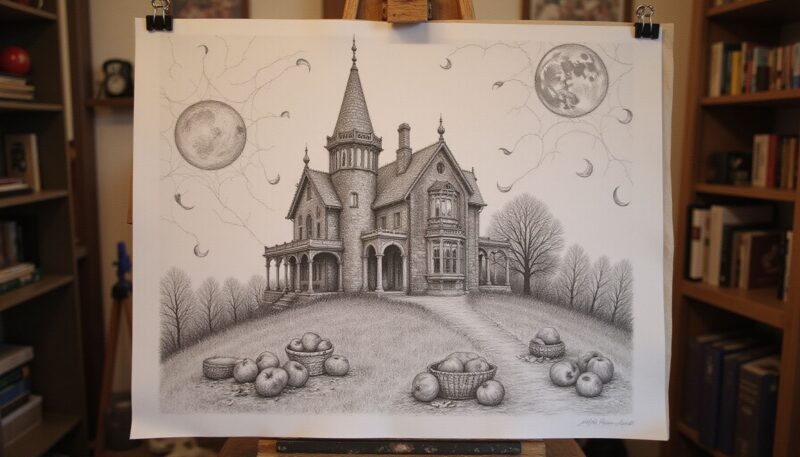
The Gothic Mansion
A multi-element composition that looks intimidating but breaks down into manageable pieces: a haunted house complete with ghosts, bats, cobwebs, and a crescent moon. Start with the basic house shape—a rectangle with a peaked roof and a few rectangular windows.
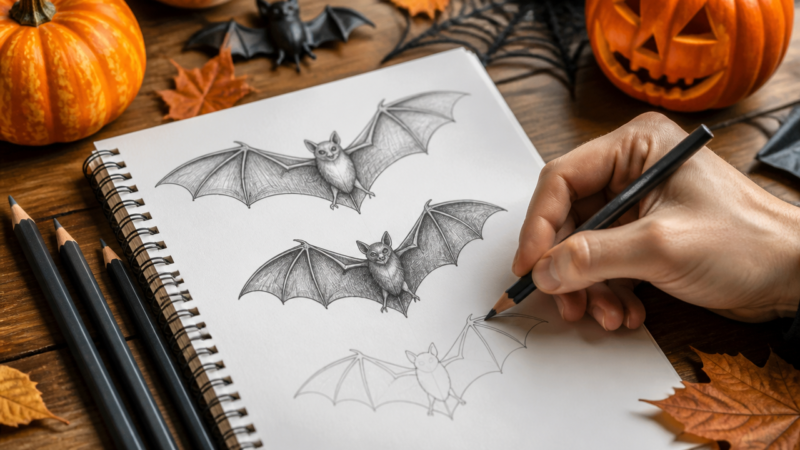
From there, add architectural details like a crooked door, shutters, and a wraparound porch. Sketch in bats flying around using simple wing shapes (two curved lines meeting at a point). Drape cobwebs in the corners using the classic plus sign foundation: draw a plus, then connect the V-shaped spaces with curving lines, expanding outward in layers. Throw in a ghost or two peeking from windows, and finish with a crescent moon in the background.
The beauty of this composition is that each element—the house, the bats, the webs, the moon—is simple on its own. Together, they create something that looks complex and haunted. This project teaches you how to layer elements and use negative space.
Orchard Harvest
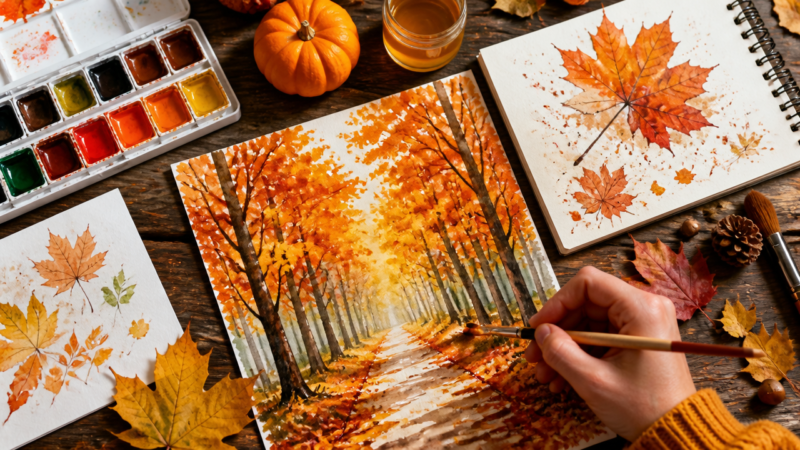
For artists ready to tackle light and texture, an orchard scene ties Halloween back to its harvest roots. Between twisted branches, add baskets of apples and autumn colors—red, gold, orange. Apples lay strewn at the base of each tree and in boxes or barrels lining grass between rows of trees.
The challenge here is light play through branches and shading to show rounded fruit. You’ll practice different pencil pressures to create shadows on the apples and depth in the orchard rows. This isn’t beginner work, but it’s a natural next step once you’ve mastered basic shapes. The harvest theme keeps it seasonal without leaning on typical spooky tropes.
Realistic Creatures
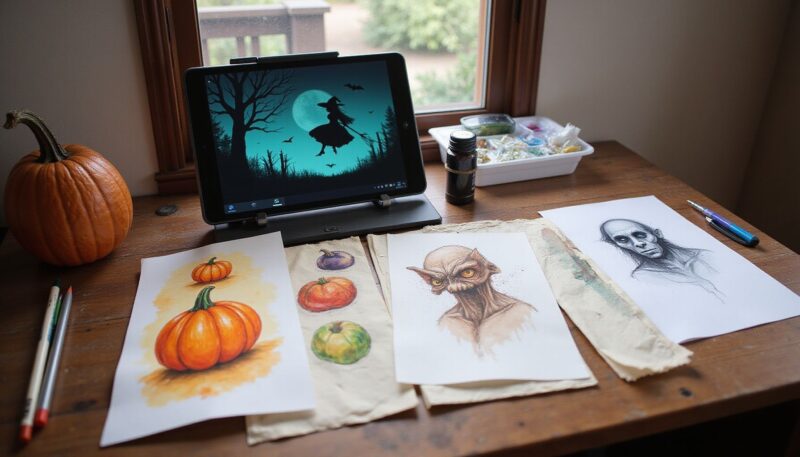
Advanced studies of werewolves and weathered gargoyles push your pencil shading and anatomy skills. These aren’t cartoons—they’re serious drawing practice with realistic proportions, muscle definition, and weathering effects. Gargoyles especially let you explore texture: cracked stone, worn edges, moss growth.
Werewolves demand understanding of fur, facial structure, and pose. You’re not aiming for perfect photorealism, just enough detail and shading to make the subject feel three-dimensional and tactile. Once finished, realistic creatures work beautifully as posters or digital invitations. They read as thoughtful, skillful art rather than quick doodles.
Comparison: Choosing Your Halloween Medium
Drawing Style
Best For
Complexity Level
Primary Use
Chibi or Cartoon
Kids and novices
Low
Cards, stickers, stamps
Realistic
Advanced artists
High
Posters, prints, digital assets
Thematic icons
Quick projects
Low
Social media art, invitations
Architectural (mansions, scenes)
Intermediate artists
Medium
Display pieces, decorative art
Textured studies (orchards, creatures)
Experienced drawers
High
Portfolio pieces, professional use
The table shows why starter artists should gravitate toward cartoon and icon styles—low complexity, high impact. Once you’re comfortable with basic proportions and line work, move into realistic or architectural pieces. Textured studies are the final frontier, reserved for when you want to spend serious time on a single piece.
Expert Tips for Effortless Halloween Art
Start with pencil. Always. Even if you’re planning a black ink final piece, sketch in pencil first so you can erase mistakes without destroying your paper. This is especially true for details like the line where a ghost’s arms join its body—much easier to fix in pencil than to cover with white ink.
Establish atmosphere before adding detail. Use harvest colors—red, gold, orange, deep purple, black—early. A background wash of these colors anchors your subject in the season immediately. Even a simple pencil drawing looks seasonal when surrounded by Halloween colors.
Step-by-step guides from instructional sites can accelerate your learning if you get stuck. Photo references are your friend too—if you’re drawing a specific pose or texture, find a photo and use it.
Use “the masking trick” when a subject feels too difficult. If skeletons intimidate you, draw a simpler character hiding behind a sheet or standing in shadow where detail isn’t visible. You get the composition and composition without wrestling with anatomy. This works for any complex subject—place it partially out of frame or partially obscured.
Leverage digital tools like Adobe Express for rapid editing and composition testing if you’re making these for digital use. You can sketch by hand, photograph it, upload it, and adjust colors and cropping without redrawing. No experience required—the platform walks you through it.
Practice shading gradients on scrap paper before adding them to your final piece. A gradient (light to dark) gives drawings dimension without needing anatomically perfect proportions. Shadows also tell a story: they suggest time of day, weather, and mood.
Common Mistakes
Over-complicating simple shapes. A ghost doesn’t need perfect symmetry or anatomically correct proportions. Wonky wavy edges actually make it look more ghostlike. Embrace imperfection.
Skipping the pencil stage. Jumping straight to ink or marker means you’re stuck with every mistake. Pencil is forgiving. Use it.
Forgetting to leave white space. Beginners often shade or color every inch of a drawing. Leaving some areas white or blank actually makes the shaded areas pop more. Contrast is your friend.
Drawing the same size everything. If all your elements are the same size, the composition feels flat. Make some pumpkins bigger, some bats smaller. Variation creates depth.
Ignoring the background. A spooky subject sits in empty white space can feel lonely. Even a simple ground line, a few stars, or a moon changes the entire feeling. Don’t skip the background.
FAQ
Q: Are simple ghosts and pumpkins the easiest to draw?
Simple ghosts and pumpkins are among the easiest Halloween drawings because they rely on basic shapes like teardrops and circles. A ghost starts with a slightly curved teardrop, while a pumpkin uses parentheses and semicircles to form its body. Adding triangles for eyes and a smile completes the jack-o-lantern, making these iconic figures quick and accessible for beginners of all ages.
Q: How do you start drawing a spider web?
To start drawing a spider web, first draw a plus sign and then add two intersecting diagonal lines to create an eight-pointed star. Starting near the center, draw a curving line inside each V-shape, then move outward to create a second layer. Continue this pattern, moving each layer of the web farther out until you reach the ends of your lines, creating a classic, breezy web effect.
Q: When should I use pencil for Halloween doodles?
You should use a pencil initially for Halloween doodles to allow for easy corrections before finalizing the drawing. For example, when drawing a ghost, you need to erase the line where the arms join the body, which is much easier with a pencil first. Using pencil allows you to refine shapes like the teardrop body or wavy lines before adding ink or color for the final look.
Q: What is the easiest candy to draw for Halloween?
Candy corn is the easiest candy to draw for Halloween due to its simple rounded triangle shape. Start with the basic outline and fill in the layered colors: yellow at the bottom, orange in the middle, and white at the top. Another simple option is generic wrapped candy, which begins with a circle, oval, or rectangle with triangular wrapper ends on each side.
Q: Which Halloween animal is best for simple doodles?
A black cat is the best Halloween animal for simple doodles because it can be drawn as a simple silhouette arching its back. Starting with basic curves for the body and a curly tail, you can add pointy ears and angled eyes with black slits. This classic look achieves the spooky Halloween vibe without needing detailed anatomy or complex shading techniques.
Q: Is drawing a haunted house hard for kids?
Drawing a haunted house is not hard for kids if they start with simple angles and add spooky details like creaky doors and foggy windows. Teachers can challenge students to draw houses from different views, such as front, side, or bird’s-eye. Adding elements like spiderwebs, shadowy figures, and unique roof shapes makes the activity fun and creative without requiring advanced architectural skills.
Q: What are some cute Halloween drawing ideas?
Cute Halloween drawing ideas include ghostly critters with rosy cheeks, cartoon-style spiders on cupcakes, and pumpkin patches with funny faces. Drawing a scarecrow with a pumpkin head eliminates the need for hands and feet, while mummies wrapped in bandages offer a playful twist. Adding oversized eyeballs on tree branches or drawing skeletons doing yoga adds humor and whimsy to classic spooky themes.
My Experience With 13 Simple Easy Halloween Drawings for Beginners
I spent last October testing these drawings on actual beginners—and, honest to God, watching someone’s face light up when their ghost actually looked like a ghost (not a blob) was better than candy. The ghost-behind-the-moon concept was the surprise winner. People who’d never touched a pencil for art in years suddenly felt capable.
The pumpkin-from-parentheses trick stuck with me because it’s so counterintuitive. Nobody thinks “let me draw curved lines” and expects a pumpkin, yet it works every single time. The geometry is forgiving enough that your hand can shake or wobble and it still reads as intentional.
What surprised me most: adding a witch hat to random objects genuinely works as a composition hack. I sketched a boot, added a tiny witch hat, and it instantly felt seasonal without any other context. That’s the kind of expert insight that saves hours of staring at a blank page wondering what to draw.
The real skill here isn’t drawing ability—it’s knowing that Halloween subjects are built from forgiveness. Wonky lines add character. Imperfect symmetry reads as charming. There’s almost no way to mess these up once you accept that “perfect” isn’t the goal. Seasonal and a little quirky is the actual win.
Have you ever tried drawing something just because it was supposed to be easy, then surprised yourself with the result?
Latest Updates or 2026 Trends
As of 2026, digital drawing tools are making Halloween art more accessible than ever. Apps and browser-based platforms eliminate the fear of permanent mistakes, letting beginners experiment without waste. Chibi-style illustrations remain hugely popular for stickers, merchandise, and social media—the cute-spooky balance resonates across age groups.
One trend gaining traction: mixed-media Halloween doodles combining pencil sketches with digital coloring. Artists draw by hand, scan or photograph the sketch, then color digitally. This method keeps the personal charm of hand-drawn line work while letting you experiment endlessly with color without commitment.
Reusable drawing templates and step-by-step video guides have also exploded. If text instructions aren’t your style, you’ll find video walkthroughs for nearly every drawing idea mentioned here. That accessibility means fewer people are stuck staring at a blank page without a starting point.
Getting Started Today
If you’ve never drawn a Halloween subject before, start with the floating ghost. Seriously. Five minutes max. You need a pencil, paper, and maybe a marker for filling in the eyes. No setup, no stress.
From there, graduate to pumpkins, then try adding witch hats to other objects just to see the trick work. Once those feel natural, layer into scenes like the gothic mansion or attempt some realistic shading on a simpler subject like a candy corn.
The real pro tip: focus on texture when practicing trees and harvest scenes. That’s where your drawings jump from “cute doodle” to “actual art.” Shadows on apples, variation in bark, layered leaves—these details sell the piece. But you don’t need to nail them on your first try. Sketch fifty apples badly and one will surprise you with how good it looks.
Keep a sketchbook specifically for Halloween themes between now and October. Thirty drawings across a month is only one per day. By November, you’ll have an entire portfolio of seasonal art you’re actually proud of.
A Teacher with 5 years of experience. Our Expertise, is reliable to meet your full Academic development needs . Worked on many crafts and construction projects offering services from design to development to deployment over the years. You will find many of my works in my business portfolio on request.