How to Draw Easy Anime Sketches: Step-by-Step Techniques for Beginners
Learn how to draw easy anime sketches with our step-by-step guide. Master facial proportions, base shapes, and pencil techniques to start sketching today.
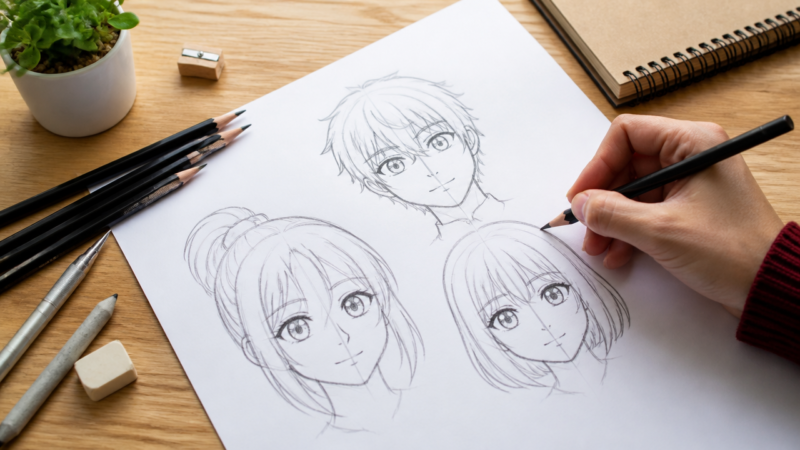
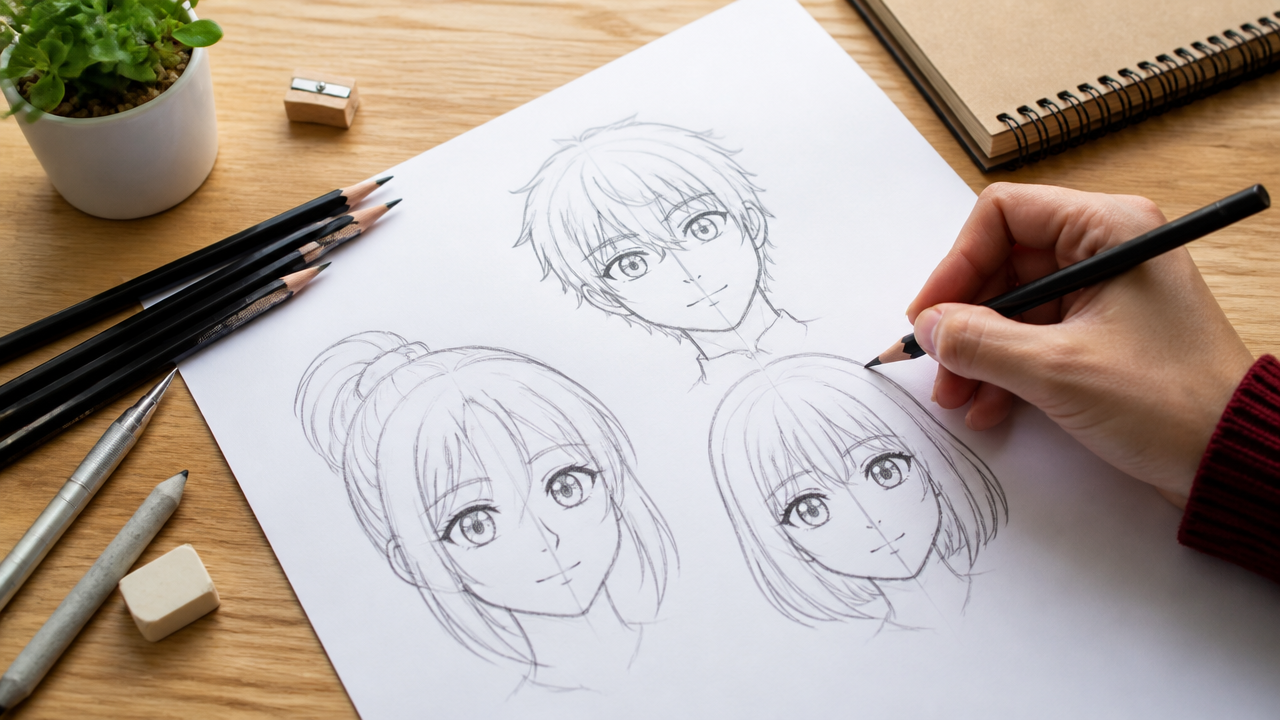
What makes a truly great anime sketch stand out from every other doodle you’ve tried to capture in your notebook? Whether you are prepping for a summer art project—similar to planning 12 Easy Summer Crafts for Kids to Keep Them Busy—or sitting down for a quiet afternoon of practice, mastering the basics of anime style art is a rewarding challenge. Starting with simple geometry helps you build confidence and precision. By focusing on fundamental shapes and consistent proportions, you turn a blank page into a recognizable character face through a quick, beginner-friendly process.
Quick Questions and Answers
Question: Why should beginners copy anime art to learn?
Answer: Copying anime art helps beginners practice observing shapes, proportions, and details effectively. It builds muscle memory for drawing lines and forms without needing constant references. Once you can copy well, you gain the foundation to start focused study on anatomy and perspective. This approach reduces frustration and lets you enjoy the learning process while improving skills.
Question: Can I draw easy anime sketches without anatomy knowledge?
Answer: Yes, you can start drawing simple anime sketches using basic shapes like circles and lines before learning anatomy. Focus on the head shape, jawline, eyes, and facial guidelines first. Anatomy and perspective practice become more important later, but trying simple sketches first builds confidence. Enjoy drawing and repeat basic exercises to master the shapes.
Question: Do I need special tools to draw anime for beginners?
Answer: No, you do not need special tools; basic paper and a pencil or pen work perfectly for beginners. Avoid using measuring tools like compasses or rulers to develop freehand skills and muscle memory. Practice drawing lines, circles, and shapes with single strokes repeatedly. This approach helps you create natural lines and smiles without jitters.
Quick Answer: The Foundations of Anime Proportions
Anime art relies on simplifying complex human anatomy into geometric shapes like circles for the head and defined gaps for facial features. Beginners often feel overwhelmed by the detail in professional manga, but everything distills down to basic forms.
Mastery begins with understanding that a standard character face uses a specific mathematical distance, such as the one-eye-length gap rule, to look authentic. According to AnimeOutline, structural integrity is the biggest hurdle for new artists. When you respect these proportions, your sketches immediately look cleaner and more intentional.
What You Need
Item
Purpose
Notes
4B Pencil
Initial sketching
Soft graphite allows for lighter lines and easier removal.
Smooth Paper
Clear illustrations
Prevents smudging and ghosting of graphite lines.
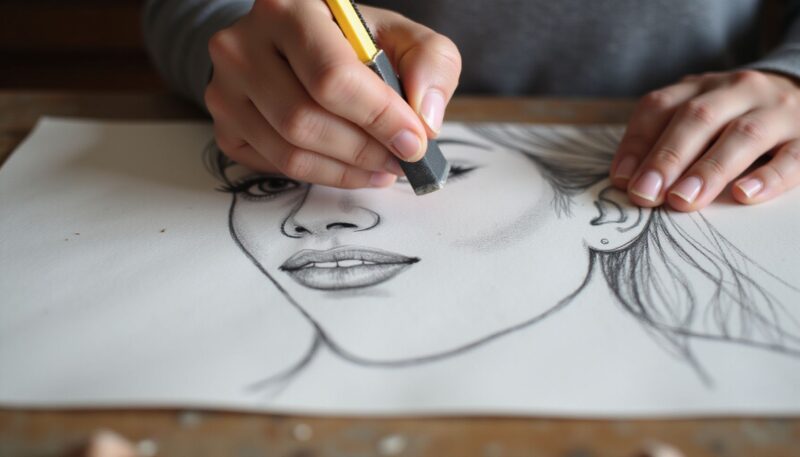
Precision Eraser
Cleanup
Removes construction lines without damaging the page.
Step 1: Mapping the Head and Base Shapes
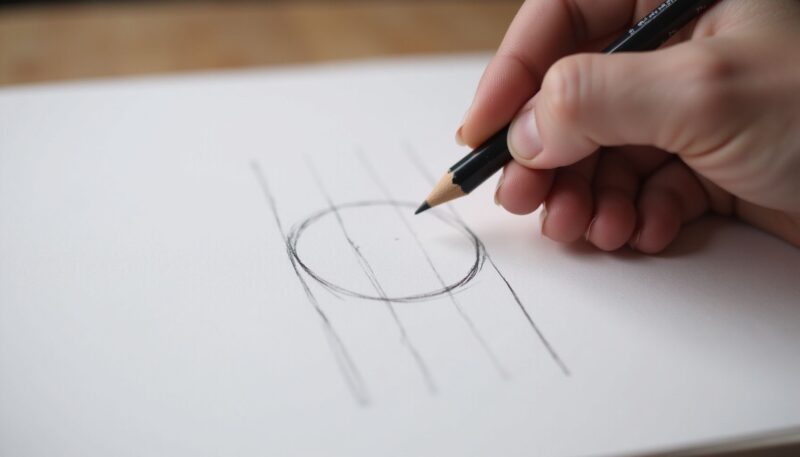
Start with a circle to form the cranium. This is the universal starting point for almost all anime character heads, providing the volume needed for the skull.
Draw a vertical line down the center of the circle to maintain symmetry for eye, nose, and mouth placement. Once the line is set, add the chin and jawline by connecting them to the bottom of the circle. Keeping these shapes light is vital, as they serve as your scaffolding rather than the final illustration.
Step 2: Placing Facial Features Correctly
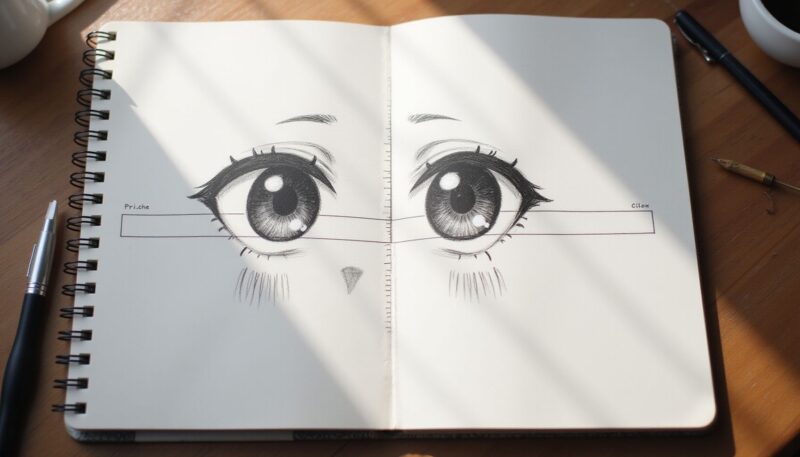
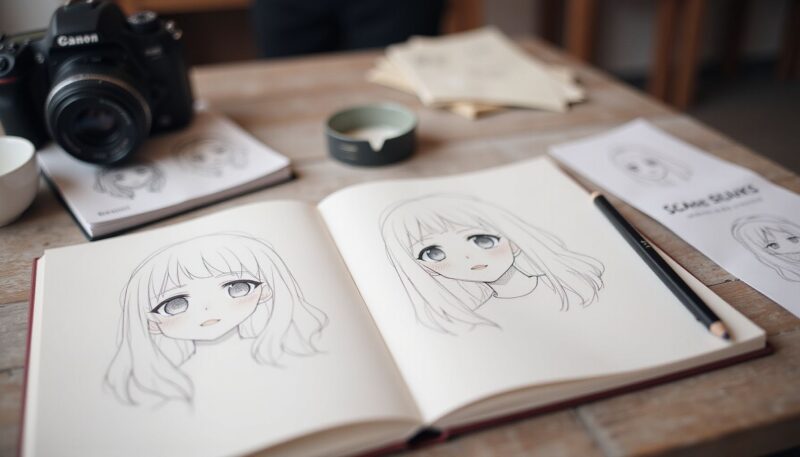
Position the eyes on the horizontal guideline. Ensure there is exactly one eye-length space between the left and right eyes to maintain correct proportions, as failure to do so is the most common reason a sketch looks distorted.
Note that anime eye styles vary from simple, closed shapes to highly detailed irises. Place the nose and mouth along the vertical center line to ensure the character’s face remains balanced. This placement process is similar to organizing materials for 10 Quick Summer Camp Crafts Kids Actually Love, where visual order makes the final result look professional.
Step 3: Refining the Sketch and Adding Hair
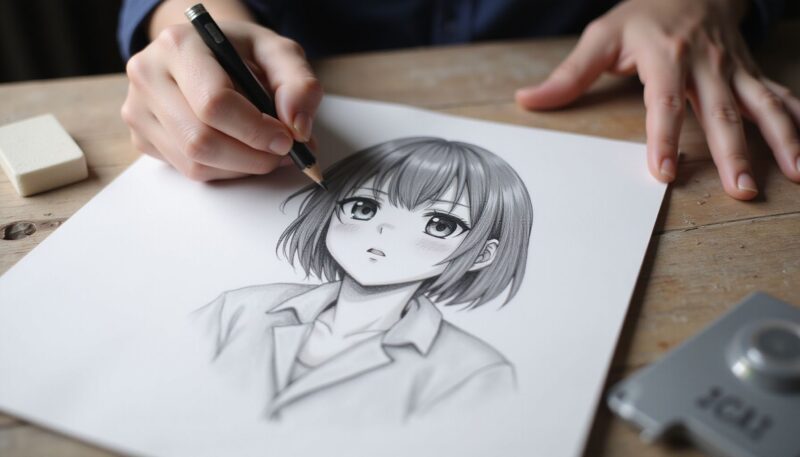
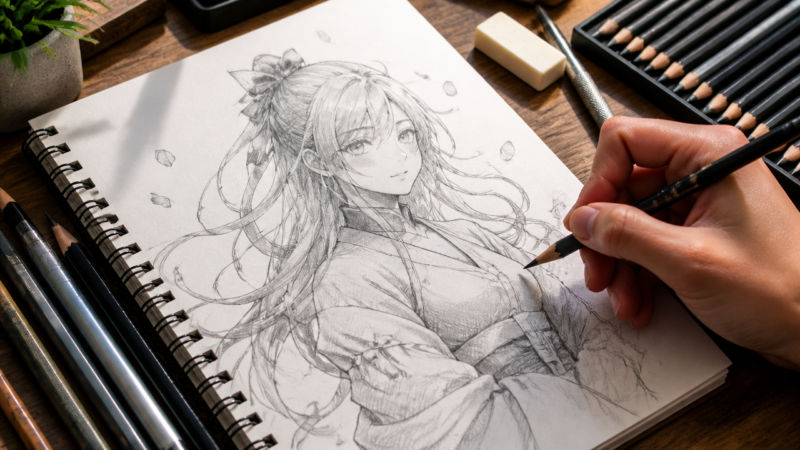
Use the 4B pencil to transition from rough construction shapes to cleaner, definitive outlines. Start by darkening the areas you are confident in, such as the iris or the jawline definition.
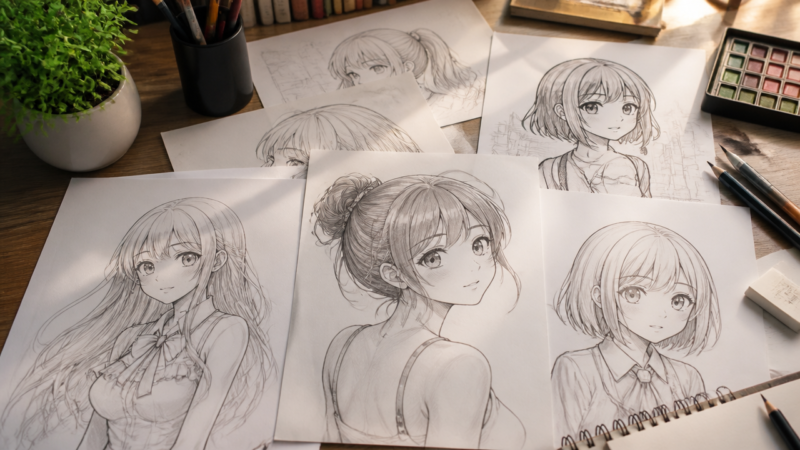
Draw hair in clumps or spiky segments rather than individual strands for the signature anime aesthetic. This technique, highlighted in Skillshare tutorials, allows you to define the hair volume without getting lost in unnecessary detail.
Common Mistakes to Avoid
Ignoring the one-eye-length rule leads to characters looking alien or unbalanced. It is tempting to make eyes too large or too close together in an effort to appear emotive, but spacing is what creates real character depth.
Pressing too hard with your pencil during the initial construction phase makes it difficult to erase guidelines later. Your sketch should look like a faint ghost of the final image. Skipping the circular base shape also results in irregular or flat head structures, which usually ruins the proportion of the ears and neck later on.
Troubleshooting Tips
If the face looks off, use a mirror to check your drawing’s symmetry. Looking at a reflection often reveals proportion errors you missed during drafting, such as a lopsided jaw or a mouth that is slightly tilted.
If your shading looks muddy, ensure you are not smudging the 4B graphite with your palm while drawing. Placing a small piece of clean paper under your hand as you draw helps keep your work clean throughout the process.
Next Steps for Anime Artists
Transition from facial sketching to full-body anatomy, starting with basic stick-figure ratios to understand posture and stance. Explore the 12-step head construction resources available on specialized platforms to refine your precision.
Developing motor skills requires active practice. Consistent daily drawing builds the muscle memory necessary for fluid, professional-looking line work, which is the hallmark of any experienced illustrator.
FAQ
Q: Are anime eyes hard to draw for beginners?
Anime eyes are actually easy to draw for beginners because they use simple C-shaped or large oval forms. Position them above the horizontal guideline on the face sketch. Add eyelids and basic shading to complete the look. Repeated practice with guides helps you master the curves and details quickly.
Q: How do I start drawing an anime face step by step?
Start by drawing a circle for the head, then add a vertical line for the nose and mouth and a horizontal line for the eyes. Draw curved lines from the circle sides to form the jaw and chin, completing the face shape. Add simple C-shaped eyes above the horizontal line, then sketch a small nose and mouth below. Finish with eyebrows and ears on the sides.
Q: What are the basic shapes for drawing anime characters?
The basic shapes include circles for the head, lines for facial guidelines, and curves for the jaw and chin. Squares, triangles, ovals, and rectangles are also used for body parts and clothing. Practice drawing these shapes with single strokes per side to build control. All complex drawings are made up of these simple repeating shapes.
Q: Will practicing lines and circles improve my anime drawing?
Yes, practicing lines and circles greatly improves your freehand drawing skills for anime. It builds muscle memory for smooth, uniform strokes without measuring tools. Filling pages with single-stroke lines and circles strengthens your hand control. This exercise is essential before drawing complex face or body parts in anime style.
Q: When should beginners learn perspective for anime art?
Beginners should learn perspective early, even before diving into detailed anatomy, to understand 3D shapes and volume. Learning perspective helps you draw characters in three dimensions effectively. Start with basic vanishing points and simple cubes to grasp height, width, and length. This foundation makes later drawing more accurate and realistic.
Q: Is it okay to erase mistakes while drawing anime?
Yes, erasing mistakes is completely okay and recommended when drawing anime to refine your sketch. Start with light lines for your sketch, then trace over them with darker lines once everything is in place. If you make too many errors, erase that part and restart. Try to use as few lines as possible for a clean final look.
Q: What is the fastest way to learn anime style art?
The fastest way is structured learning through videos, tutorials, courses, or books combined with regular practice. Use the CCC method: copy a reference, compare it with your drawing to find differences, and change your copy to match. Reflect on why artists make certain choices, then learn specific techniques to apply them. Consistent practice and studying fundamentals accelerate your progress.
My Experience With How to Draw Easy Anime Sketches for Beginners
When I first started sketching anime, my characters consistently looked like they were missing a few fundamental life lessons—and perhaps a correct jawline. That is the thing about this style; it looks deceptively simple because it is so stylized. I learned the hard way that jumping straight into “cool” hair designs before mastering the basic circle-and-line construction was a recipe for frustration.
Once I committed to drawing that pesky center guideline and respecting the eye-length gap, things finally clicked. One clever trick I swear by is flipping your paper upside down while you draw. It sounds strange, but it disengages your brain’s tendency to “assume” what a face looks like and forces you to see the actual shapes you are laying down. Suddenly, those proportion errors become glaringly obvious. It is never about having a perfect hand; it is about having a disciplined eye. You do not need to be a professional to enjoy this. The process is meditative if you let it be. Have you found yourself getting stuck on one specific part of the face, like the eyes or the hair, more than others?
Latest Updates
In 2026, digital sketching tools have become even more accessible, allowing beginners to use “onion skin” layering features that mimic the traditional construction-line method. Many artists are now combining pencil-and-paper basics with digital drafting to speed up the process of learning anatomy.
A Teacher with 5 years of experience. Our Expertise, is reliable to meet your full Academic development needs . Worked on many crafts and construction projects offering services from design to development to deployment over the years. You will find many of my works in my business portfolio on request.