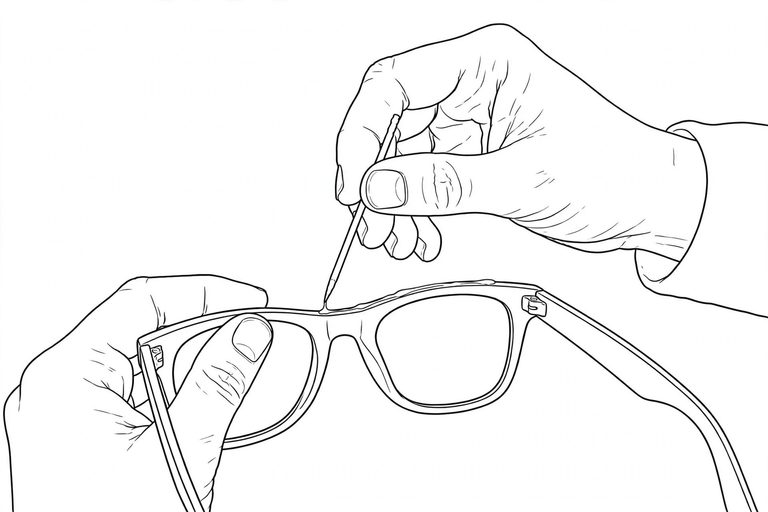
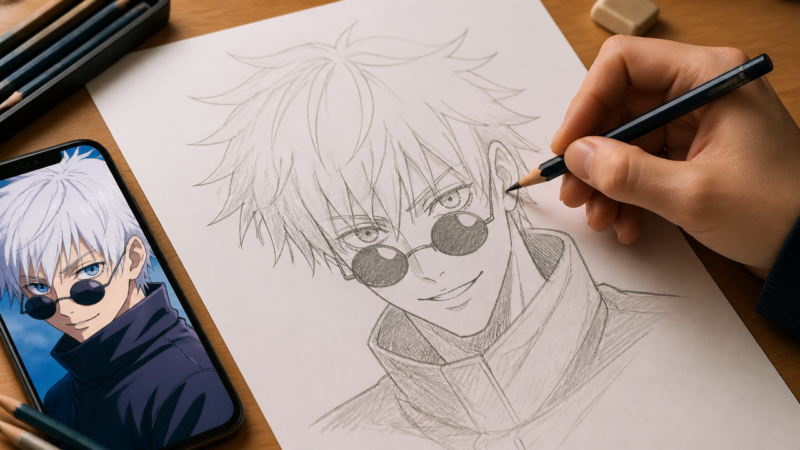

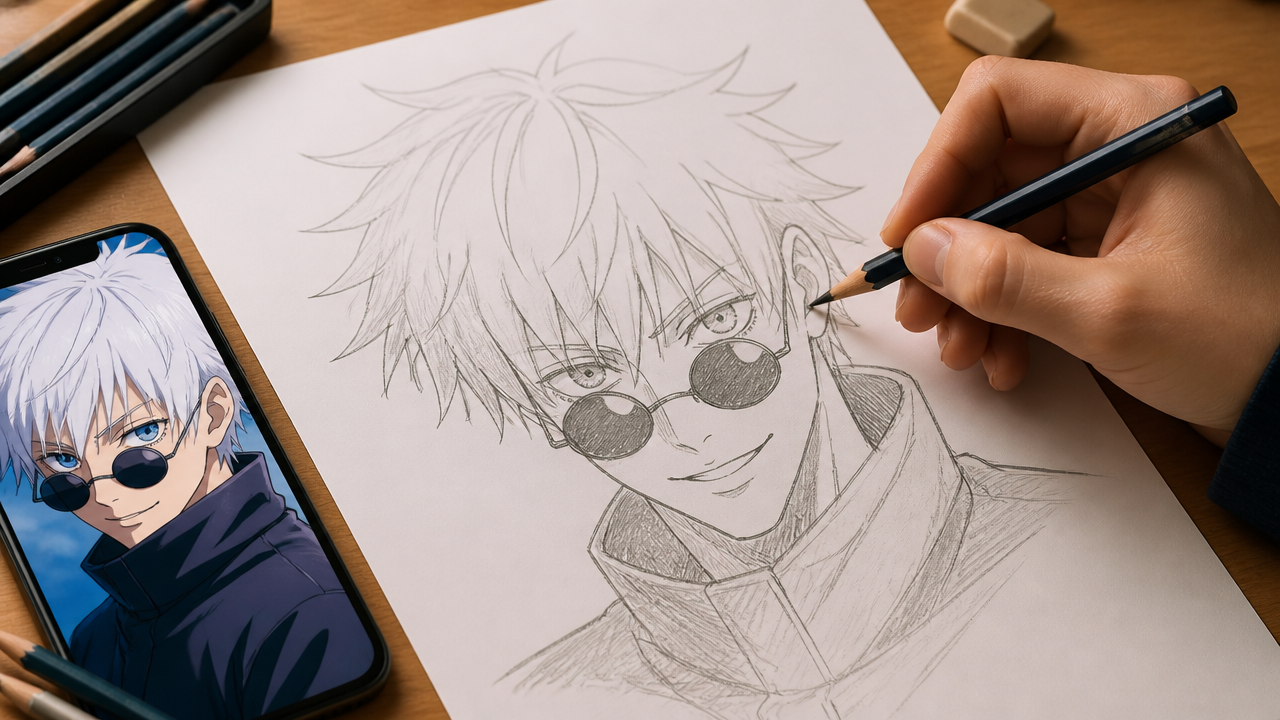
What makes a truly great Gojo sketch stand out when you want anime-accurate proportions without guesswork? If you’re searching for how to draw Gojo Satoru easy or how to sketch Satoru Gojo in a beginner-friendly way, you’re in the right place. Gojo’s spiky hair structure and iconic blindfold or Six Eyes gaze can look tricky, but they turn simple once you break them into repeatable shapes. Whether you’re drawing for a holiday gift or a casual weekend challenge, this Gojo sketch tutorial keeps your lines confident and your results readable.
Quick Questions and Answers
Question: Why is Gojo blindfold so hard to draw? Answer: Gojo’s blindfold is tricky because it needs to sit naturally with subtle folds and shading. Artists often struggle with capturing its curved shape and how it wraps around his head without looking flat. Proper pencil pressure and eraser techniques help create realistic depth and texture in the fabric.
Question: Can beginners draw Gojo Satoru easily? Answer: Yes, beginners can draw Gojo easily by following step-by-step tutorials that start with basic shapes. Simple techniques for his face, eyes, and blindfold make the process accessible. With practice and the right tools like a pencil and eraser, even new artists can sketch his iconic look.
Question: Do I need special tools to draw Gojo? Answer: You don’t need special tools; a standard pencil (like 6B), eraser, and sketch paper work well. Some tutorials suggest using a 6B pencil for soft lines and depth. Basic drawing gear is sufficient for beginners to create a great Gojo sketch without expensive equipment.
Key Takeaways
Gojo looks complex, but his design breaks into three practical parts: head construction, face details (blindfold or Six Eyes), and spiky hair blocks. Start light, erase freely, and only darken once your proportions feel right. Treat the blindfold like a curved wrap around the head, not a flat sticker, and let your eye or gaze marks sit exactly on your guideline.
What You Need
| Item | Purpose | Notes |
|---|---|---|
| Graphite pencils (HB for sketching, 2B/4B for darker lines) | Create construction lines and darker forms | HB keeps lines erasable; 2B/4B help you push contrast later |
| High-quality eraser | Clean up guidelines and mistakes | A kneaded eraser is great for lifting stray pencil marks |
| Drawing paper or a smooth sketchbook | Prevent smudging and line dragging | Smooth paper helps crisp anime edges |
| Fine-liner pen or marker | Final outline you can commit to | Use when your pencil sketch feels stable |
| Option | Feature | Best For | Notes |
|---|---|---|---|
| HB pencil + eraser | Clean construction + easy corrections | Beginners | Keep pressure light so you can erase confidently |
| 2B/4B pencil | Softer, darker shading | Final form and shadow cues | Use after proportions are correct |
| Fine-liner pen | Crisp final line art | Inked look | Let pencil lines dry before inking |
| Marker | Bold, graphic edges | Quick finished sketches | Can hide mistakes, so plan carefully |
Step 1: Mapping the Head and Guidelines
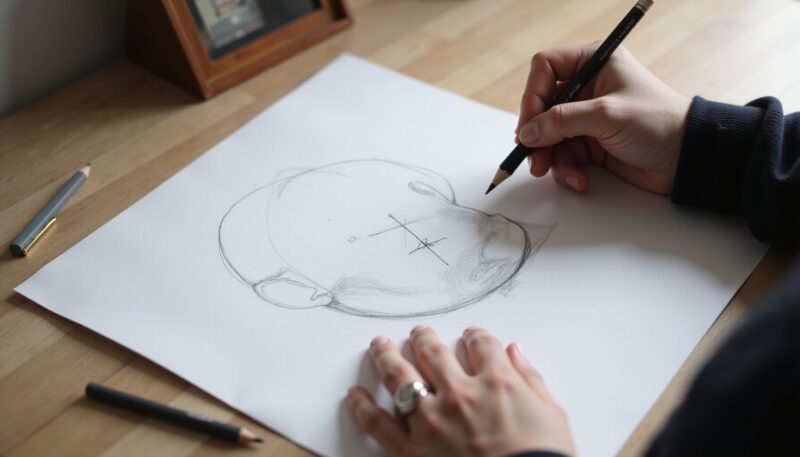
Start with a clean circle for the cranium. This first circle is your anchor. Many tutorials emphasize beginning with that simple shape because Gojo’s face proportions lock in quickly once your head outline is believable (and yes, a wrong head circle makes everything downstream harder).
Next, add a cross-grid on top of the circle. Draw a horizontal guideline where the eyes or blindfold center will sit, and a vertical line to help you keep left-right symmetry. Then sketch a wedge or chin shape under the circle, so the jawline feels attached instead of floating.
Finally, check your angles before you add details. If the chin points too far left or right, Gojo will look “tilted” even if every hair spike is perfect.
Pro tip for symmetry
Hold your pencil like a measuring tool. Compare both sides of the face against your vertical guideline as you draw, not after you finish.
Step 2: Detailing the Eyes and Blindfold
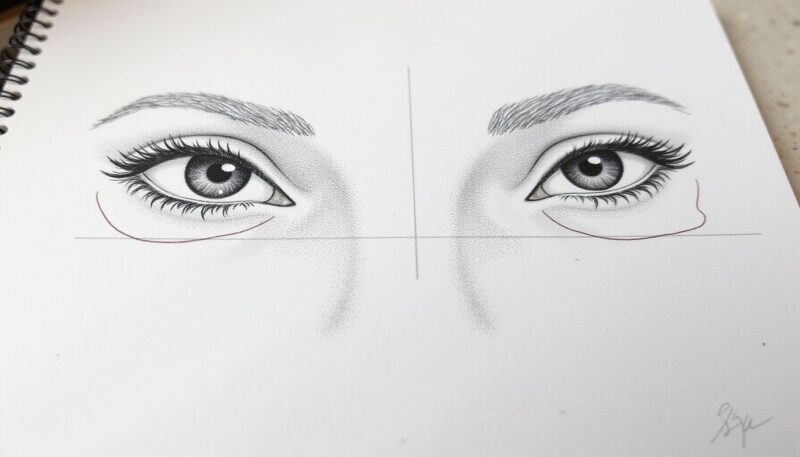
Choose your look first: blindfold style or Six Eyes gaze style. This decision matters because it changes where the viewer’s attention lands.
For the blindfold version, draw the blindfold shape wrapping around the head. Keep the line curved so it dips slightly in the center, which helps suggest the nose bridge and fabric form. Then add subtle fold cues. A blindfold that’s perfectly flat reads wrong, even when the hair is on point.
For the Six Eyes version, place the pupil centers directly on your horizontal guideline. Keep them sharp and narrow compared to the rest of the eye shapes, because that intensity is a big part of the anime style. Also, leave enough space around the eyes so the face doesn’t turn into a blob.
If you’re following a step-by-step method, starting from baselines and construction lines makes this part calmer. According to how to draw Satoru Gojo from Jujutsu Kaisen Step by Step tutorials, the first circle and baselines help establish facial proportions before you commit to details.
Step 3: Structuring the Signature Spiky Hair
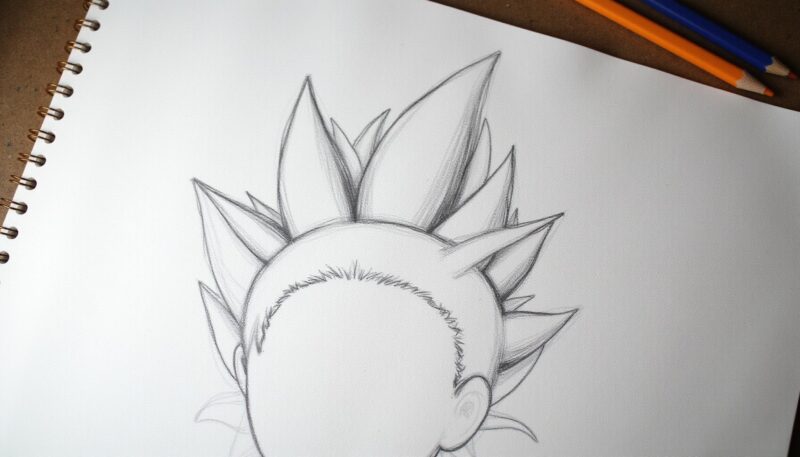
Now build Gojo’s hair as geometric blocks before you draw individual strands. Split the top and sides into large triangular sections. That’s the cheat code. Once those big shapes exist, the hair looks intentional instead of random.
Use short, overlapping jagged strokes to create the voluminous, floating effect. Gojo’s hair often reads as separate spikes, so let each spike point outward and slightly upward from the hairline you established in Step 1. Don’t draw every spike the same size. Mix big tips with smaller ones to avoid a repeating pattern.
As you work, keep checking the hair mass against the head circle. If the hair feels too huge, it usually means the head circle was too small, or the hairline sits too high.
Quick correction if hair looks “off”
If your spikes start to lean all in one direction, compare your spike angles to the vertical center line. Hair should feel like it radiates from the head structure.
Step 4: Refining the Final Ink Lines
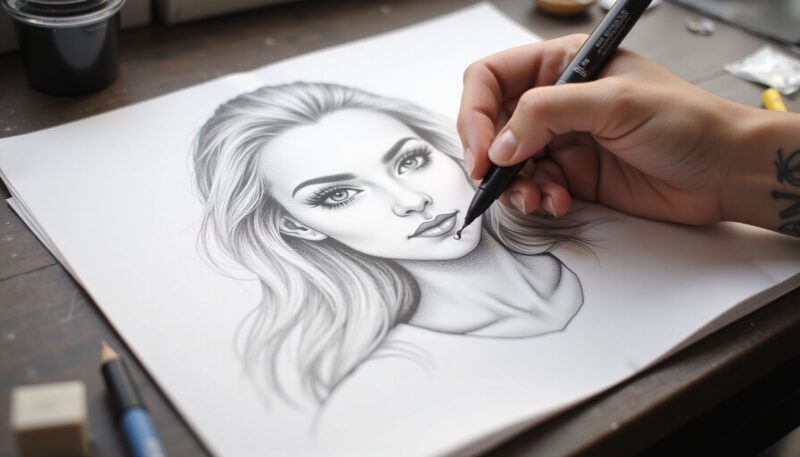
At this stage, your pencil sketch should look like a complete character, even if it’s still light. Trace key outlines with a fine-liner or dark marker: jawline, blindfold edge (or eye contours), and the outer hair silhouette.
Then add line weight. Thicker lines usually work for heavier forms like the jaw and inner hair sections. Thinner lines work for subtle face details so they don’t overpower the design. You can also vary pressure if your marker allows it, but pencil-to-pen tracing is fine for a beginner.
Once the ink lines dry, erase stray pencil marks and construction lines. Don’t rush this. Smudging ruins the crisp anime look fast.
Cleanup that makes the drawing look “finished”
Use the eraser lightly around the hair edges. If you rub too hard, you’ll fray the paper texture and lose the clean silhouette.
Step 5: Shaping the Face So It Matches the Hair
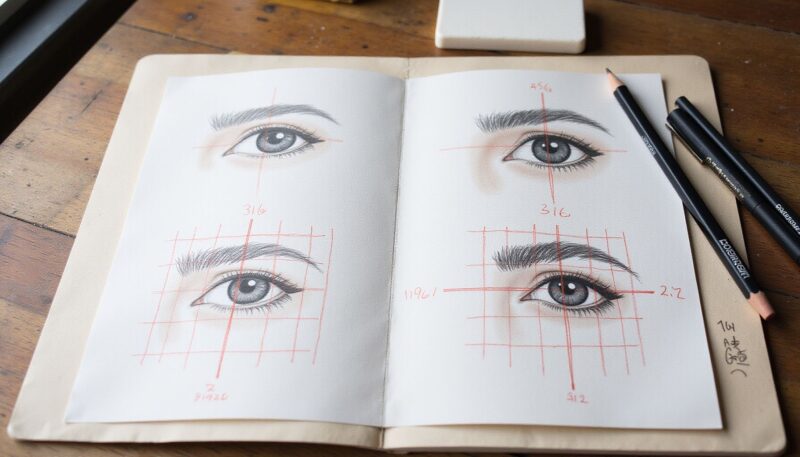
This is the step people skip, then wonder why Gojo looks “almost right.” Your face needs to visually support the hair volume.
Look at the jawline and chin. Make sure the chin wedge feels centered beneath the head circle. If your jaw dips too low, it can stretch Gojo’s face. If it’s too short, the hair will look like it’s glued to the forehead.
Adjust the blindfold or eyes placement only if needed. The blindfold center mark and the eye guideline should still align with the vertical and horizontal guides you drew in Step 1. If those guides drifted earlier, fix them now while the drawing is still mostly pencil-based.
This approach matches what many beginner tutorials teach: build construction first, then detail, then refine.
Step 6: Adding Simple Shading and Depth Cues
You don’t need full coloring to make Gojo pop. Use shading cues that guide the eye.
For the blindfold version, add light shading where folds would naturally compress. Keep the darkest lines near fold creases and where the blindfold overlaps the head curvature. Use soft pencil pressure for these cues, then lighten it quickly with an eraser so it stays subtle.
For the Six Eyes version, focus on the eye intensity rather than heavy shading. Tight pupil centers and clean eyelid lines carry the expression. If you add shadow, keep it near the upper eye area or around the brows so the eyes stay readable.
If you want an easy next step, you can keep the drawing mostly line-based and just use pencil for depth. That keeps the sketch beginner-friendly while still looking anime-clean.
Step 7: Final Check for Proportions (Before You Call It Done)
Before you sign your sketch, do a quick “distance check” using your guidelines.
- Does the eye or blindfold center sit on the horizontal guideline?
- Does the chin wedge sit under the center line?
- Do the hair spikes radiate outward from the hairline you established?
- Do both sides of the face feel like they belong to the same drawing?
If you spot one problem area, fix it now. Once you start inking and thickening lines, small proportion mistakes become very hard to hide.
Troubleshooting Your Sketch
If symmetry feels wrong, hold your paper up to a mirror or take a photo. A camera view catches tilt you don’t notice with your face pressed close to the page. For proportion problems like a jaw that feels too long, revisit the distance between your eye-line guideline and the chin. That spacing controls how “long” the face reads even if your hair looks great.
Tips
- Start light. I’ve learned the hard way that heavy pencil pressure turns erasing into a battle and makes the final ink look messy.
- Draw big shapes first. Triangles for hair, clean circle for head, simple guidelines for face placement.
- Pick the look (blindfold or Six Eyes) before you draw details, so your attention goes in one direction.
- Use line weight on purpose. Thick lines tell the viewer what’s important; thin lines keep facial details from flattening.
- Take breaks. Staring too long makes your eyes stop catching small asymmetry. A 30-second pause helps.
FAQ
Q: Are there different ways to draw Gojo?
Yes, you can draw adult Gojo, kid Gojo, or different expressions like intense or calm. Tutorials cover various styles from beginner-friendly to pro-level anime art. Each version highlights different features, such as kid Gojo’s smaller face or adult Gojo’s sharp blindfold details.
Q: How to start sketching Gojo’s face?
Start by drawing a circle for the head shape, then add a jawline and chin for Gojo’s face structure. Use light lines to mark eye placement and the blindfold position. Gradually refine the shape and add details like his intense eyes and signature hair strands.
Q: Does Gojo’s hair look different in anime?
Gojo’s hair features wild, spiky strands that are white and often drawn with sharp angles. In Jujutsu Kaisen anime, his hair is voluminous with distinct points that frame his face. Artists emphasize these spikes to capture his unique and energetic anime style.
Q: Will following a tutorial help me draw Gojo?
Yes, following a step-by-step tutorial significantly helps you draw Gojo by breaking down complex shapes into simple steps. Videos guide you from basic outlines to intricate details like his blindfold and eyes. Beginners benefit greatly from these structured lessons for accurate results.
Q: When did Gojo become popular to draw?
Gojo became popular to draw after Jujutsu Kaisen gained massive popularity through anime and manga releases. His iconic blindfold, striking eyes, and unique power made him a fan favorite. Artists started creating sketches and tutorials as demand for his character art grew globally.
Q: Is Gojo’s blindfold real in the anime?
Gojo’s blindfold is a real item he uses to suppress his overwhelming six eyes power in the anime. It is not a magical object but a fabric piece he wears over his eyes. Removing it reveals his full power and intense glowing eyes during battles.
Q: What makes Gojo’s face iconic in anime?
Gojo’s face is iconic due to his sharp features, intense six eyes, and signature white blindfold. His wild spiky hair and confident expression make him stand out in Jujutsu Kaisen. These elements combine to create a memorable and powerful character design loved by fans.
My Experience With How to Sketch Gojo: A Step-by-Step Anime Tutorial
I tried sketching Gojo a few times before I accepted the boring truth: the circle in Step 1 is the whole game. The moment my head circle got even slightly wrong, the hair looked like it belonged to a different character. So I started going lighter with the pencil and slower with the cross-grid. That change alone made my blindfold sit more naturally and kept my eyes from drifting toward one side.
One sharp insight helped me a lot: treat hair like shapes first, then spikes. When I chased every strand too early, my lines fought each other and the silhouette turned messy. Breaking hair into triangular sections fixed that fast.
Also, I learned to erase construction lines only after the ink dries. The first time I didn’t, smudges turned my “clean anime outline” into “abstract art,” and my sketchbook still holds the evidence.
How does your Gojo come out when you switch between blindfold and Six Eyes—more confident, or totally unpredictable?
Conclusion
Latest Updates
If you want faster progress, repeat this same Gojo step sequence with small changes: same head construction, then try a different expression, then adjust only the hair spike angles. You’ll train your eye for proportions quickly because each sketch starts with the same reliable foundation.
References
- HowToAnime. (n.d.). How to draw Satoru Gojo from Jujutsu Kaisen Step by …. howtoanime.com. https://howtoanime.com/Steps/How-to-draw-Satoru-Gojo
- YouTube. (n.d.). How To Draw Gojo Satoru Step by Step Easy. YouTube. https://www.youtube.com/watch?v=E7B2-jfGkzw&vl=en
- YouTube. (n.d.). Easy Gojo Drawing for Beginners | Step-by-Step Anime …. YouTube. https://www.youtube.com/watch?v=7mV47CPYdbc
- YouTube. (n.d.). How to Draw Gojo Satoru Step by Step. YouTube. https://www.youtube.com/watch?v=R1UCGgL4cqk&vl=en
- YouTube. (n.d.). How To Draw Satoru Gojo. YouTube. https://www.youtube.com/playlist?list=PLOhjjqp0NlCHBLEszcHEpUfgszaSbuDXS
- TikTok. (n.d.). Gojo Drawing Tutorial: Easy Step-by-Step Guide. TikTok. https://www.tiktok.com/@chillwithaki/video/7364455398075567403?lang=en
- YouTube. (n.d.). How to draw gojo satoru easy for beginners. YouTube. https://www.youtube.com/watch?v=BD5diZAnYDg
- YouTube. (n.d.). How To Draw Gojo Satoru For Beginners. YouTube. https://www.youtube.com/watch?v=OT5S5in1t5c

A Teacher with 5 years of experience. Our Expertise, is reliable to meet your full Academic development needs . Worked on many crafts and construction projects offering services from design to development to deployment over the years. You will find many of my works in my business portfolio on request.