
Marigolds are the easiest way I know to add bright color and instant “garden success” fast. If you want flowers that reliably bloom and don’t fuss too much, you’re in the right place. Marigolds love sunshine, handle a lot of garden conditions, and can thrive in both beds and containers. They’re also great for beginners because you can get results with simple steps: pick the right spot, prepare the soil, plant at the right time, and keep watering sensible. By the end, you’ll know exactly how to grow marigolds in your garden—plus how to get fuller plants and more blooms all season.
Quick Answer
To grow marigolds, I start by planting them in full sun (at least ~6 hours daily), in well-draining soil. I loosen the soil about 6 inches deep and mix in compost for steady growth. Then I plant based on temperature: I wait until soil hits around 65°F for direct seeding, and I set transplants after frost danger is gone. After planting, I water about 1 inch per week as a baseline and let the soil dry a bit between waterings. Finally, I give them enough space for airflow—roughly 8 inches for shorter types and 10–12 inches for larger African marigolds.
Key Takeaways
- Marigolds perform best in full sun and well-draining soil, even though they tolerate many soils.
- Planting time matters: direct seed when soil is about 65°F, and transplant after frost risk passes.
- Space them for airflow: crowded plants tend to get leggy and bloom less.
- Water steadily early on, then adjust—avoid constantly wet soil.
- Choose the right type (French, Signet, or African) for your space and timing.
1. Choose the Right Marigold Type for Your Garden

Before I dig in, I pick the marigold type that matches what I want my garden to look like. Marigolds aren’t all the same size, and that changes spacing, where they fit best, and how you should plant them.
- French marigolds are often compact and great for borders or filling in gaps.
- Signet marigolds usually have a smaller, finer look and can work especially well in containers if you want patio color.
- African marigolds are typically larger and showier, so they need more room.
When I’m planning, I also check how tall and wide the variety will get at maturity. That tells me whether it belongs at the front of a bed, the middle, or as a bigger centerpiece plant. It’s a small step that prevents a lot of frustration later—like trying to squeeze plants together and ending up with weak growth.
2. Pick a Sunny Location (Full Sun Really Means It)
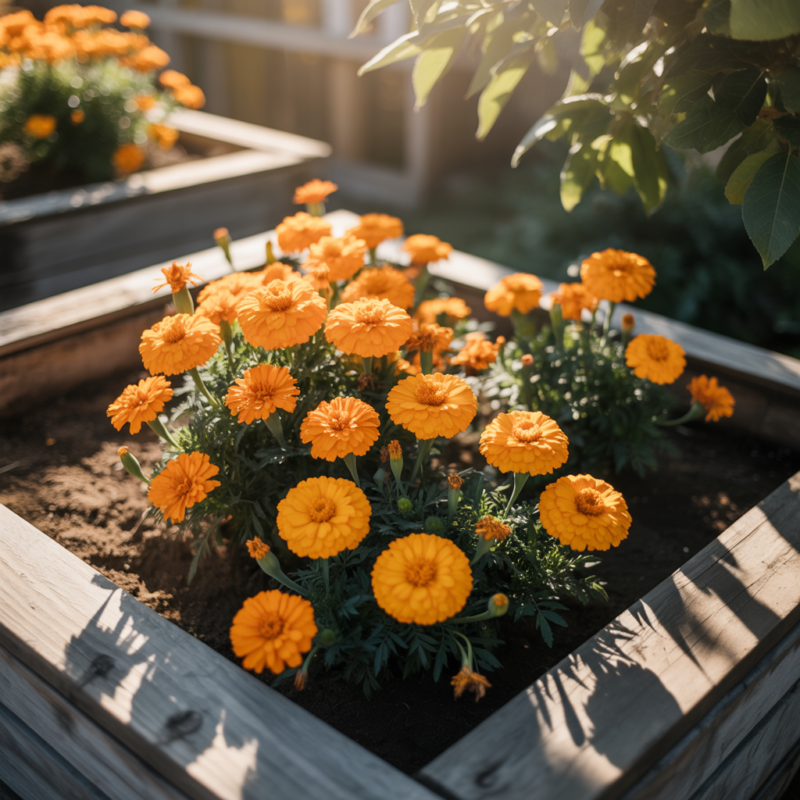
Marigolds are sun-lovers. If I want them to bloom well, I give them full sun all day long—I aim for 6+ hours daily. If they don’t get enough light, they can grow but won’t look their best. I’ve noticed this mostly shows up as fewer blooms or plants that stretch upward (leggy growth).
Also, I think about airflow. Even though marigolds aren’t “disease drama queens,” overcrowding can make plants stay damp longer or struggle to grow evenly. So instead of planting “as close as possible,” I leave room for air to move between them.
3. Prepare Soil for Strong Growth (You Don’t Need Perfect Soil)

One reason I love marigolds is that they don’t demand perfect soil. They generally do well in a wide range of conditions, but they thrive when the soil is:
- Moderately fertile
- Well-draining
- Loose and workable
To set myself up for success, I loosen the soil about 6 inches deep. Then I mix in compost. Compost helps with fertility and improves the soil texture so water doesn’t sit around too long.
If I’m feeling extra careful, I check soil pH. Marigolds are usually happiest around slightly acidic to neutral (roughly pH 5.5–7.0). Even without a test, adding compost gets me close enough for great results most of the time.
4. Know When to Plant (Timing by Variety and Temperature)

Marigolds are warm-season annuals, so timing matters more than it does for some cool-season flowers. Here’s what I follow:
If I’m direct seeding outdoors
- I wait until soil temperature reaches about 65°F.
That’s the moment when seeds are more likely to sprout strongly and catch up quickly.
If I’m starting with transplants
- I plant larger seedlings after frost danger is gone.
This is the easiest way to avoid stalling—especially for African marigolds, which often need more time to mature.
If I’m thinking by type
- French and Signet marigolds: I plant from spring through mid-summer for ongoing blooming once they’re established.
- African marigolds: I plant in spring after frost risk because they take longer to mature and bloom.
If you’re not sure what type you have, check the seed packet or plant tag. A quick label check can save an entire season of “why aren’t these blooming?”
5. Start Seeds and Choose a Planting Method

When it’s time to plant, I choose the method that fits my timeline and space.
Option A: Direct sow in the garden
This is my go-to when the weather is already warming up and I don’t mind waiting a bit.
- I sow seeds close together at first—about 1 inch apart—so I’m not relying on perfect germination.
- After they sprout and grow a little, I thin them to the spacing needed for healthy plants.
This method is simple and often works great because marigolds are fairly easy to grow once the soil is warm.
Option B: Start indoors (for an earlier start)
If I want blooms sooner—or my spring is slow to warm up—I start seeds indoors.
- I begin indoors about 4–6 weeks before the frost-free date.
- I keep them in a sunny window or under strong light.
- Once conditions are safe, I transplant them into the garden.
Even with indoor starting, I still follow the “wait for frost risk to pass” rule. Marigolds hate cold snaps.
6. Space Plants for Healthy Growth (Airflow = Better Blooms)

This is one of those steps that feels annoying while I’m planting, but it pays off later. When I ignore spacing, marigolds can become crowded and less productive.
Here’s the spacing guidance I use most often:
- Shorter varieties: about 8 inches apart
- Larger African types: about 10–12 inches apart
If you sow seeds close initially (like in direct sowing), thinning is essential. Thinning doesn’t “ruin” your garden—it helps the remaining plants grow stronger, stay sturdier, and focus energy on flowering.
7. Watering and Ongoing Care (Keep It Steady, Not Soggy)

Marigolds don’t want to be ignored, but they also don’t want to sit wet. My baseline routine is:
- About 1 inch of water per week
- Let the soil dry a bit between waterings
I usually watch the soil more than the calendar. If the top layer feels dry, I water. If it’s still damp, I wait. Constant wet conditions can lead to problems and can slow down healthy growth.
During establishment (the first couple weeks after planting), I’m a bit more consistent so the roots get going. After that, I adjust based on rainfall, heat, and how quickly my garden bed dries out.
8. Manage Growth for More Blooms (Make Them Thrive, Don’t Just Survive)

Once marigolds get going, they can deliver color from early summer through frost in many gardens. To keep them productive, I focus on the basics they need most:
- Sunlight: Full sun is the biggest driver of bloom.
- Drainage: Well-draining soil helps plants stay healthy through changing weather.
- Spacing: Enough room prevents overcrowding and supports airflow.
- Watering habits: Steady moisture early, then smart watering afterward.
If you want a neat, full look, I also make sure my bed doesn’t have “bare patches” caused by poor germination. That’s another reason I sometimes sow slightly thicker and thin later—so the overall look stays lush.
9. Troubleshooting Common Problems (Fix It Fast, Before It Spreads)
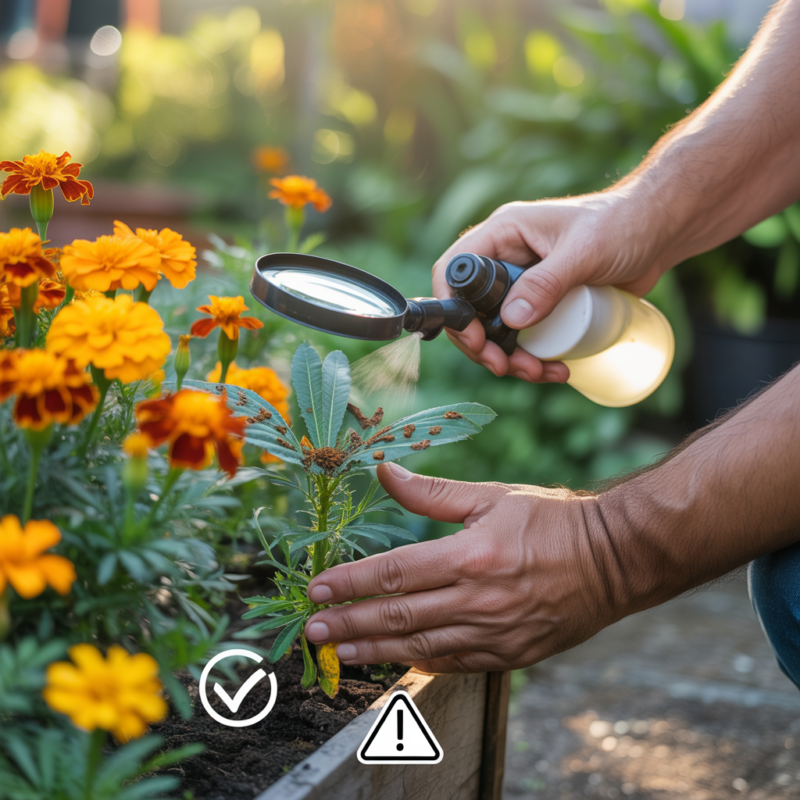
Even with good care, something can go off. Here’s how I troubleshoot marigolds when they don’t look right.
Problem: Plants look leggy or bloom poorly
My first guesses are:
- Not enough sun (they need those 6+ hours)
- Too much crowding (plants compete for light and airflow)
I check how close everything is, and I look for stretching. If they’re crowded, thinning helps immediately. If it’s light, I can’t “move the sun,” but I can reposition plants next season or plan better.
Problem: Plants decline or look weak
This often points to:
- Drainage issues
- Watering too often
If the soil stays waterlogged, marigolds struggle. I adjust by watering less frequently and improving soil structure with compost next time. If you suspect drainage is the issue, it’s worth focusing on raised beds or amending the soil for next year.
Problem: Growth is slow
Slow growth usually connects to:
- Planting too early (too cold)
- Soil temperature not warm enough for direct seeding
- Variety mismatch with your season
If I direct sowed and the soil was cooler than expected, germination and early growth can stall. In the future, I wait for soil temps closer to 65°F before sowing.
10. Extend Your Success with Simple Variations (Beds, Borders, and Containers)
One of the most fun parts for me is choosing how to use marigolds around the yard. They’re versatile.
- Bed planting and borders: Great for long stretches of color and easy cleanup after the season.
- Mass plantings: When I plant many together, they make a bigger visual impact and create a bold “all in one” display.
- Containers: I lean on Signet marigolds in pots because they tend to do well in container conditions. If you go container, I make sure the pot has drainage holes and doesn’t hold water too long.
If you want cut flowers, marigolds can also be used indoors, though I focus on growing them well first. The real win is the garden color they provide.
Common Mistakes
Here are the biggest “oops” moments I see people run into when growing marigolds—and how to avoid them.
- Skipping full sun: If your spot only gets a little light, marigolds won’t bloom as strongly. Aim for at least 6 hours.
- Planting in soggy soil: Marigolds need drainage. If water pools, fix the soil or use raised beds.
- Planting too early: Direct sowing in cold soil leads to poor germination and slow growth. Wait for around 65°F.
- Overcrowding: Crowded plants can look leggy, stay weak, and bloom less. Follow spacing (about 8 inches for shorter types; 10–12 for African).
- Inconsistent watering: Letting the soil swing between bone-dry and soaked can stress plants. Water about 1 inch per week and adjust to conditions.
- Choosing the wrong type for the space: Large African marigolds need more room. Compact areas are better for shorter types.
- Not thinning when direct seeding: Thick sowing is fine at first, but thinning is needed for strong plants.
FAQ
1. Are marigolds easy to grow?
Yes—marigolds are one of the easier flowers for many gardeners. I find they’re forgiving as long as they get full sun, warm temperatures, and well-draining soil.
2. What’s the best time to plant marigolds?
I plant based on temperature and frost:
- Direct seed outside when soil temps reach about 65°F.
- Transplant larger starts after frost danger has passed.
French and Signet often handle spring through mid-summer well, while African marigolds typically need spring timing after frost risk ends because they mature a bit longer.
3. Do marigolds need a lot of water?
They need steady moisture early, then a more moderate routine. A good baseline is about 1 inch per week, and I let the soil dry between waterings so it doesn’t stay soggy.
4. Can I grow marigolds in containers?
Yes. Signet marigolds are commonly suited for containers, and many gardeners grow others too. The key is drainage holes and not letting the soil remain constantly wet.
5. Why aren’t my marigolds blooming?
The most common reasons I see are:
- Not enough sun
- Overcrowding
- Too-cold planting (especially for direct seeding)
- Poor drainage or watering issues
6. How far apart should I space marigolds?
A simple guide is:
- Shorter varieties: about 8 inches apart
- African varieties: about 10–12 inches apart
If you’re not sure, check your variety label for mature size.
7. Will marigolds bloom all season?
They often bloom from early summer through frost. With good sun, spacing, and proper watering, many varieties can keep producing and look great for a long time.
Conclusion
Growing marigolds in my garden is usually straightforward: I start with a sunny spot, loosen and improve the soil with compost, and plant at the right time for my conditions. Then I water with a calm, consistent approach—enough to get established, but not so much that the soil stays wet. The payoff is big: bright flowers from early summer onward, with minimal fuss compared to many other garden plants.
If you follow the steps here—choose the right marigold type, give them full sun, space them well, and keep watering smart—you’ll be amazed how quickly those blooms show up and how good your garden looks with very little stress. Now go get those marigolds planted—you’ll thank yourself when the first sunny flowers appear.

A Teacher with 5 years of experience. Our Expertise, is reliable to meet your full Academic development needs . Worked on many crafts and construction projects offering services from design to development to deployment over the years. You will find many of my works in my business portfolio on request.