What makes a truly great little library stand out from every other book-sharing box in the neighborhood? Whether you’re building one for summer reading season or planning a winter community project, the design matters as much as the books inside. Little library ideas range from simple repurposed containers to elaborate themed structures, and the best part is that you can start with almost nothing. This guide covers 12 concrete little library ideas you can actually build—each one practical, achievable, and designed to get neighbors excited about sharing books.
Quick Questions and Answers
Question: What are some easy little library ideas for beginners?
Answer: Easy ideas include using a repurposed cabinet, old mailbox, storage tote, vintage suitcase, or small plastic container. The goal is to create a simple weather-resistant box with books inside and a visible sign so neighbors know it is a free little library. Many budget-friendly versions can be made with items you already have at home.
Question: Can I build a little free library on a budget?
Answer: Yes. Budget options include a plastic storage container, old mailbox, filing cabinet, dresser, suitcase, or even a small appliance with usable space inside. You can also buy used materials or repurpose furniture to keep costs low while still making a durable book-sharing box.
Question: How do you make a little library for your yard?
Answer: Start with a sturdy, weather-resistant container or small cabinet, place it on a post or in a safe outdoor spot, and fill it with books. Add a sign so people know it is a free library, and make sure the location is on your property if it will be in the front yard.
1. Repurposed Mailbox Library
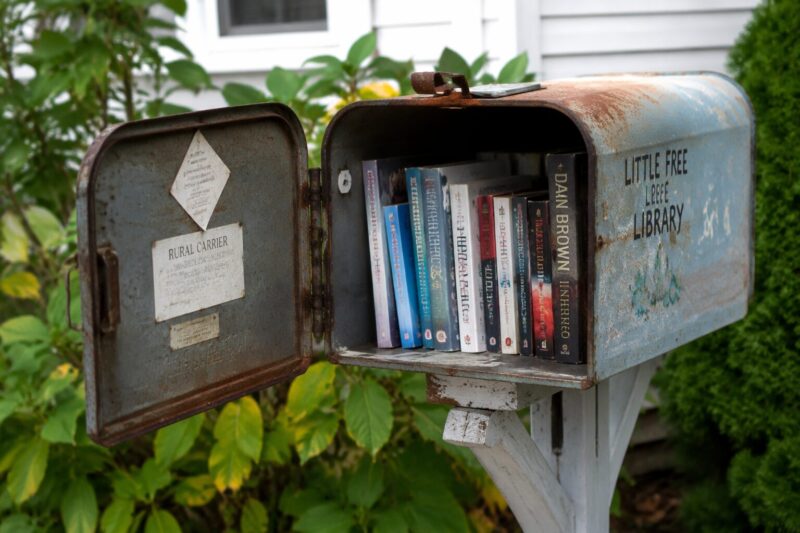
A classic mailbox transforms into one of the easiest little library ideas with minimal effort. Old-style metal mailboxes work perfectly because they’re already built to withstand weather and have a natural hinged door.
To build this version, clean out the mailbox thoroughly, add a weatherproof coat of paint or sealant, and mount it on a sturdy wooden post at eye level. You can fit roughly 15 to 25 paperback books inside, depending on the mailbox size. Paint it a bright color to catch attention, and add a hand-painted or printed sign that says “Free Books—Take One, Leave One.”
This design works especially well in yards with a rustic or cottage aesthetic. The mailbox style signals immediately to passersby that this is a legitimate book-sharing space. Because mailboxes already have drainage holes, water won’t pool inside during rain.
2. Painted Wooden Cabinet Library
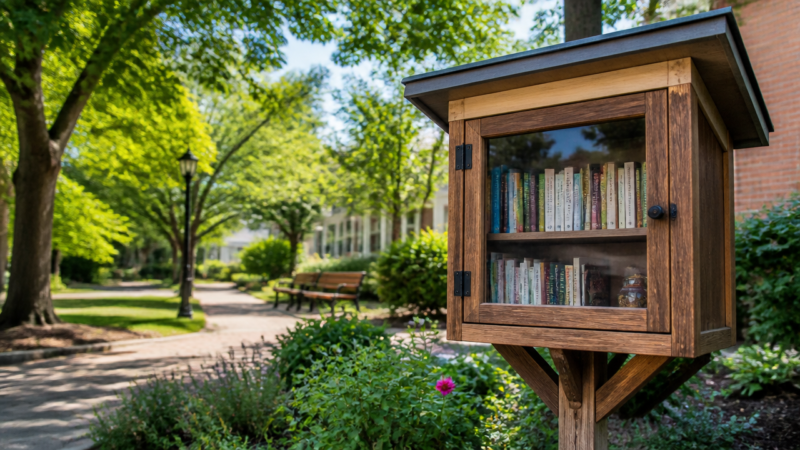
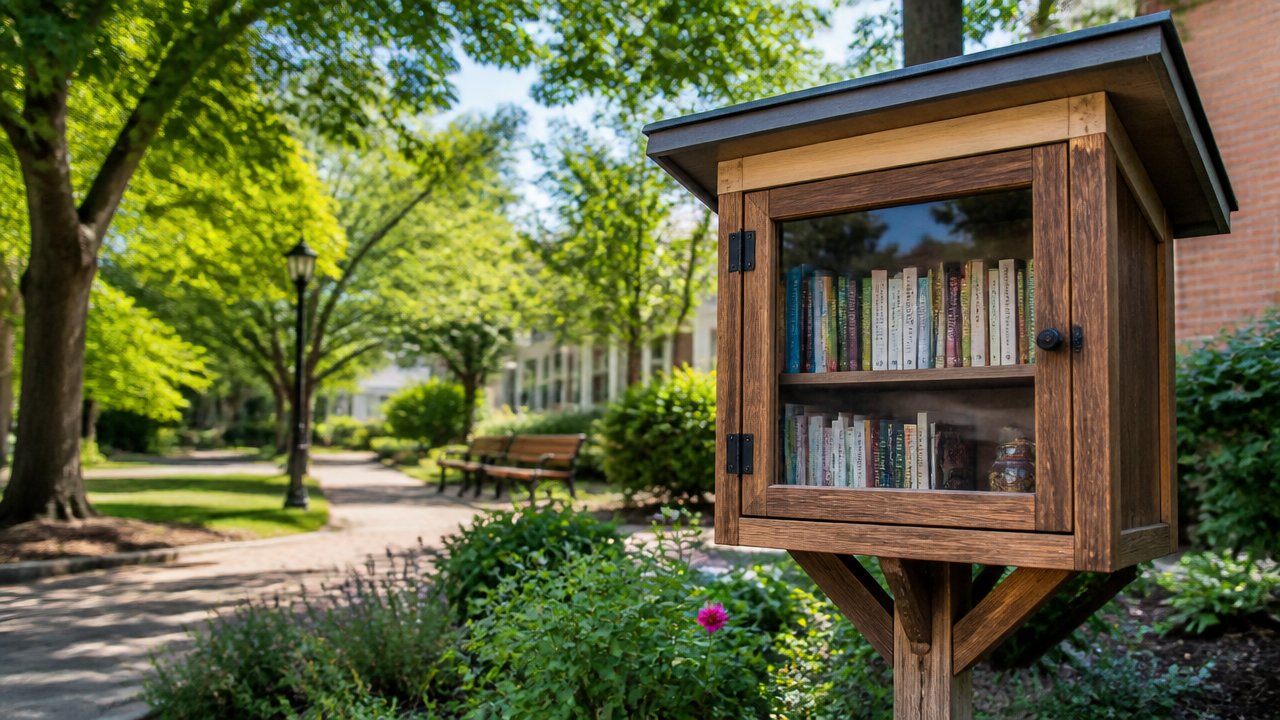
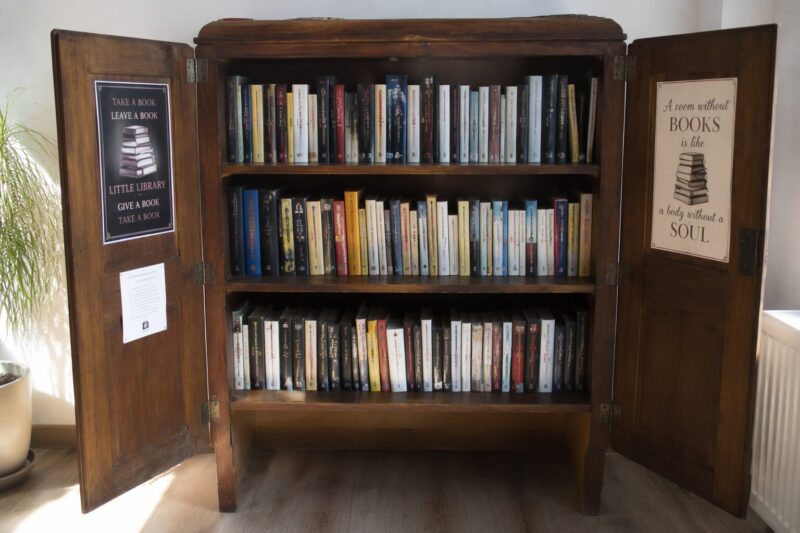
A freestanding wooden cabinet—the kind you’d find at a thrift store for under $20—becomes a substantial little library with solid storage. This approach lets you fit 40 to 60 books comfortably and looks intentional, not hastily assembled.
Start by sanding the cabinet lightly and applying weather-resistant stain or exterior-grade paint. Add a roof overhang cut from plywood to shield the top from rain. Install a glass or clear acrylic panel in the front door so people can see the books without opening it every time. Mount the cabinet on a wooden base or concrete pads to keep it off damp ground.
The wooden cabinet style pairs well with apartment rooms and home libraries in residential areas. Neighbors often view these as more permanent community fixtures, which can increase engagement.
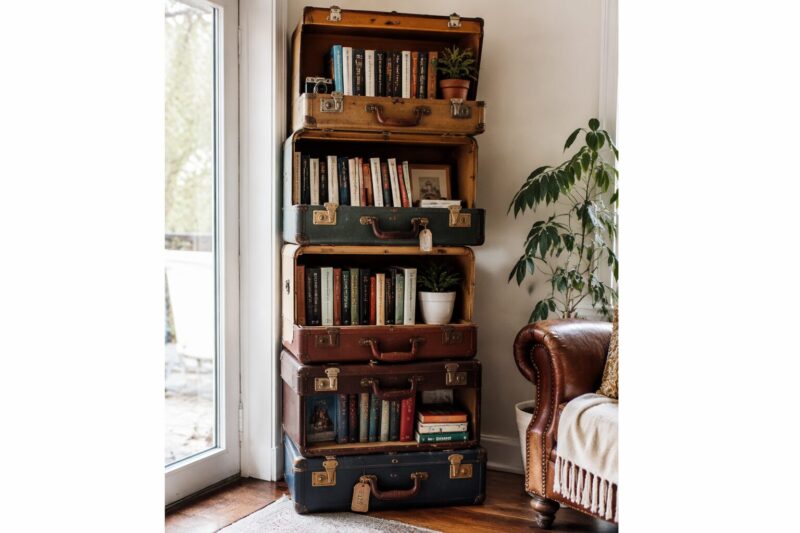
3. Vintage Suitcase Stacked Library
Stacking vintage suitcases creates a quirky, mobile-friendly little library that feels handmade and charming. You’ll typically need three to five suitcases of varying sizes to create an attractive tower.
Source old suitcases from thrift stores, estate sales, or online marketplaces. Stack them with the largest at the base and secure them together using weather-resistant adhesive or brackets. Paint or leave them in their original colors—faded leather and pastels look intentionally retro. Fit smaller books horizontally inside each suitcase, with the lids propped open at a 45-degree angle so people can easily browse.
This design works great for people who rent or want a temporary little library. You can move the suitcase stack if needed, and it requires no tools or permanent installation.
4. Modern Plywood Box with Sloped Roof
Clean lines and a modern aesthetic appeal if your home has contemporary styling. This little library uses three-quarter-inch plywood, a sloped roof, and simple butt joints assembled with weather-resistant screws and wood glue.
The basic dimensions are roughly 24 inches wide, 18 inches deep, and 30 inches tall. Cut a peaked roof from scrap plywood and attach it so rain slides off easily. Drill small drainage holes in the floor. Paint it a single bold color—navy, forest green, or matte black work well—and add a minimalist metal sign.
This style accommodates 30 to 50 books depending on their thickness. The geometric shape looks intentional enough that neighbors recognize it immediately as a community project, not random clutter.
5. Repurposed Plastic Storage Tote Library
For the absolute simplest and cheapest little library idea, grab a large plastic storage container and weatherproof it. A 50-gallon tote costs under $15 and requires only a few cuts and a good hinge.
Cut an opening in the front panel large enough for hands to reach books comfortably—roughly 12 by 16 inches. Add a hinged lid or door using clear acrylic or polycarbonate so books stay dry but visible. Drill ventilation holes near the top to prevent moisture buildup. Paint the exterior with exterior-grade plastic paint in any color you like.
Place this tote on a sturdy base or table. It holds about 20 to 30 paperbacks and costs so little that replacing it in a few years poses no hardship. This is genuinely the entry point for beginners who want to test the idea before investing time or money.
6. Telephone Booth Replica Library
For those who love British aesthetic, a classic red phone booth design creates an instantly recognizable little library that sparks conversations.
Build a wooden frame that mimics the iconic British phone box shape—rectangular with a peaked top and a door in front. Paint it bright red with black trim. Add small glass panes on three sides so passersby can see the book selection from multiple angles. Install a proper roof and weatherstripping around the door.
This build takes more skill and time, but the payoff is huge. Neighbors often photograph phone booth libraries and share them on social media. It becomes a neighborhood landmark rather than just a book box.
7. Open-Book Roof Design Library
An open-book roof is visually striking and immediately signals what’s inside. The roof itself mimics the pages of an open book, pointing upward in the center.
Build a rectangular box (roughly 24 by 36 inches) and crown it with two peaked roof sections that angle away from the center like an opened book. Paint each “page” a different color—cream and forest green, or navy and mustard yellow. This design stores 40 to 60 books and functions beautifully in front yards where it catches morning light.
The open-book design works especially well if your street includes other homes with creative outdoor displays. It feels artistic without being childish.
8. Window-Box Library for Apartment Buildings
If you live in an apartment or don’t have yard space, a window-mounted box keeps the library visible and accessible without taking up ground space. This is one of the few little library ideas tailored specifically for urban settings.
Build a shallow wooden box roughly 12 inches deep that mounts securely to an outer window frame or wall. Install clear acrylic panels on the front and sides. Stock it with books spine-out so they’re visible through the window. People can open the hinged door from the street or sidewalk.
These window boxes typically hold 15 to 25 books and work well on busy pedestrian streets. Check local building codes or lease agreements before installation.
9. Book-Themed Painted Library
Turn the little library itself into public art by painting or stenciling book-related imagery directly on the box. Think bookshelves, famous book quotes, literary characters, or abstract designs inspired by your favorite authors.
Use exterior-grade acrylic paint and seal the finished artwork with outdoor polyurethane. This approach works on any little library base—wooden box, cabinet, or repurposed container. The painted design makes each library unique to its neighborhood and creator.
Your little library becomes a talking point. Families walk by to see what design is painted on this week or season.
10. Solar-Lit Evening Library
Adding solar lighting transforms a little library into an evening gathering spot. Install small LED strip lights inside the box or battery-powered solar lights above the roof.
Place solar panels on top of the roof peak and run thin wiring along the interior walls. Use warm white LEDs to create an inviting glow that makes books visible even after sunset. This is especially valuable in neighborhoods where foot traffic increases in the evening.
Lighting adds maybe $30 to $50 in materials but makes the library functional around the clock. People are more likely to stop and browse if the books are actually visible.
11. Dual-Purpose Library with Seed Swap
Expand beyond books by creating a little library that also shares seeds, pantry goods, or garden harvest items. Divide the interior space with shelves—top half for books, bottom half for other items.
Add labels and signage that explain what items are welcome. During growing season, neighbors leave seed packets, tomato plants, and herb cuttings. In winter, shelf-stable pantry items rotate in.
This transforms the little library into a genuine community exchange hub. It builds relationships and encourages neighbors to participate beyond just taking a book.
12. Easy Tote-on-Table Library for Renters
If you rent or move frequently, place a large decorative basket or tote on a small table and call it a little library. No permanent installation needed.
Add a hand-painted or printed sign that explains the concept. Stock it with books you’re willing to give away. You can move it indoors during harsh weather or take it with you when you relocate.
This ultra-flexible approach works for apartment dwellers, people with landlord restrictions, or anyone testing the concept before building something permanent.
Comparison Table of Little Library Styles
Design
Build Difficulty
Capacity
Best For
Weatherproofing
Cost
Repurposed Mailbox
Very Easy
15–25 books
Renters, beginners
Excellent
$5–$15
Wooden Cabinet
Easy
40–60 books
Permanent yards
Good with roof
$20–$50
Stacked Suitcases
Very Easy
20–35 books
Mobile, rental properties
Fair
$10–$30
Plywood Box
Moderate
30–50 books
DIY builders, modern homes
Excellent
$30–$60
Plastic Storage Tote
Very Easy
20–30 books
Budget-conscious beginners
Good
$10–$20
Phone Booth Replica
Advanced
40–50 books
Statement pieces, photo ops
Excellent
$100–$200
Open-Book Roof
Moderate
40–60 books
Artistic neighborhoods
Excellent
$50–$100
Window Box
Easy
15–25 books
Apartments, urban areas
Good
$20–$40
Painted Art Box
Easy–Moderate
Varies
Community engagement
Depends on base
$20–$80
Solar-Lit Library
Moderate
30–60 books
Evening use, visibility
Excellent
$60–$120
Seed Swap Dual-Purpose
Moderate
25–40 books + items
Community building
Good
$40–$80
Renter-Friendly Table Tote
Very Easy
15–30 books
Temporary, no installation
Fair
$5–$25
Common Mistakes to Avoid
Placing your little library in direct sun all day causes pages to fade and the structure to warp. Position it where it gets morning light but has afternoon shade if possible.
Skipping drainage is a silent killer. Even with a roof, condensation and rain splash will accumulate inside. Drill small holes in the floor and add ventilation holes near the top of the box.
Using indoor paint or stain is tempting because it’s cheaper, but it won’t hold up outdoors. Invest in exterior-grade products—they cost more upfront but last years longer.
Overstocking your library creates a cramped, unattractive display. Aim for neat rows with visible spine artwork. Too many books pushed in makes people less likely to browse.
Forgetting to maintain the box leads to deterioration that discourages neighbors. Wipe it down monthly, remove water damage, and refresh damaged books seasonally.
Placing the library on public property without permission gets it removed. Check local ordinances and confirm your little library sits entirely on your own lot.
FAQ
Q: Why do people put little free libraries in neighborhoods?
People use them to share books, encourage reading, and create a friendly community spot. Some neighborhoods also expand the idea to share other items like seeds, toys, pantry goods, or garden harvests, turning the box into a small sharing hub. It builds connection between neighbors who might not otherwise interact.
Q: Are little free libraries allowed on city property?
Usually, no. If the library is placed in a front yard, it should be on your own lot rather than city property, because placement on public land is a common reason these boxes are removed. Local rules can vary, so checking local placement requirements is important before installation.
Q: How do you decorate a little free library?
Common decorations include a playful roof, natural wood siding, windows on all sides, chalkboard paint, a bench, or solar lights. Some designs also use themes like a British phone booth, an open-book roof, or a kid-friendly annex to make the box more inviting to browsers of all ages.
Q: What should I put inside a little library?
Books are the main item, usually a mix of children’s books, novels, and community favorites. Some alternate little libraries also share items like seeds, board games, art supplies, pantry goods, or even herbs, depending on the purpose of the box and neighborhood preferences.
Q: How do you make a little library look inviting?
Use clear signage, bright paint, good lighting, and a tidy layout so the box feels welcoming. Ideas from home-library design also suggest adding cozy seating nearby, a bench, or playful details like message boards and visible windows to show the books inside. Keep books organized and remove damaged ones regularly.
Q: Which materials work best for a weatherproof little library?
Weatherproof options include repurposed cabinets, old mailboxes, storage benches, and other enclosed containers that can be sealed against rain. A covered structure with a roof, doors, and durable exterior materials will usually hold up better outdoors than open shelving. Cedar and pressure-treated plywood resist rot naturally.
Q: What is the cheapest way to start a little free library?
The cheapest approach is to repurpose something you already own, such as a plastic tote, storage container, bread box, suitcase, dresser, or filing cabinet. Add an official sign, place it in a visible location, and stock it with donated books to create a very low-cost library that works just as well as pricier versions.
My Experience With 12 Creative Little Library Ideas You Will Wish You Knew
I’ve watched little libraries evolve from a handful of experimental boxes to something genuinely common on residential streets. What strikes me most is how much personality gets baked into even the simplest designs. I’ve seen a plastic tote painted neon pink become a neighborhood conversation starter, and I’ve watched elaborate wooden cabins sit neglected because they felt too pristine to touch.
The real wins happen when people pick a design they’ll actually maintain. A repurposed mailbox that takes three hours to assemble will outlast an ambitious phone booth replica built once and then ignored. That’s not romantic, but it’s true. Budget matters less than fit—choosing something aligned with your skill level, available time, and home aesthetic.
The other insight I’ve gathered is that the best-performing libraries aren’t necessarily the fanciest. The ones that generate real book flow tend to be highly visible, easy to access, and stocked with a genuine mix of titles. A weatherproof plastic tote placed on a busy corner often circulates more books than a beautiful wooden structure tucked behind a hedge.
Have you thought about which style would fit your home, or are you still in the “just test the idea” phase?
Conclusion
Building a little library requires choosing a design that matches your goals, skill level, and budget. Whether you start with a plastic storage tote for under $20 or invest time in a crafted wooden box, the impact on your neighborhood remains the same—you’re creating a free, accessible space for book sharing that builds community connection.
The twelve ideas in this guide range from ridiculously easy (stack some old suitcases) to genuinely ambitious (build a phone booth replica). Most fall somewhere in the middle: doable in a weekend with basic tools and materials you can find secondhand or repurpose from home.
Pick one that excites you and start small. Stock it with books you’ve already read and no longer need. Monitor how neighbors respond. Add a simple sign. Maintain it seasonally. The best little library isn’t the most elaborate—it’s the one that actually gets used, stays in good condition, and becomes part of your neighborhood’s rhythm. Start this month and watch what happens.
References
Little Free Library. (n.d.). How to build a Little Free Library. Little Free Library. https://www.littlefreelibrary.org/about/
Goodreads. (2024). Community book sharing: Getting started with a little library. Goodreads. https://www.goodreads.com/
DIY.com. (2024). Creative book box designs and decorating ideas. DIY.com. https://www.diy.com/
The Spruce. (2024). Budget-friendly little library ideas for every yard. The Spruce. https://www.thespruce.com/
Community Exchange Network. (n.d.). Little libraries and community sharing spaces. Community Exchange Network. https://www.communityexchangenetwork.com/
HGTV. (2024). Outdoor book box designs and inspiration. HGTV. https://www.hgtv.com/
Better Homes & Gardens. (2024). DIY little free library designs and placement tips. Better Homes & Gardens. https://www.bhg.com/
Architectural Digest. (2024). Creative and beautiful little library designs. Architectural Digest. https://www.architecturaldigest.com/
A Teacher with 5 years of experience. Our Expertise, is reliable to meet your full Academic development needs . Worked on many crafts and construction projects offering services from design to development to deployment over the years. You will find many of my works in my business portfolio on request.