
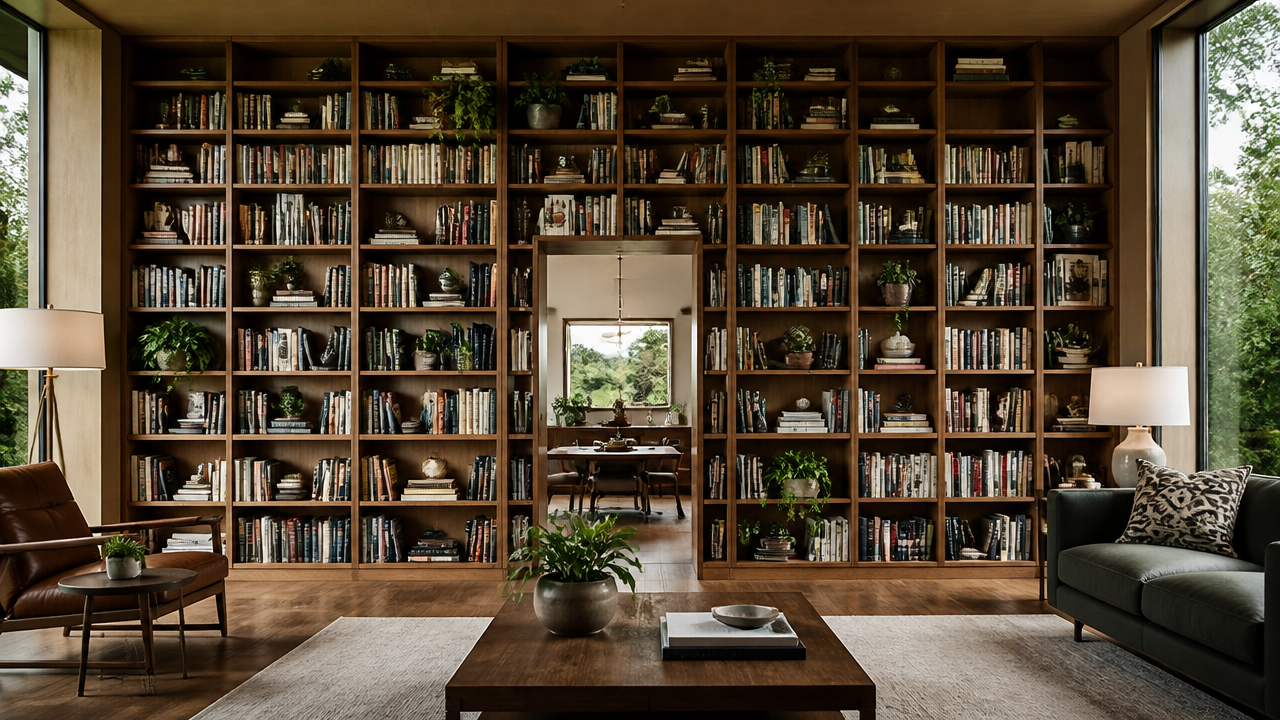
What makes a truly great library bookshelf stand out from every other home storage unit you’ve ever seen? Whether you’re prepping a cozy autumn reading nook or building a permanent study, the right library bookshelf design transforms clutter into calm. These twelve options prove that smart placement beats expensive furniture every single time. You get better airflow, cleaner lines, and a spot that actually invites you to sit down and read. Pick one that fits your wall and watch your space breathe.
Quick Questions and Answers
Question: What are the best bookshelf designs for a home library? Answer: Strong choices come down to built-in walls, floating mounts, ladder racks, corner units, under-stair niches, and picture ledges. Custom builds give rooms a finished architectural feel. Open wall units free up square footage. How you arrange books matters just as much. Tight grouping creates order while loose styling feels relaxed. Your layout choice sets the entire tone for the room.
Question: How do I choose a bookshelf design for small room? Answer: Living Spaces suggests tall, narrow cases because they reach upward without crowding the floor. Wall-mounted or floating panels work perfectly when space feels tight. You simply remove heavy legs and let shelves kiss the wall. Under-stair zones also steal dead area for extra storage. Measure your exact height limits first so everything fits without blocking doorways or windows.
Question: Are built-in bookshelves worth it for a library? Answer: Those custom installations pay off when you want a fixed reading room that matches the house architecture. Planning around exact wall lengths saves money later. Designer publications consistently rank full-wall built-ins as top picks for polished home libraries. The setup hides hardware completely. You gain seamless cabinet doors and tailored trim. The finish looks permanently intentional rather than temporarily assembled.
Key Takeaways
• Built-in systems anchor rooms and deliver a permanent, high-end finish. • Floating and ladder units clear floor space for smaller layouts. • Styling choices dictate whether shelves look crowded or intentionally curated. • Weight limits and stud anchoring matter more than aesthetic trends.
| Shelf Type | Installation Difficulty | Floor Space Saved | Best Room Size | Estimated Cost |
|---|---|---|---|---|
| Full-Wall Built-In | High | Complete | Large | $$$$ |
| Floating Wall Unit | Medium | Complete | Small | $$ |
| Ladder-Style Rack | Low | Partial | Medium | $$ |
| Under-Stairs Nook | Medium | Complete | Any | $$$ |
| Modular Cube Grid | Low | None | Flexible | $ |
1. Best Full-Wall Built-In Shelving
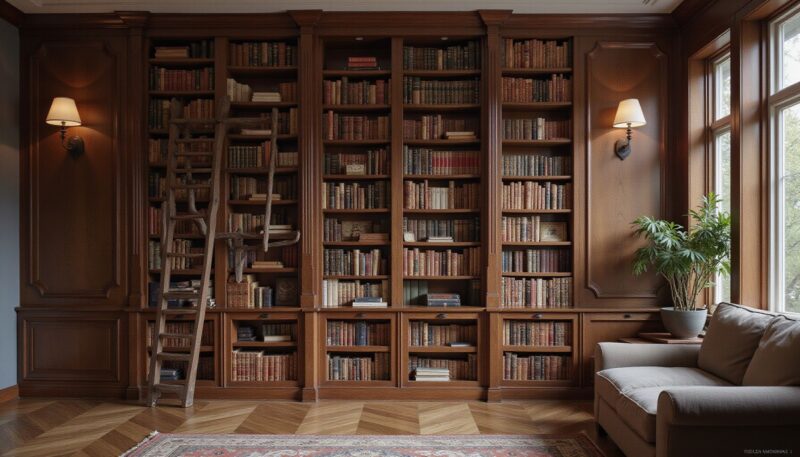
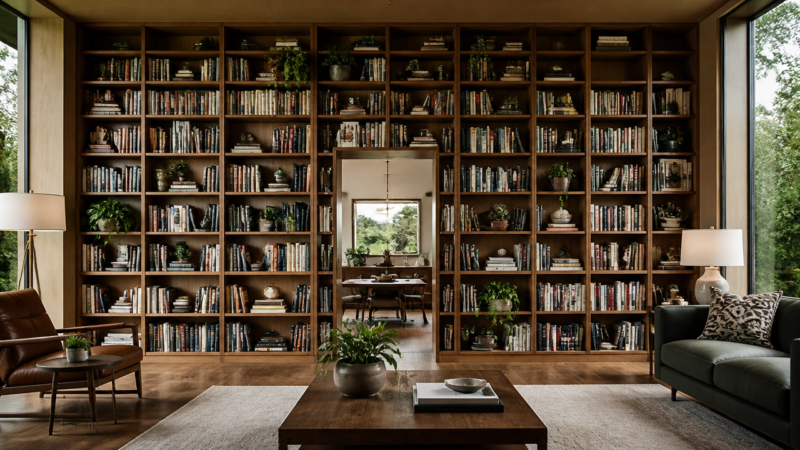
Covering an entire wall changes how people move through a room. Architects at the American Institute of Architects note that continuous shelving acts like structural framing rather than temporary furniture. You build custom trim around the edges to hide gaps. Cabinet bases hold heavier hardcovers near the bottom. Asymmetrical spacing keeps the grid from looking robotic. Empty panels break up the vertical lines. The result feels permanent and deeply personal. Visit this guide on maximizing small apartment spaces if you worry about taking up too much floor area. Elites publications often pair this layout with painted MDF panels and brass hardware. You achieve a museum-grade backdrop that anchors heavy furniture.
2. Easy Under-Stairs Storage Nooks
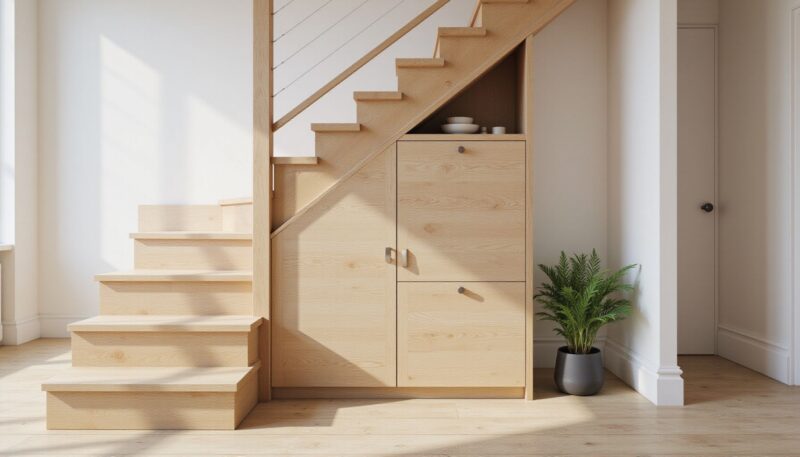
Triangular gaps beneath stairs usually collect dust balls and old umbrellas. You can fix that mess by framing out a snug shelf zone. Custom joinery tucks sliding drawers behind lower panels. Pull-out bins catch stray notebooks and magazines. Builders love this trick because it turns dead square footage into working storage. You only lose ceiling height where people rarely walk anyway. The hidden compartments keep visual noise low. Family members stop dumping clutter on the landing floor. The Library of Congress recommends converting unused architectural voids into dedicated study zones. Proper ventilation prevents moisture buildup in enclosed timber frames. You preserve older homes while adding modern convenience.
3. Genius Floating Wall Shelves
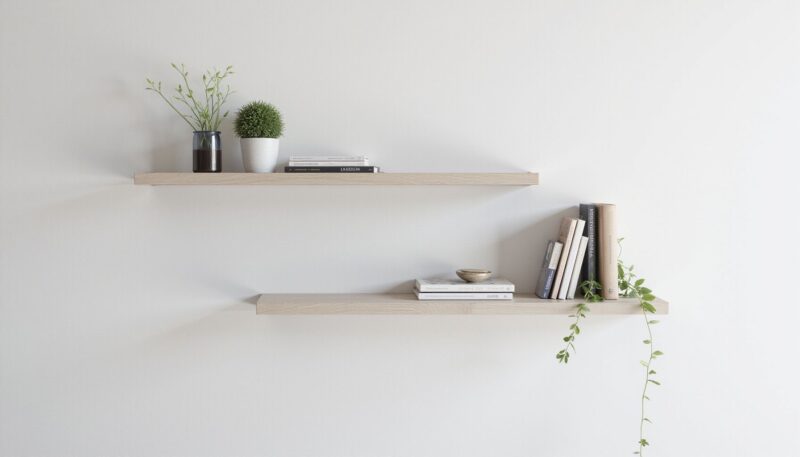
Removing heavy support legs instantly opens up floor plans. Clean metal brackets vanish behind thick wood planks. Anchoring into wall studs matters a lot here. Drywall alone snaps under stacked encyclopedias. Mount plates distribute weight evenly across multiple studs. You leave breathing room between boards so rugs stay visible. Lighter materials keep morning cleaning quick. Dust sweeps away without crawling underneath bulky frames. Simple powder-coated steel brackets cost almost nothing and disappear visually. You repaint the wall periodically without disturbing fastened boards. Renters appreciate the damage-free return deposit potential.
4. Aesthetic Arched Alcove Shelving
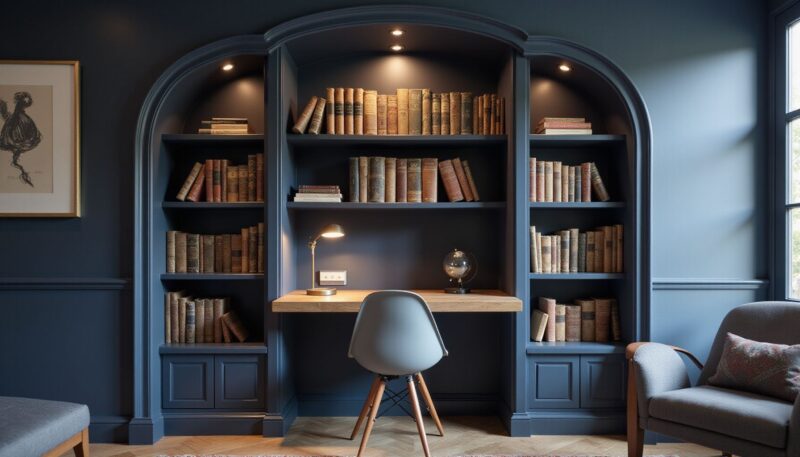
Curved niches borrow heavily from European palace design. Paint the arch a darker tone than the surrounding plaster. Books face outward when you stack them flat against the curve. Vertical rows sit neatly in the corners. Shadows play across the rounded edge throughout the day. Natural light catches spines differently depending on window placement. The shape guides eyes upward instead of locking them on straight horizontal lines. Traditional homes suit this detail especially well. Crown molding extensions bridge the arch to the ceiling beam. You gain a sculptural focal point that requires zero floor footprint. Vintage aesthetics thrive under arched framing.
5. Stunning Bookshelf Room Dividers
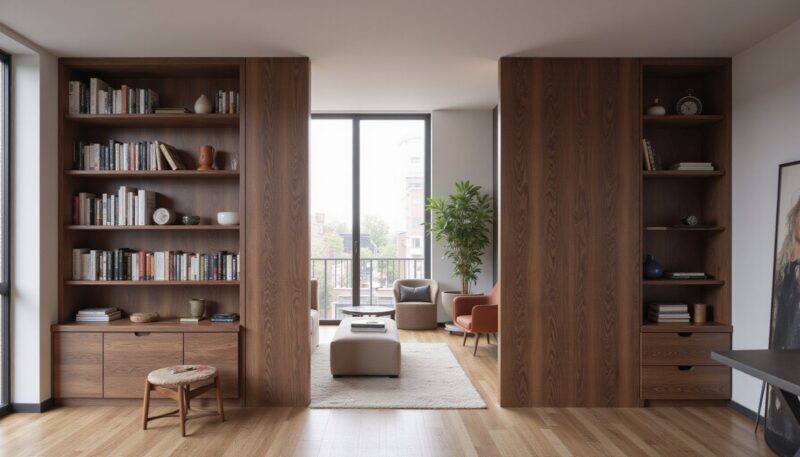
Tall freestanding racks split large studios without closing off light. You mount open-back frames so sightlines pass right through the slats. Placing a desk behind one side creates a quiet workspace. Plant stands slip easily into lower gaps. Air moves freely around the room during summer months. Moving the divider takes twenty minutes and a good grip. Studios benefit from this flexible zoning method more than anything else. Check out 12 creative little library ideas you will wish you knew for extra styling tricks. Metal cross-bracing prevents wobbling when upper shelves carry heavy weights. Temporary partitions beat permanent drywall construction every time.
6. Modern Ladder-Style Bookshelves
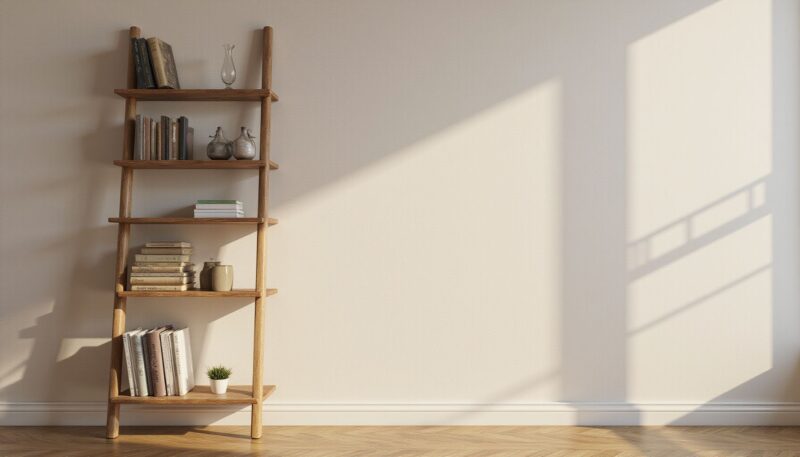
Tapered wooden rails lean comfortably against bare walls. You slide the entire unit sideways to change the room flow. Mid-century interiors favor this casual silhouette. Dark walnut finishes balance the lightweight frame. Adjustable shelves handle oversized art books without bending. Casters lock firmly so the rack stays put during thunderstorms. Casual living rooms welcome the informal vibe. Formal dining areas usually look out of place with leaning racks. Solid hardwood cores resist warping in humid basements. You angle the back legs slightly backward to increase stability. DIY builders can cut their own tapered rails with basic hand saws.
7. Smart Picture-Ledge Displays
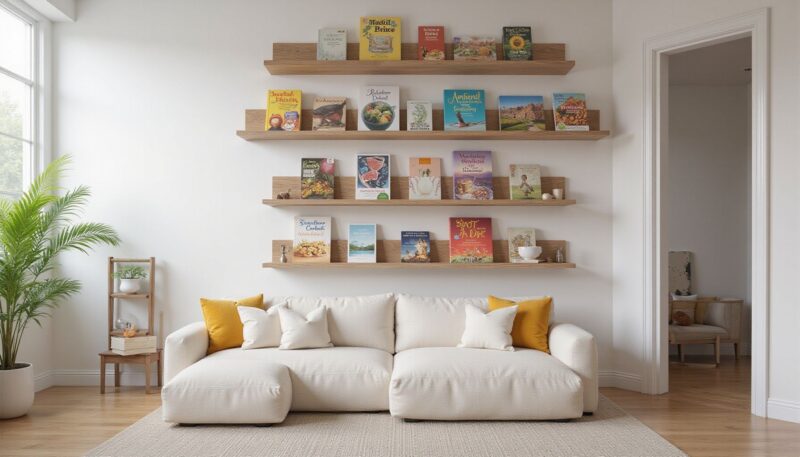
Narrow wooden boards feature a raised front lip to keep pages safe. Face favorite covers toward the seating area. Rotate collections monthly to match changing interests. Install three boards in a straight vertical line. Gaps between ledges create natural breathing space. Children’s libraries thrive under this setup. Tiny hands grab paperbacks easily without toppling whole stacks. Gallery walls transform into rotating exhibition grids. Cleaning requires nothing more than a damp microfiber cloth. Thin drywall anchors support the light loads without muddying plaster. You display travel mementos alongside vintage postcards effortlessly.
8. Brilliant Integrated Reading Benches
Sandwich a padded cushion between two tall shelf towers. You gain immediate access to current reads while lounging. Fabric upholstery adds warmth to otherwise rigid wood structures. Deep seats accommodate long legs comfortably. Under-seat compartments store throw blankets securely. The combination encourages staying in the reading corner longer. Natural light from nearby windows bounces off open pages. House Beautiful highlights this hybrid approach in dozens of designer layouts. Cozy rooms demand functional comfort. Plywood boxes receive foam padding and removable slipcovers. You wash the fabric annually to keep dust allergens down.
9. Essential Mixed-Use Corner Shelves
Standard square cabinets waste awkward intersection angles. Wraparound units hug both walls simultaneously. Corner geometry softens sharp interior transitions. Diagonal shelves maximize volume compared to flat panels. You store reference manuals alongside decorative vases without crowding. Heavy loads sit closest to the joint for safety. Rotating display faces allow browsing from any standing position. Transitional hallways feel wider once corner units disappear. Mortise joints keep corner seams invisible over decades. Particleboard cores accept veneer patches for a solid oak appearance. Budget builders save material costs by utilizing wasted wall intersections.
10. Practical Modular Cube Grids
Square modules snap together without tools. Rearrange configurations whenever tastes shift. White laminate blends into modern kitchens easily. Black steel frames anchor industrial lofts. Cubes rotate vertically to reveal storage depth. Stacking six units creates a full entertainment wall. Loose bricks stay secure with hidden connectors. You mix closed fabric baskets with open plastic bins. Weather-resistant plastics survive unheated garages without cracking. Polypropylene cubes withstand daily knocks from running toddlers. You disassemble the entire system for moving day. Reconfiguration keeps aging collections organized without buying new furniture.
11. Sleek Wall-Mounted Rolling Ladders
Chrome tracks bolt directly into ceiling joists. Brass ladders glide smoothly along overhead rails. Homeowners reach top shelves safely without wobbly step stools. Vintage libraries used rolling platforms originally. Steel mesh steps prevent foot slippage. Ceiling channels stay flush against drywall paint. Upper storage finally becomes accessible. Powder coating protects metal from rust in damp climates. Soft-close rollers reduce noise during operation. You clear the floor completely since tracks mount overhead. Maintenance involves wiping dust from track grooves monthly. Structural engineers verify joist capacity before drilling pilot holes.
12. Curated Glass-Front Display Cases
Tempered glass fronts protect rare editions from sunlight fading. Brass hinges open outward quietly. Interior LED strips illuminate titles automatically. Velvet backing absorbs shock during handling. Lockable doors keep valuable first editions secure. Climate control seals maintain stable humidity levels. Collector cabinets demand precise measuring before installation. UV-filtering glass blocks eighty percent of harmful rays. Magnetic latches stay invisible when doors close. You showcase porcelain figurines alongside antique leather bindings safely. Temperature sensors trigger alerts when storage areas grow too warm. Restoration experts recommend glass enclosures for delicate paper preservation.
Common Mistakes
Ignoring load capacity causes sudden shelf collapses. Drywall anchors fail quickly when stacked with textbook-heavy volumes. Always locate wooden studs before mounting boards. Heavy items belong on the lowest possible rungs to lower the center of gravity. Overcrowding kills visual interest. Publishers fill every gap until readers cannot pull books out without shaking the row. Leave at least one empty board between dense sections. Measuring twice saves costly returns. Window sills, baseboards, and radiators shrink usable shelf width by inches. Accounting for protruding furniture guarantees proper fitting. Skipping ventilation traps heat around electronics and sensitive paper. Air circulation extends book lifespan considerably.
FAQ
Q: What bookshelf style looks most modern in a library?
Modern home-library inspiration often features clean-lined built-ins, floating shelves, cube-grid shelving, and minimal wall-mounted units. Hommes Studio specifically frames its ideas as modern home library concepts, while Living Spaces highlights lighter, more open arrangements. Neutral finishes and negative space usually help the design feel modern. You strip away ornate crown molding and replace it with flat-panel wood. Matte black hardware replaces brushed brass accents. Geometric layouts replace traditional symmetrical grids. Leaving generous gaps between items prevents visual clutter. Simple lines paired with natural wood tones create a streamlined atmosphere that appeals to contemporary tastes.
Q: Can shelves be used as a room divider in a library?
Yes. The YouTube list includes a ‘bookshelf divider’ as one of its named ideas, showing that shelving can separate zones while still allowing light and visibility. This works well in open-plan rooms where you want a reading area without building a full wall. You orient the rack perpendicular to a sofa arrangement. Lower shelves hold decorative objects to anchor the partition visually. Upper shelves remain open so ceiling fans circulate air uninterrupted. Freestanding units require anti-tip brackets for safety. You achieve spatial separation without sacrificing brightness or creating dark tunnel effects.
Q: What should I display on bookshelf styling shelves?
Living Spaces recommends combining books with decorative objects such as ceramics and small plants, and mixing vertical and horizontal stacks. It also suggests varying heights and textures and grouping by color or theme for a cohesive look. Leaving some empty space helps the shelves feel intentional rather than crowded. You place a trailing pothos plant next to a woven basket. Stack three coffee tables horizontally beside a vertical stack of fashion magazines. Scatter metallic candleholders across empty boards. Group items by hue instead of random scattering. Negative space acts as visual punctuation between clusters.
Q: How do I make a bookshelf look like a luxury library?
Luxury library looks in the sources rely on custom built-ins, full-height shelving, rich materials, and careful detailing. Hommes Studio positions its examples as luxury bookcases, and Architectural Digest’s gallery focuses on built-ins that receive special attention to planning and finish. Integrated seating, molding, and symmetry are common cues in this style. You select solid walnut or quarter-sawn oak for visible grain patterns. Add upholstered headwalls behind reading benches. Install dimmable sconces flanking the central panels. Symmetrical layouts communicate wealth and restraint. Hand-finished varnishes replace factory laminates entirely.
Q: What bookshelf ideas work near stairs or corners?
Corner bookshelves and under-stairs storage both appear in the idea lists as space-specific solutions. These formats are useful when the room has awkward geometry or leftover architectural space that would otherwise go unused. They are especially practical when you want storage without sacrificing the main floor area. You frame triangular units flush against stair stringers. Wraparound corner pieces connect two adjacent walls seamlessly. Diagonal bracing supports heavier loads on uneven floors. You eliminate awkward dead zones that frustrate standard rectangular furniture buyers. Measurement precision remains critical since angles compound quickly.
Q: How many bookshelf ideas should I compare before choosing one?
A focused comparison of about 9 to 14 distinct ideas is practical because the research sources themselves commonly present lists in that range. That number is enough to cover built-ins, floating shelves, ladder forms, corner units, and styling-heavy options without becoming repetitive. It also makes it easier to compare space, cost, and installation effort side by side. You shortlist three candidates that match your budget. Test room mockups using cardboard templates. Walk through the space imagining daily interaction. Decision fatigue sets in past fourteen options. Quality outweighs quantity every single time.
Q: What makes a bookshelf design feel cozy for reading?
House Beautiful’s cozy home-library gallery and the other design roundups show that cozy libraries usually combine shelving with comfortable seating, layered lighting, and warm finishes. Built-ins can help by enclosing the space, while open shelves need styling to avoid feeling sparse. The overall effect comes from balancing storage, display, and a place to sit and read. You add wool throws draped over bench arms. Position floor lamps angled downward to cast warm pools of light. Choose deep navy or forest green paint for surrounding walls. Textured rattan baskets soften rigid wood lines. Comfort dictates layout choices over pure storage efficiency.
My Experience With 12 Beautiful Library Bookshelf Designs for Home Inspiration
I spent three weekends wrestling with a cheap particleboard unit that collapsed when I stacked hardcovers on the middle rung. The sagging middle shelf taught me to respect weight distribution immediately. I switched to solid oak floating brackets anchored into studs, and suddenly the wall felt anchored rather than temporary. You learn pretty fast that visual clutter screams chaos, while empty boards whisper calm. I started leaving one full board blank between every two packed rows. The difference is night and day. I also learned that reading benches deserve memory foam, not thin cushions that flatten after ten minutes. Your back will thank you during long winter nights. Which layout finally convinced you to ditch the wobbly secondhand rack?
Conclusion
Choosing the right library bookshelf design hinges on matching your room’s geometry with honest material choices. You gain longevity by prioritizing stud mounting and weight limits over trendy finishes. Open layouts breathe better than packed grids. Custom built-ins commit you permanently but reward you with architectural unity. Floating panels renter-friendly and quick to replace. Play with asymmetry, add breathing room, and stage your collection intentionally. Your reading corner should invite lingering, not just storing paper. Build it slow, measure twice, and let functionality lead the aesthetic.
References
- Architectural Digest. (2024, October 12). AD It Yourself: 38 Built-In Bookshelves to Help You Enter Your Reading Era. Architectural Digest. https://www.architecturaldigest.com/gallery/built-in-bookshelves-to-help-you-enter-your-reading-era
- Elle Decor. (2024, November 3). 10 Built-In Bookshelf Ideas to Create the Ultimate Home Library. Hearst Communications. https://www.elledecor.com/design-decorate/a71270651/built-in-bookshelf-ideas/
- Hommes Studio. (2024). 14 Home Library Design Ideas With Luxury Bookcases. Hommes Studio. https://hommes.studio/journal/home-library-design-ideas-with-luxury-bookcases/
- House Beautiful. (2024). 49 Cozy Home Library Ideas That Are a Bibliophile’s Dream. Hearst Magazine Media. https://www.housebeautiful.com/room-decorating/home-library-office/g696/designer-libraries/
- Living Spaces. (2024). 16 Bookshelf Ideas for a Stylish Home Library. Living Spaces Inc. https://www.livingspaces.com/inspiration/ideas-advice/decor-tips/16-bookshelf-ideas-for-a-stylish-home-library
- Times of India. (2024, March 15). 9 bookshelf designs for every Bibliophile’s dream decor. Bennett Coleman & Co. Ltd. https://timesofindia.indiatimes.com/life-style/home-garden/web-stories/9-bookshelf-designs-for-every-bibliophiles-dream-decor/photostory/112524444.cms

A Teacher with 5 years of experience. Our Expertise, is reliable to meet your full Academic development needs . Worked on many crafts and construction projects offering services from design to development to deployment over the years. You will find many of my works in my business portfolio on request.