Fall is one of the easiest seasons to decorate a preschool classroom for, since kids already know pumpkins, leaves, and cozy sweaters from the world around them. A good bulletin board does more than fill wall space though. It can teach colors, build fine motor skills through cutting and gluing, and give every child a chance to see their own work on display. This list covers thirteen fall bulletin board ideas built for preschool classrooms, from simple cutout displays to boards that double as a learning activity.
Quick Answer
The best fall bulletin board ideas for preschool include a handprint turkey farm, a leaf tree with student names, a pumpkin patch photo display, a gratitude tree, and a fall-in-love-with-learning board. Pick a theme kids can help create themselves so the board doubles as a hands-on activity, not just decoration.
Bulletin Board Idea
Effort Level
Skill Built
Handprint Turkey Farm
Easy
Fine motor
Leaf Name Tree
Easy
Name recognition
Pumpkin Patch Photo Display
Medium
Community
Gratitude Tree
Medium
Social-emotional
Apple Orchard Counting Board
Harder
Early math
Leaf Name Tree
Most Used
Handprint Turkey Farm
Classic Favorite
Pumpkin Patch Photo Display
Very Popular
Gratitude Tree
Growing Trend
1. Leaf Name Tree
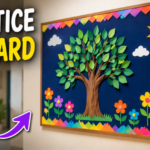
Cut a large brown trunk and branches out of craft paper and staple it to the board. Give each child a paper leaf to decorate with their name and one thing they love about fall, then arrange the leaves across the branches. A simple headline like “Our Leafy Learning Tree” ties it together and turns the board into a name recognition activity every child can point to.
Leave a small gap of bare branches near the bottom so late enrollees or a new student joining mid-year still have a spot to add their own leaf later without needing to redo the whole board.
Cut leaves from red, orange, yellow, and brown paper so the tree has natural color variety instead of one flat shade. Letting each child pick their own leaf color also gives them a small sense of ownership over the finished board.
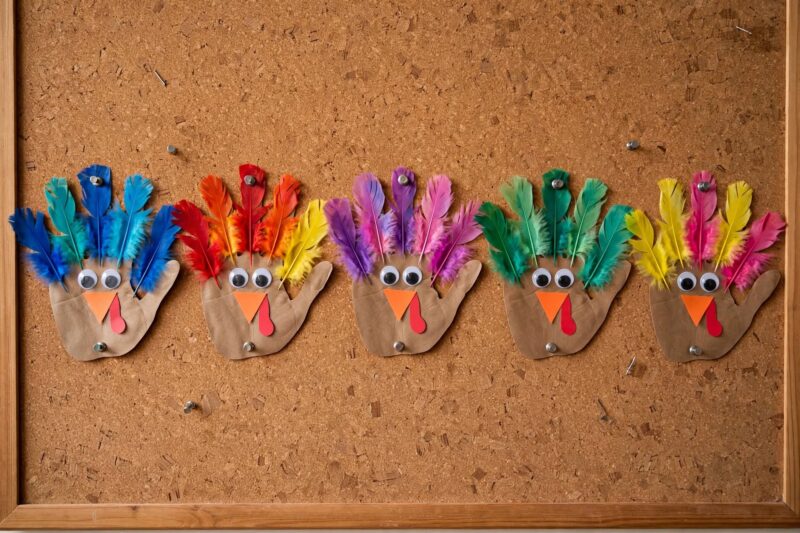
2. Handprint Turkey Farm
Trace each child’s hand on construction paper and let them cut it out with safety scissors, then decorate it into a turkey with googly eyes, feathers, and paint. Pin the finished turkeys across the board to build a whimsical little turkey farm. This craft is a preschool classic because tracing and cutting hands builds real fine motor skills while making something kids are proud to show their families.
Save one turkey template as a spare in case a child is absent on craft day, so nobody misses out on being part of the farm once everyone else’s turkey is already pinned up.
Set up a small assembly line, one table for tracing, one for cutting, one for decorating, so the activity moves smoothly with a full class instead of bottlenecking at one station.
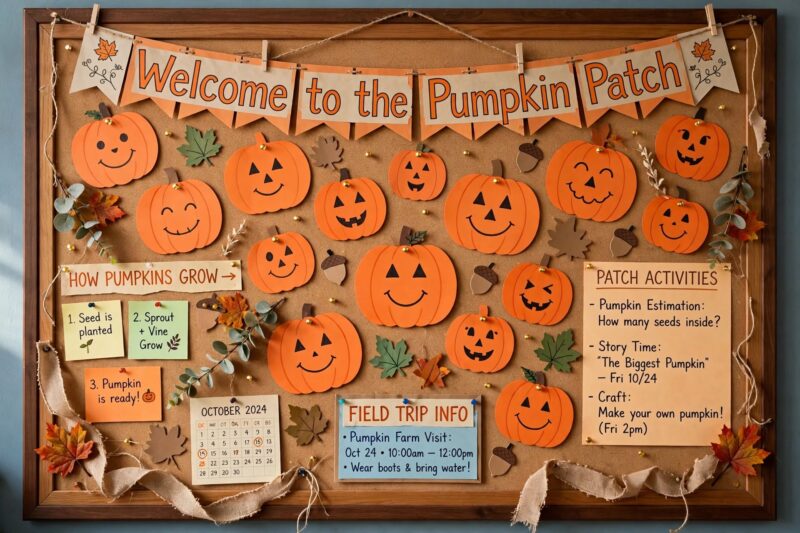
3. Pumpkin Patch Photo Display
Take a photo of each child and place it so their face peeks out from behind a paper pumpkin cutout, like they are growing right in the patch. Add a “Welcome to Our Pumpkin Patch” headline across the top. This board doubles as a name-learning tool for parents and visitors, since each pumpkin can be labeled with the child’s first name underneath.
This board also works well as a rotating monthly feature, swap the pumpkin cutouts for snowmen or flowers later in the year while keeping the same photo-behind-a-shape concept for every season.
Take photos against a plain background so the pumpkin patch scene stays the visual focus rather than a busy classroom background showing through behind each child’s face.
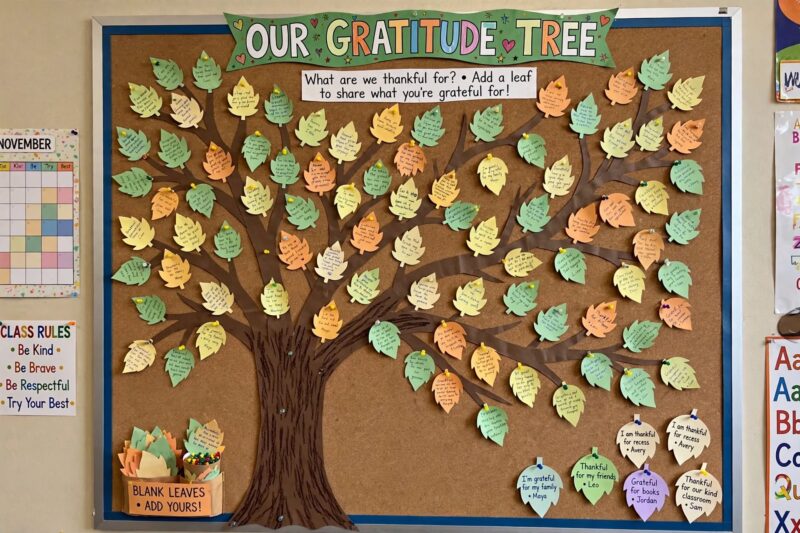
4. Gratitude Tree
Build a bare tree out of craft paper, then give each child a paper leaf or feather to add once they name something they are thankful for. A teacher can write down younger children’s answers for them. This board works especially well heading into Thanksgiving and gives children an early, simple way to practice expressing gratitude out loud.
Read a few leaves out loud at pickup time so families can see what their child shared that day, which turns the board into a small daily conversation starter at home too.
Add a new leaf every few days rather than filling the whole tree in one sitting, so the board keeps growing and changing throughout October and November instead of sitting finished and static.
5. “Fall in Love With Learning” Board
Use the classic fall pun as your headline and pair it with hearts made of small red and orange leaves. Underneath, add photos or drawings of kids doing favorite classroom activities, reading, painting, building blocks. It is a simple play on words that still lands with preschoolers once a teacher explains the joke, and it works as a welcoming board for open house or back-to-school events.
Add a small mirror or a laminated cutout speech bubble near the board so kids can practice saying the phrase themselves, which turns a purely visual pun into a bit of early language play too.
Swap “learning” for “our class,” “school,” or “friends” depending on what message fits your classroom best that month, since the same leaf-heart design can be reused with a new word each time.
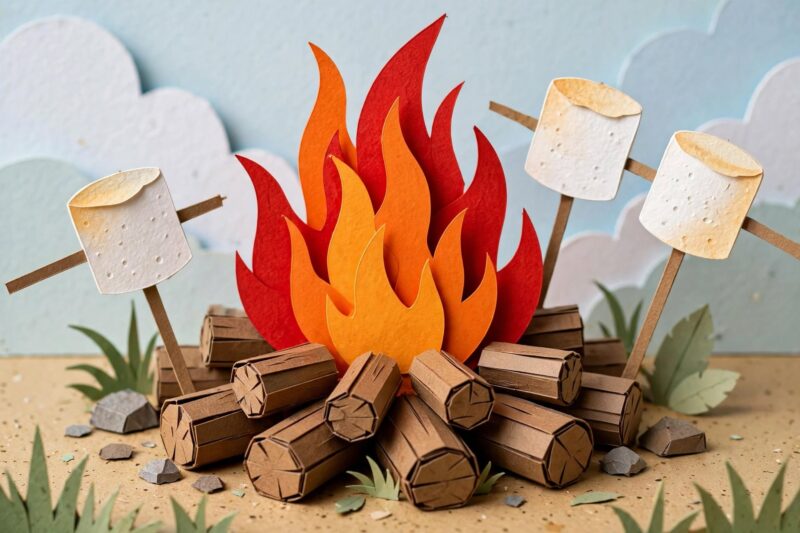
6. S’mores Campfire Board
Build a paper campfire scene with orange and red flames, then add a marshmallow cutout for each child with their name written across it, roasting over the fire on a stick. A headline like “Back for S’more Learning” ties the camping and fall theme together. This one is a hit because kids love spotting their own marshmallow in the fire.
Add a few small paper logs at the base of the fire and a couple of camping chair cutouts nearby, small details like these help sell the campfire scene beyond just the flames and marshmallows.
Layer the flames using two or three shades of red, orange, and yellow paper cut into simple flame shapes, which gives the campfire more depth than a single flat color would.
7. Apple Orchard Counting Board
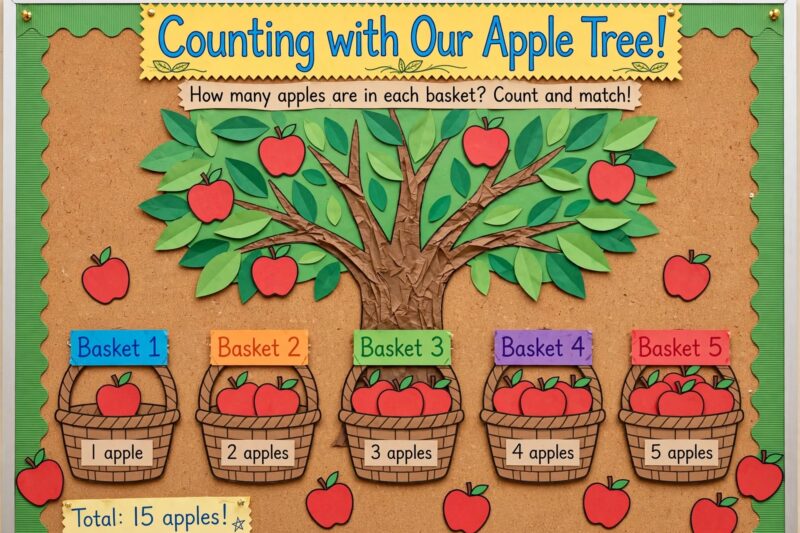
Build a simple apple tree and add numbered baskets underneath. Have children glue the matching number of paper apples into each basket, one apple in basket one, two in basket two, and so on. This turns the bulletin board into an early counting activity kids can revisit and point to throughout the fall unit, not just a one-time display.
Laminate the number baskets so the apples can be removed and reattached with reusable adhesive, letting the same board double as a hands-on math center kids can practice with during free choice time.
Keep the counting range small, one through five or one through ten depending on your class’s age and skill level, so the activity stays achievable rather than overwhelming for younger preschoolers.
8. Farm Stand Produce Board
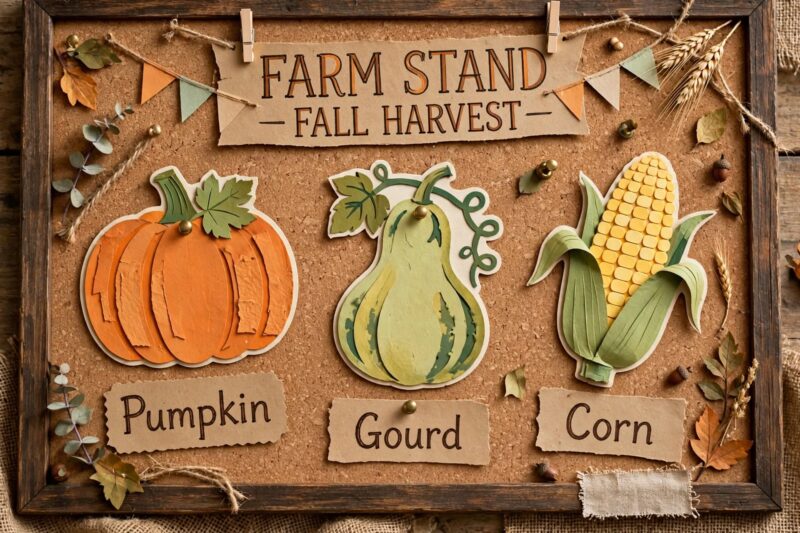
Cover the board with a farm scene background and attach cutouts of fall produce, pumpkins, gourds, corn, apples, each labeled with its name in simple print. This board doubles as an early vocabulary tool, since children can match the picture to the word as they learn fall harvest terms during circle time or a farm-themed unit.
Rotate in seasonal produce as fall progresses, apples early on, then pumpkins and gourds closer to Halloween, so the board naturally updates itself as the weeks move toward Thanksgiving.
Add a few real mini pumpkins or gourds along the bottom edge of the board with a small shelf or ledge, since a bit of texture and dimension makes the display feel more like an actual farm stand.
9. Tear Art Pumpkin Patch
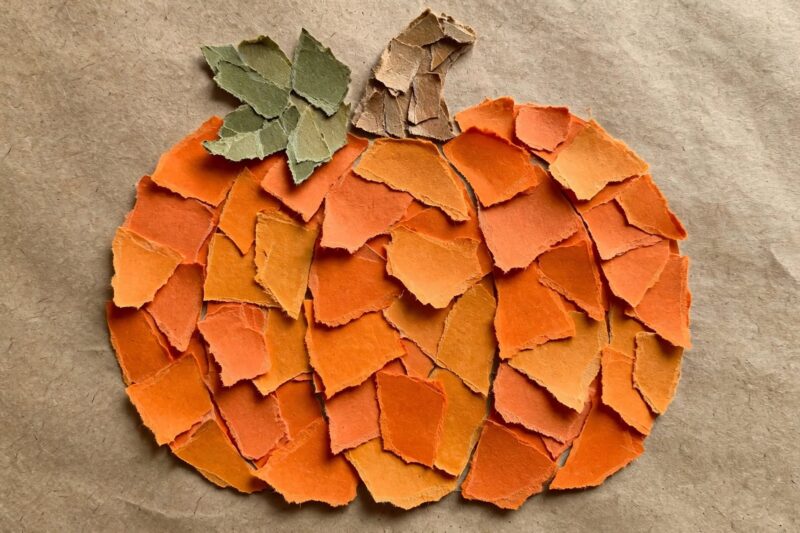
Give each child small pieces of orange paper to tear, not cut, into rough shapes, then glue them onto a pumpkin outline to fill it in. Tearing paper is a great sensory activity for preschoolers since it works different hand muscles than cutting with scissors and needs no sharp tools at all.
This activity works well for children who are not yet confident with scissors, since tearing needs less hand control than cutting a clean line, making it an easy option early in the school year.
Add green tissue paper vines and stems between the finished pumpkins to fill any gaps on the board and give the whole patch a fuller, more connected look once every pumpkin is glued up.
10. “Being Nice Means…” Coffee Cup Board
Cut out paper coffee cups, a nod to the fall pumpkin spice trend, and have each child finish the sentence “Being nice means…” with help from a teacher writing down their answer. Pin the filled-in cups across the board. It is a playful way to fold a kindness lesson into a fall-themed display kids will recognize from cups they see with parents.
Save a stack of blank cup cutouts nearby so new answers can be added throughout the month whenever a teacher notices a child being especially kind to a classmate.
Read a few of the answers out loud during circle time before pinning them up, so the board becomes a shared class moment rather than something kids only notice on the wall later.
11. Favorite Fall Book Tree
Build a bare tree shape and decorate it with leaves, but instead of names, write each child’s favorite fall-themed book title on their leaf along with a small photo. This board encourages a love of reading while still fitting the fall visual theme, and it gives teachers an easy way to recommend related books to families at pickup time.
Update a few leaves partway through the season as children discover new favorite books during story time, so the tree keeps growing and stays a living reflection of what the class is reading.
Pair the board with a small basket of the actual featured books placed on a nearby shelf, so children can grab and read the exact titles they see represented on the wall.
12. Life Cycle of a Pumpkin Wheel
Cut a large circle and divide it into six or seven sections, then illustrate or attach pictures showing each stage, seed, sprout, vine, flower, green pumpkin, orange pumpkin. This board turns fall decor into a simple science lesson, giving children a visual way to understand how a pumpkin grows before it ever reaches the patch.
Pair this board with an actual pumpkin seed planting activity earlier in the fall if your program has outdoor space, so children can compare the real growing process to what the wheel shows on the wall.
Add small arrows between each section of the wheel so children can trace the growth cycle with a finger, starting at the seed and moving all the way around back to a new seed.
13. “Bee Kind, Bee Honest” Honeycomb Board
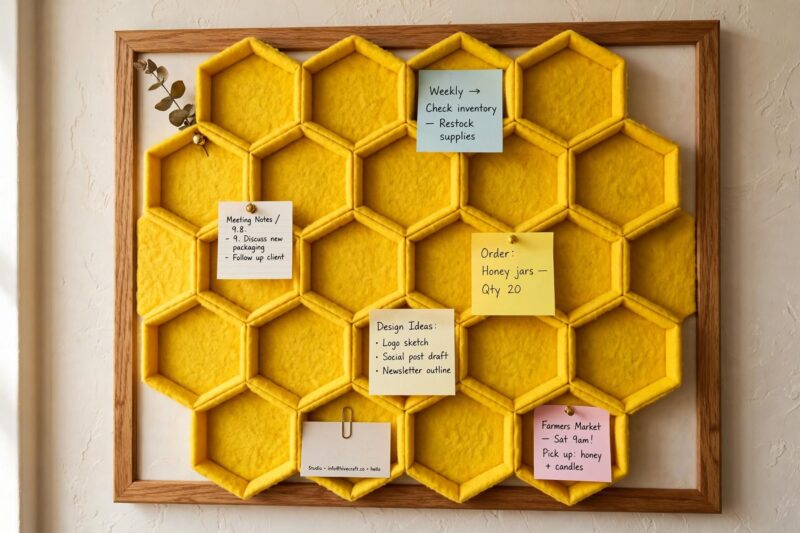
Cut yellow honeycomb hexagon shapes and write simple behavior reminders on each one, Bee kind, Bee honest, Bee a good friend, arranged in a beehive pattern. Add a headline like “Our Classroom is the Best Place to Bee.” Playing on the word “bee” gives a behavior chart a lighthearted fall feel instead of a plain rules poster look.
Revisit one honeycomb message each morning during circle time and talk through what it looks like in action, which helps the board reinforce classroom behavior expectations rather than sitting as decoration alone.
Keep each honeycomb message to three or four words so it stays easy for early readers to sound out on their own as they look at the board during free time.
FAQ
What colors work best for a fall preschool bulletin board?
Red, orange, yellow, and brown are the classic fall palette. A soft cream or light blue background helps these warm colors stand out clearly instead of blending together.
How often should a preschool bulletin board be changed?
Most preschool teachers refresh bulletin boards every four to six weeks, or at the start of a new seasonal unit, so the classroom stays visually fresh throughout the year.
What materials are needed for most fall bulletin boards?
Construction paper in fall colors, safety scissors, glue, a stapler, and a printed or hand-lettered headline cover most of the ideas on this list without needing any special supplies.
Can these bulletin board ideas involve the children directly?
Yes. Most of these ideas are designed so children help create part of the board themselves, tracing hands, decorating leaves, tearing paper, rather than just looking at a finished display a teacher made alone.
References
Highlights Early Learning, “20 Fall Bulletin Board Ideas for Preschool Classrooms” (2024)
Procare Solutions, “Five Fall Bulletin Board Ideas for Preschool” (2024)
Little Learning Corner, “Fall Classroom Bulletin Board Ideas” (2025)
Classpop!, “Fall Bulletin Board Ideas: 23 Best in 2026” (2026)
A Teacher with 5 years of experience. Our Expertise, is reliable to meet your full Academic development needs . Worked on many crafts and construction projects offering services from design to development to deployment over the years. You will find many of my works in my business portfolio on request.