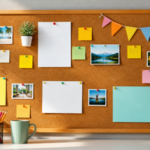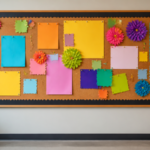



What makes a fifth-grade classroom feel like a place where students actually want to learn, not just show up? The answer combines smart setup choices, student autonomy, and strategies that work across reading, math, and social-emotional growth. Building a fifth-grade classroom requires balancing independence with structure, creativity with routine, and beautiful design with functional space. Whether you are decorating for the first time, refreshing a tired room, or looking to boost engagement mid-year, these fifth-grade classroom ideas address real needs teachers face daily. Read on to discover options that fit tight budgets, tight schedules, and tight spaces.
Quick Questions and Answers
Question: What are the best fifth grade classroom ideas? The best fifth-grade classroom ideas combine engagement, structure, and student independence. Strong options include learning stations, anchor charts, classroom jobs, reading corners, behavior systems, and project-based activities like Genius Hour or debates. The right mix depends on whether your classroom needs more organization, more creativity, or more hands-on learning.
Question: How do I decorate a fifth grade classroom cheaply? Low-cost fifth-grade classroom decorating uses student work, anchor charts, bulletin boards, and reusable labels instead of buying themed décor. We Are Teachers and Teaching Expertise both recommend making the room feel personal and functional rather than just decorative. This approach keeps costs lower while making the space inviting and useful for students.
Question: Can fifth grade classrooms use learning stations effectively? Yes. Dr. Matt Lynch specifically recommends interactive learning stations where each station focuses on a different subject or skill, giving students hands-on practice. Stations work well in fifth grade because students can rotate more independently and stay active while practicing multiple skills in one lesson.
Selection Criteria: Decor vs. Instruction
Choosing classroom ideas for fifth grade often comes down to one key tension: Do you invest in pre-packaged, coordinated decor, or do you build the classroom around student-created displays and functional learning tools?
Pre-purchased collections—like those offered through Chalkboard Classroom Decor—give you instant aesthetic cohesion and save planning time. The trade-off is cost and inflexibility. A themed classroom set looks polished but doesn’t adapt as your curriculum or student interests shift.
The smarter move for most teachers is to prioritize functional design. We Are Teachers recommends using anchor charts instead of premade posters, which means your wall space becomes a living reference tool for whatever you’re actually teaching that week. Student-created displays, bulletin boards filled with real student work, and a wall of knowledge cost almost nothing but deliver real academic value.
Budget matters too. Hand-traced name tags, class time capsules, and bean bag libraries built from donations are nearly free. Genius Hour requires only planning time. Meanwhile, a fully themed classroom can run $200 to $500+ depending on how far you go.
The best approach? Start with one or two functional anchor pieces—a reading nook, a classroom job chart, a wall for student work—then layer in low-cost engagement ideas. You’ll have a classroom that feels intentional without draining your wallet or your energy.
Instructional Strategies for High Engagement
Fifth graders are at an age where direct instruction alone no longer cuts it. They need movement, choice, and opportunities to pursue their own curiosity.
Genius Hour is one of the most powerful engagement tools available. Students get a set block of time—sometimes weekly, sometimes daily—to research a topic of their choice and present findings to the class. According to We Are Teachers, Genius Hour “students spend a set amount of time each day researching a topic before presenting a project.” This autonomy is transformative. Fifth graders feel heard. They stay on task because they chose the task. And they learn real research skills along the way.
Creative literacy projects push beyond worksheets. Book Bentos (visual book summaries using divided compartments), fictional news broadcasts, character letters, and digital postcards turn reading comprehension into something students actually want to make. The Creative Educator lists these as core fifth-grade activities because they combine literacy rigor with student agency.
Interactive learning methods keep energy high. Classroom debates, scavenger hunts for evidence, educational games, and virtual guest speakers break up direct instruction and let students actively engage with content rather than passively receive it. Dr. Matt Lynch emphasizes that “each station can focus on a different subject or skill set, allowing students to engage in hands-on activities.” Learning stations work especially well in fifth grade because students have the independence to rotate without constant supervision, and the variety keeps attention sharp across the day.
1. Genius Hour: Student-Directed Research and Passion Projects

Genius Hour gives students one block per week (or more often) to pursue self-directed research on any topic that fascinates them. One student researches professional skateboarding. Another digs into ancient Egypt. A third builds a guide to local wildlife. At the end, they present findings to the class.
Why this works: Autonomy is the number one engagement driver at this age. Fifth graders are developing their sense of self and their opinions matter to them. When you give them genuine choice, compliance and effort follow naturally.
How to run it: Set a time frame (Friday afternoons work well). Provide access to research tools—library books, vetted websites, databases. Create a simple tracking sheet so students stay accountable. End with presentations, posters, or videos.
This idea is best for classrooms that need an engagement boost or where students seem disengaged during regular instruction. It also builds real research skills that carry into middle school and beyond.
2. Anchor Charts: Student-Built, Not Store-Bought
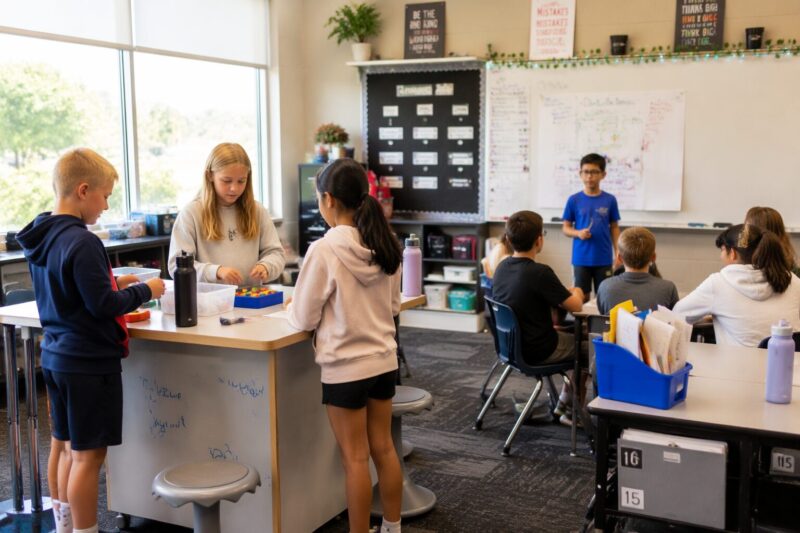
Anchor charts are large visual references that stay posted throughout the lesson cycle—they might explain a strategy for solving word problems, show steps for writing an essay, or list character traits with examples. The key: build them with your class, not buy them pre-made.
We Are Teachers advises using “anchor charts instead of premade posters” because student-created charts become learning tools, not just decoration. When students help create an anchor chart, they own the information. They see how thinking is organized visually. The chart becomes something they reference, contribute to, and internalize.
Best for: Any classroom management or instructional goal. Anchor charts work for reading strategies, writing procedures, vocabulary, math steps, behavior reminders, and social-emotional skills. Teachers working with students who struggle with executive function or need visual supports see the biggest impact.
Cost: Near zero if you use butcher paper and markers you already own.
3. Classroom Jobs System: Building Independence and Responsibility

Assign rotating jobs so every student has a role. Line leader, attendance monitor, materials manager, door holder, technology helper, time keeper. Jobs change weekly or monthly so everyone gets a turn at different roles.
This serves two purposes. It distributes classroom tasks so you’re not doing everything. And it gives students real responsibility and belonging—they have a job to do, and the classroom runs because of their work.
According to We Are Teachers, implementing classroom jobs is a direct way to “foster a growth mindset” while also managing logistics. Fifth graders take these jobs seriously when you treat them seriously.
Best for: Teachers who feel stretched thin and classrooms where student buy-in feels low. When students feel responsible for classroom operations, behavior and engagement improve.
Tip: Make job cards visual and simple. Laminate them and rotate using a chart so transitions are clear.
4. Reading Oasis: A Dedicated Comfort Space for Independent Reading
Carve out a corner with cushions, bean bag chairs, a small bookshelf, and good lighting. This is the reading oasis. It’s not a punishment corner—it’s a reward zone and a refuge for independent reading.
Teaching Expertise notes: “You can build a bean bag library, or set the space aside as a reward zone for task completion and good behavior.” Fifth graders who finish work early earn time in the oasis. Students who need a reset can read there quietly. It becomes the most coveted real estate in your classroom.
Stock it with diverse books at multiple reading levels. Include graphic novels, poetry, realistic fiction, fantasy, nonfiction—whatever hooks readers. Rotate titles monthly so it stays fresh.
Best for: Classrooms where independent reading time is part of your literacy block. Also ideal if you have students who need sensory breaks or quiet spaces to regulate emotions.
Cost: $0–$100 depending on whether you source donated cushions or buy new. Used bean bags from online marketplaces cost $10–$30 each.
5. Wall of Knowledge: Functional Academic Display
Instead of decorative bulletin boards, dedicate one or two wall spaces to a “wall of knowledge”—a living reference guide that students actually use. It might include a word wall with currently taught vocabulary, anchor charts for strategies, student work samples labeled with learning goals, or a reference guide for processes (how to cite, how to write dialogue, how to format a heading).
The difference from a bulletin board: every item serves an instructional purpose. Students consult it during independent work. It’s not pretty decoration—it’s a tool. We Are Teachers recommends this approach because it maximizes wall real estate while supporting student independence.
Update it as your unit changes. Laminate key pieces so they last all year.
Best for: Any classroom, but especially helpful for students who benefit from visual references and for teachers who want to reduce hand-raising and clarification questions.
6. Interactive Learning Stations: Differentiated, Hands-On Centers
Set up 3–5 stations around the room, each focused on a different skill or subject. One station might be a writing station with prompts and revision checklists. Another could be a math manipulatives station for practicing a new strategy. A third might be a reading comprehension station where students answer questions about a shared text.
Students rotate through stations on a schedule, spending 10–20 minutes at each. Rotations can happen daily, a few times per week, or during a specific “station time.”
Dr. Matt Lynch emphasizes that stations allow students to “engage in hands-on activities” and work more independently than whole-group instruction allows. Fifth graders have the maturity to move between stations without constant monitoring, which makes this strategy efficient for teachers managing 20+ students.
Best for: Classrooms where students work at different levels and need differentiation. Also powerful for breaking up direct instruction and keeping hands-on learners engaged.
Setup tip: Create clear written directions at each station so students know exactly what to do without asking.
7. SMART Goals: Teaching Students to Set Achievable Targets
SMART goals are Specific, Measurable, Attainable, Relevant, and Timely. Instead of saying “I want to be a better reader,” a SMART goal is “I will read two chapters of my book and write one sentence about my favorite part three times per week by October 31st.”
The Creative Educator includes goal-setting as a core fifth-grade activity because it teaches metacognition and ownership. When students set their own goals, they become invested in reaching them. Plus, it’s a life skill that transfers far beyond your classroom.
Have students set goals at the start of each unit, quarter, or semester. Check in regularly. Celebrate progress. This works for academic goals (reading, math fluency, writing) and behavioral or social-emotional goals (making friends, managing frustration, raising my hand more).
Best for: Any classroom, but especially powerful for students who struggle with motivation or who don’t see the connection between effort and progress.
8. Class Time Capsule: Building Community and Memory
On the first day or during the first week, have each student contribute something to a time capsule. They might write a prediction about what they’ll learn, draw their self-portrait, write a letter to their future selves, or answer prompts about their interests and strengths.
Seal the capsule and open it during the last week of school. Students re-read their predictions and reflections, seeing how much they’ve grown and changed.
This is low-prep, low-cost, and emotionally powerful. We Are Teachers recommends the time capsule as a way to “get to know your 5th grade class and finish decorating during the first week of school.”
Best for: New teachers building classroom culture or any teacher working with a new class. It’s also beautiful for students who’ve struggled with transitions—they see that the year went fast and they made it through.
Cost: Free if you use a plastic container you already own.
9. Personalized Hand-Traced Name Tags and Introductions
On the first day, have students trace their hands on cardstock, cut them out, and decorate with words and pictures that describe themselves. Display them around the room, or students wear them as name tags.
Teaching Expertise calls this “an activity that has students trace their hands and decorate with words and pictures that describe themselves.” It does multiple things at once: students introduce themselves, you learn their names faster, and the room gets instant student-created decor that actually means something.
You can extend this by having students share their tags with the class—it becomes a getting-to-know-you activity that’s less forced than typical icebreakers.
Best for: The first week of school, especially if you have a lot of new students or if social anxiety is high in your group.
10. Brain Breaks and Movement Routines: Keeping Energy Regulated
Fifth graders sit for longer stretches than younger kids, but they still need movement breaks—especially if they’re transitioning between subjects or after quiet work time.
Brain breaks can be simple: two minutes of jumping jacks, a quick dance to a favorite song, a guided breathing exercise, stretching, or a silly movement game. Pedagogue highlights brain breaks as part of a balanced fifth-grade day, noting that they help with focus and behavior.
Schedule them intentionally. A brain break before math feels different than one mid-lesson. Consistent timing trains students to expect them and helps them self-regulate.
Best for: All classrooms, but especially helpful for students with ADHD, anxiety, or restlessness. Even for “good” classrooms, brain breaks prevent the energy crash at 2 p.m.
Cost: Free.
11. Themed Classroom Days and Immersive Environments
Some teachers create an overarching theme for the classroom—Hogwarts, an enchanted forest, a news bureau, a museum. While a full theme isn’t necessary, themed days or immersive units can boost engagement.
We Are Teachers suggests “Be the headmaster of Hogwarts” as one fifth-grade classroom idea. Whether it’s a month-long unit where students run a classroom “school of magic” or a Friday tradition where everything ties to a single theme, immersion captures imagination.
Teaching Expertise recommends balancing aesthetics with function: “a theme works best when it is easy to maintain and tied to how the room functions.” A theme that requires constant upkeep or doesn’t serve instruction will drain you.
Best for: Teachers who love creative classroom setup and have the energy to maintain décor. Also powerful for classes that need a coherent identity or a behavior reset.
| Classroom Idea | Primary Benefit | Cost | Best For |
|---|---|---|---|
| Genius Hour | Student autonomy & engagement | Free (planning time) | Disengaged learners; building research skills |
| Anchor Charts | Visual learning support & independence | $10–$20 | All classrooms; students needing visual references |
| Classroom Jobs | Responsibility & task distribution | Free | Teachers stretched thin; building buy-in |
| Reading Oasis | Independent reading & emotional regulation | $0–$100 | Literacy-rich classrooms; students needing breaks |
| Wall of Knowledge | Functional reference & student consultation | $15–$30 | All classrooms; visual learners |
| Learning Stations | Differentiation & hands-on engagement | $20–$50 | Mixed-ability classes; kinesthetic learners |
| SMART Goals | Metacognition & student ownership | Free | All classrooms; low-motivation students |
| Class Time Capsule | Community-building & reflection | Free | New classes; transition support |
| Hand-Traced Name Tags | Introductions & student-created décor | $5–$10 | First week; low-prep setup |
| Brain Breaks | Focus & behavior regulation | Free | All classrooms; high-energy students |
| Themed Days | Imagination & classroom cohesion | $10–$50 | Creative teachers; identity-building |
Common Mistakes
Buying everything pre-made and hoping it works. Purchased decor collections look polished but don’t adapt to your students or curriculum. Student-created displays engage deeper and cost less.
Setting up an idea and never changing it. A reading oasis that sits empty, anchor charts that no one consults, job rotations that lose momentum mid-year—these happen when you don’t maintain the system. Pick ideas you genuinely have energy to run.
Choosing theme over function. A gorgeous Hogwarts room means nothing if students can’t find materials, don’t know classroom procedures, or sit passively during lessons. Function first, beauty second.
Trying every idea at once. You don’t need all 11 ideas running simultaneously. Pick 2–3 that solve real problems in your classroom, run them well, then add more next month.
Not getting student input. Fifth graders have opinions about what works for them. Ask which ideas they’d like to try. The more ownership they have, the more engagement you’ll see.
FAQ
Q: Why do fifth grade teachers use anchor charts?
Anchor charts are used because they keep important information visible and support student independence. We Are Teachers recommends using walls for anchor charts instead of premade posters, which makes the classroom more tailored to what students are actually learning. They work especially well for procedures, strategies, and content review—allowing students to reference them without raising their hands for clarification every few minutes.
Q: Are themed fifth grade classrooms still popular?
Yes, themed classrooms still appear in fifth-grade ideas lists, including Hogwarts-style rooms and subject-based themes. The theme is usually less important than whether it supports organization, student engagement, and classroom routines. A theme works best when it is easy to maintain and tied to how the room functions, not just how it looks.
Q: What classroom ideas help fifth graders stay engaged?
Ideas that help fifth graders stay engaged include debates, scavenger hunts, games, guest speakers, brain breaks, hands-on experiments, and student choice projects. Several sources recommend outdoor learning, classroom stations, and creative writing because they vary the pace of the day. Fifth graders often respond well when the lesson includes movement, challenge, and choice.
Q: How much do fifth grade classroom decor ideas cost?
Costs vary widely depending on whether you buy decorations or make them yourself. A DIY approach using bulletin boards, student art, anchor charts, and reusable supplies can be low cost, while coordinated decor collections and themed classroom sets are more expensive. The main cost distinction is between homemade setup and purchased decor packages.
Q: What are easy first week ideas for fifth grade?
Easy first-week ideas include personalized name tags, classroom jobs, a class time capsule, and activities that help students learn one another’s interests and strengths. We Are Teachers also suggests setting goals and building a positive classroom culture early. These ideas help establish routines and make students feel known right away, which sets the tone for the entire year.
Q: How can I make fifth grade classroom routines clearer?
Routines become clearer when the classroom uses visible systems like anchor charts, behavior charts, classroom jobs, and posted expectations. We Are Teachers specifically recommends using wall space for knowledge and reminders rather than buying pre-made expectation posters. These tools help fifth graders know what to do without needing constant teacher direction.
Q: Which fifth grade ideas work for both learning and decor?
Ideas that work for both learning and decor include reading nooks, wall-of-knowledge displays, bulletin boards with student work, and classroom libraries. These choices improve the room visually while also supporting literacy, organization, and independent learning. They are especially useful when you want the classroom to feel welcoming and academically purposeful at the same time.
My Experience With 11 Genius 5th Grade Classroom Ideas Worth Knowing
I’ve used most of these ideas across multiple fifth-grade years, and the pattern is always the same: the simplest ones create the biggest shifts. Genius Hour looks flashy, but hand-traced name tags on day one? That’s where the magic happens. Students see themselves on your walls immediately.
Anchor charts changed how I spend instructional time. Instead of re-explaining the writing process for the hundredth time, I point to the chart we built together. Suddenly students are independent, and I’m not a broken record. The real insight here is that visibility isn’t decoration—it’s scaffolding.
Bean bag libraries feel like luxury until you see a struggling reader actually choose to sit there instead of avoid reading altogether. A few cushions shifted one student’s entire relationship with books.
The mistake I made early? I tried everything at once. Genius Hour and stations and themed days and elaborate jobs rotations. I burned out in October. Now I pick one or two solid systems per quarter and let them breathe.
What’s one fifth-grade classroom idea you’ve tried that actually stuck with your students?
References
- We Are Teachers. (n.d.). 19 Fun and Inspiring Fifth Grade Classroom Ideas. https://www.weareteachers.com/fifth-grade-classroom/
- We Are Teachers. (n.d.). 70 Tips, Tricks, and Ideas for Teaching Fifth Grade. https://www.weareteachers.com/50-tips-tricks-and-ideas-for-teaching-5th-grade/
- Teaching Expertise. (n.d.). 5th Grade Classroom Ideas: Themes, Decorations, Welcome Packets, Crafts, And Discussions. https://www.teachingexpertise.com/k-5/5th-grade/5th-grade-classroom-ideas/
- The Creative Educator. (2024). 50 Activities for 5th Grade. http://thecreativeeducator.com/2024/articles/50-ideas-5th-grade
- Pedagogue. (n.d.). 20 Classroom Ideas to Excite Your 5th Grade Students. https://pedagogue.app/20-classroom-ideas-to-excite-your-5th-grade-students/
- Dr. Matt Lynch. (n.d.). 20 Classroom Ideas to Excite Your 5th Grade Students. https://www.drmattlynch.com/20-classroom-ideas-to-excite-your-5th-grade-students/
- TeacherVision. (n.d.). 25 Fun and Creative Classroom Decor Ideas for Fifth Grade. https://www.teachervision.com/classroom-management/25-fun-and-creative-classroom-decor-ideas-for-fifth-grade
- Chalkboard Classroom Décor. (n.d.). 5th Grade Classroom Decor Ideas. https://www.chalkboardclassroomdecor.com/collections/5th-grade-classroom-decor-ideas
Conclusion
Fifth-grade classroom ideas work best when they solve real problems—whether that’s engagement, organization, behavior, or student independence. You don’t need a perfectly themed room or every Pinterest-worthy activity. You need two or three solid systems that fit your teaching style and your students’ needs, run them consistently, and let them compound over time.
Start with a reading oasis if you teach reading-heavy literacy. Begin with anchor charts and classroom jobs if you need better classroom structure. Launch Genius Hour if motivation is the bottleneck. Add one more idea next month. By November, you’ll have a fifth-grade classroom that hums.
The classroom that works is the one you actually maintain, not the one that looks best on the first day of school. Choose wisely, start small, and adjust as you go. Your fifth graders will respond with focus, responsibility, and genuine engagement.

A Teacher with 5 years of experience. Our Expertise, is reliable to meet your full Academic development needs . Worked on many crafts and construction projects offering services from design to development to deployment over the years. You will find many of my works in my business portfolio on request.