Picture this: hundreds of curious visitors crowding around a bubbling volcano, gasping in amazement as colorful chemical reactions unfold before their eyes. Science exhibitions have the magical power to transform complex scientific concepts into captivating, hands-on experiences that inspire wonder and learning. Whether you’re a student preparing for your first science fair or an educator looking to spark curiosity in young minds, choosing the right project can make all the difference between a memorable presentation and a forgettable display.
Key Takeaways
• Start with your skill level: Choose projects that match your experience, from simple chemical reactions to advanced robotics experiments • Focus on visual impact: The best exhibition projects combine educational value with eye-catching demonstrations that engage audiences • Plan for interaction: Projects that allow visitors to participate or observe real-time changes create the most memorable experiences • Document everything: Proper research, hypothesis formation, and data collection elevate any project from a simple demonstration to serious science • Safety first: Always prioritize proper safety equipment and adult supervision, especially when working with chemicals or electrical components
🧪 Beginner-Friendly Science Exhibition Projects to Try
Starting your science exhibition journey doesn’t require a PhD in chemistry or access to expensive laboratory equipment. These beginner-friendly projects offer maximum visual impact with minimal complexity, making them perfect for younger students or first-time exhibitors.
The Classic Volcano Eruption
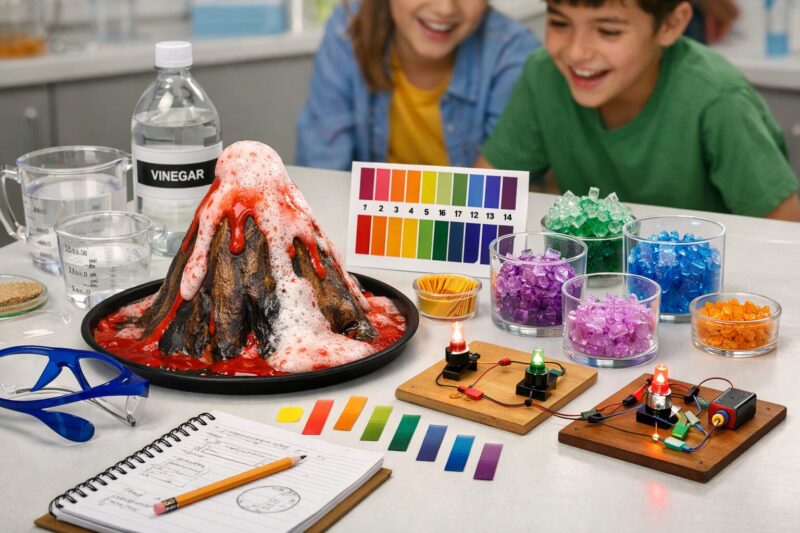
The volcano remains a science fair staple for good reason. This project demonstrates acid-base reactions while creating an impressive visual spectacle. Mix baking soda (sodium bicarbonate) with white vinegar (acetic acid) inside a clay or papier-mâché volcano model. The resulting chemical reaction produces carbon dioxide gas, creating a foaming “eruption” that never fails to captivate audiences.
Materials needed:
Baking soda (2 tablespoons)
White vinegar (1/4 cup)
Red food coloring
Liquid dish soap
Volcano model (homemade or purchased)
Crystal Garden Growth
Growing crystals demonstrates supersaturation and crystallization processes in stunning visual form. Using common household materials like salt, sugar, or Epsom salts, students can create beautiful crystal formations over several days or weeks. This project teaches patience while showcasing how molecules arrange themselves in repeating patterns.
pH Rainbow Experiment
Create a colorful display that teaches about acids and bases using red cabbage as a natural pH indicator. When cabbage juice encounters different household substances (lemon juice, baking soda, soap), it changes colors dramatically. This project combines chemistry education with an Instagram-worthy color spectrum.
Simple Circuit Demonstrations
Introduce electrical concepts with basic LED circuits powered by batteries. Students can create simple switches, demonstrate conductivity using different materials, or even build basic electronic games. These projects lay the foundation for understanding electricity while producing immediate, satisfying results.
🔬 Intermediate Science Exhibition Projects to Try for Developing Scientists
Ready to tackle more complex challenges? These intermediate-level projects require additional planning and materials but offer deeper scientific learning opportunities and more sophisticated presentations.
Solar-Powered Devices
Harness renewable energy by building functional solar-powered gadgets. Students can create solar ovens that actually cook food, solar-powered cars that race across tables, or solar charging stations for small electronic devices. These projects demonstrate photovoltaic principles while addressing current environmental concerns.
Project variations:
Solar oven reaching temperatures above 200°F
Solar-powered water purification system
Solar battery charger for phones or tablets
Solar-powered fan or motor demonstrations
Plant Growth Experiments
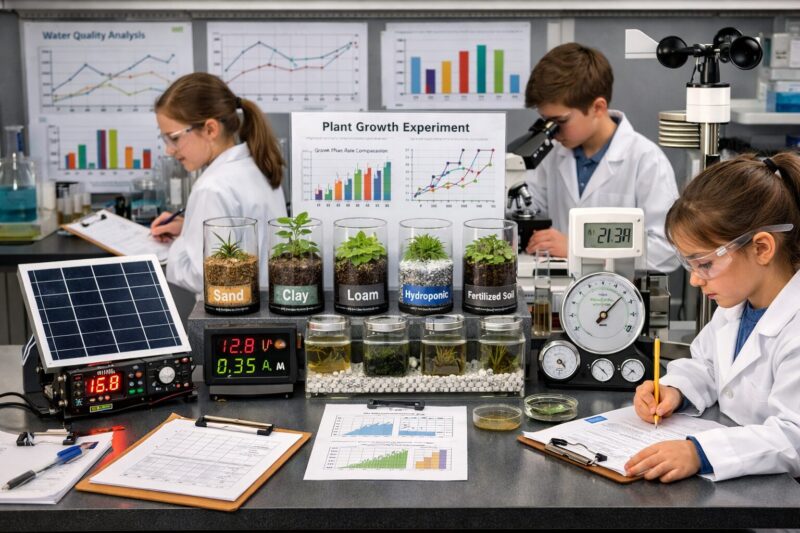
Investigate how different variables affect plant development through controlled experiments. Test the effects of light wavelengths, soil pH, fertilizer types, or music on plant growth. These projects require several weeks of careful observation and data collection, teaching proper scientific methodology.
Weather Station Construction
Build a functional weather monitoring system using basic meteorological instruments. Include thermometers, barometers, wind vanes, and rain gauges to create a comprehensive weather tracking setup. Students learn about atmospheric science while developing data collection and analysis skills.
Microscopic World Exploration
Dive into microbiology by examining pond water, soil samples, or household items under microscopes. Create detailed drawings and photographs of microscopic organisms, bacteria, and cellular structures. This project opens up an invisible world while teaching proper laboratory techniques and scientific observation skills.
🚀 Advanced Science Exhibition Projects to Try for Serious Student Scientists
For experienced students ready to tackle college-level concepts, these advanced projects offer opportunities to conduct genuine scientific research while creating impressive exhibition displays.
Robotics and Programming Projects
Design and build programmable robots that solve specific problems or perform complex tasks. Using platforms like Arduino or Raspberry Pi, students can create robots that navigate mazes, sort objects by color, or respond to voice commands. These projects combine engineering, programming, and problem-solving skills.
Advanced robotics ideas:
Line-following robot with obstacle avoidance
Voice-controlled home automation system
Robotic arm with precise movement capabilities
AI-powered image recognition system
Advanced Chemistry Investigations
Conduct sophisticated chemical analyses that could contribute to real scientific knowledge. Test water quality in local streams, analyze soil composition from different locations, or investigate the effectiveness of natural antibacterial compounds. These projects require proper safety protocols and often benefit from mentorship by professional scientists.
Physics Demonstration Platforms
Create interactive displays that illustrate complex physics principles like electromagnetic induction, wave interference, or quantum mechanics concepts. Build working models of particle accelerators, demonstrate magnetic levitation, or create visible representations of sound waves and frequency patterns.
Biotechnology and Genetics Projects
Explore cutting-edge biological sciences through DNA extraction experiments, bacterial transformation studies, or enzyme activity investigations. These projects often require access to specialized equipment and materials but offer insights into the rapidly advancing field of biotechnology.
📋 Planning and Execution Tips for Successful Science Exhibitions
Research and Documentation
Every successful science exhibition project begins with thorough research and proper documentation. Start by formulating a clear hypothesis and designing experiments that test specific variables. Keep detailed laboratory notebooks recording observations, measurements, and unexpected results.
Essential documentation includes:
Literature review of existing research
Detailed methodology and procedures
Raw data and measurements
Analysis and interpretation of results
Conclusions and future research directions
Safety Considerations
Prioritize safety throughout every aspect of project planning and execution. Research potential hazards associated with chemicals, electrical components, or biological materials. Always work under adult supervision when handling dangerous substances, and ensure proper ventilation, protective equipment, and emergency procedures are in place.
Presentation and Display Design
Create visually appealing displays that communicate scientific concepts clearly to diverse audiences. Use large, readable fonts, colorful charts and graphs, and interactive elements that engage visitors. Practice explaining complex concepts in simple terms that both children and adults can understand.
Audience Engagement Strategies
The most memorable science exhibitions invite audience participation and create emotional connections with scientific concepts. Design demonstrations that visitors can safely observe or participate in, prepare simple explanations for different age groups, and be ready to answer unexpected questions with enthusiasm and accuracy.
💡 Troubleshooting Common Exhibition Challenges
Equipment Failures and Backup Plans
Technology and experiments don’t always cooperate during public demonstrations. Prepare backup equipment, practice demonstrations multiple times, and develop alternative explanations for when live experiments don’t work as expected. Sometimes the most valuable learning happens when students explain why experiments fail and how they would modify their approach.
Time Management and Preparation
Start planning exhibition projects well in advance, allowing time for research, experimentation, troubleshooting, and display preparation. Create realistic timelines that account for unexpected delays, material procurement challenges, and the iterative nature of scientific investigation.
Budget-Friendly Material Sourcing
Many impressive science projects can be completed using household materials, recycled components, or inexpensive supplies from hardware stores. Research alternative materials that achieve similar results, connect with local businesses that might donate supplies, and consider group purchases to reduce individual costs.
🎯 Conclusion
Science exhibitions offer incredible opportunities to transform abstract scientific concepts into tangible, engaging experiences that inspire curiosity and learning. Whether starting with simple chemical reactions or tackling advanced robotics projects, the key to success lies in matching project complexity to skill level while prioritizing safety, thorough documentation, and effective communication.
The 10 science exhibition projects to try outlined in this guide provide a roadmap for students and educators at every level. Remember that the most valuable aspect of any science exhibition isn’t winning awards or impressing judges—it’s the deep learning that occurs through hands-on investigation, problem-solving, and sharing discoveries with others.
Ready to start your next science exhibition project? Begin by choosing a topic that genuinely interests you, research existing knowledge in that area, and design experiments that test specific hypotheses. Don’t be afraid to start small and build complexity over time. The scientific method rewards curiosity, persistence, and careful observation—qualities that any dedicated student can develop.
Most importantly, embrace the inevitable challenges and unexpected results that come with scientific investigation. These moments often lead to the most significant learning and the most memorable exhibition experiences. Science is about asking questions, testing ideas, and sharing discoveries—and science exhibitions provide the perfect platform for all three activities:
A Teacher with 5 years of experience. Our Expertise, is reliable to meet your full Academic development needs . Worked on many crafts and construction projects offering services from design to development to deployment over the years. You will find many of my works in my business portfolio on request.