What makes the shortcut key combination to insert a link in Word different from every other keyboard command you use daily? The answer lies in how CTRL+K bridges selected text and web resources without breaking your typing flow. This insert link shortcut lets you attach URLs, email addresses, or file paths to words in seconds. Whether you are drafting a back-to-school research paper or a quarterly business report, mastering this keyboard shortcut keeps your hands on the keys and your focus on the content.
Quick Questions and Answers
Question: Why is CTRL+K the shortcut to insert a link in Word?
Answer: Microsoft chose CTRL+K because K is the first letter in the word “link” — it is a mnemonic shortcut, making it intuitive to remember. Pressing CTRL+K opens the Insert Hyperlink dialog box so you can quickly paste a web address or select a file without leaving the keyboard or navigating the ribbon menu.
Question: Can I insert a link in Word without using CTRL+K?
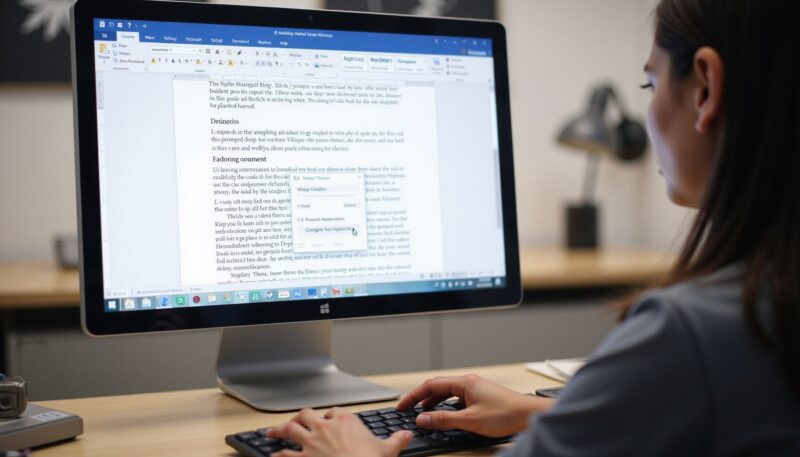
Answer: Yes. You can select your text, go to the Insert tab on the ribbon, and click the Link button. Right-clicking the selected text also offers the “Link” option from the context menu. Additionally, typing a full URL followed by Space or Enter automatically converts that text into an active hyperlink in most Word versions.
Question: What other shortcut opens the hyperlink dialog in newer Word versions?
Answer: In some newer versions, such as Microsoft 365, you might encounter Ctrl+Alt+H or Ctrl+Alt+K assigned to the hyperlink function depending on regional settings or custom keyboard layouts. However, CTRL+K remains the most consistent and widely recognized shortcut across all Word editions, including older versions.
Key Takeaways
CTRL+K (Windows) and Command+K (Mac) are the standard keyboard shortcuts for inserting a hyperlink in Word.
Using the shortcut keeps your hands on the keyboard, reducing interruptions to your writing flow.
You can also insert links through the Insert tab menu, right-click menu, or automatic URL detection.
The shortcut works across most Microsoft 365 applications, including PowerPoint and Excel.
In Word Which of the Following Shortcut Key Combination Inserts Link: Understanding the Basics
A hyperlink is a reference in a document that connects to another location — a web page, an email address, a specific section within the same file, or even a different document saved on your computer. When you insert a link in Word, you are telling the program to turn a piece of text or an image into a clickable element that takes the reader somewhere else.
Microsoft built the Insert Hyperlink function directly into the ribbon menu, accessible under the Insert tab in the Links group. But navigating through tabs and buttons interrupts the natural flow of writing. That is where keyboard shortcuts come in. The shortcut key combination to insert a link in Word — CTRL+K — was designed specifically to eliminate that interruption.
According to Microsoft’s official documentation, keyboard shortcuts in Word are intended to help users work faster and more efficiently by keeping both hands on the keyboard. The CTRL+K command is one of the oldest and most stable shortcuts in the suite, dating back to early versions of Word for Windows.
The logic behind the choice of K is simple: it stands for “link.” Unlike some shortcuts that feel arbitrary or require memorization, CTRL+K offers a direct mnemonic cue. Pressing those two keys simultaneously opens the same Insert Hyperlink dialog you would find by clicking through the ribbon, but in a fraction of the time.
Core Shortcut Combinations for Linking
The shortcut you use depends on your operating system. The differences are small but important for anyone working across both environments.
Windows: CTRL + K is the universal standard. Hold down the Control key, tap K, and the Insert Hyperlink dialog appears immediately.
macOS: Command (⌘) + K performs the same function. Apple keyboards do not have a Control key in the same position, so the equivalent uses the Command key instead.
Both shortcuts achieve the exact same result: they open a dialog where you can paste a URL, select a file, choose a heading within your document, or compose an email link.
Microsoft 365 users should note that these keyboard shortcuts work not only in the desktop version of Word but also in the web-based Word app running inside a browser. The browser version supports CTRL+K as a standard command, making it consistent regardless of whether you are using the installed software or the online edition.
Below is a comparison of the primary linking methods available in Word:
Method
Platform
Speed
Notes
CTRL+K
Windows
Fastest
Universal across all Word versions
Command+K
macOS
Fastest
Equivalent to Windows shortcut
Insert tab > Link
Both
Moderate
Requires mouse navigation to ribbon
Right-click > Link
Both
Moderate
Context menu option after selecting text
Auto-hyperlink
Both
Instant
Typing a URL followed by Space or Enter
The table shows that keyboard shortcuts are the fastest deliberate method. Auto-hyperlinks are technically instant but require you to type the full URL, which is not always practical when you want to embed a link behind descriptive text.
Why Keyboard Shortcuts Improve Workflow
Every time you lift your hands off the keyboard to reach for a mouse, you break your rhythm. Researchers and productivity experts call this “context switching” — the mental cost of shifting from one task to another. Even a two-second pause to grab the mouse can slow you down noticeably over the course of a long writing session.
The shortcut key combination to insert a link in Word removes that pause. You stay in the typing zone. Your hands remain on the home row, ready to continue writing the moment the link is applied.
This efficiency matters most in professional environments where speed and accuracy count. Reports, proposals, academic papers, and legal documents often contain dozens of hyperlinks. Using the mouse to insert each one costs measurable time. Using CTRL+K cuts that time to nearly zero.
Microsoft 365 Copilot and other AI-driven features are now part of the Word experience. But even with AI assistance, the fundamentals of document editing — including hyperlinking — still rely on traditional keyboard commands. Knowing the shortcut makes you faster than waiting for the AI to suggest a link or manually clicking through menus.
A guide from the University of Oxford (2024) on digital productivity notes that keyboard shortcuts reduce repetitive strain by minimizing mouse use. This is a practical health benefit over long days at the keyboard.
Executing the Process: Step-by-Step
The actual process of inserting a hyperlink using the keyboard is straightforward. Here is how it works from start to finish.
1. Select the target text. Use the mouse or hold Shift while using arrow keys to highlight the word or phrase you want to turn into a link. The text you select will become the clickable anchor.
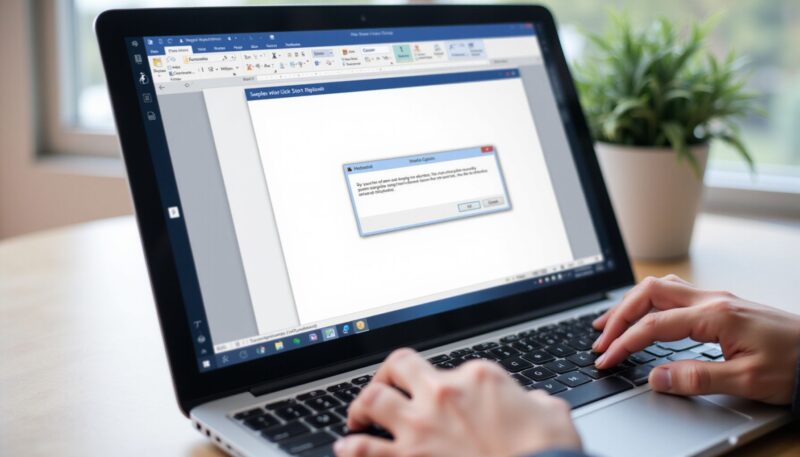
2. Press CTRL+K (Windows) or Command+K (Mac). The Insert Hyperlink dialog box opens immediately. It contains several sections — on the left, you choose the type of link (web page, file, email, or place in this document). The main area shows the current selection as the “Text to display” field.
3. Enter the destination. For a web link, paste or type the full URL into the “Address” field at the bottom of the dialog. For an email, choose “Email Address” on the left and enter the recipient’s address. For a file, browse to the location on your computer. For an internal link, choose “Place in This Document” and select a heading or bookmark.
4. Apply the link. Press Enter or click OK. The selected text now appears as a blue, underlined hyperlink. Hold Ctrl and click it to test that it opens correctly.
The entire sequence takes about three seconds after you learn it. The dialog remembers your last-used settings, so if you frequently link to the same type of destination, you can move through it even faster.
Troubleshooting Common Linking Issues
Even a reliable shortcut like CTRL+K can run into problems. Here are the most common issues and how to resolve them.
Shortcut key disabled. If you press CTRL+K and nothing happens, the shortcut may have been overridden by a macro, an add-in, or custom keyboard settings. Check this by going to File > Options > Customize Ribbon > Keyboard Shortcuts (Customize). Look for the “InsertHyperlink” command under the Home tab or All Commands category. If no shortcut is assigned, you can manually set CTRL+K there.
Broken links. A hyperlink that used to work but no longer opens is usually a URL issue. The destination page may have moved or been deleted. Right-click the link, select Edit Hyperlink, and verify the address in the “Address” field. If the URL is correct, the issue is on the destination end, not in your document.
Link opens in Word instead of a browser. This happens when the link points to a file type that Word can open, such as another Word document or a PDF. To force an external link to open in a browser, make sure the address starts with “http://” or “https://” and is not a local file path.
Auto-hyperlink not working. If typing a URL and pressing Space does not create a link, the auto-format feature may be turned off. Go to File > Options > Proofing > AutoCorrect Options > AutoFormat As You Type and check the box for “Internet and network paths with hyperlinks.”
Frequently Asked Questions
Can I use these shortcuts in other Microsoft 365 applications like PowerPoint or Excel?
Yes. The CTRL+K shortcut is largely universal across the Microsoft 365 suite. It works in PowerPoint to link text to slides or web pages, and in Excel to link cells to external data sources. The exact dialog may look different in each app, but the shortcut remains the same.
Does the shortcut work on web-based versions of Microsoft Word?
Yes. Most modern web browsers support the standard CTRL+K command for hyperlinking inside the web version of Word. The behavior is nearly identical to the desktop version, though the dialog may appear as a simplified pop-up rather than a full window.
FAQ
Q: Are there different ways to insert internal links in Word documents?
Answer: Yes. Internal links connect to sections within the same document. Select your text, press CTRL+K, and choose “Place in This Document” from the left panel. You will see a list of headings and bookmarks. Pick one to link to that location. This method is useful for long documents like reports or manuals where you want readers to jump quickly between sections.
Q: How does auto-hyperlinking work when typing URLs in Word?
Answer: Word automatically detects valid web addresses or email addresses as you type them. When you press Space or Enter after finishing the URL, the program converts that text into a blue, underlined hyperlink. This feature saves time because you do not need to open any menu or press any shortcut for simple URLs.
Q: Which menu option inserts a link if CTRL+K fails?
Answer: If the keyboard shortcut is unavailable or disabled, go to the Insert tab on the ribbon at the top of the Word window. Look for the Links group and click the Link button. A dropdown appears where you can select Insert Link. This opens the same Insert Hyperlink dialog you would get by pressing CTRL+K.
Q: Does CTRL+K work for inserting email links in Word?
Answer: Yes. Press CTRL+K to open the Insert Hyperlink dialog and choose Email Address from the panel on the left. Enter the recipient’s email address and optionally a subject line, then click OK. The selected text becomes a clickable link that opens the default email client with a new message pre-addressed.
Q: When should I use Ctrl+Alt+H instead of CTRL+K?
Answer: Use Ctrl+Alt+H only if your specific version of Microsoft 365 has that combination assigned to the hyperlink function. This is not standard across all versions. CTRL+K is more reliable because it works consistently in older and newer editions of Word, including the desktop app, the web app, and the mobile version.
Q: Is there a shortcut to insert a bookmark link quickly?
Answer: To link to a bookmark, select your text, press CTRL+K, and choose “Place in This Document.” Then pick the bookmark from the list. There is no single dedicated shortcut that inserts a bookmark link directly. But CTRL+K streamlines the process by bringing you to the correct dialog faster than navigating the ribbon.
Q: What happens if I type a URL and press Space in Word?
Answer: Word formats the URL as an active hyperlink. The text changes to blue and becomes underlined. This behavior is controlled by the AutoFormat As You Type settings. If you prefer to keep the URL as plain text, press Ctrl+Z immediately after Word converts it, or disable the auto-hyperlink feature in the AutoCorrect options.
My Experience With the Word Shortcut for Inserting Links
I have used CTRL+K daily for well over a decade. It is one of those shortcuts that feels invisible when it works — which is almost always — and painfully obvious when it does not. The first time I discovered it, I was fumbling through the Insert tab for what felt like the hundredth time, and a colleague leaned over and said, “Just hit Control K.” I have never gone back.
The real insight here is not that the shortcut exists. It is how dramatically it reshapes your writing rhythm when you actually commit to using it. Most people know about CTRL+K. Fewer people actually remember to use it every time. The muscle memory takes maybe a week to build. After that, reaching for the mouse to insert a link actually feels wrong.
I have also seen the frustration when the shortcut breaks — usually because someone installed a third-party add-in that hijacked K. That is why I always tell people to verify their keyboard settings before assuming the feature is broken. Nine times out of ten, it is just a mapping conflict.
Have you ever lost a hyperlink shortcut to a rogue macro? I would love to hear how you fixed it.
Latest Updates
Microsoft 365 continues to evolve, but the core shortcut for inserting a hyperlink in Word remains unchanged as of mid-2026. Recent updates to Microsoft 365 Copilot have introduced AI-generated link suggestions in some contexts, but the manual CTRL+K shortcut remains the most reliable method for experienced users.
One notable trend is the increasing use of tablet-style devices with detachable keyboards. On these devices, the Command+K shortcut functions the same way as on traditional desktops, provided an external keyboard is connected. Touch-based users must rely on the Insert menu or the right-click context menu.
Microsoft has not announced any plans to change or deprecate CTRL+K. Given its age and widespread adoption across the entire Office suite, it is likely to remain a standard keyboard command for years to come.
A Teacher with 5 years of experience. Our Expertise, is reliable to meet your full Academic development needs . Worked on many crafts and construction projects offering services from design to development to deployment over the years. You will find many of my works in my business portfolio on request.