
Quick answer: 900 seconds equals 15 minutes exactly. You get this by dividing 900 by 60, since there are 60 seconds in every minute.
Maybe a timer on your phone showed “900 seconds” and you froze for a second. Maybe your teacher gave you a word problem with 900 seconds in it. Either way, you landed in the right place. Turning seconds into minutes is one of the simplest conversions in math, and once you know the trick, you can do it in your head for almost any number. This article walks you through the answer, shows you the easy method, gives you a bunch of real examples, and includes a free calculator so you can check any seconds-to-minutes conversion instantly.
| Fact | Value |
| Seconds in 1 minute | 60 seconds |
| 900 seconds in minutes | 15 minutes |
| 900 seconds in hours | 0.25 hours |
| Formula used | seconds ÷ 60 = minutes |
| Seconds | Minutes | Easy way to say it |
| 60 seconds | 1 minute | One full minute |
| 120 seconds | 2 minutes | Two minutes |
| 180 seconds | 3 minutes | Three minutes |
| 300 seconds | 5 minutes | Five minutes |
| 450 seconds | 7.5 minutes | Seven and a half minutes |
| 600 seconds | 10 minutes | Ten minutes |
| 900 seconds | 15 minutes | A quarter of an hour |
| 1,200 seconds | 20 minutes | Twenty minutes |
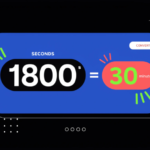
| 1,800 seconds | 30 minutes | Half an hour |
| 3,600 seconds | 60 minutes | One full hour |
Seconds to Minutes Calculator
900 seconds = 15 minutes
How many minutes is 900 seconds?
900 seconds is 15 minutes. You find this by dividing 900 by 60, because 60 seconds always make up 1 minute. So 900 ÷ 60 = 15.
This works because seconds and minutes are both units of time, and minutes are just a bigger "bucket" that holds 60 seconds each. If you had 900 candies and put them into bags of 60, you would end up with exactly 15 bags. Time works the same way, just with seconds instead of candies.
Knowing that 900 seconds equals 15 minutes is handy for real life. It is the length of many timed tests, a common cooking timer, and a popular break length at school or work.
Why do you divide by 60 to convert seconds to minutes?
You divide by 60 because there are 60 seconds in every single minute, no matter what. This rule never changes, so 60 is always the number you divide by when going from seconds to minutes.
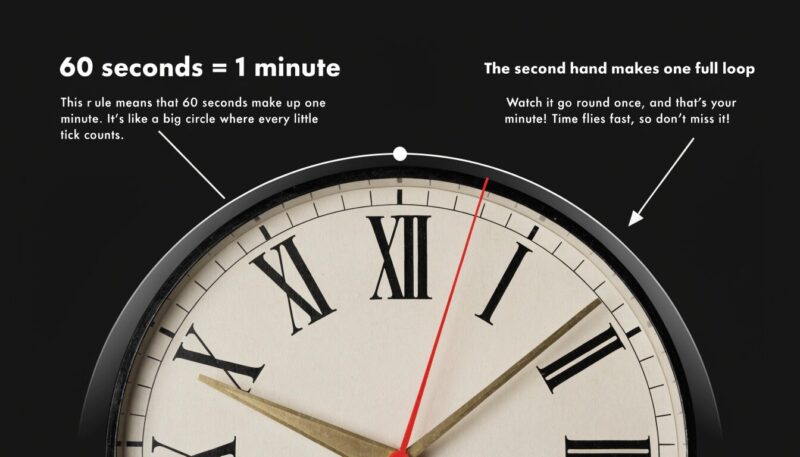
Think of a clock. The second hand ticks all the way around the clock face one time, and that one full trip equals 60 seconds. When the second hand finishes that trip, the minute hand moves forward by exactly one tick. That is where the number 60 comes from. It is not a made up rule, it is built into how clocks and time itself are organized.
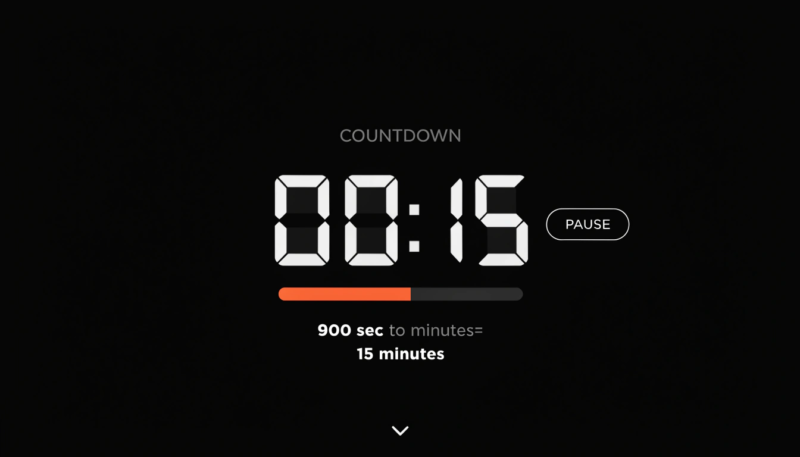
Once you remember "divide by 60," you can convert any number of seconds into minutes, not just 900. This one fact unlocks the whole skill.
How do you convert seconds to minutes step by step?
You convert seconds to minutes by dividing the number of seconds by 60, then reading the whole number as minutes and any leftover as extra seconds. Here is the full process broken into simple steps.
- Write down the number of seconds you want to convert. Example: 900.
- Divide that number by 60. Example: 900 ÷ 60 = 15.
- If the answer is a whole number, that is your total minutes with no seconds left over. Example: 15 minutes exactly.
- If the answer has a decimal, like 7.5, split it into two parts: the whole number is minutes, and you multiply the decimal part by 60 to find leftover seconds. Example: 7.5 minutes = 7 minutes and 30 seconds.
- Double check your work by multiplying your answer back by 60. It should match your starting number of seconds. Example: 15 x 60 = 900.
This same five step method works whether you are converting 900 seconds or 9,000 seconds. The math tool never changes, only the numbers do.
What are some real examples of seconds to minutes conversions?
Real examples make this easier to picture, so here are several everyday amounts of seconds and what they equal in minutes.
- 60 seconds is 1 minute, about how long it takes to sing "Happy Birthday" twice.
- 150 seconds is 2.5 minutes, close to the length of many short songs.
- 240 seconds is 4 minutes, roughly how long it takes to brush your teeth if you do it twice as long as the dentist recommends.
- 300 seconds is 5 minutes, a common length for a short recess or a quick snack break.
- 600 seconds is 10 minutes, about how long a short cartoon episode runs.
- 900 seconds is 15 minutes, the length of a typical school class period or a coffee break at work.
- 1,500 seconds is 25 minutes, close to one "work sprint" in the popular Pomodoro study method.
- 1,800 seconds is 30 minutes, the length of many TV show episodes without commercials.
- 2,700 seconds is 45 minutes, about the length of one class period in many middle schools.
- 3,600 seconds is 60 minutes, which is one full hour.
Notice the pattern. Every time the seconds number goes up by 60, the minutes number goes up by exactly 1. That steady pattern is what makes this type of math predictable and easy to check.
Why does 900 seconds matter in everyday life?
900 seconds matters because 15 minutes is one of the most common time chunks people use for breaks, timers, and short tasks. Many kitchen timers, workout intervals, and study breaks are set to exactly 900 seconds without people even realizing it is the same as 15 minutes.
For example, many ovens and microwaves let you set a timer in seconds for very precise cooking, and 900 seconds is a common setting for baking small items. Workout apps often use 900 second intervals for a quarter hour of cardio. Even parking meters and video games sometimes measure time in seconds, so being able to quickly turn 900 into 15 minutes helps you plan your day without stopping to do long division.
What is 900 seconds in hours?
900 seconds equals 0.25 hours, which is one quarter of an hour. You find this by dividing 900 by 3,600, since there are 3,600 seconds in one full hour.
Another way to check this is to first convert to minutes, since you already know 900 seconds equals 15 minutes. Since 60 minutes make one hour, 15 minutes is exactly one fourth of 60, which gives you 0.25 hours. Both paths, seconds straight to hours or seconds to minutes to hours, land on the same answer.
How can you convert minutes back to seconds to check your work?
You convert minutes back to seconds by doing the opposite operation, which is multiplying instead of dividing. Since 15 minutes came from dividing 900 by 60, multiplying 15 by 60 should bring you right back to 900.
This "undo" trick is one of the best ways to catch mistakes on a math test or homework page. If you divide seconds by 60 and get an answer, multiply that answer back by 60. If you land on your original number of seconds, you know your conversion is correct. If you do not land on the same number, you know something went wrong along the way and you can go back and check your division. For 900 seconds, the check looks like this: 900 ÷ 60 = 15, then 15 x 60 = 900. Both directions match, so 15 minutes is confirmed as the correct answer.
This back and forth idea also works for hours. Since 900 seconds equals 0.25 hours, multiplying 0.25 by 3,600 seconds per hour should also bring you back to 900, which it does. Learning to check answers this way builds confidence and helps you catch small errors before they turn into a wrong final answer on a quiz or a real life schedule.
What is a simple chart of common seconds to minutes conversions?
The chart below shows how minutes grow evenly as seconds grow, using some of the most common values people search for.
300s
5 min
600s
10 min
900s
15 min
1200s
20 min
Bar height shows minutes for each seconds value. 900 seconds (green) equals 15 minutes.
What exactly are seconds and minutes?
A second is the smallest common unit of time we use every day, and a minute is simply a group of 60 seconds put together. Think of seconds as single steps and minutes as a set of 60 steps counted as one big jump.
Scientists actually define one second using the vibrations of atoms, but you do not need that level of detail for everyday math. All you need to remember is the simple rule: 60 seconds always makes 1 minute, 60 minutes always makes 1 hour, and 24 hours always makes 1 day. Seconds and minutes belong to this same family of time units, they are just different sized boxes for measuring the exact same thing, which is how much time has passed.
Understanding that minutes are built from seconds helps the conversion make sense instead of feeling like a random math rule. You are not changing the amount of time at all when you convert 900 seconds to 15 minutes, you are only changing how you group and label that same stretch of time.
What mistakes do people make when converting seconds to minutes?
The most common mistake is dividing by 100 instead of 60, because people are used to decimal numbers where 100 is the "round" number. Time does not work in groups of 100, it works in groups of 60, so that habit can lead to a wrong answer.
Another common mistake happens with decimal answers. If a student converts 100 seconds and gets 1.67 minutes, they sometimes think that means "1 minute and 67 seconds," which is impossible since 67 is more than 60. The 0.67 is a decimal fraction of a minute, not a count of seconds, so it needs to be multiplied by 60 to become 1 minute and 40 seconds. A third mistake is mixing up the direction of the conversion and multiplying by 60 instead of dividing, which makes the number much bigger instead of smaller. Keeping the rule "seconds are always the bigger number, minutes are always the smaller number" helps catch this kind of mistake quickly, since 900 seconds turning into anything bigger than 900 minutes would be a clear sign something went wrong.
Can you practice with a few more seconds to minutes problems?
Yes, working through a few extra problems is the fastest way to make this conversion feel automatic. Try solving each one below before checking the answer.
- Problem: How many minutes is 720 seconds? Answer: 720 ÷ 60 = 12 minutes.
- Problem: How many minutes is 90 seconds? Answer: 90 ÷ 60 = 1.5 minutes, which is 1 minute and 30 seconds.
- Problem: How many minutes is 2,400 seconds? Answer: 2,400 ÷ 60 = 40 minutes.
- Problem: How many minutes is 45 seconds? Answer: 45 ÷ 60 = 0.75 minutes, which is less than 1 full minute.
- Problem: How many minutes is 5,400 seconds? Answer: 5,400 ÷ 60 = 90 minutes, which is 1 hour and 30 minutes.
Notice that 900 seconds sits right in the middle of easy, friendly numbers like these. It is bigger than a quick snack break of 300 seconds but smaller than a half hour break of 1,800 seconds, which is part of why 15 minutes feels like such a natural, common length of time to plan around.
FAQ
Is 900 seconds the same as 15 minutes?
Yes, 900 seconds is exactly the same amount of time as 15 minutes. Dividing 900 by 60 gives 15 with nothing left over.
How do I convert 900 seconds to minutes without a calculator?
Divide 900 by 60 in your head by first dividing by 10 to get 90, then dividing 90 by 6 to get 15. Breaking the division into two smaller steps makes mental math easier.
What is 900 seconds in hours and minutes together?
900 seconds is 0 hours and 15 minutes, since it is less than one full hour but exactly one quarter of an hour. There are no leftover seconds because 900 divides evenly by 60.
Why is the answer a whole number and not a decimal?
The answer is a whole number because 900 divides evenly by 60 with no remainder. Not every number of seconds does this, which is why some conversions end in decimals like 7.5 minutes.
Can I use the calculator on this page for numbers other than 900?
Yes, the calculator works for any number of seconds you type in, not just 900. Just enter your number and press Convert to see the minutes.
References
- National Institute of Standards and Technology, "Time and Frequency Division: Definition of the Second" (2024)
- Bureau International des Poids et Mesures, "SI Base Units: Second" (2023)
- Khan Academy, "Units of Time: Seconds, Minutes, and Hours" (2023)

A Teacher with 5 years of experience. Our Expertise, is reliable to meet your full Academic development needs . Worked on many crafts and construction projects offering services from design to development to deployment over the years. You will find many of my works in my business portfolio on request.