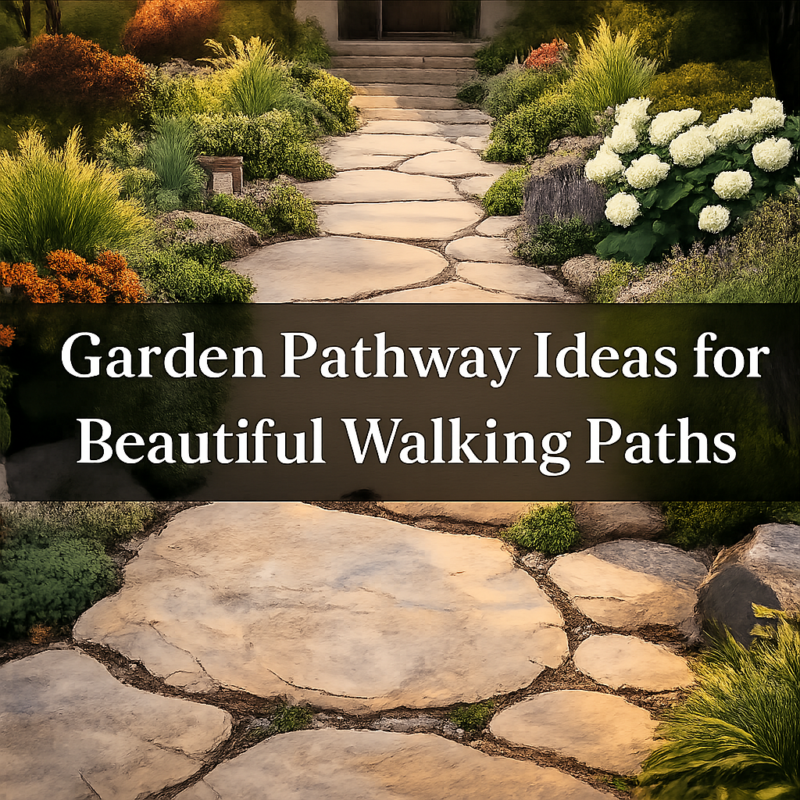

A well-designed stepping stone pathway can elevate your garden from ordinary to extraordinary. These functional yet artistic features guide visitors through your outdoor space while adding visual interest and protecting your lawn from excessive foot traffic. Whether you’re aiming for a rustic cottage garden feel or a sleek modern aesthetic, stepping stones offer endless creative possibilities. Here are 12 inspiring stepping stone pathway ideas to help you design the perfect garden walkway.

1. Natural Stone with Grass Gaps
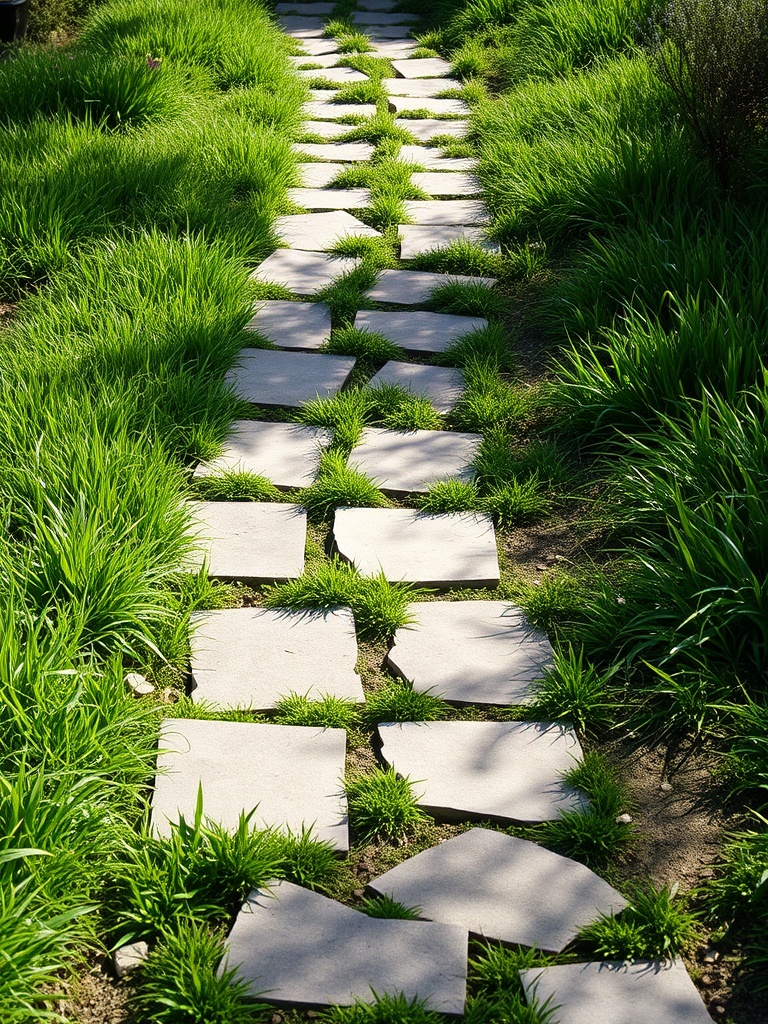
One of the most classic and timeless approaches is placing irregularly shaped natural stones with grass growing between them. This design creates a harmonious blend of hardscaping and softscaping that feels organic and inviting. The grass gaps soften the overall look while providing a cushioned feel underfoot. Space your stones approximately 18-24 inches apart for comfortable walking, and choose flat stones like flagstone, slate, or bluestone for stability. This design works beautifully in cottage gardens, traditional landscapes, and naturalistic settings where you want to maintain a strong connection to nature.
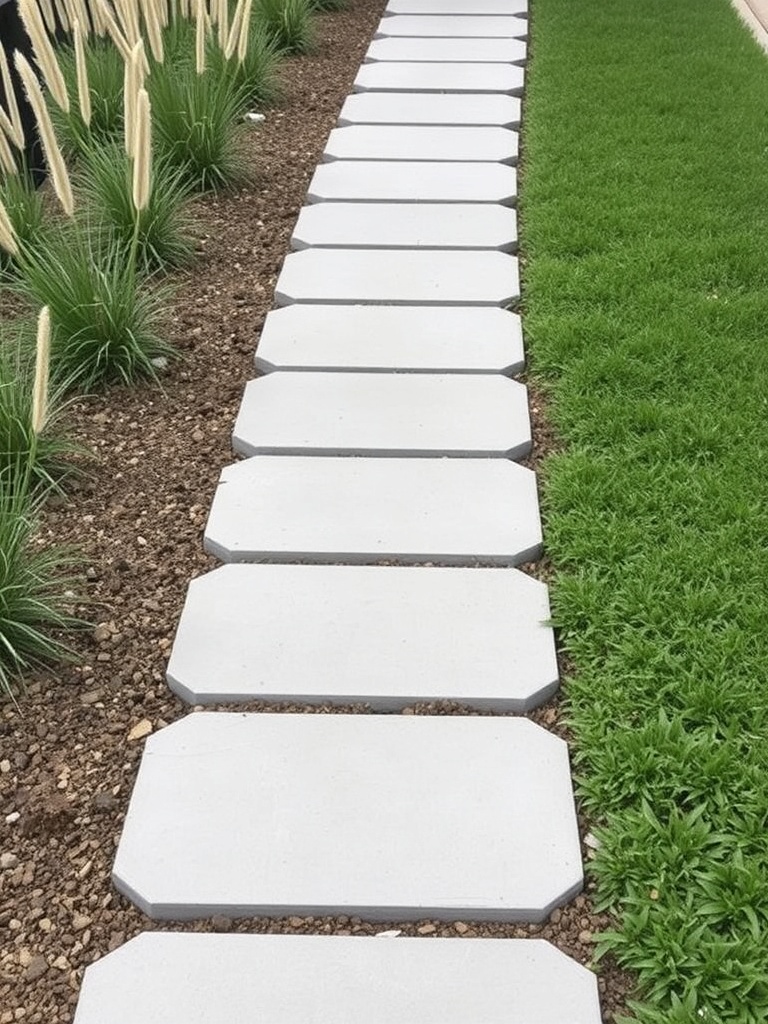
2. Geometric Modern Concrete Pavers
For contemporary gardens and modern architectural styles, geometric concrete stepping stones offer clean lines and a sophisticated aesthetic. Square, rectangular, or hexagonal pavers in shades of gray, white, or even charcoal create striking visual impact. Arrange them in linear patterns or staggered formations for added interest. The beauty of concrete pavers lies in their uniformity and precision, which pairs perfectly with minimalist landscaping, ornamental grasses, and architectural plantings. You can also find concrete pavers with subtle textures or embedded aggregates that add depth without sacrificing the modern feel.
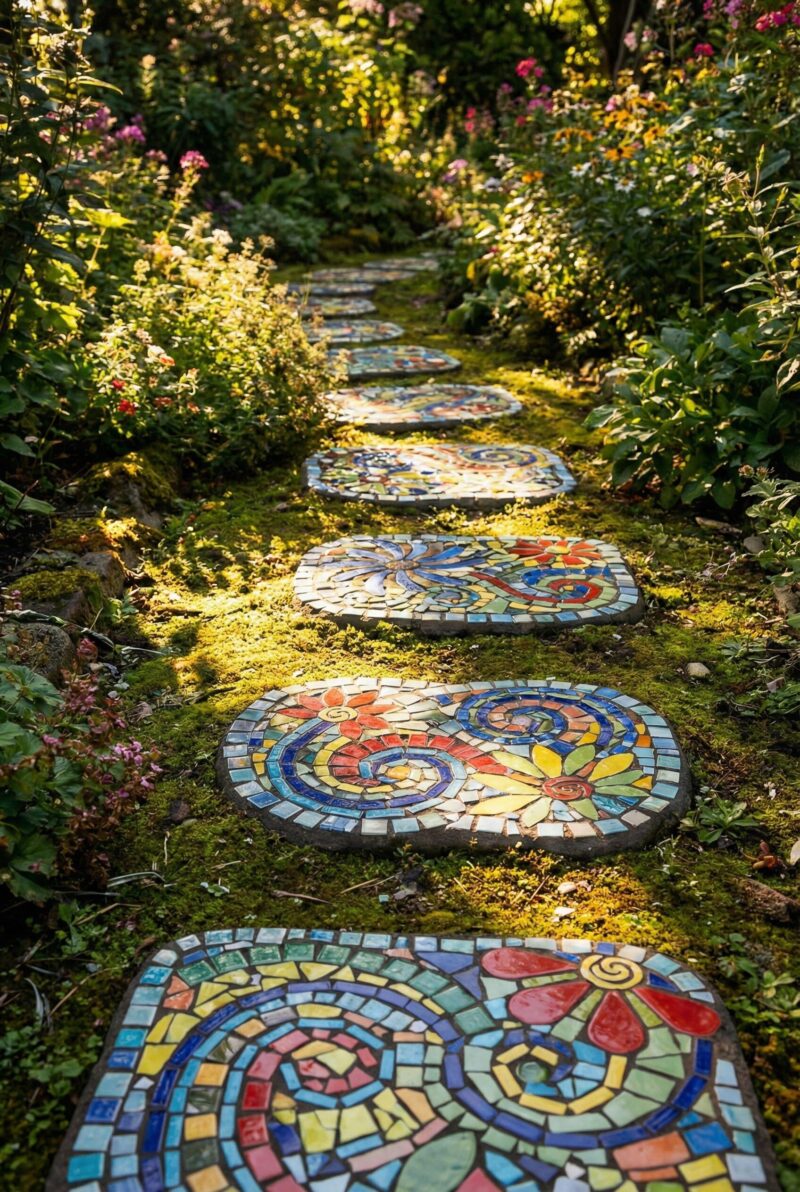
3. Mosaic Masterpieces
Transform ordinary concrete stepping stones into works of art by creating custom mosaic designs. Using broken tiles, colored glass, pebbles, or ceramic pieces, you can craft unique patterns ranging from simple geometric designs to elaborate florals or abstract compositions. This is an excellent DIY project that allows for complete personalization. Consider incorporating meaningful symbols, family initials, or nature-inspired motifs like butterflies, leaves, or flowers. Mosaic stepping stones work particularly well in eclectic gardens, Mediterranean-style landscapes, and outdoor spaces that celebrate color and creativity.
4. Pea Gravel Surrounds
Combining stepping stones with pea gravel creates beautiful contrast and excellent drainage. This approach works with any stone type—from natural flagstone to manufactured pavers—and the gravel filling provides a finished, polished look. The small stones create a pleasant crunching sound when walked upon and help prevent weed growth between your stepping stones. Choose gravel colors that complement your home’s exterior and existing landscaping. Cream, tan, and gray are versatile neutrals, while darker charcoal or black gravel creates dramatic contrast with lighter stones. Edge the path with metal, brick, or stone borders to keep the gravel contained.
5. Circular Stone Rounds
Large circular stone slabs or tree rounds create a whimsical, storybook quality in the garden. These round stepping stones, whether cut from natural stone or thick wood sections, invite a meandering path that encourages slow, mindful walks through the garden. The circular shape feels friendly and approachable, making it ideal for family gardens and spaces designed for relaxation. Vary the sizes slightly for visual interest, and allow ground cover plants like creeping thyme or Irish moss to grow between them for a magical, carpet-like effect.
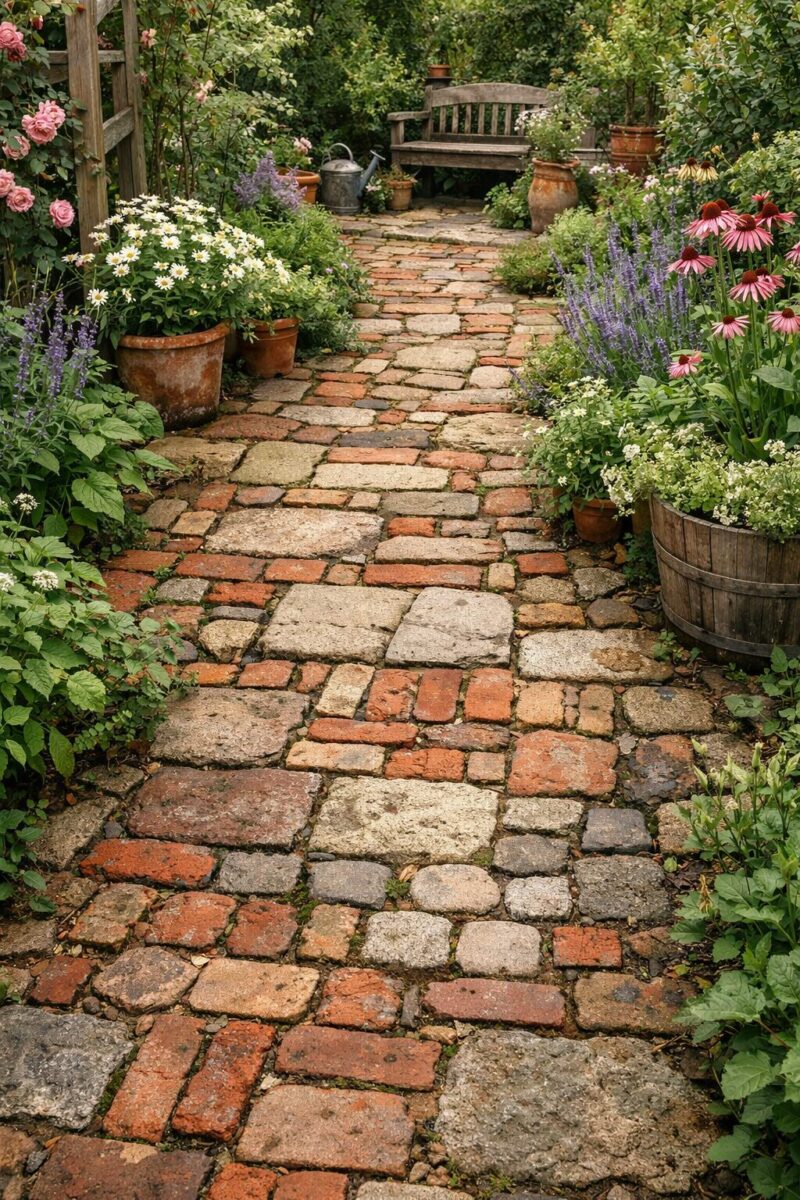
6. Reclaimed Materials Path
Sustainability meets style when you create stepping stones from reclaimed materials. Old bricks, salvaged pavers, broken concrete pieces, or repurposed wood can be transformed into characterful pathways with history and soul. This eco-friendly approach not only saves money but also adds unique texture and patina that new materials cannot replicate. Arrange reclaimed bricks in basket weave or herringbone patterns, or use chunks of broken concrete to create a rustic, industrial-chic pathway. The weathered appearance blends beautifully with cottage gardens and vintage-inspired landscapes.
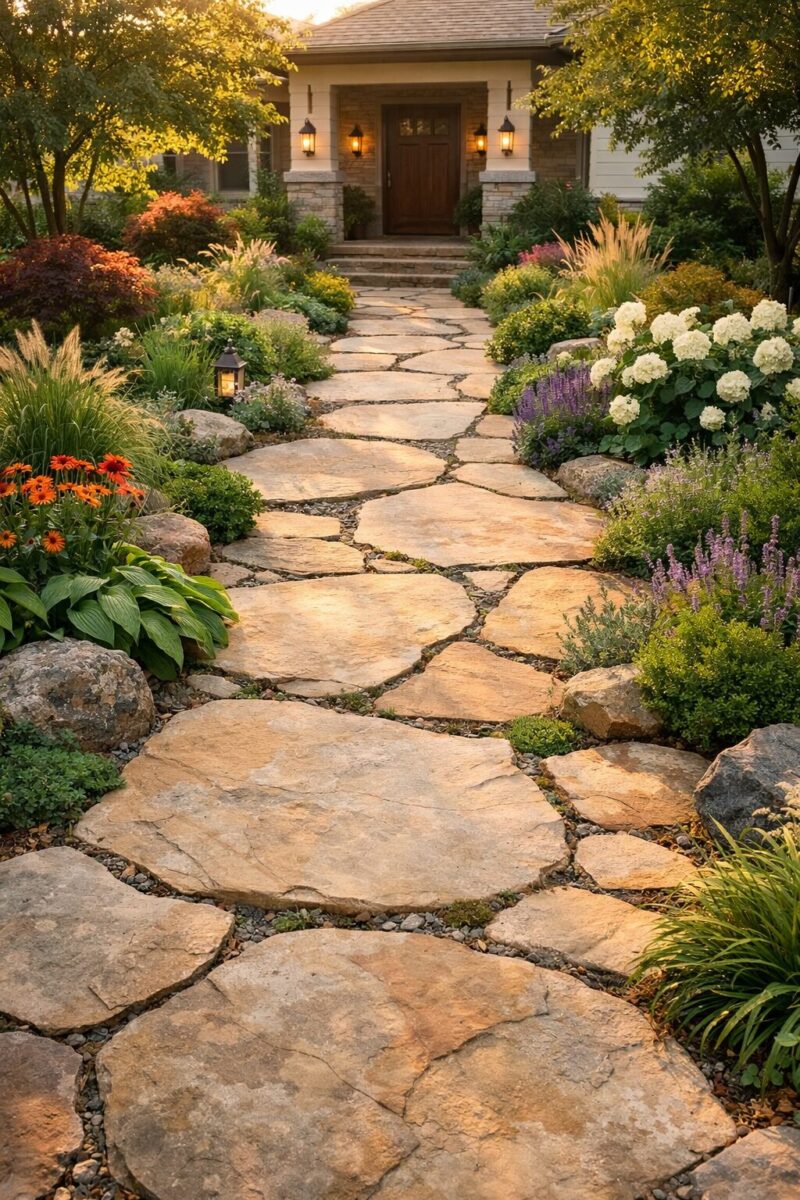
7. Oversized Flagstone Pavers
Make a bold statement with extra-large flagstone pieces that serve as substantial stepping platforms. These oversized stones—typically 24 inches or larger—create a sense of grandeur and permanence in the landscape. Their substantial size provides stable, secure footing and reduces the number of stones needed for your path, which can simplify installation. The irregular edges of natural flagstone contrast beautifully with surrounding plantings, and the earthy tones of sandstone, limestone, or slate harmonize with nearly any garden style. Space them generously for a leisurely pace, or closer together for more formal pathways.
8. Stenciled or Painted Concrete
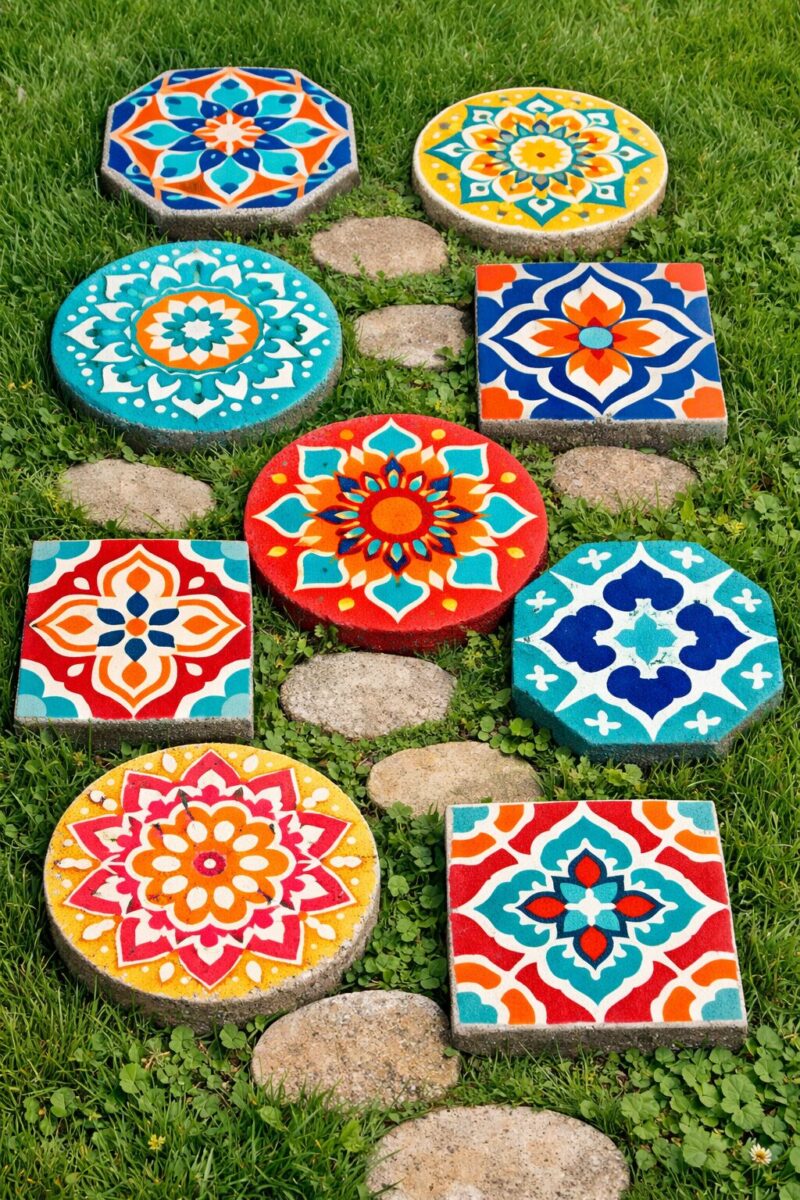
Ordinary concrete stepping stones can be transformed into decorative focal points with stencils and outdoor paint. This budget-friendly option allows you to customize plain pavers from home improvement stores with intricate patterns, Moroccan-inspired designs, mandala motifs, or even playful graphics. Use outdoor-rated concrete paint or stains in colors that complement your garden palette. Seal finished pieces with clear concrete sealer to protect your artwork from weather and foot traffic. This approach offers endless design possibilities and can be updated seasonally if you’re feeling creative.
9. River Rock Embedded Stones
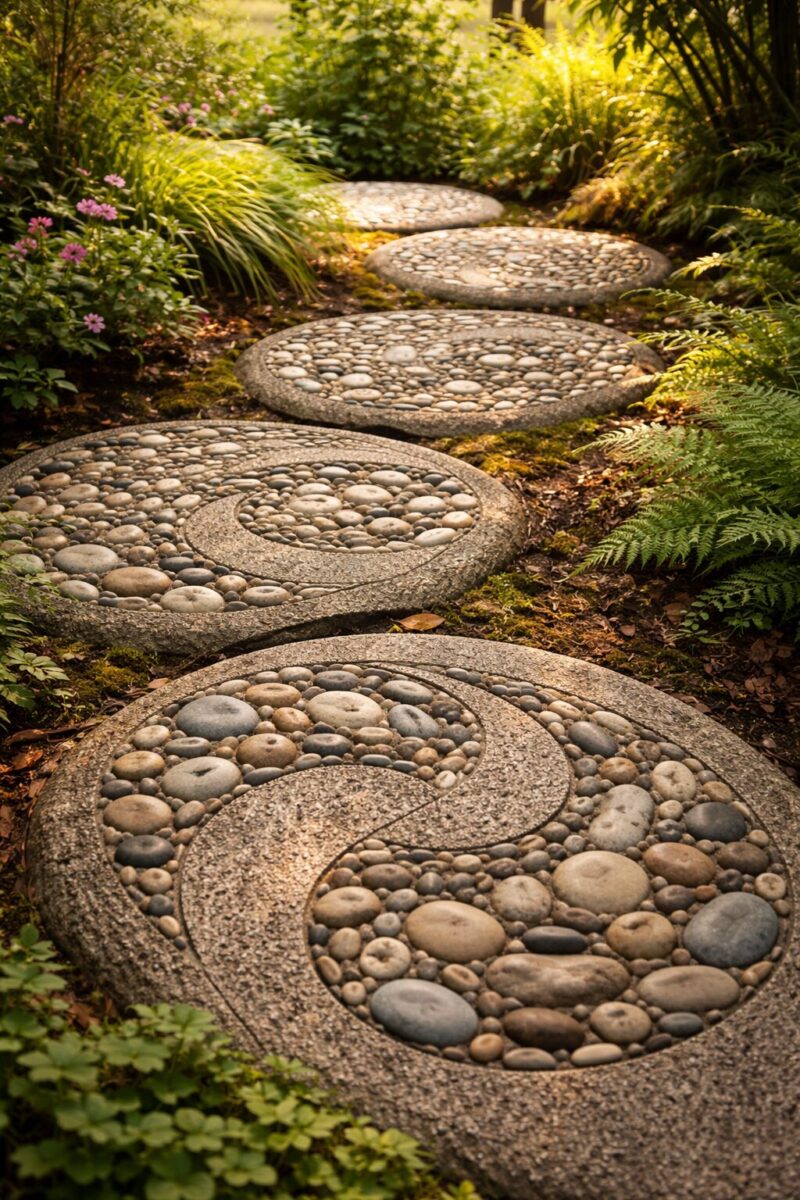
Create textured, massage-like stepping stones by embedding smooth river rocks into concrete. This technique combines the natural beauty of stone with the moldability of concrete, resulting in organic-looking pavers with interesting surface texture. The river rocks can be arranged in spirals, concentric circles, flowing patterns, or random arrangements. Beyond their visual appeal, these textured surfaces provide excellent traction when wet and offer a gentle foot massage as you walk. This design works particularly well in Asian-inspired gardens, zen spaces, and naturalistic landscapes.
10. Blooming Step Path
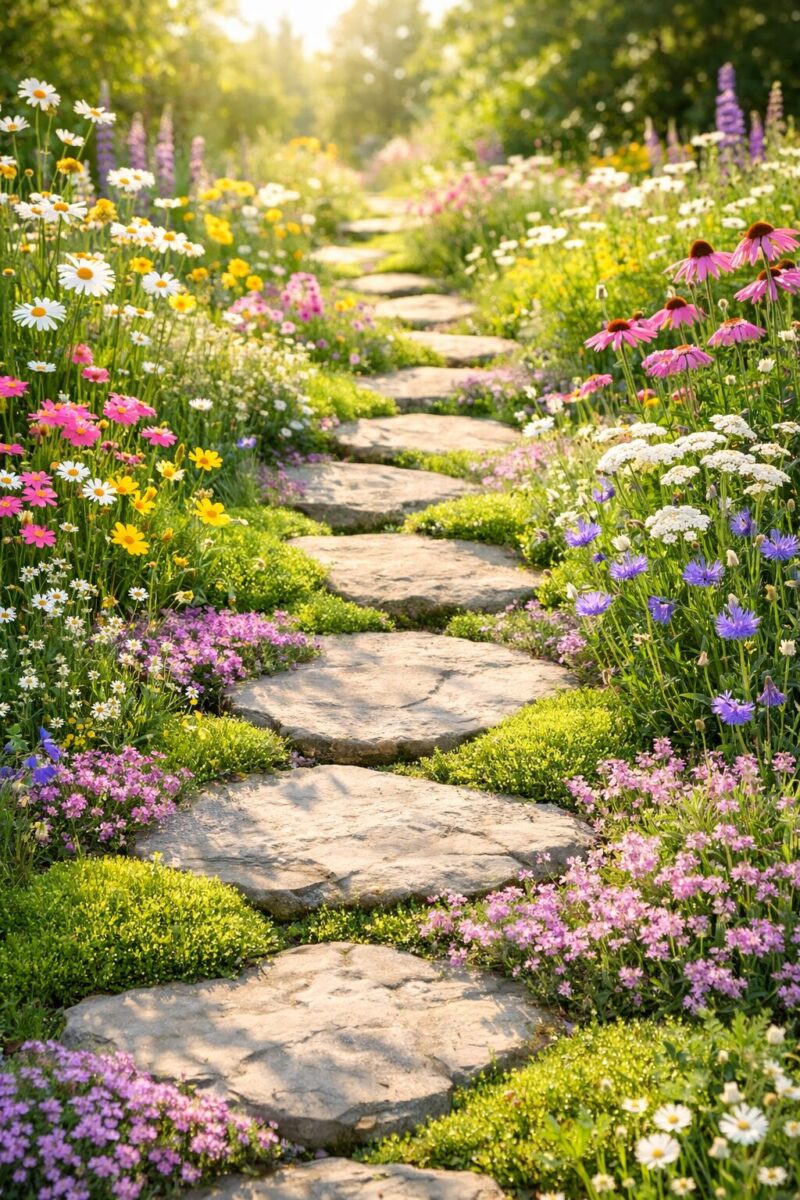
Allow low-growing, ground-hugging plants to take center stage by creating generous gaps between your stepping stones and filling them with flowering ground covers. Creeping thyme, elfin thyme, Blue Star creeper, and Irish moss all tolerate light foot traffic and create living carpets between stones. These plants release pleasant fragrances when stepped on and attract beneficial pollinators to your garden. Space your stones wider apart—perhaps 24-30 inches—to give plants room to spread. This approach creates a romantic, cottage-garden aesthetic and softens the hardscape considerably.
11. Illuminated Path Stones
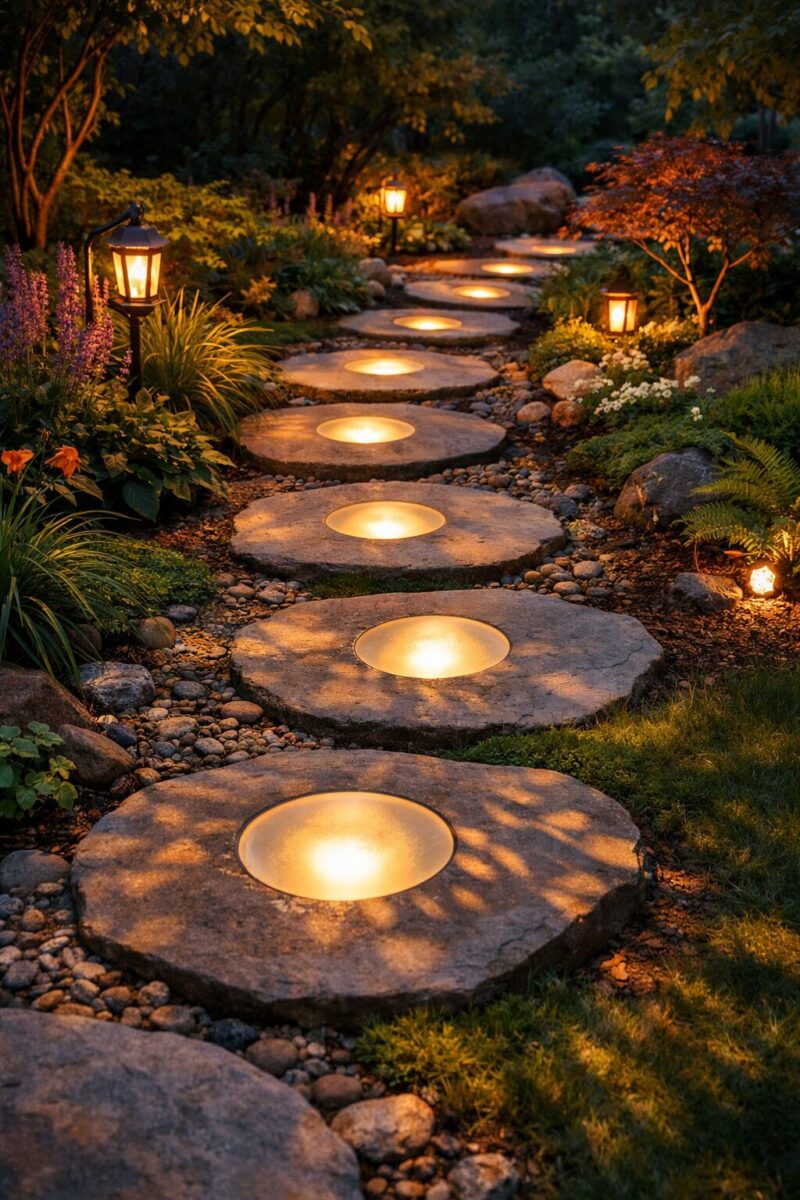
Incorporate lighting directly into your stepping stone pathway for both safety and ambiance. Solar-powered stone lights, LED pavers, or fiber optic embedded stones create magical pathways that glow softly after dark. Some options include stones with frosted glass inserts that house LED lights, while others feature edge-lighting that outlines each stone. This practical solution eliminates the need for separate pathway lighting and creates a cohesive, integrated design. Illuminated stepping stones are particularly valuable along pathways leading to front entries, pool areas, or outdoor entertaining spaces where safe nighttime navigation is essential.
12. Mixed Material Medley
Don’t feel constrained to use just one material—mixing different stone types, colors, and textures creates dynamic, visually engaging pathways. Combine slate with limestone, bluestone with sandstone, or manufactured pavers with natural stone for eclectic appeal. You might alternate between square and circular shapes, smooth and textured surfaces, or light and dark tones. This approach allows you to incorporate various materials you may already have on hand and creates a curated, collected-over-time appearance. The key to success is maintaining some unifying element—whether it’s similar color tones, consistent stone thickness, or repeated spacing patterns—to prevent the path from looking chaotic.
Final Thoughts
Stepping stone pathways offer the perfect combination of form and function in garden design. They protect your lawn, guide foot traffic, provide drainage solutions, and serve as artistic expressions of your personal style. When planning your pathway, consider your garden’s overall aesthetic, the path’s intended function, your climate and soil conditions, and your budget. With countless materials, patterns, and design approaches available, you can create a stepping stone pathway that’s uniquely suited to your outdoor space and lifestyle. Whether you choose the rustic charm of natural flagstone, the clean precision of geometric concrete, or the whimsical appeal of mosaic designs, your stepping stone pathway will become a beloved feature that enhances your garden for years to come.

A Teacher with 5 years of experience. Our Expertise, is reliable to meet your full Academic development needs . Worked on many crafts and construction projects offering services from design to development to deployment over the years. You will find many of my works in my business portfolio on request.