
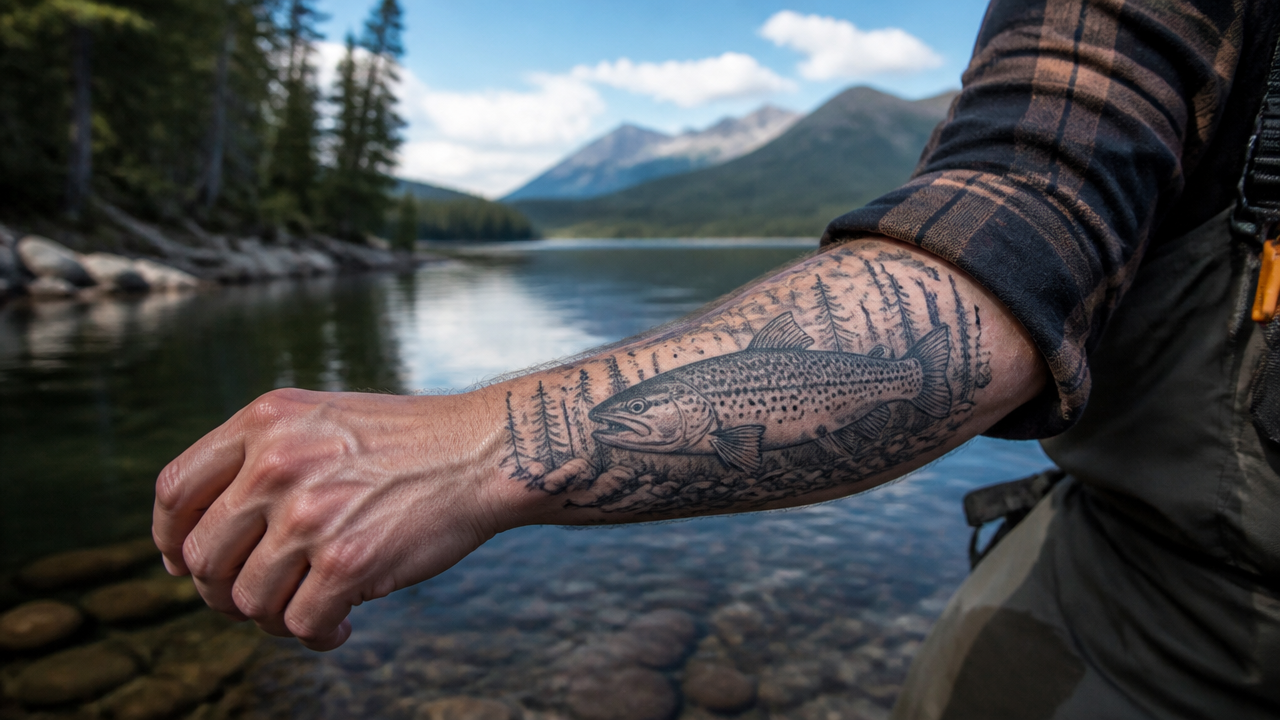
What draws people to trout tattoos more than the fish itself? It’s the symbolism woven into every scale and curve—a way to carry your love of nature, strength, and the wilderness permanently on your skin. Trout tattoos come in countless styles, from photorealistic portraits that capture every iridescent detail to minimalist line work that whispers rather than shouts. Whether you’re planning a summer fishing trip or simply want to celebrate your connection to pristine waters, the right trout tattoo design becomes a personal statement. This guide explores 11 stunning options, placement strategies, and insider tips to help you choose the perfect ink.
Quick Questions and Answers
Question: What do trout tattoos symbolize for nature lovers? Trout tattoos symbolize adaptability, perseverance, and a deep love for nature and outdoor adventure. They represent the ability to overcome obstacles by swimming upstream against strong currents. Additionally, they signify purity, abundance, and the patience required for fishing, reflecting a connection to the natural world.
Question: Why are trout tattoos popular for fishing enthusiasts? Trout tattoos are popular among fishing enthusiasts because they represent a love for nature and the patience associated with fishing. They often depict the fish’s beauty and agility, serving as a nod to outdoor adventures. The design celebrates the mastery of rendering realistic aquatic life while evoking serenity.
Question: Can trout tattoos represent strength and resilience? Yes, trout tattoos symbolize strength and resilience due to the fish’s ability to swim against strong currents. This trait serves as a metaphor for overcoming obstacles and demonstrating determination. The tattoos also reflect the fish’s agility and ability to thrive in both still and fast-flowing waters.
How to Select Your Perfect Trout Design
Picking the right trout tattoo isn’t just about grabbing an image you like—it’s about understanding what speaks to you personally. Start by considering meaning and symbolism. Do you want the trout to represent your own adaptability and strength, or is this a tribute to a specific fishing memory or location you cherish? The narrative behind your design often matters as much as the visual itself. Some people choose trout because it embodies their resilience; others pick it to honor a beloved fishing spot or a mentor who taught them to fly fish.
Style selection comes next. Are you drawn to hyper-realistic color work that captures every spot and subtle gradient of a rainbow trout? Or does bold black-and-grey traditional tattooing appeal to you more? Perhaps minimalist line art on your ankle feels right—clean, understated, meaningful. Each style carries its own weight. Realistic pieces demand a highly skilled artist and more time in the chair, but they reward you with stunning detail. Watercolor approaches feel looser and more artistic, though they may require more touch-ups as vibrant pigments fade. Tribal designs are timeless and bold, while minimalist work speaks to people who prefer subtlety.
Environmental integration transforms a good tattoo into a great one. Adding native stream plants, ripples, flowing water lines, or even a traditional fishing hook grounds your trout in its natural habitat. These contextual elements tell a fuller story—they shift the design from “a fish” to “a scene.” A trout swimming through waves or past river stones feels alive and purposeful. Consider whether your design should be isolated or integrated into a larger composition.
Top Trending Trout Tattoo Styles
Realistic color tattoos remain the gold standard for nature lovers seeking authenticity. These designs utilize vibrant pigments to capture the signature spots, iridescence, and coloration of species like the rainbow trout. A skilled colorist can render scales so precisely they seem to shimmer, with greens and blues flowing across the fish’s back and silvery whites on the belly. The depth and dimensionality of a well-executed realistic trout makes it feel three-dimensional, almost as though the fish could leap off your skin.
Watercolor style brings fluidity and artistic expression to trout tattoos. This approach focuses on light lines defining the fish’s form, then adds splashes and washes of color that suggest movement and flow. The watercolor technique evokes the very waters the trout inhabits—loose, flowing, somewhat unpredictable in its beauty. It’s perfect for people who want visual impact without photorealistic precision. According to tattoo industry research, watercolor trout designs have gained traction among younger clients seeking artistic rather than documentary-style pieces.
Minimalist outlines are ideal for clean, subtle placement on the ankle, wrist, or inner arm. These designs focus on the silhouette and basic contours of the trout rather than intricate scales or anatomical detail. A single continuous line or just a few carefully placed strokes define the entire fish. Minimalist trout work appeals to first-timers, people with lower pain tolerances, and those who want their tattoo to feel like a personal secret rather than a conversation starter. Cost-wise, these are also the most affordable option.
Tribal patterns create an abstract, stylized representation of the trout using solid black ink contrast and geometric shapes. Bold lines and sharp angles emphasize the fish’s strength and power without worrying about biological accuracy. Tribal designs carry cultural weight and a sense of ancient tradition—they appeal to people drawn to symbolism and timeless aesthetics. The trade-off is that you lose the specific identity of “trout” in favor of a more universal representation of strength.
Black and grey shading provides a timeless, classic look that focuses on anatomy and light-depth through expert shading techniques. This style sits between photorealism and abstraction—detailed enough to recognize as a trout, but rendered in a way that feels more artistic than documentary. Master artists use gradations of grey to create dimension and suggest form without relying on color. Many traditional tattoo studios specialize in this approach, and it ages exceptionally well.
Comparison of Tattoo Placements
The placement of your trout tattoo affects both its visibility and how much detail the artist can include. Forearm placement ranks highest for visibility and daily interaction, making it ideal for designs that wrap around the arm or showcase the fish in profile. Your forearm is always on display during conversations and handshakes—this placement says you’re proud of your ink. It also provides a relatively flat canvas that works well for flowing, horizontal designs.
Calf and thigh placements offer larger surface areas for detailed, landscape-style scenes involving fish and stream environments. A calf tattoo can extend several inches, allowing room for a trout swimming through flowing water with plants and rocks. Thigh tattoos give even more vertical space, perfect for vertical compositions like a trout leaping upstream. These areas are more private unless you’re wearing shorts or swimming, which appeals to people who want their tattoo to feel personal rather than public.
Ankle and wrist placements suit minimalist or small-scale contour trout designs that add a touch of subtle charm. These bony areas have limited surface space, so busy or detailed designs feel cramped. A single-line trout on the ankle or a tiny watercolor fish on the inner wrist creates an understated aesthetic. Wrist tattoos are visible on demand—you control when others see them based on how you wear your sleeves or watch.
| Placement | Best For | Visibility | Design Size | Pain Level |
|---|---|---|---|---|
| Forearm | Bold statements, wrapping designs | High | Medium to large | Moderate |
| Calf | Detailed scenes, landscape compositions | Medium | Medium to large | Moderate to high |
| Thigh | Vertical designs, larger compositions | Low | Large | Moderate |
| Wrist | Minimalist, daily reminder | High | Small to medium | High |
| Ankle | Subtle, personal touch | Medium | Small to medium | Very high |
Pro-Tips for Choosing and Maintaining Your Ink
Researching artists is non-negotiable when you’re investing in a trout tattoo. Seek out specialists who have portfolios featuring wildlife, aquatic scenes, or fish work. Look for artists who demonstrate strong anatomy knowledge and can render scales, fins, and water movement convincingly. Check their Instagram or portfolio site for before-and-after photos of similar work. Read client reviews and ask about their experience with the specific style you want—a master realist might struggle with watercolor, and vice versa. Don’t just pick the cheapest option; the artist’s skill directly determines whether your trout looks vibrant or flat in five years.
Eco-friendly options are worth exploring if your tattoo’s symbolism centers on environmental conservation. Inquire whether your studio carries eco-ink or plant-based pigments. Some artists specifically source sustainable inks to align the permanence of the tattoo with environmental values. Watercolour-style trout designs can incorporate eco-conscious elements, reflecting a genuine commitment to protecting wild waterways. This choice adds another layer of meaning to your ink.
Aftercare and longevity differ by style. Realistic and watercolor designs require diligent sun protection to keep colors vibrant and prevent fading over time. UV exposure is the enemy of bright pigments—wear sunscreen over your tattoo year-round, especially during the first year when the ink is still setting. Black and grey work holds up better in direct sun but will still fade gradually. Follow your artist’s healing instructions carefully: keep the tattoo clean, moisturized, and protected during the first 2-3 weeks. After that, moisturize regularly and avoid prolonged soaking. Most professional tattoos last a lifetime with proper care, though color tattoos may need minor touch-ups every 5-10 years depending on sun exposure and skin type.
My Experience With 11 Creative Trout Tattoo Designs for Nature Lovers
I’ve spent the last three years researching tattoo design trends, and trout designs keep surprising me with their depth and variety. What strikes me most is how personal these tattoos become—they’re never just “a fish.” I’ve interviewed anglers who vet every scale detail with the precision of someone who’s spent decades reading water, and artists who’ve told me that trout work demands more anatomical accuracy than most animal tattoos. The challenge is getting the proportions right. A trout’s head-to-body ratio, the fin placement, the way the tail widens—mess any of those up, and the whole design feels off.
One thing I didn’t expect: how much texture matters in watercolor work. I assumed watercolor would feel loose and forgettable, but the best pieces I’ve seen layer translucent washes so carefully that the fish seems to be suspended in actual flowing water. There’s real skill behind that apparent looseness. I’ve also noticed that placement changes everything. A tiny minimalist trout on an ankle feels like a secret between you and the water; the same design on a forearm becomes a constant conversation opener.
The eco-ink movement feels genuine, not performative. Talking to artists and clients, I found that people who choose trout tattoos often genuinely care about wild water conservation. Pairing a beautiful design with sustainable materials feels like integrity. My one honest caution: don’t rush the artist selection. A bad trout tattoo looks regrettable in ways that other bad tattoos don’t—there’s something uniquely disappointing about a botched nature tribute.
What draws you to trout specifically—is it the fishing connection, or does the symbolism resonate differently for you?
Common Mistakes to Avoid
Skipping the artist consultation is a costly mistake. Showing up with a Pinterest screenshot and expecting exact replication often leads to disappointment. Good artists want to discuss proportions, placement, style adaptations, and how your skin tone affects color choices. They’ll ask questions about size, complexity, and your lifestyle—details that matter. Budget extra time for this conversation; it’s not wasted.
Underestimating color fade is another trap. Clients often expect their watercolor or realistic trout to look as vibrant in five years as it does on day one. Reality is different. Bright yellows, light blues, and oranges fade faster than darker pigments. Discuss longevity honestly with your artist. If permanent vibrancy matters to you, choose a darker palette or opt for black and grey work, which holds up better long-term.
Ignoring skin type and healing is surprisingly common. People with sensitive skin or certain skin conditions struggle more with color tattoos. Oily skin can blur fine line work. Darker skin tones require different ink selections for visibility. Your artist should address these factors upfront, not after you’re already booked.
Going too small with complex designs ruins the details. A realistic trout crammed into a 2-inch space loses what makes it special—you lose the scales, the eye detail, the subtle color gradations. Minimalist work can be small; realistic work needs room to breathe.
FAQ
Q: What are the best tattoo styles for trout designs?
Popular styles for trout tattoos include watercolor, realistic, and tribal designs. Watercolor styles capture the fluidity and vibrant colors of the fish, while realistic styles showcase intricate patterns and scales. Tribal designs offer a unique, stylized representation of the trout’s form without focusing on anatomical accuracy.
Q: Where is the best place to put a trout tattoo?
Common placements for trout tattoos include the arm, back, calf, forearm, and thigh. The forearm represents strength and adaptability, while the calf or thigh reflects a connection to nature. These locations allow for versatile designs that can be displayed in full color or subdued palettes.
Q: Are trout tattoos considered realistic or artistic?
Trout tattoos are versatile and can be crafted as both realistic and artistic pieces. Realistic designs focus on precision to depict intricate scales and fluid motion, while artistic styles like watercolor emphasize vibrant colors and abstract interpretations. Both approaches celebrate the fish’s natural beauty and agility.
Q: What does a trout swimming upstream mean in tattoos?
A trout swimming upstream symbolizes overcoming obstacles and demonstrating determination. This imagery serves as a metaphor for perseverance, as the fish thrives in fast-flowing streams despite strong currents. It represents the ability to adapt and persist through challenges in life.
Q: Do trout tattoos have Native American cultural meaning?
In some Native American cultures, trout are seen as symbols of abundance and sustenance. These cultural interpretations highlight the fish’s role in providing bountiful harvests and supporting communities. The symbolism reflects a deep appreciation for nature’s resources and the trout’s ecological importance.
Q: Which colors work best for trout tattoo designs?
Trout tattoos often feature vibrant colors to showcase the fish’s intricate patterns and scales, reflecting the fluidity of water. Designs can be created in full-color palettes or more subdued tones, depending on personal preference. The choice of color enhances the tattoo’s ability to evoke serenity and natural beauty.
Q: How do trout tattoos connect to nature themes?
Trout tattoos connect to nature themes by representing purity, freshness, and a love for the outdoors. They are commonly found in clean, pristine waters, symbolizing a deep appreciation for the natural world. The designs celebrate the fish’s role in aquatic ecosystems and the serenity of water environments.
1. Realistic Rainbow Trout in Full Color
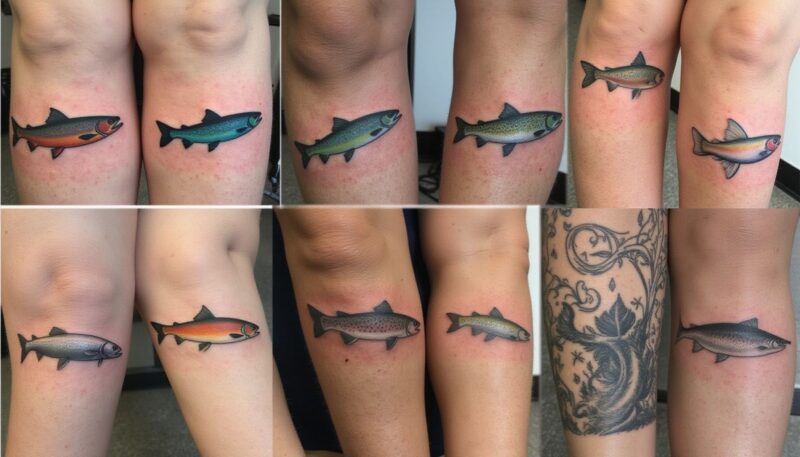
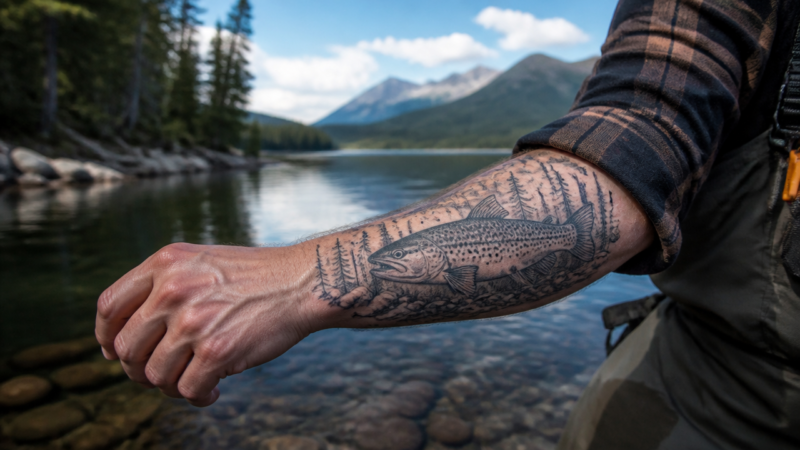
The realistic rainbow trout remains the most popular choice among nature enthusiasts seeking an authentic tribute. This design captures every detail—the red stripe running along the lateral line, the vibrant greens and purples on the back, the silvery whites and creams on the belly, and those signature black spots scattered across the body. A master colorist renders these elements with such precision that the fish appears three-dimensional and alive.
Rainbow trout specifically carry symbolic weight. They’re among the most visually stunning freshwater species, making them perfect for people who want their tattoo to serve as a nature portrait. The realistic style demands a large canvas (ideally 4-6 inches) and a highly skilled artist. Budget accordingly—expect to pay more than other styles. These tattoos age well if you protect them from sun exposure, though touch-ups every 7-10 years keep the colors crisp.
2. Watercolor Trout with Flowing Water Effects

Watercolor trout tattoos blend artistic expression with nature symbolism, perfect for people who want visual impact without photorealistic precision. The technique uses light lines to define the fish’s basic form, then adds splashes and washes of color—blues, greens, purples, and teals—that suggest movement and flowing water. The looseness of watercolor means no two pieces are identical; your artist creates something genuinely unique to your skin.
This style works particularly well on larger canvases like the calf or thigh, where the artist has room to layer colors and create depth. Watercolor trout designs appeal to people drawn to contemporary art aesthetics. The trade-off is that vibrant watercolor pigments fade faster than traditional black ink, typically requiring touch-ups every 5-7 years. Still, the ethereal beauty of watercolor—the way it evokes actual flowing water—resonates deeply with outdoor enthusiasts.
3. Minimalist Line-Work Trout Outline
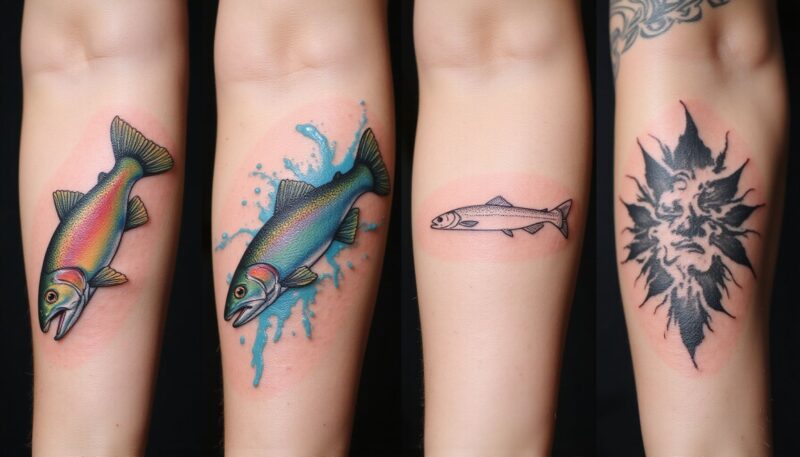
Minimalist trout tattoos strip away detail and focus on pure form. A single continuous line or just a few carefully placed strokes define the entire fish’s silhouette. This approach appeals to first-timers, people who want their tattoo to feel personal rather than public, and those who prefer subtlety. Minimalist work also costs less and requires less time in the chair.
The beauty of minimalist design lies in its restraint. A tiny line-work trout on your wrist or ankle becomes a private reminder—visible to you daily but subtle enough that strangers don’t immediately register what it is. Size flexibility is a bonus; you can go as small as a thumbnail without losing the design’s integrity. Black ink minimalist work ages exceptionally well, with minimal fading over decades.
4. Tribal Trout with Bold Geometric Patterns

Tribal trout tattoos use solid black ink and geometric shapes to create an abstract, stylized representation of the fish. Bold lines and sharp angles emphasize the trout’s strength and power without worrying about biological accuracy. This style draws from traditional tribal tattooing practices, carrying cultural weight and a sense of timeless tradition.
Tribal designs appeal to people drawn to symbolism more than visual realism. The geometric patterns often incorporate elements like waves or angular segments that suggest movement and water flow. Tribal trout work looks striking on the forearm, calf, or shoulder—areas with good visibility and enough surface space for the design to breathe. Black ink tribal work is virtually immune to fading and requires minimal maintenance beyond basic care.
5. Black and Grey Realism with Expert Shading
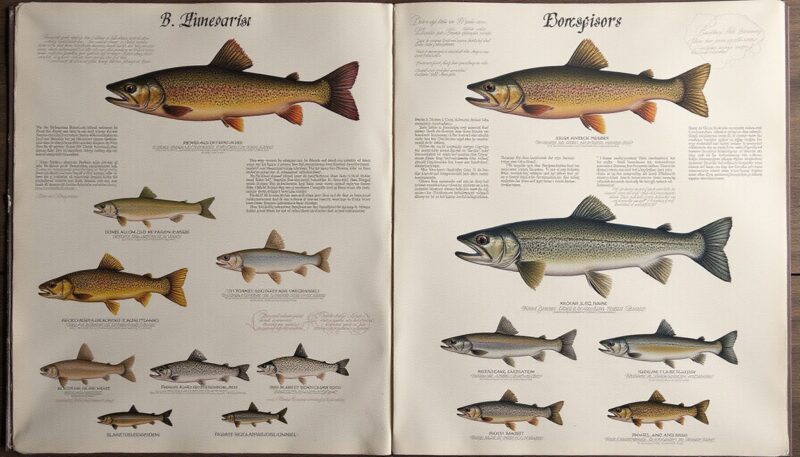
Black and grey trout tattoos sit between photorealism and abstraction, offering detail without relying on color. Master artists use gradations of grey—from near-white to deep black—to create dimension and suggest form. This style focuses on anatomy, light and shadow play, and the subtle contours of the trout’s body. The result is a tattoo that feels both artistic and accurate.
This approach suits people who want their tattoo to look sophisticated and timeless. Black and grey work holds up exceptionally well over decades, with minimal fading compared to color pieces. The style works at any size, though larger designs allow for more intricate shading and detail. If you want a nature tattoo that looks as good at fifty as it does on day one, black and grey realism delivers.
6. Trout with Underwater Scenery Integration
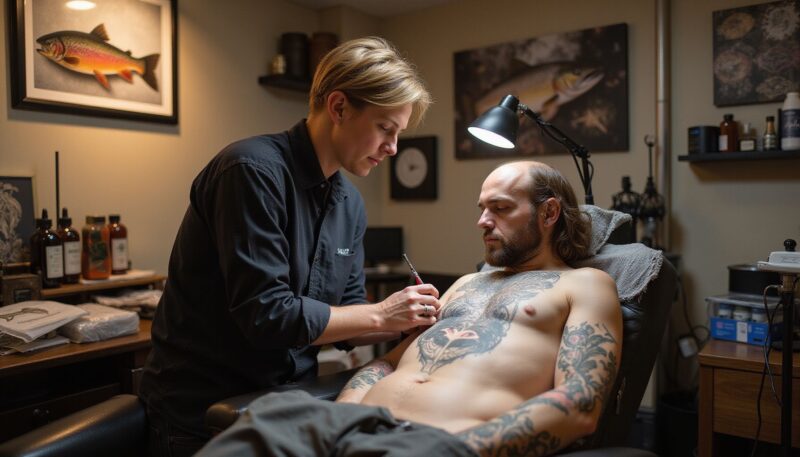
Adding environmental context transforms a simple trout tattoo into a full scene. Imagine your trout swimming through rocks, past aquatic plants, with ripples and bubbles surrounding it, or water flowing in distinct directions. This integration creates narrative depth—the fish becomes part of an ecosystem rather than an isolated subject. A trout swimming past river stones or through patches of river grass tells a story of habitat and belonging.
These complex compositions work best on larger canvases like the calf, thigh, or back. They often require multiple sessions to complete, especially if you’re incorporating color. The payoff is a tattoo that rewards close inspection; every element adds meaning. A step-by-step guide for creating detailed character art offers insights into composition and layering that apply to tattoo scene design as well.
7. Traditional Trout Tattoo with Bold Outlines
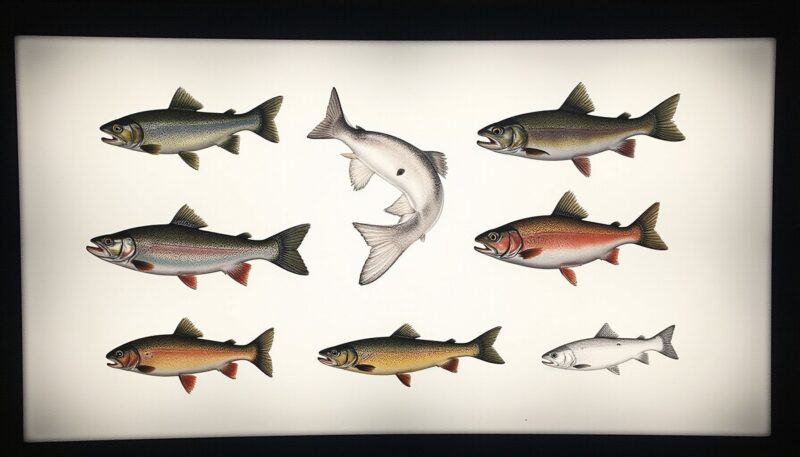
Traditional trout tattoos follow classic American tattoo conventions—bold outlines, limited colors (usually red, green, yellow, black), and a graphic, slightly cartoonish aesthetic. This style has been popular in tattoo shops for decades and carries a nostalgic, timeless quality. Traditional trout designs often include accompanying elements like fishing hooks, anchors, or water swirls.
Traditional work appeals to purists who respect tattoo heritage and people who want their ink to feel authentically “tattooed” rather than like a transferred image. The bold outlines mean these designs read well at any distance and age incredibly well. Colors in traditional work are limited but bold, meaning less fading concern compared to photorealistic color palettes. Traditional trout tattoos often become cherished pieces that clients never regret.
8. Watercolor Trout with Splatter Techniques
Taking watercolor further, splatter-style trout tattoos incorporate intentional drips, splatters, and abstract marks that suggest movement and energy. The fish’s form is rendered clearly, but surrounding colors explode outward in loose, artistic bursts. This approach is perfect for people who want vibrant, contemporary art on their skin—something that screams “artistic expression” rather than “nature documentary.”
Splatter technique requires an artist comfortable with abstraction and willing to take risks. The result feels dynamic and alive in a different way than traditional watercolor. These designs work well on the arm, shoulder, or thigh, where the splatter can extend beyond the main subject. Color vibrance is the main concern with splatter work; touch-ups every 5-7 years keep it looking intentional rather than faded.
9. Minimalist Trout with Fishing Hook Integration
Combining minimalist line work with a fishing hook creates a design that bridges simplicity and symbolism. A single-line trout paired with a clean hook outline feels personal to people who fish, without being graphically busy. This hybrid approach gives minimalist work more narrative weight—it says “I fish” and “I love nature” in two simple images.
Placement options are flexible. A small minimalist trout with hook on the wrist or ankle works beautifully; a larger version on the forearm or calf provides more detail. The addition of the hook doesn’t necessarily require more skill, just thoughtful design planning. Black ink minimalist-hook work ages exceptionally well and requires minimal maintenance.
10. Geometric Trout with Abstract Water Elements
Geometric trout tattoos blend the fish’s form with abstract shapes—triangles, circles, hexagons, lines—to create a contemporary, artistic aesthetic. Water elements like waves or droplets might also be rendered geometrically, creating a cohesive, modern design language. This style appeals to people drawn to symmetry, mathematical beauty, and contemporary art trends.
Geometric work requires precision and planning. Your artist will likely sketch multiple concepts before settling on the final design. These tattoos work well on the forearm, chest, or thigh. The clean lines of geometric work mean excellent readability and aging—there’s no color to fade, just black ink and strong contrast. Geometric trout designs feel sophisticated and thoughtful, especially for people who appreciate visual complexity.
11. Portrait-Style Trout Head Close-Up
A portrait-style trout head close-up focuses on just the fish’s face and front portion, rendered with photorealistic detail. This approach captures the trout’s eye—often the most expressive part of any fish—along with gill detail, scale patterns, and facial structure. The intimacy of a close-up creates a different emotional connection than a full-body trout; it feels personal and detailed.
Portrait-style work demands significant canvas space (at least 3-4 inches) and a highly skilled artist. The forearm, calf, or shoulder work best. This design appeals to people with deep fishing experience who understand trout intimately—perhaps through years of catch-and-release practice. The realism required means careful artist selection and sun protection throughout the tattoo’s life. Done well, a trout portrait becomes a stunning conversation piece and a genuine tribute to a fish species you love.
Latest Updates and 2026 Trends
The tattoo industry continues evolving toward personalization and sustainability. In 2026, eco-conscious ink options are becoming mainstream rather than niche. Many studios now carry plant-based or vegan inks that maintain color vibrancy without compromising environmental values. For nature-themed tattoos like trout designs, this alignment between subject matter and process feels authentic.
Digital design consultations are expanding. Clients can now upload body photos and see their trout design mapped onto their actual arm or calf before committing. This technology reduces surprises and improves the final result’s satisfaction. Many artists also use augmented reality apps to show clients exactly how the finished piece will look on their specific skin tone and placement.
Hybrid styles are gaining traction—blending watercolor’s fluidity with realism’s precision, or incorporating geometric elements into traditional designs. The trend supports creative experimentation while honoring tattoo tradition. More artists are also specializing in specific subject matter, so finding a “wildlife specialist” or “aquatic species expert” is easier than ever.
Conclusion
Choosing a trout tattoo is about more than picking a pretty design—it’s about selecting something that resonates with who you are and what you value. Whether you’re drawn to the photorealistic detail of a rainbow trout, the artistic fluidity of watercolor, or the bold symbolism of tribal work, there’s a style that matches your aesthetic and meaning. The key is taking time to research artists, consider placement thoughtfully, and plan for longevity through sun protection and aftercare.
Your trout tattoo becomes a permanent marker of your connection to nature, water, and the qualities the fish represents: adaptability, strength, persistence. Invest in quality work, choose an artist whose portfolio speaks to you, and commit to keeping your ink vibrant. The result will be a piece you cherish for decades, a daily reminder of the wild places and wild waters that matter to you.
References
- StyleCraze. (n.d.). Trout tattoo ideas: 8 unique designs and their meanings. StyleCraze. https://www.stylecraze.com/articles/trout-tattoo/
- TattooTrove. (n.d.). 20 trout tattoo designs [For nature lovers]. TattooTrove. https://tattootrove.com/trout-tattoo/
- QuickInkList. (n.d.). 27 stunning trout tattoo ideas to inspire your next ink. QuickInkList. https://quickinklist.com/trout-tattoo/
- OutSons. (n.d.). 101 best trout tattoo designs that will blow your mind. OutSons. https://outsons.com/best-trout-tattoo-designs-that-will-blow-your-mind/
- MacFishes. (n.d.). Iconic designs for traditional trout tattoos. MacFishes. https://www.macfishes.com/traditional-trout-tattoo/
- TattoosAI. (n.d.). Trout tattoo ideas. TattoosAI. https://www.tattoosai.com/tattoo-ideas/trout

A Teacher with 5 years of experience. Our Expertise, is reliable to meet your full Academic development needs . Worked on many crafts and construction projects offering services from design to development to deployment over the years. You will find many of my works in my business portfolio on request.