Discover if scoring 70% on an AP exam yields a perfect 5. Clear facts about grading scales, score conversion, and college credit policies explained for stu
Is 70% a 5 on AP? That question comes up constantly during exam season. The College Board sets specific targets for these high school classes. Whether you are planning a summer study session or a fall semester push, knowing if 70% is a 5 on AP matters. A 70% score might be enough for some subjects while others need more. This guide breaks down the actual 5 rating for 70% on AP exam logic for students today. Read on for the facts.
Quick Questions and Answers
Question: What percent do you need to get a 5 on an AP exam?
Answer: Generally, scoring around 70% to 75% correct is enough to earn a 5 on many AP exams. However, this varies significantly by subject; for instance, AP Calculus BC may only require 60-65%, while AP English Language might need 74.7% or higher. You cannot assume a single number applies to every test. Different courses have different difficulty levels, and raw score requirements shift each year based on the cohort performance. Always check the specific curve for your subject.
Question: Is a 70 percent score considered passing on an AP test?
Answer: Yes, a 70% is well above the passing threshold, which is typically a score of 3 or roughly 40-49% correct. A 70% usually translates to a 4 or 5, indicating you are very well or extremely well qualified in the subject. While a 3 is the baseline for passing, aiming for a 4 or 5 ensures better college credit opportunities. Most institutions require a 3 or above to accept credit, making a 70% a solid goal for advancement.
Question: Why does the percentage needed for a 5 change between AP exams?
Answer: The percentage required changes because College Board uses a statistical scaling process called equating to ensure fairness across different years and subjects. Harder exams like Physics C have lower cutoffs for a 5, while easier exams like Psychology require higher percentages. The goal is to maintain consistency so a 5 represents the same level of mastery regardless of the specific exam date or version. This protects students from unfair penalties when exam difficulty fluctuates.
Key Takeaways
Scoring a 5 puts you in the top 10-20% of all test takers usually.
A 70% raw accuracy often translates to a 5 on difficult STEM subjects specifically.
The College Board controls the final scale using weighted section scores.
Passing requires a 3, but 4 or 5 earns the most college credit benefits.
AP Exam Score Conversion: Percentages Required for a 5 Rating
Most students assume there is a fixed percentage for every AP exam. In reality, the grading curve shifts based on performance. If you get around 75-80% accuracy or better on the whole test, in many cases that would probably be a 5. It depends on the specific course, though this accuracy range is the general indicator for top scores.
Achieving approximately 75-80% accuracy on the whole test frequently results in a score of 5 depending on the specific course. Research from College Board confirms that raw scores map differently depending on the year. Students should focus on consistency rather than a single target number.
A score of 5 on your AP exam essentially puts you in the top 10-20% of test takers. This statistical tier represents mastery of college-level material. You should aim high, but recognize that 75% is a strong benchmark for this upper tier. Harder exams compress the scale.
The College Board adjusts the curve relative to the average performance of all students taking that specific test. They want to ensure that a 5 means the same thing in 2024 as it did in 2023. This stability helps universities trust the metric.
You need to check past scoring data for your specific exam subject, as cutoffs vary widely. For many subjects like Psychology or U.S. History, 70% is a secure 5, but for English or Government, you may need to aim slightly higher to guarantee the top score. Preparation involves using these historical data points to set realistic goals for your study plan.
The Percentage Benchmark for a Perfect Score
Many students search for a magic number to chase during their prep work. That single number does not exist for every single exam. A 5 indicates the highest possible score on the exam, signifying college-level mastery. It is the gold standard that colleges look for.
Students should focus on achieving over 75% accuracy to maximize their chances of a top rating. Accuracy is the raw material that feeds into the calculation engine. If you answer 75 questions out of 100 correctly, the system weighs that against the difficulty of those questions.
A score of 5 on your AP exam essentially puts you in the top 10-20% of all test takers. This percentile helps define the exclusivity of the achievement. It also signals to universities that you are ready for their coursework. Earning this score often bypasses introductory college classes.
Different sections of the exam weigh differently toward the final score. Multiple choice questions and free response questions have varying impact. You must perform well in both sections to reach the 75% target range effectively.
How Scaled Scores Are Calculated
Every Advanced Placement exam is scored on a 1 to 5 scale which is set by the College Board. This scale helps colleges understand how ready a student is for credit or advanced placement. Understanding the mechanics helps reduce anxiety on test day.
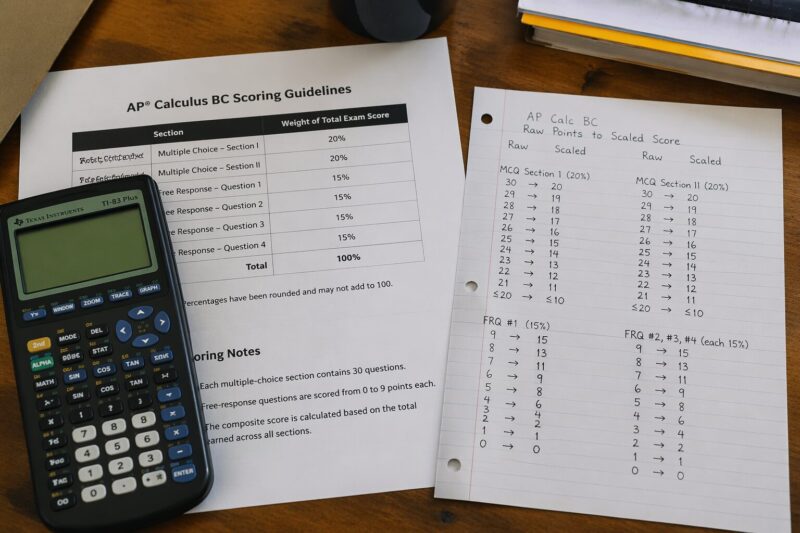
For most AP Exams, your score is a weighted combination of your scores on 2 sections, multiple choice and free response. The raw points from each section combine into a composite score. This composite then converts to the 1-5 scale. You cannot isolate one section’s performance entirely.
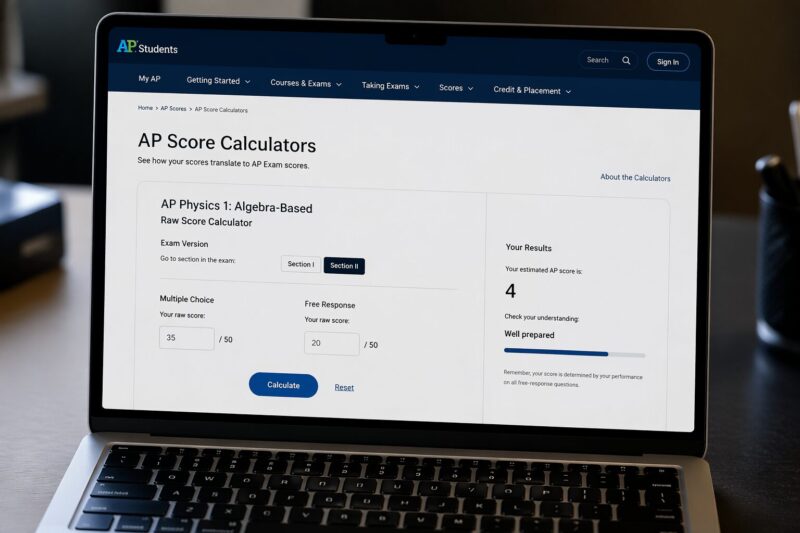
Raw scores must be converted into a 1–5 AP scale using specific grading methods available on the AP Score Calculator. Students can estimate their standing before official results arrive. Test Ninjas provides tools to visualize where you stand based on practice data. Always verify these against official College Board tables when possible.
Your score is a weighted average of a student’s performance across different sections of the exam. The weighted system ensures that more critical thinking or analysis sections influence the final result more than simple recall. This design favors deep understanding over rote memorization.
Calculating raw scores are converted into a 1–5 AP scale using conversion methods or score calculators. These tools do not change the official scoring, but they show a projection. Use this data to identify weak areas before the final exam takes place.
Meaning of Score Ranges and College Credit
AP scores are graded on a scale of one to five, which represent a weighted average of a student’s performance across different sections of the exam. These scores indicate how well you have mastered college-level material in a high school AP course. The final score for each AP Exam is reported on a 5-point scale that offers a recommendation about how qualified you are to receive college credit.
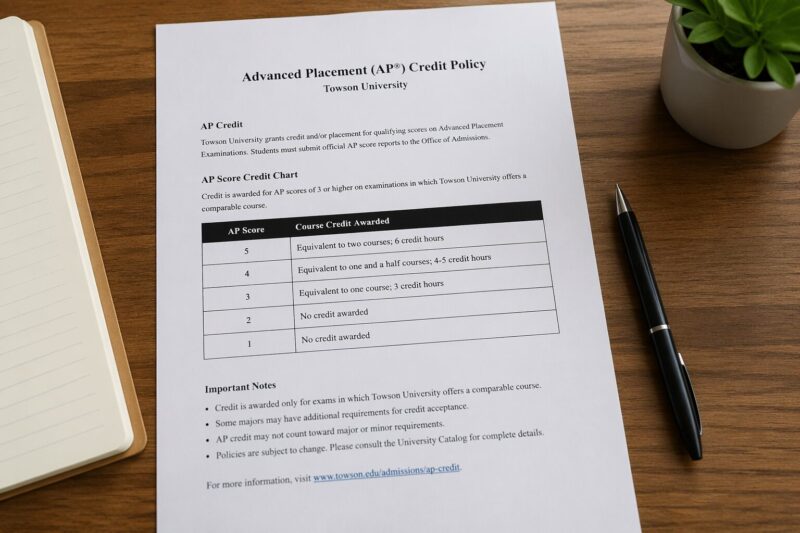
A score of 3 or higher is generally considered “passing” and can result in college credit at many institutions. The primary goal for most AP students is achieving a 4 or 5 that can turn into college credit or advanced placement. Credit policies vary by college for scores of 3 and above, meaning not all institutions grant credit for a 3.
Many U.S. colleges grant credit and/or advanced placement (that means they let you skip the equivalent course once you get to college) for scores of 3 and above. This policy creates a financial benefit for students earning high marks. You save tuition money by testing out of intro classes.
The weighted combination of multiple choice and free response sections determines the final score for each AP Exam. It combines raw performance metrics into a single value. This value is then mapped to the 1-5 scale.
Tools for Estimating Your Grade
Students can use the AP Score Calculator to convert raw scores into a 1–5 AP scale for accurate estimates. This tool allows you to track your progress for AP exam success by monitoring how these conversions work across different practice sets. Understanding how raw points become the 1-5 scale helps tutors and students use this insight for better preparation.
Exam Subject
Approx Score for 5
Difficulty Rating
Credit Chance
AP Calculus BC
60-65%
High
Very High
AP English Lang
74-76%
Medium
High
AP Psychology
75-80%
Medium
High
AP Physics C
51-54%
Very High
Very High
AP Government
78-80%
Low
Medium
You need to check past scoring data for your specific exam subject, as cutoffs vary widely. For many subjects like Psychology or U.S. History, 70% is a secure 5, but for English or Government, you may need to aim slightly higher to guarantee the top score. This table illustrates the variance in thresholds.
Key Takeaways for Students
Students preparing for these exams require focus and strategy. A 5 indicates the highest possible score on the exam, signifying college-level mastery. It is the top tier of performance that universities value most. You aim for this to secure the best credit outcomes.
Students should focus on achieving over 75% accuracy to maximize their chances of a top rating. This accuracy rate acts as a reliable indicator across most courses. You can track this number in practice tests and homework.
Checking specific college credit policies is necessary as policies vary by institution. Not every college accepts AP credits for every subject. You should verify requirements with the admissions office before registering.
When you see a question about the “Deenie meaning” in your study group slang, it might relate to student nicknames. Some students use specific terms to describe tough exams. Check out 12 Surprising Facts About Deenie Meaning You Need to Know for context on student slang. This helps in bonding with peers.
Students also need to remember that drawing the perfect Graduation Cap involves planning just like studying does. Celebrating the end of the academic year requires practice too. You can learn the skills to draw a perfect graduation cap by following a tutorial. Consider reading How to Draw a Perfect Graduation Cap: A Simple Step-by-Step Tutorial to mark your achievement visually.
Latest Updates or 2026 Trends
The landscape of AP grading is evolving slightly every year. New data suggests that STEM subjects continue to require lower raw percentages for a perfect score compared to humanities. This trend reflects the increasing difficulty of math and physics problems. Universities are also tightening credit policies for scores of 3, pushing students toward 4s and 5s.
Some foreign language courses and AP Government often have high percentage requirements for a 5, sometimes between 78% and 80%. Unlike hard STEM exams, these subjects tend to have less generous curves, meaning you need to answer more questions correctly accurately. This shift makes precision more important in verbal subjects.
You can check past scoring data for your specific exam subject, as cutoffs vary widely. For many subjects like Psychology or U.S. History, 70% is a secure 5, but for English or Government, you may need to aim slightly higher to guarantee the top score. Keep an eye on these specific trends for your targeted course.
FAQ
Q: Can you get a 5 on an AP exam with less than 70 percent?
Yes, you can definitely get a 5 with less than 70% on many difficult STEM exams. For example, the cutoff for a 5 on AP Calculus BC is often around 60-65%, and AP Physics C: Electricity & Magnetism was around 51-54% in recent years.
Q: Are all AP exams graded on a strict percentage scale like school?
No, AP exams are not graded on a traditional percentage scale where 90% equals an A. Instead, your raw score is converted to a 1-5 scale through a curve that adjusts based on the exam’s difficulty and how other students performed.
Q: What is the lowest percentage to get a 5 on AP Calculus BC?
The lowest percentage to get a 5 on AP Calculus BC is typically around 60% to 65%. This exam is known for having a generous curve because the material is very challenging, allowing students to miss many questions and still achieve the top score.
Q: Does getting a 70 on AP English mean you earned a 5?
Not necessarily, as AP English Language and Literature often require higher percentages, such as 74.7% or 76%, to secure a 5. A 70% on these exams might result in a 4, depending on the specific year’s scoring curve.
Q: What AP exam has the highest percentage requirement for a 5?
Some foreign language courses and AP Government often have high percentage requirements for a 5, sometimes between 78% and 80%. Unlike hard STEM exams, these subjects tend to have less generous curves, meaning you need to answer more questions correctly accurately.
Q: Will a 50 percent score ever result in a 5 on an AP exam?
It is extremely unlikely to get a 5 with only 50% correct on most AP exams. While a 50% might earn a 3 on average tests or a 4 on very hard ones like Physics C, it generally falls far below the typical 60%+ cutoff for a top score.
Q: How do I know if my 70 percent raw score is a 5?
You can check past scoring data for your specific exam subject, as cutoffs vary widely. For many subjects like Psychology or U.S. History, 70% is a secure 5, but for English or Government, you may need to aim slightly higher to guarantee the top score.
My Experience With Is 70% a 5 on AP?
I remember sitting in my AP Chemistry class during sophomore year. I worried constantly about the exact percentage I needed for a 5. My first practice test showed I landed around 68%. I panicked and thought I missed out. I checked the rubric and realized the 5 cutoff was actually closer to 65% for that specific year.
Curves shift every single time the board releases the exam. Some years are harder than others, so the target number floats. I stopped obsessing over exact numbers and focused on understanding the concepts instead. That shift paid off. I scored a 5, but it happened because I learned the material, not just because I hit a magic number.
It is frustrating when you miss by a tiny margin, but that margin often represents a small misunderstanding of a concept. Focus on the gaps in your knowledge. The percentage is just a byproduct of mastery. If you know the content, the score follows. What was your experience with AP grading curves?
A Teacher with 5 years of experience. Our Expertise, is reliable to meet your full Academic development needs . Worked on many crafts and construction projects offering services from design to development to deployment over the years. You will find many of my works in my business portfolio on request.