
Quick answer: The best leftover fabric ideas are coasters, scrunchies, sachets, and pouches for small scraps, and tote bags, pillow covers, and quilt blocks for bigger pieces. Sort your scraps by size first, then match them to a project below.
Fabric scraps pile up fast, and most of them are too good to toss. Below are 12 simple ways to turn leftover fabric into something you will actually use, sorted from the quickest scrap-busters to the projects worth saving your bigger pieces for.
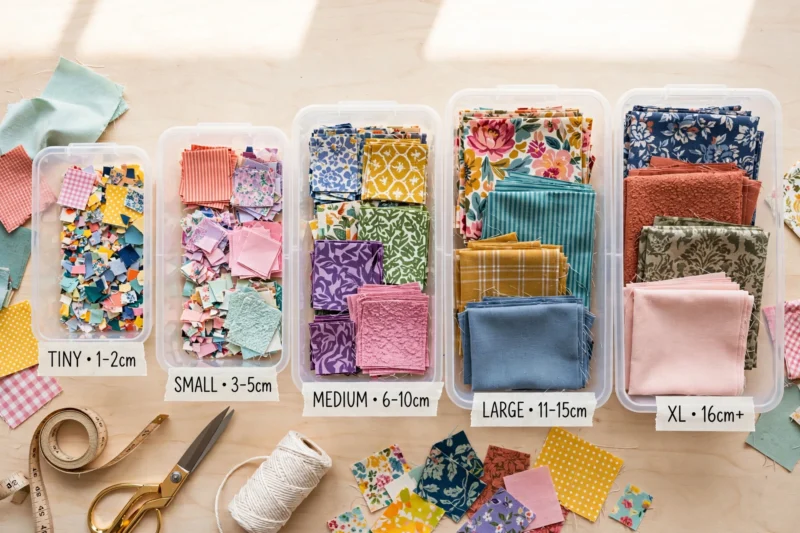
| Scrap Size | Best Use | Sewing Needed |
| Tiny (under 4 in) | Varies | Stuffing, trim, appliqué |
| Small (4 to 8 in) | Standard | Coasters, scrunchies, sachets |
| Medium (8 to 18 in) | Standard | Pouches, headbands, blocks |
| Large (over 18 in) | Caution | Totes, pillow covers, garments |
| Project | Scrap Size Needed | Skill Level |
| Fabric coasters | Small | Beginner |
| Lavender sachets | Small | Beginner |
| Scrunchies | Small | Beginner |
| No-sew fabric bows | Small | Beginner |
| Fabric wall hanging | Mixed | Intermediate |
| Patchwork headband | Medium | Beginner |
| Zipper pouch | Medium | Intermediate |
| Bias tape | Medium to large | Intermediate |
| Stuffed toy | Small to medium | Beginner |
| Fabric gift wrap | Medium to large | Beginner |
| Quilt block set | Small, many pieces | Advanced |
| Tote bag | Large | Intermediate |
Average sewing time per project
15 min
20 min
40 min
1 hr
2+ hrs
1. Fabric coasters
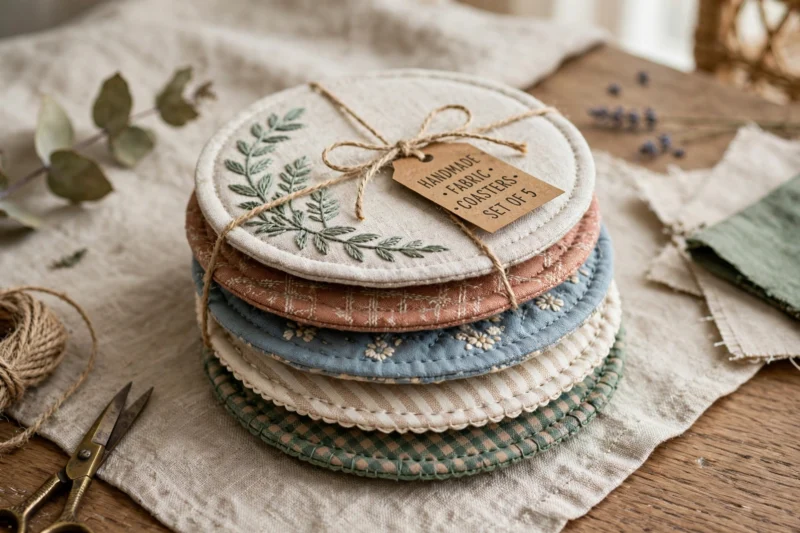
Coasters are the fastest way to use up small, sturdy scraps like cotton or linen. Cut two matching squares, layer them with a bit of batting or an old towel scrap in between, then stitch around the edges and leave a small gap to turn it right side out. Topstitch the opening closed and you have a finished coaster in about 15 minutes. This is one of the easiest starter projects because it only needs straight seams and no zippers or curves. Make a set of four or six from different prints for a cohesive kitchen accessory, or mix patterns for a scrappy, collected look. They also make quick, low-cost gifts when tied together with twine.
2. Lavender sachets
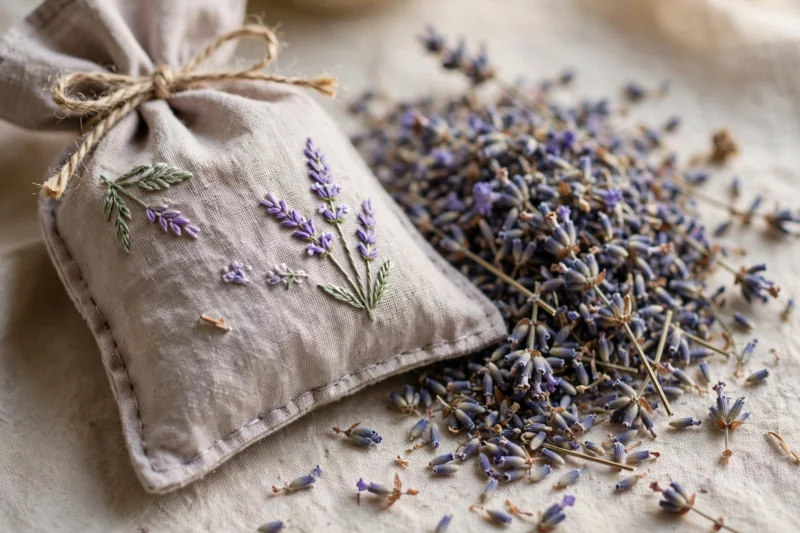
Tiny scraps that are too small for almost anything else are perfect for lavender sachets. Cut two small rectangles, sew three sides, fill with dried lavender or rice, then stitch the last side shut. Lavender bags are considered a great way to use up scrap fabrics, and they double as an easy, cute small gift idea, according to one scrap-fabric guide. Tuck them into drawers, closets, or gift boxes. Because the pieces are so small, this is also a good project for practicing hand-sewing if you are still building confidence with a needle and thread. Even mismatched prints look intentional once the sachet is stuffed and closed.
3. Scrunchies
A single small scrap and a bit of elastic is all you need for a scrunchie. Cut a long strip, fold it lengthwise, sew down the open side, thread elastic through with a safety pin, then stitch the ends closed. This project uses very little fabric and no sewing machine skill beyond a straight line, which makes it a favorite beginner idea. Scrap pieces of fabric and elastic come together into pretty little accessories that most people, including kids, enjoy wearing, as one upcycling roundup notes. Odd-shaped or narrow scraps that are not useful for much else are often perfect here, since the strip does not need to be wide.
4. No-sew fabric bows
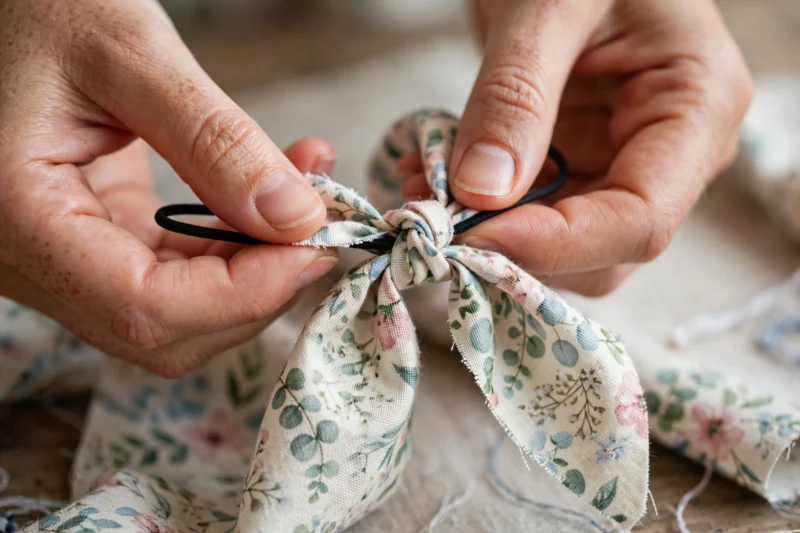
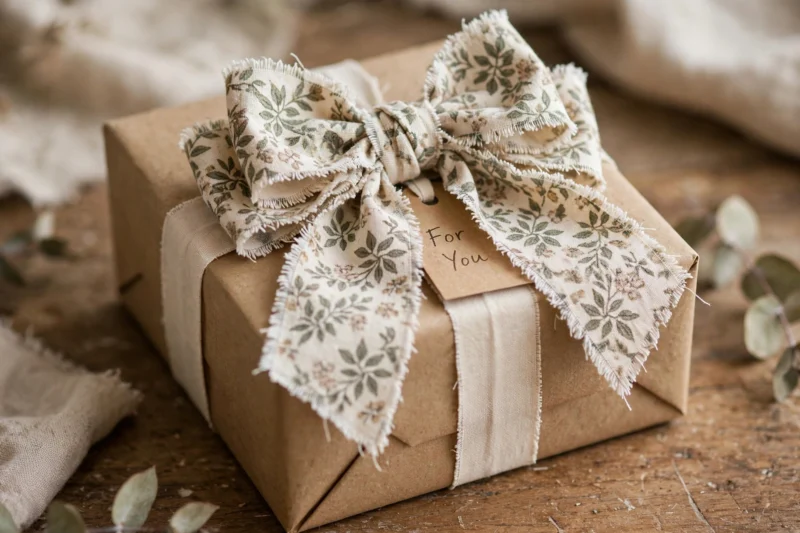
If you do not own a sewing machine, small fabric scraps can still become decorative bows for gifts, plant pots, or hangers. Cut a strip, fold and pinch it into a bow shape, then wrap a smaller strip around the center and secure with hot glue or fabric glue. Using fabric scraps as accessory pieces adds a decorative touch to gifts and plants, and a bow made this way can dress up a plain gift box in minutes, according to one no-sew craft guide. This is a great project to do with kids, since there is no needle involved and mistakes are easy to redo with more glue.
5. Fabric wall hanging
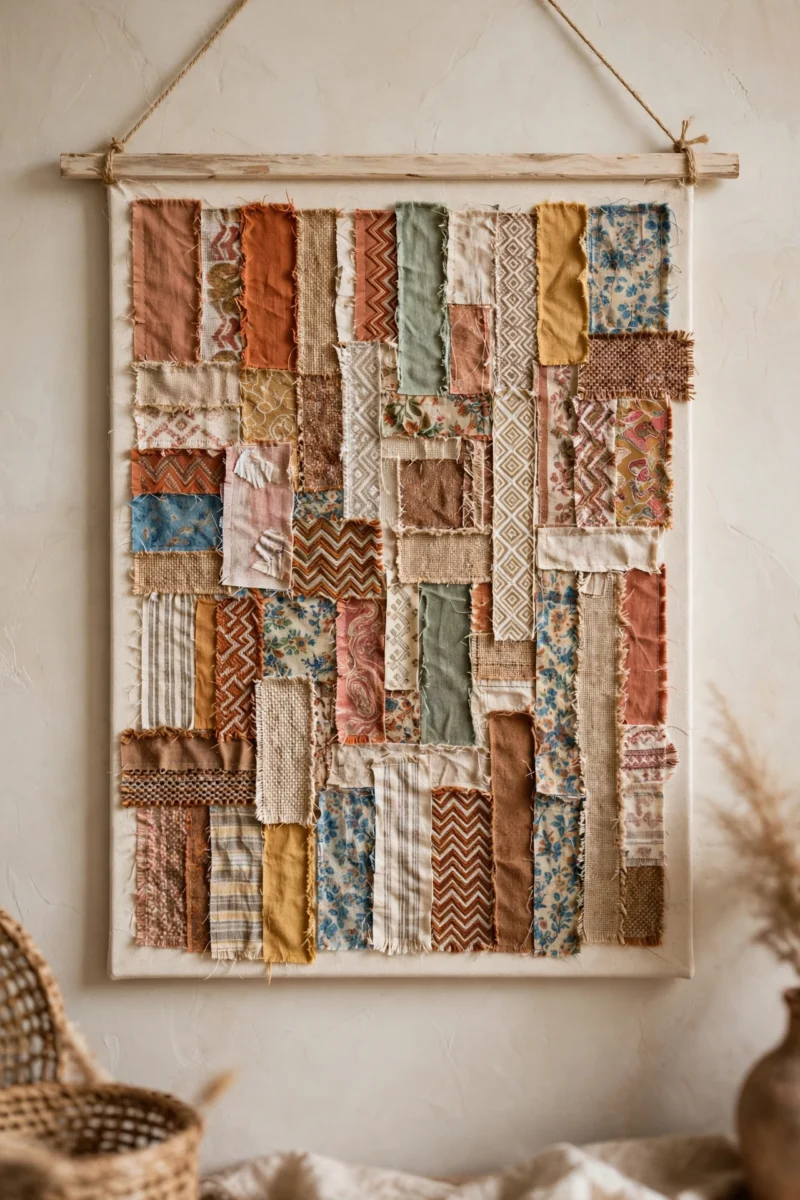
Mismatched scraps in different colors and textures work well glued or stitched onto a canvas or dowel to make a wall hanging. Cut scraps into strips or shapes, arrange them into a pattern you like, then attach them with fabric glue or a few simple stitches. Fabric wall hangings are considered one of the coolest things to make from leftover fabric, since you can unleash your creativity and add color and texture to a wall using pieces that would otherwise sit in a bin, as one craft blog explains. This project works with almost any combination of scraps, so it is a good way to use up odd colors or prints that do not match anything else.
6. Patchwork headband
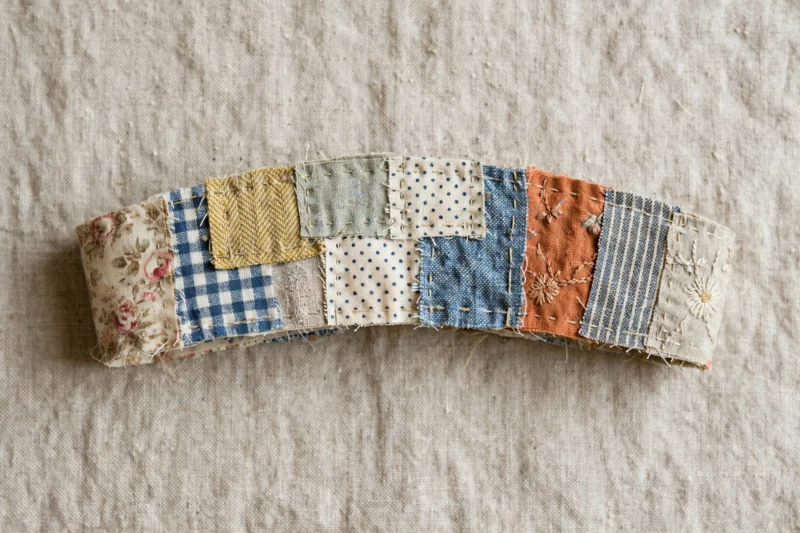
Medium scraps and a bit of elastic turn into a soft, stretchy headband with almost no fabric waste. Cut a long strip or piece several smaller scraps together first, fold it lengthwise, sew the long edge, then attach elastic at the ends the same way you would for a scrunchie. With just those scrap pieces and a little elastic, you can create pretty headbands that need very little sewing, and any little girl is going to love wearing one, according to one fabric-upcycling roundup. Piecing several small scraps together before cutting the strip is a good way to use up leftover fabric that is too narrow on its own.
7. Zipper pouch
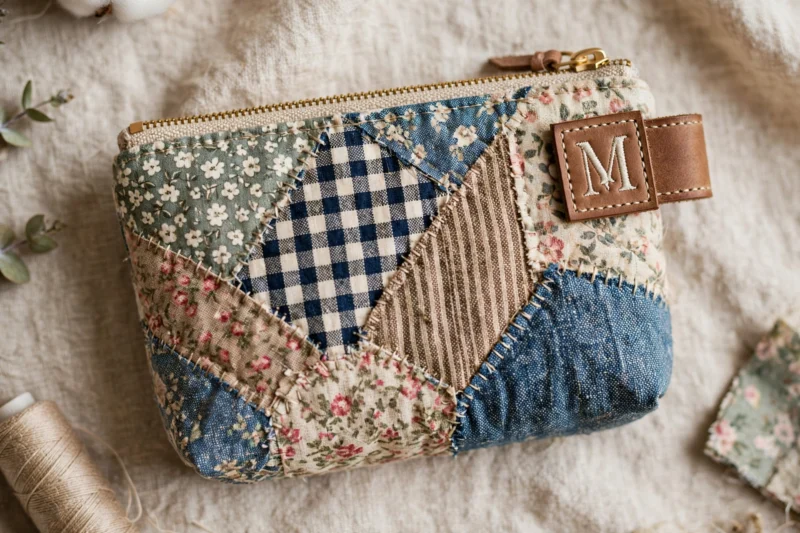
A zipper pouch is the next step up once straight-seam projects feel easy, and it turns a medium scrap into something genuinely useful, like a pencil case or a spot for cords and chargers. Cut two rectangles, sew in a zipper along one edge, then sew around the remaining sides and turn it right side out. This project takes more focus than a coaster because of the zipper, but it is still beginner-friendly with practice. A monogrammed pouch can be made using leftover trim scraps for the strap or a decorative tab, which turns a plain pouch into a personalized gift, as one upcycling guide points out.
8. Bias tape
Longer, narrower scraps can be cut on the diagonal and pressed into bias tape, which is normally sold by the yard at fabric stores. Cut strips at a 45 degree angle to the fabric grain, join them end to end, then fold and press using a bias tape maker or an iron. There is no need to buy bias tape when you can use this method to make a colorful version that looks even better and is more environmentally friendly, since it reuses fabric scraps instead of throwing them out, according to one scrap fabric guide. Save this project for medium to large scraps, since bias tape needs continuous fabric length to avoid too many seams.
9. Stuffed toy
Small and medium scraps in fun prints make simple stuffed toys, and even the tiniest offcuts can become the stuffing inside. Cut two matching shapes, like a bunny or a bean bag square, sew around the edge leaving a gap, stuff it, then close the opening. A square bunny with body parts pieced from different colored scraps is a good example of how mismatched fabric can still work in a single toy, since the patchwork look becomes part of its charm, as one scrap-project guide describes. This project is also a good way to finally use up your tiniest scrap pile as filling instead of buying polyester stuffing.
10. Fabric gift wrap
Medium to large scraps can replace wrapping paper entirely using the furoshiki method, a simple fabric-wrapping technique that needs no sewing or glue. Lay the gift diagonally on a square of fabric, fold the corners up and over, then tie two corners together in a knot on top. Using a fabric scrap to wrap a gift adds an extra touch of thoughtfulness and sustainability, and it can even double as a bow or topper if tied a certain way, according to one craft guide. The fabric becomes a second gift once it is unwrapped, so pick a print the recipient could actually reuse as a scarf or tote liner.
11. Quilt block set
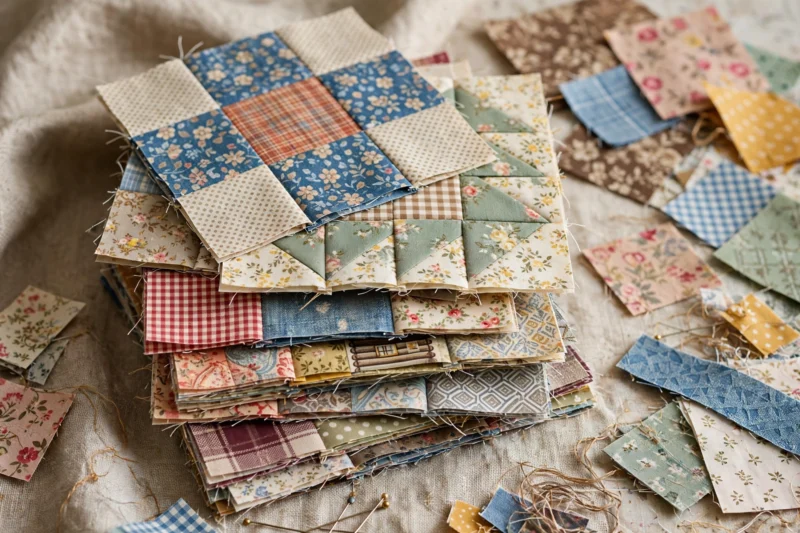
If you have a large collection of small, similarly sized scraps, cutting them into uniform squares for quilt blocks is one of the most efficient ways to use them all. Trim scraps to a standard size like two and a half or five inches, then piece them together in rows to build a block. This project takes longer and needs more precise cutting than the others on this list, so it is best once you are comfortable sewing straight, even seams. Even scraps that do not match in color can work in a scrappy quilt style, which is designed to look intentionally mixed rather than coordinated.
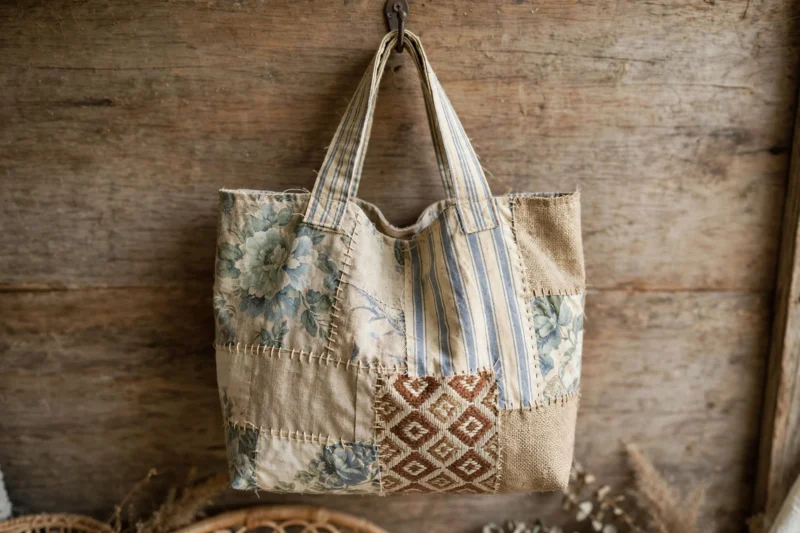
12. Tote bag
Large leftover pieces, roughly the size of a fat quarter or bigger, have enough surface area for a full tote bag pattern without piecing scraps together first. Cut two body panels and two strap pieces, sew the sides and bottom, attach the straps, and hem the top edge. A large scrap can be treated the same way you would treat fabric bought new specifically for a project, since the size is already there, as one fabric-organizing guide notes. This is a good project to save your biggest, best-condition scraps for, since smaller offcuts will not give you enough fabric for the panels.
FAQ
Should I keep every fabric scrap?
No, it is fine to let go of scraps smaller than two inches in any direction, since they are usually too small for most projects. Many quilters set a minimum size rule and donate or compost anything smaller so the scrap pile stays manageable.
Can I mix different fabric types in one project?
Yes, but it works best when the fabrics have similar weight and stretch, like cotton with cotton or knit with knit. Mixing a stiff fabric with a stretchy one can cause puckering, so save very different fabric types for no-sew or stuffing projects instead.
What is the fastest way to use up a big pile of scraps?
Cutting scraps into standard square sizes, like two and a half inch or five inch squares, is the fastest way to work through a big pile. Pre-cut squares go straight into quilt blocks, coasters, or pouches without extra measuring later.
Where can I donate fabric scraps I do not want?
Local schools, animal shelters, and community art or maker spaces often accept clean fabric scraps for supplies or pet bedding. Some communities also have textile recycling or compost programs for natural-fiber scraps.
References
- DIY & Crafts: 100+ Cool Scrap Fabric Projects
- DIY Joy: 49 Fabric Scrap Crafts Ideas
- A Rose Tinted World: Fabric Scraps, How To Use Every Last Piece
- Ichcha: What to Do with Fabric Scraps, 16 Ideas
- Hello Sewing: 50 Brilliant Ways To Use Up Fabric Leftovers
- The Sewing Loft: How to Organize Fabric Scraps
- OLFA: How to Organize and Store Fabric Scraps

A Teacher with 5 years of experience. Our Expertise, is reliable to meet your full Academic development needs . Worked on many crafts and construction projects offering services from design to development to deployment over the years. You will find many of my works in my business portfolio on request.