
What makes a truly great scrap fabric clothing idea stand out from every other DIY project you have tried? Whether you are planning a summer garden party or a cozy autumn afternoon indoors, the right fabric choice makes all the difference. Using leftover materials reduces textile waste while helping you build a one-of-a-kind wardrobe. Finding clever ways to reuse those small remnants turns a messy bin into a collection of useful, handmade items. These scrap fabric clothing ideas provide practical ways to save money and show off your personal style.
Quick Questions and Answers
Question: What are the best scrap fabric clothing ideas for beginners? Answer: The easiest beginner-friendly options are scrunchies, headbands, reusable make-up wipes, simple bibs, and basic patchwork accessories because they need small pieces and simple seams. For actual clothing, patchwork tops and slip tops are possible, but they usually require more planning because you must match pattern pieces, add seam allowances, and think about fabric behavior.
Question: Can you make real clothes from fabric scraps? Answer: Yes. Threads Monthly specifically focuses on turning scrap fabric into new clothes by patching a sewing pattern or using different fabrics for each pattern piece, and Friday Pattern Company gives examples such as a Patchwork Saltwater Slip Top and a patchwork Ilford Jacket. The main limitation is that scraps must be large enough, or you need a patchwork design that intentionally joins many pieces together.
Question: How much scrap fabric do you need for a scrunchie? Answer: A scrunchie can be made from a relatively small strip of fabric, and Wikihow gives one example size of 20 in by 4.5 in for a DIY scrunchie. That makes scrunchies one of the easiest scrap projects because they do not require large continuous yardage, and leftover blouse, skirt, or dress fabric is often enough.
1. Patchwork Jackets and Tops
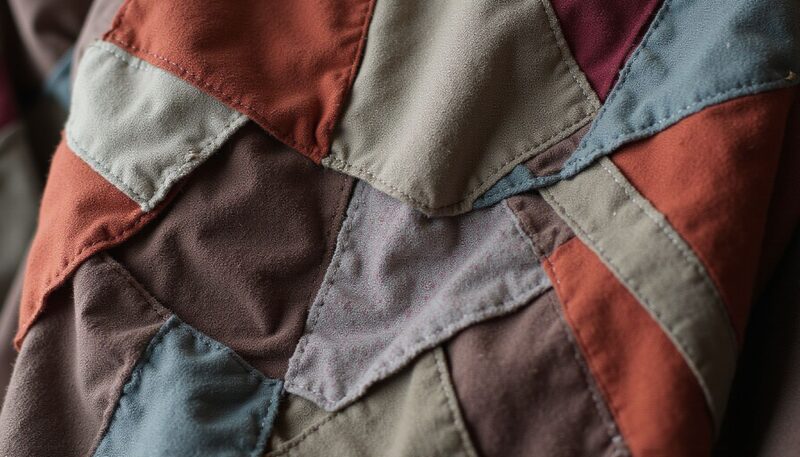
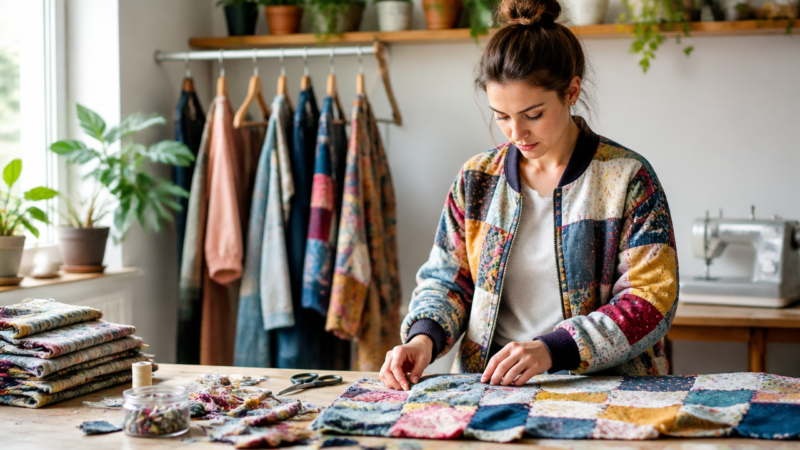
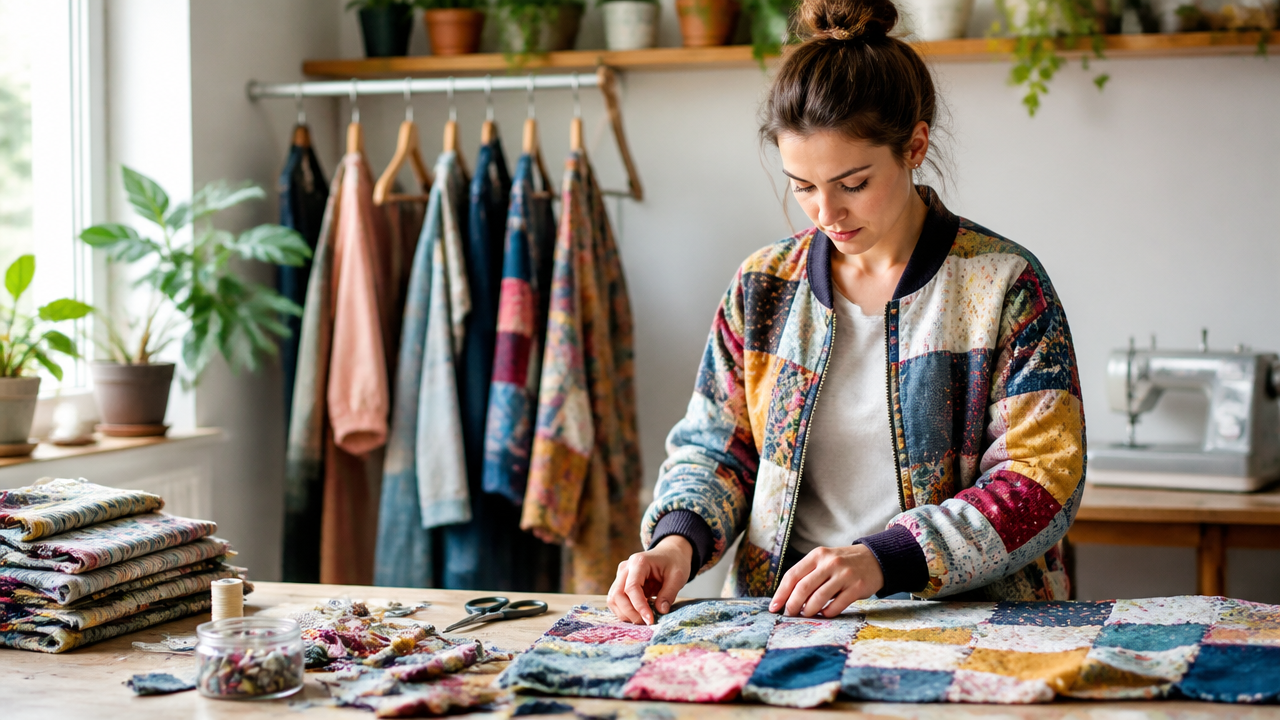
Creating a garment from scraps is more than a way to save fabric; it is a design choice. By treating your remnants as individual pattern pieces, you can construct a unique top or jacket. Threads Monthly suggests that you can either chop up an existing sewing pattern into smaller segments or simply assign a different fabric to every panel.
This approach works for both lightweight summer wear and heavier outerwear. The Patchwork Saltwater Slip Top is a classic example of how lighter scraps can look intentional and high-end. For cooler weather, a patchwork Ilford Jacket uses sturdier remnants to build structure. If you feel like your current closet needs a refresh, 10 Editor-Approved Vintage Sewing Patterns Worth Buying can provide the base shapes for your next patchwork experiment.
2. Reusable Wash Cloths and Make-Up Pads
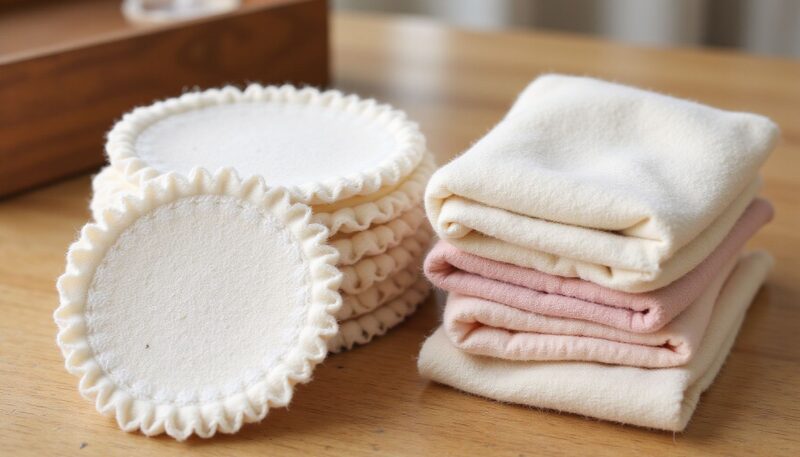
Sometimes the smallest scraps provide the most daily utility. Madam Sew explains that cotton or flannel remnants as small as 4 by 4 inches are perfectly sized for reusable beauty pads. These small squares are often easier to manage than larger garments and allow you to test how different textures perform against your skin.
You can use old towels as a base for a thicker, more absorbent pad. To keep these edges from fraying, use a zigzag stitch or an overlocker. It is a simple way to replace disposable products with something that lasts for years.
3. Fabric Scrunchies and Headbands

Scrunchies are the quintessential beginner scrap project. They require minimal fabric and a short length of elastic, making them perfect for those tiny ends of your favorite skirts or blouses. As noted by Friday Pattern Company, these accessories have seen a major revival and remain a go-to for quick wins.
Headbands function the same way. You can braid strips of cotton or use a single wider piece to create a comfortable accessory. If you are just starting out with sewing, these projects help you master straight seams without the pressure of fitting a garment to your body.
4. Custom Bias Tape

If you enjoy finishing your own garments, custom bias tape is a secret weapon. By cutting long, thin strips from your scraps on the bias, you create a professional finish for necklines and armholes. This is a functional use for remnants that are too narrow for anything else.
Using your own fabric instead of store-bought binding gives your clothes a cohesive look. You can match the binding to your project or use a contrasting print to add a pop of color. It turns a scrap pile into a supply of essential sewing notions.
| Project | Skill Level | Best Use Of | Time Investment |
|---|---|---|---|
| Scrunchies | Beginner | Tiny scraps | 15 minutes |
| Patchwork Top | Advanced | Medium remnants | 5-10 hours |
| Fabric Basket | Intermediate | Long thin strips | 3-4 hours |
| Pattern Weights | Beginner | Fabric offcuts | 30 minutes |
5. Braided Coil Baskets

When you have long, thin strips that cannot be used for garment trim, braiding them is a great alternative. CamiMade recommends cutting scraps into 2-3 cm wide strips and braiding them into a long, continuous strand. This creates a sort of soft, handmade yarn.
Once you have your braid, you coil it tightly into a circle. Use a strong zigzag stitch to secure each row to the previous one as you expand the base. This method is incredibly sturdy and produces a functional basket for your sewing room.
6. Upcycled Tube and Crop Tops

Some of the best scrap clothing ideas start with an existing garment that is too large or damaged. Wikihow points out that you can turn old clothes into simple tube tops or mini-dresses with basic sewing skills. If the fabric has a pattern you love, don’t throw it away.
These projects are often just about removing the original seams and re-tailoring the piece to fit you. It is a fantastic entry-level upcycling project because it relies on the pre-existing structure of the clothing. If you want more tips on managing a budget-friendly sewing room, 13 Useful Scrap Fabric Ideas on a Budget is worth a look.
7. Detachable Collars
High-quality fabric scraps are often too small to make a shirt, but they are perfect for a detachable collar. This accessory can instantly transform a plain blouse or sweater. It is a classic, versatile piece that adds a touch of elegance to your daily outfit.
Because the collar is small, you can afford to use your most beautiful or delicate scraps. It is a low-risk project where you can experiment with lace, embroidery, or unique prints. Plus, it takes very little fabric to get a big stylistic payoff.
8. DIY Pattern Weights
Every seamstress knows that pinning patterns takes forever. Madam Sew suggests creating your own pattern weights by sewing small fabric squares into pouches. Fill them with rice or dried beans to give them enough heft to hold your paper patterns steady.
This is a clever way to use up tiny offcuts that would otherwise go to the bin. You can make them as heavy or as light as you like. They are durable, cheap to make, and infinitely better than constantly reaching for pins.
9. Applique and Custom Pockets
If you have an old sweater or shirt that feels a bit boring, add an applique. You can cut shapes from your favorite scrap prints and stitch them onto your garments. For a more functional choice, sew a small patch pocket onto the front of a plain t-shirt.
This customization is a great way to hide small stains or holes in your existing clothes. If you feel like taking your decoration to the next level, 12 Creative Bedazzle Ideas to Spruce Up Your Wardrobe offers plenty of inspiration to complement your new custom pockets.
Common Mistakes
Many beginners try to mix too many different fabric weights in one patchwork garment. If you combine heavy denim with lightweight silk, the piece will not hang correctly. Always try to match the weight and texture of your scraps so the final garment moves as one piece.
Another issue is forgetting to press your seams. Even if you are just joining small patches, pressing them flat keeps the garment from looking lumpy. Neglecting your iron makes the final piece look unfinished, even if the sewing itself is solid.
FAQ
Q: Which scrap projects use the smallest pieces of fabric?
Reusable make-up wipes are one of the smallest-piece options because scraps as small as 4 by 4 inches can work. Other small-scrap ideas include applique, bias tape, piping, fabric twine, and bows, which appear in the scrap-project roundups and can use narrow strips or irregular remnants efficiently.
Q: How do you choose scrap fabric for clothing projects?
Choose scraps by size, fabric type, and how visible the finished piece will be. Larger, more stable scraps work best for patchwork garments and tops, while small leftovers are better for bias tape, pockets, bows, or accessories; several sources also suggest that cotton, flannel, and old towels are useful for simpler reusable items.
Q: Is patchwork clothing difficult to sew?
Patchwork clothing is usually more difficult than a single-fabric garment because you need to plan seams, seam allowances, and fabric layout carefully. You can chop up the pattern into patches or use a different fabric for each pattern piece, which makes the method flexible but more design-intensive than a standard make-and-sew project.
Q: What scrap fabric ideas are best for using up leftovers quickly?
Fabric twine, scrunchies, reusable wipes, bows, and small pouches are among the fastest-use projects because they are small and repetitive. Fabric twine is a fast scrap-busting pastime, and wipes or scrunchie ideas are also positioned as simple, quick makes.
Q: Can old clothes be turned into scrap fabric clothing ideas?
Yes. You can reuse old clothes by turning them into crop tops, shorts, mini-dresses, headbands, scrunchies, tote bags, pillowcases, quilts, and patchwork curtains. That means old garments can serve as both the source material and the design base for new clothing or accessories.
Q: What is the cheapest scrap fabric clothing project?
The cheapest projects are usually the ones that use leftover fabric and common household materials, such as scrunchies, reusable make-up wipes, or pattern weights. Pattern weights can be filled with rice and make-up wipes can be made from scraps as small as 4 by 4 inches, which helps keep material costs very low.
Q: Should scrap fabric be cotton or can it be mixed fabrics?
Mixed fabrics can work, but the best choice depends on the project. Garments and patchwork clothes often benefit from stable, similar-weight fabrics so the finished piece hangs well, while small accessories like bows, wipes, bibs, and scrunchies can tolerate more variety.
My Experience With 10 Brilliant Scrap Fabric Clothing Ideas to Try Today
I have spent many hours digging through my own “scraps bin” that grew a bit out of control. My biggest takeaway after testing these ideas is that organization is half the battle. If you keep your strips separate from your larger patches, you will actually reach for them. I once tried making a patchwork jacket using entirely mismatched weights, and it looked like a lumpy mess. Lesson learned: stability matters. Now, I stick to grouping similar weight fabrics together, which makes the construction phase much smoother. My favorite project remains the DIY pattern weights. Filling little fabric pouches with rice is incredibly satisfying and significantly faster than pinning everything down when I am in a creative flow. It’s funny how the smallest projects often provide the most relief from the tedious parts of sewing. You really don’t need much space or equipment to start making a real impact on your wardrobe. Start with something tiny, like a scrunchie, to get the feel for your fabric’s behavior before you move on to a full garment. What is the one scrap project you have been putting off starting?
Conclusion
Transforming fabric scraps into something new is a rewarding way to reduce waste. Whether you start with a simple scrunchie or a complex patchwork jacket, each project saves material and gives you a one-of-a-kind result. Take your time with the seams, choose your fabrics wisely, and enjoy the process of making clothes that reflect your own creative touch.
References
- Scattered Thoughts of a Crafty Mom. (n.d.). 75+ Scrap Fabric Projects to Use up Your Leftover Fabric. Scattered Thoughts of a Crafty Mom. https://www.scatteredthoughtsofacraftymom.com/scrap-fabric-projects/
- A Rose Tinted World. (n.d.). Fabric Scraps – How To Use Every Last Piece. A Rose Tinted World. https://www.arosetintedworld.co.uk/fabric-scraps-how-to-use-every-last-piece/
- Threads Monthly. (n.d.). Turn Scrap Fabric into NEW Clothes: 14 Sewing Project. Threads Monthly. https://threadsmonthly.com/scrap-fabric-clothes-projects/
- Madam Sew. (n.d.). 10 Projects to Sew from Scraps. Madam Sew. https://madamsew.com/blogs/sewing-blog/10-projects-to-sew-from-scraps
- Friday Pattern Company. (n.d.). 15 Scrap Fabric Sewing Project Ideas. Friday Pattern Company. https://fridaypatterncompany.com/blogs/blog/15-scrap-fabric-sewing-project-ideas
- CamiMade. (n.d.). Reuse your fabrics scraps with these beautiful sewing projects. CamiMade. https://camimade.com/reuse-fabrics-scraps/
- Wikihow. (n.d.). How to Reuse Old Clothes: 20 DIY Ideas. Wikihow. https://www.wikihow.com/Reuse-Old-Clothes

A Teacher with 5 years of experience. Our Expertise, is reliable to meet your full Academic development needs . Worked on many crafts and construction projects offering services from design to development to deployment over the years. You will find many of my works in my business portfolio on request.