
10 Watercolor Pen Paintings for Beginners
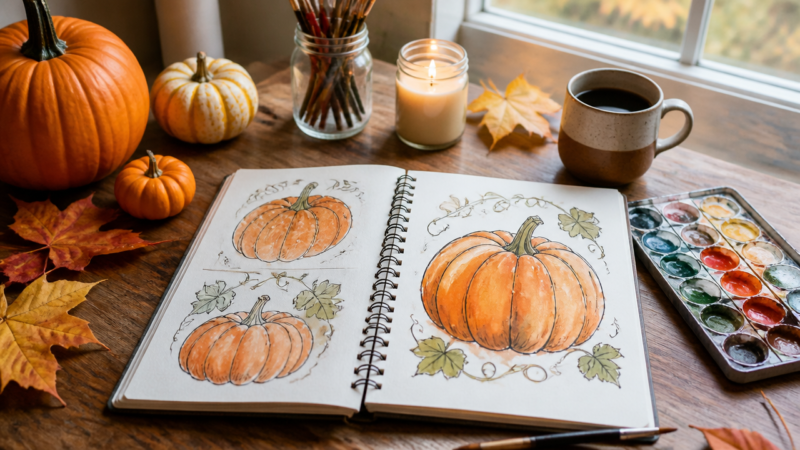
Have you ever wanted to create beautiful artwork that looks professional here is how to start with these 10 Watercolor Pen Paintings for Beginners Combining pen and watercolor is one of the best ways to start your art journey! This technique mixes the sharp, clear lines of pen drawing with the soft, flowing colors of watercolor paint. The result is stunning illustrations that anyone can learn to create.
Pen and watercolor art is perfect for beginners because it’s forgiving. If you make a small mistake with your pen lines, the watercolor can help hide it. If your watercolor bleeds a little outside the lines, it often makes the artwork look more interesting and artistic. This combination has been used by famous artists for hundreds of years, and now you can learn it too!
What You’ll Need to Get Started
Before we jump into our eight amazing projects, let’s gather the basic supplies you’ll need. Don’t worry – you don’t need expensive materials to create beautiful art!
- Waterproof black pen: A fine-tip marker or technical pen that won’t smudge when wet
- Watercolor paints: A basic set with primary colors is perfect for starting
- Watercolor paper: This special paper won’t fall apart when it gets wet
- Paintbrushes: One medium round brush and one small detail brush
- Water containers: Two jars – one for clean water, one for dirty water
- Paper towels: For blotting excess water and cleaning brushes
- Pencil and eraser: For light sketching before using pen
Eight Fantastic Projects to Try
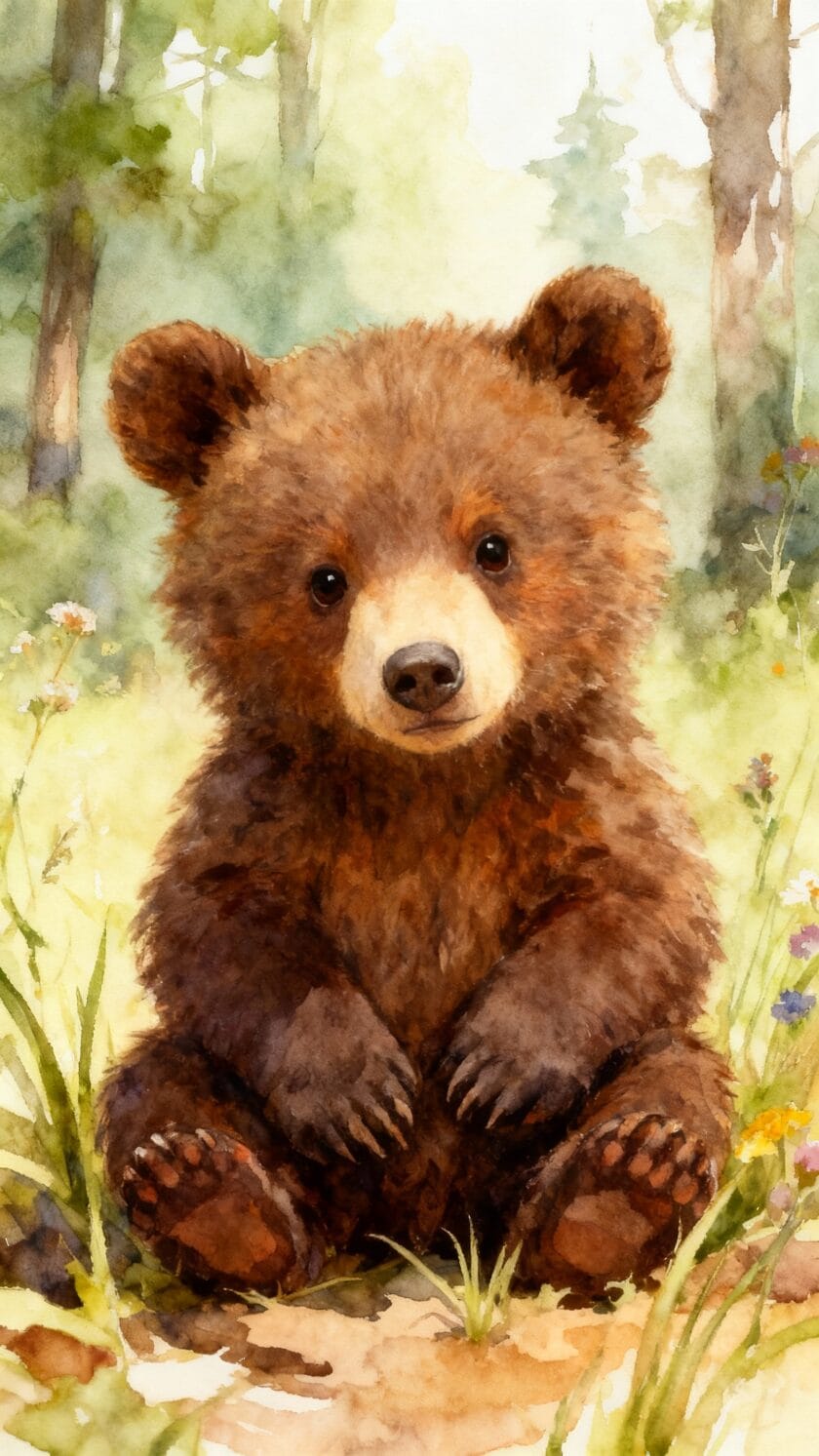
1. Adorable Baby Bear
Let’s start with something cute and simple! A baby bear is perfect for beginners because bears have round, forgiving shapes.
- Draw a large circle for the head and a smaller oval below for the body
- Add two small circles on top of the head for ears
- Draw four short, chubby legs extending from the body
- Add facial features: two dots for eyes, a small triangle for the nose, and a curved line for the mouth
- Go over your pencil lines with the waterproof pen, adding some fuzzy texture lines
- Let the ink dry completely, then erase pencil marks
- Paint the bear with light brown or golden watercolor, leaving the belly area lighter
- Add darker brown for the ears and nose, and a tiny bit of pink for the inner ears
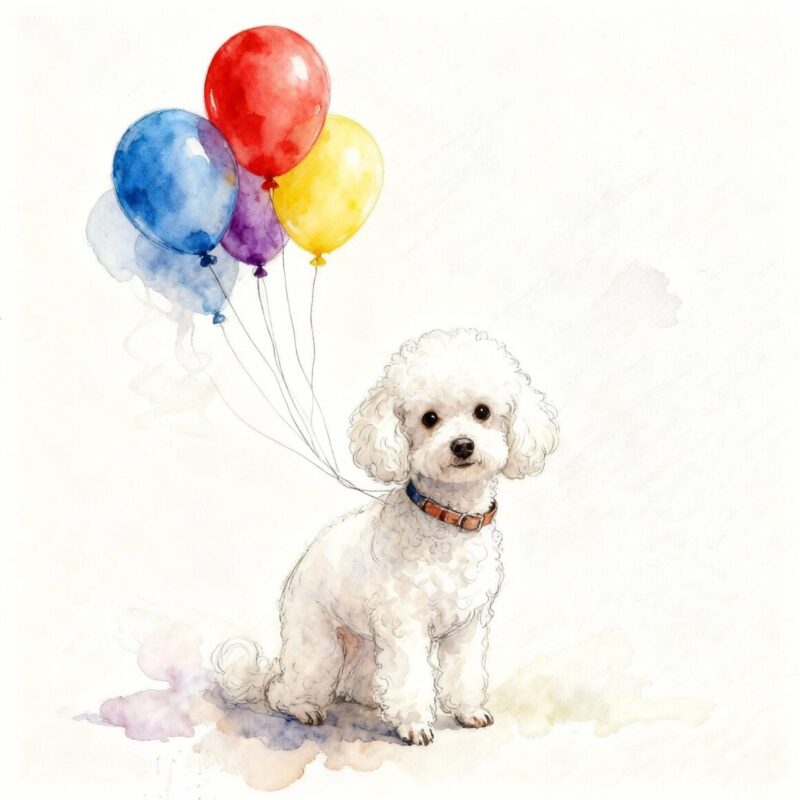
2. Fluffy Poodle Dog
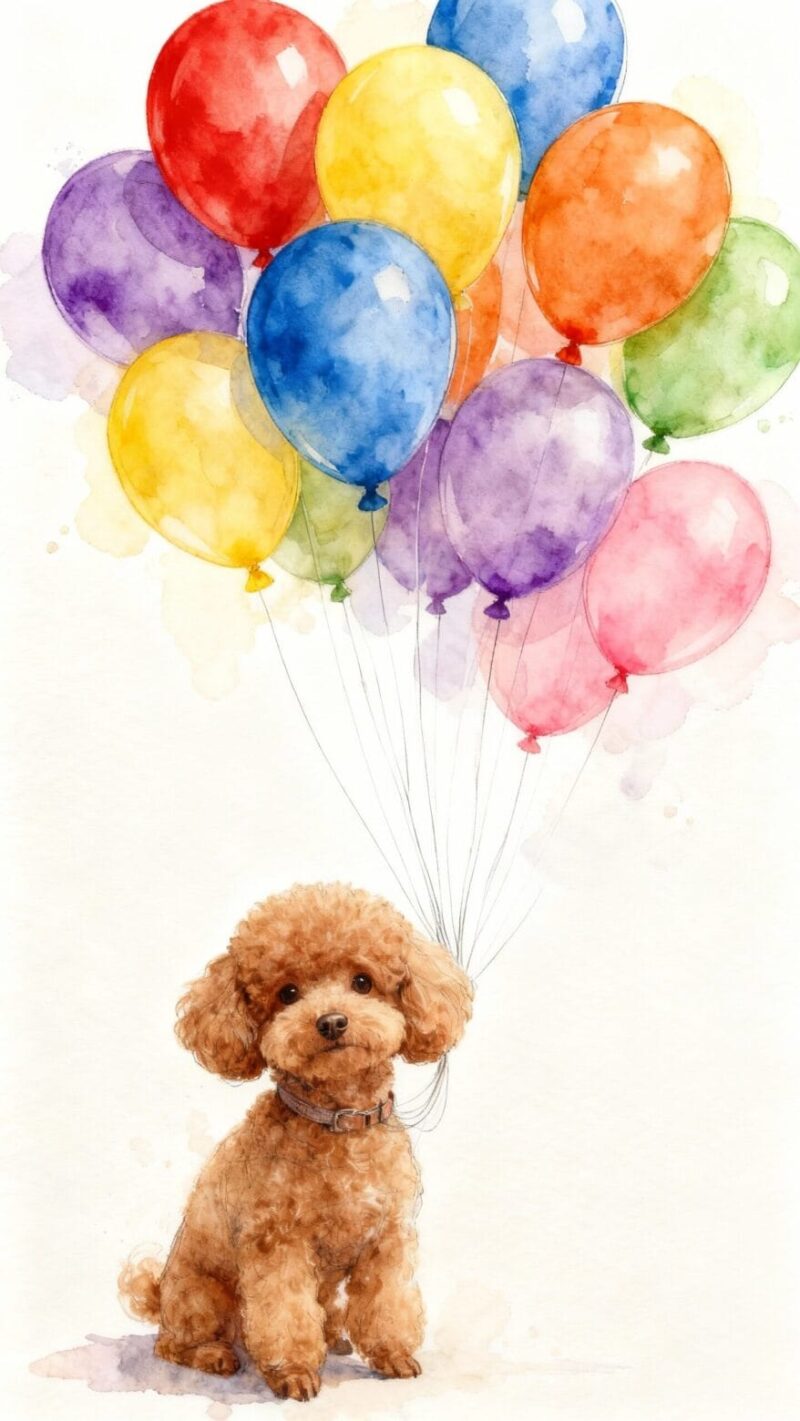
Poodles are fantastic to paint because their curly fur gives you lots of room to be creative with texture!
- Sketch an oval head and a slightly larger oval body
- Add long, droopy ears on either side of the head
- Draw four legs with round, fluffy “boots” at the bottom
- Add a small tail that curves upward
- Use your pen to create curly, scribbled lines all over the body to show the poodle’s curly coat
- Draw simple facial features: dot eyes, a small nose, and a happy mouth
- Paint with light colors – white, cream, or light gray work beautifully
- Add shadows under the curls with slightly darker tones
3. Cozy Cottage House
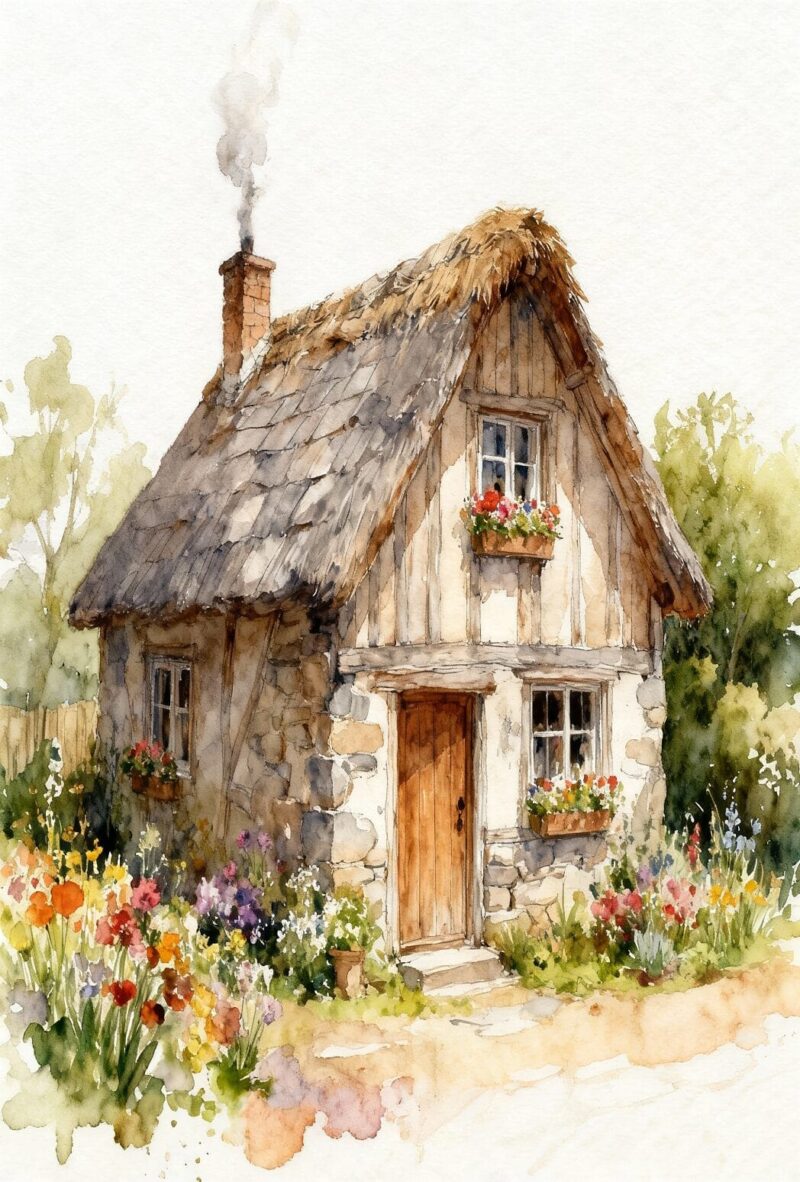
A cottage house is perfect for practicing straight and curved lines while creating something everyone will recognize.
- Draw a rectangle for the main house structure
- Add a triangle roof on top, slightly overlapping the sides
- Include a chimney on one side of the roof
- Draw a door in the center and two windows on either side
- Add window frames, door handle, and some roof tiles with your pen
- Include small details like flowers by the door or bushes around the house
- Paint the walls with warm colors like yellow, peach, or light blue
- Use darker colors for the roof – red, brown, or dark green work well
- Paint the door and windows with contrasting colors to make them stand out
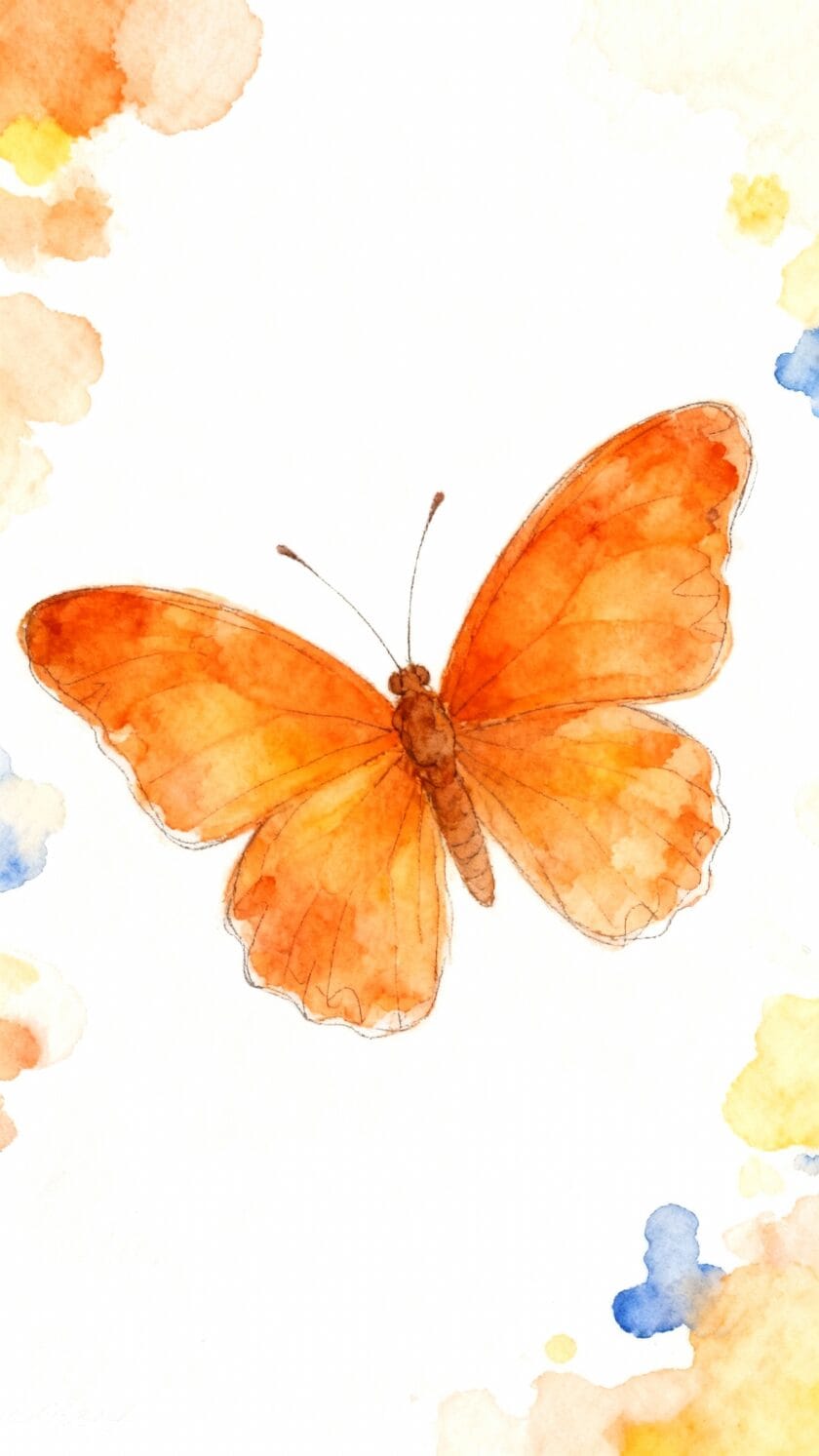
4 .Beautiful Butterfly
Butterflies are wonderful for beginners because they’re symmetrical, and you can use bright, cheerful colors!
- Draw a straight line down the middle for the butterfly’s body
- Add two large upper wings and two smaller lower wings on each side
- Make the wings slightly different but roughly the same size
- Draw the body as a long oval with segments, and add two curved antennae
- Use your pen to add wing patterns – circles, spots, or line designs
- Paint each wing section with different bright colors
- Let colors blend together slightly for a magical effect
- Paint the body with a darker color like black or dark brown
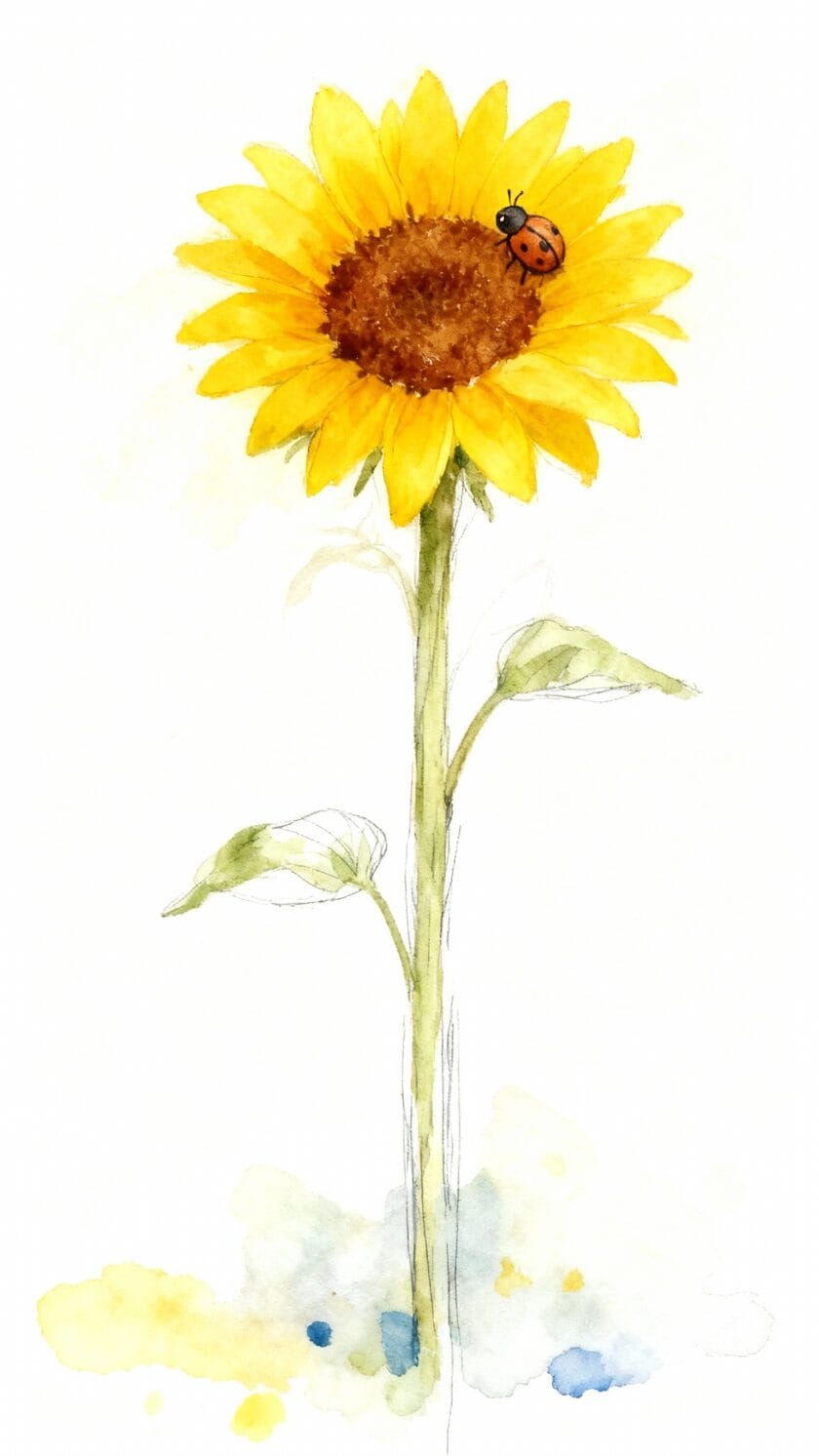
5. Smiling Sunflower
Sunflowers are cheerful and forgiving – if your petals aren’t perfect, it just adds character!
- Draw a large circle in the center for the flower’s face
- Add long, pointed oval petals all around the circle
- Draw a long, straight stem extending downward
- Add two or three large leaves attached to the stem
- Use your pen to add texture to the center with cross-hatching or small circles
- Paint the petals bright yellow or orange
- Use brown or dark yellow for the center
- Paint the stem and leaves with different shades of green
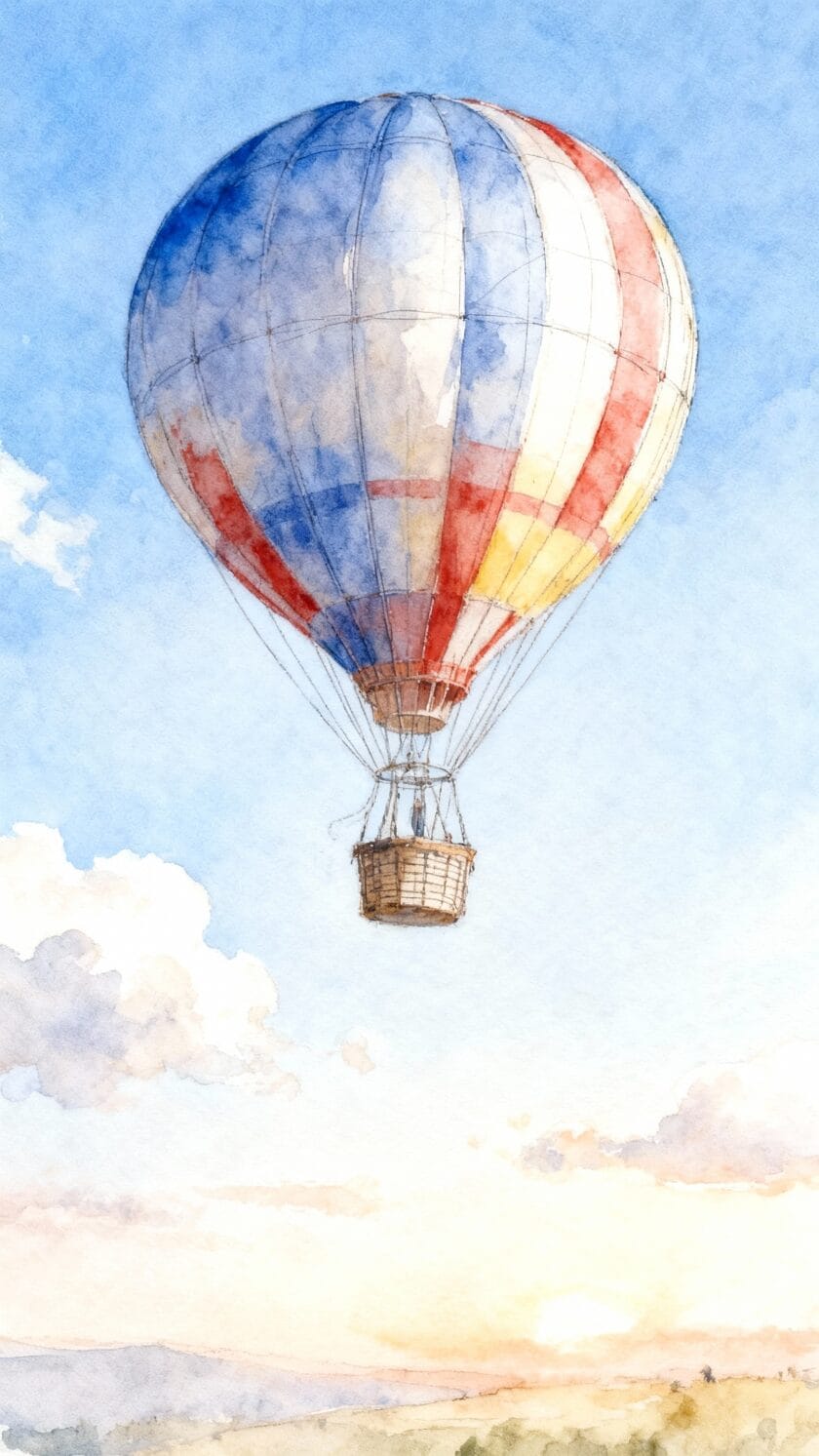
6 .Peaceful Hot Air Balloon
Hot air balloons are perfect for practicing rounded shapes and using lots of different colors!
- Draw a large circle or oval for the balloon
- Add curved lines from top to bottom to create sections
- Draw a small basket hanging below the balloon with straight lines connecting them
- Add details to the basket with cross-hatched lines
- Include some fluffy clouds in the background
- Paint each section of the balloon with different bright colors
- Use light blue for the sky and white or light gray for clouds
- Paint the basket with brown or tan colors
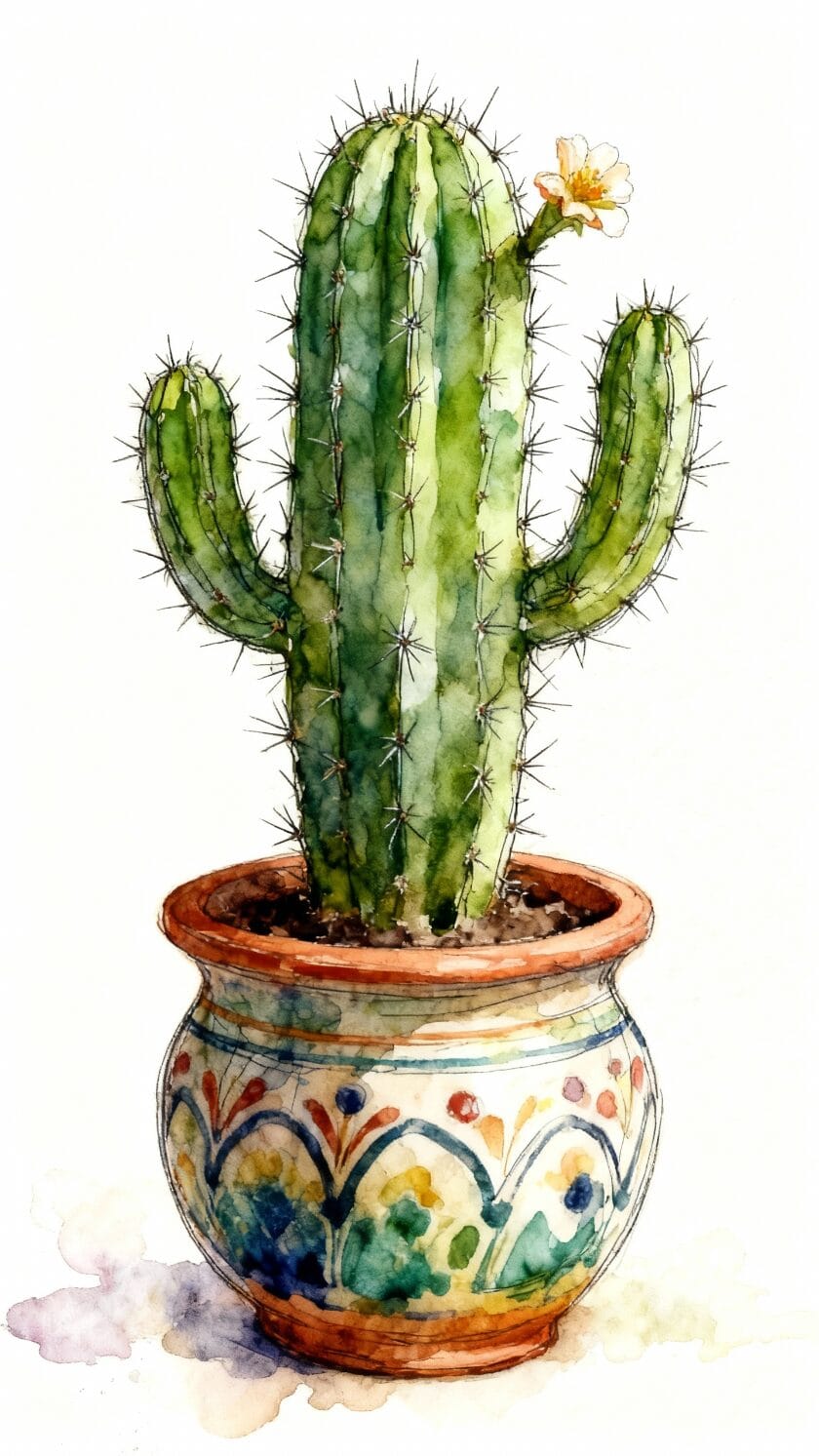
7 . Friendly Cactus in a Pot
Cacti are excellent for beginners because they have simple shapes and you can’t really mess up their spiky texture!
- Draw a rounded rectangle for the flower pot
- Add an oval or cylinder shape rising from the pot for the main cactus body
- Include one or two smaller arms branching off the main body
- Draw small lines all over the cactus for spines
- Add a simple face to make your cactus friendly – two dots for eyes and a curved line for a smile
- You can include a small flower on top
- Paint the pot with warm colors like terracotta, red, or yellow
- Use different shades of green for the cactus body
- Add bright colors for any flowers
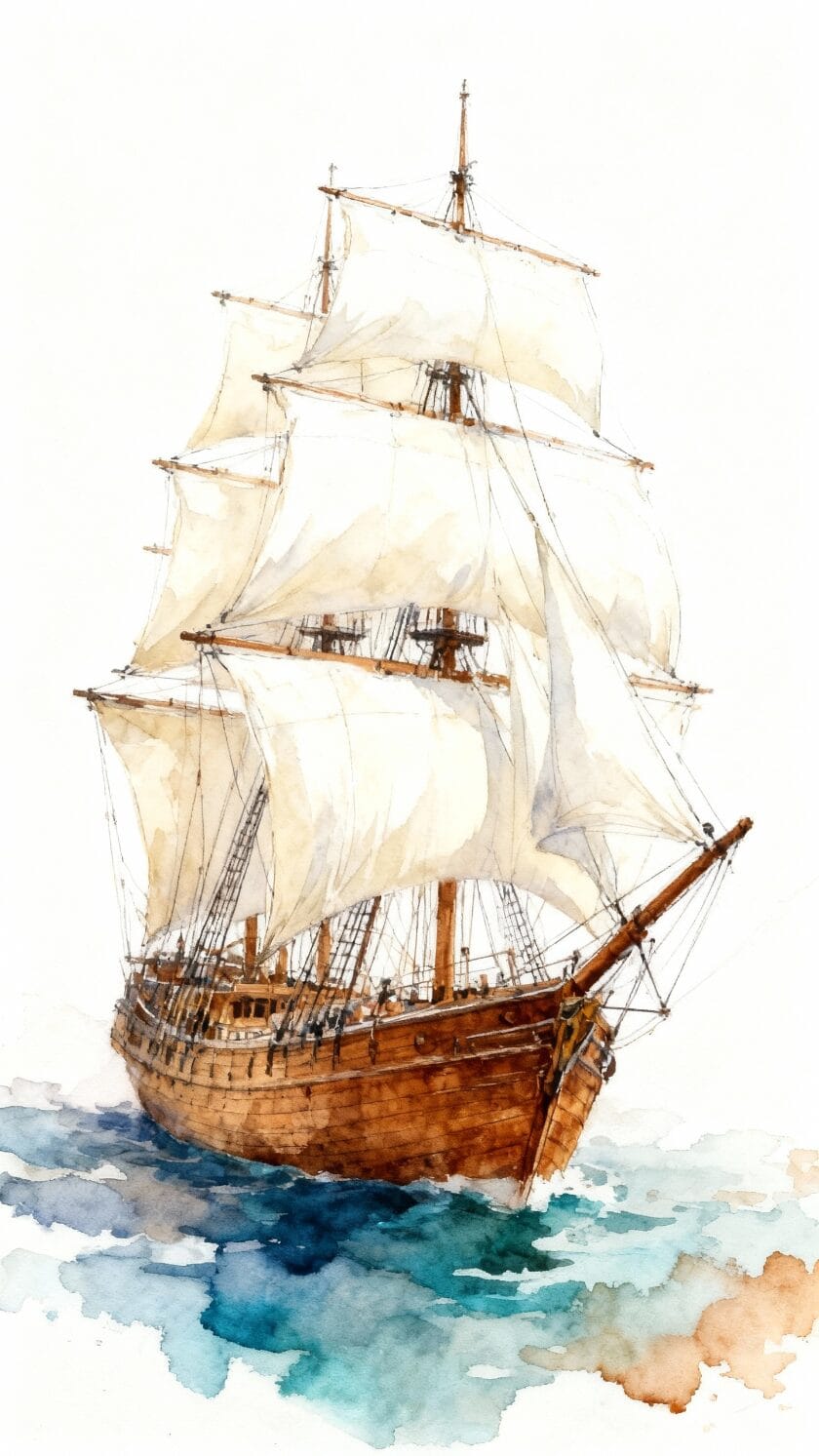
8 .Majestic Sailing Ship
End your practice with something a bit more challenging but still very doable – a simple sailing ship!
- Draw a curved line for the bottom of the boat hull
- Add the sides of the boat, making it wider at the top
- Draw a tall mast in the center with a horizontal line across it
- Add a triangular or rectangular sail attached to the mast
- Include a flag at the top of the mast
- Draw wavy lines below the boat for water
- Paint the hull with brown or white
- Use bright colors for the sail and flag
- Paint the water with different shades of blue, letting the colors flow together
Tips for Success
Here are some helpful tips to make your pen and watercolor illustrations even better:
- Always let your ink dry completely before adding watercolor, or your lines will smudge
- Start with light colors and gradually add darker tones – you can always make something darker, but it’s hard to make it lighter
- Don’t worry about staying perfectly inside the lines – watercolor looks beautiful when it flows naturally
- Keep your brush slightly damp but not soaking wet to control the paint better
- Practice mixing colors on a separate piece of paper before applying them to your artwork
- Clean your brush between different colors to keep your paints bright and clear
- Let each layer dry before adding the next one if you want crisp edges
Keep Creating and Have Fun!
Congratulations! You now have eight wonderful projects to try with pen and watercolor. Remember, the most important thing about art is to enjoy the process. Every artist started as a beginner, and every masterpiece began with a simple first brushstroke.
Don’t be discouraged if your first attempts don’t look exactly like you imagined. Each painting is a learning experience that makes you better for the next one. Try these projects multiple times, experiment with different colors, and maybe even combine elements from different projects to create something completely new!
Art is about expressing yourself and having fun. So grab your pen, mix those beautiful watercolors, and start creating.

A Teacher with 5 years of experience. Our Expertise, is reliable to meet your full Academic development needs . Worked on many crafts and construction projects offering services from design to development to deployment over the years. You will find many of my works in my business portfolio on request.