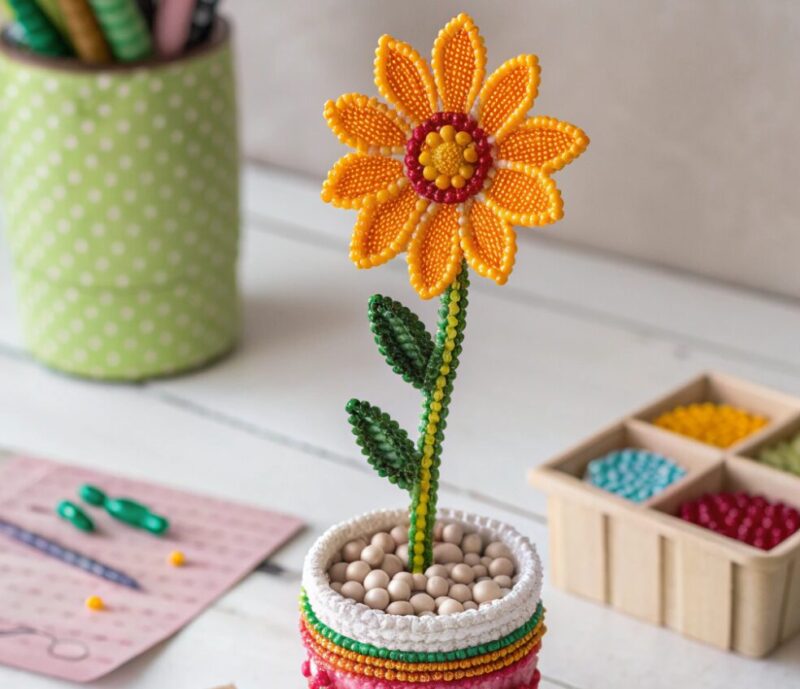

The art of creating beaded flowers combines patience, precision, and creativity into delicate botanical sculptures that never wilt. From French beading techniques passed down through generations to innovative contemporary approaches, beaded flower crafting offers endless possibilities for artistic expression. These ten pattern ideas showcase the diversity and beauty achievable with simple materials like seed beads, wire, and imagination. Whether you’re seeking a new creative outlet or wanting to craft lasting botanical beauty, these patterns provide inspiration for crafters at every skill level.
1. French Beaded Roses – The Ultimate Challenge
French beaded roses represent the pinnacle of beaded flower artistry, combining multiple techniques into one spectacular bloom. This classic pattern typically incorporates the basic frame technique for petals, creating graduated sizes that curl naturally like real rose petals. Crafters use 26-gauge or 28-gauge wire with 11/0 seed beads, employing the continuous basic frame method to build each petal layer by layer. The inner petals start small and tight, gradually increasing in size and opening outward to create the characteristic rose form. Adding lacing – running finer 28-gauge to 30-gauge wire between rows – holds everything in place while making petals beautifully pliable. The complexity of roses makes them an aspirational project that showcases mastery of fundamental techniques.

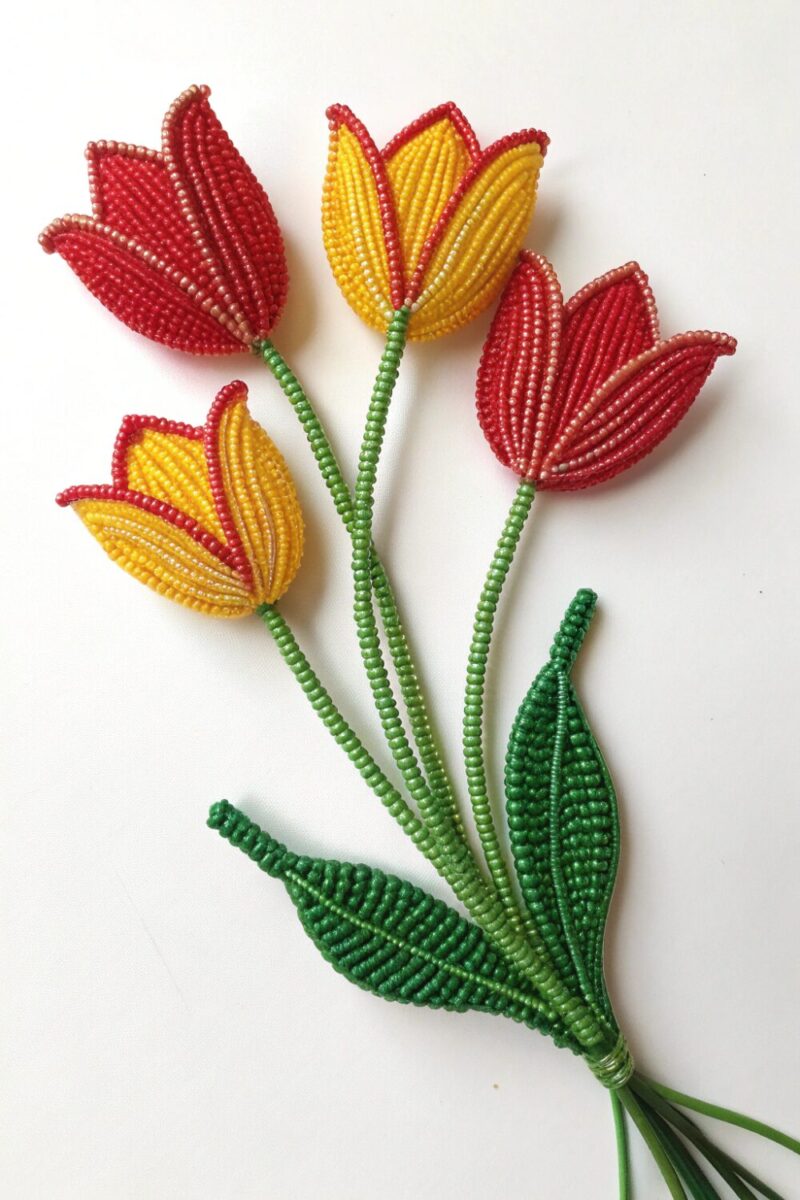
2. Simple Tulips for Spring Celebrations
Tulips offer an excellent introduction to French beading for beginners while still producing impressive results. This pattern uses the basic frame technique to create the characteristic cup-shaped petals that define tulips. With five to six petals per flower made from 11/0 seed beads on 24-gauge wire, tulips come together relatively quickly. The pattern allows for gorgeous color experimentation – from classic red and yellow to variegated pastels or dramatic purple-black varieties. Leaves employ the same basic frame technique but with green beads, creating long, slightly curved shapes that complement the flowers perfectly. Many crafters create entire bouquets ready for spring, with multiple blooms at varying heights for natural-looking arrangements.
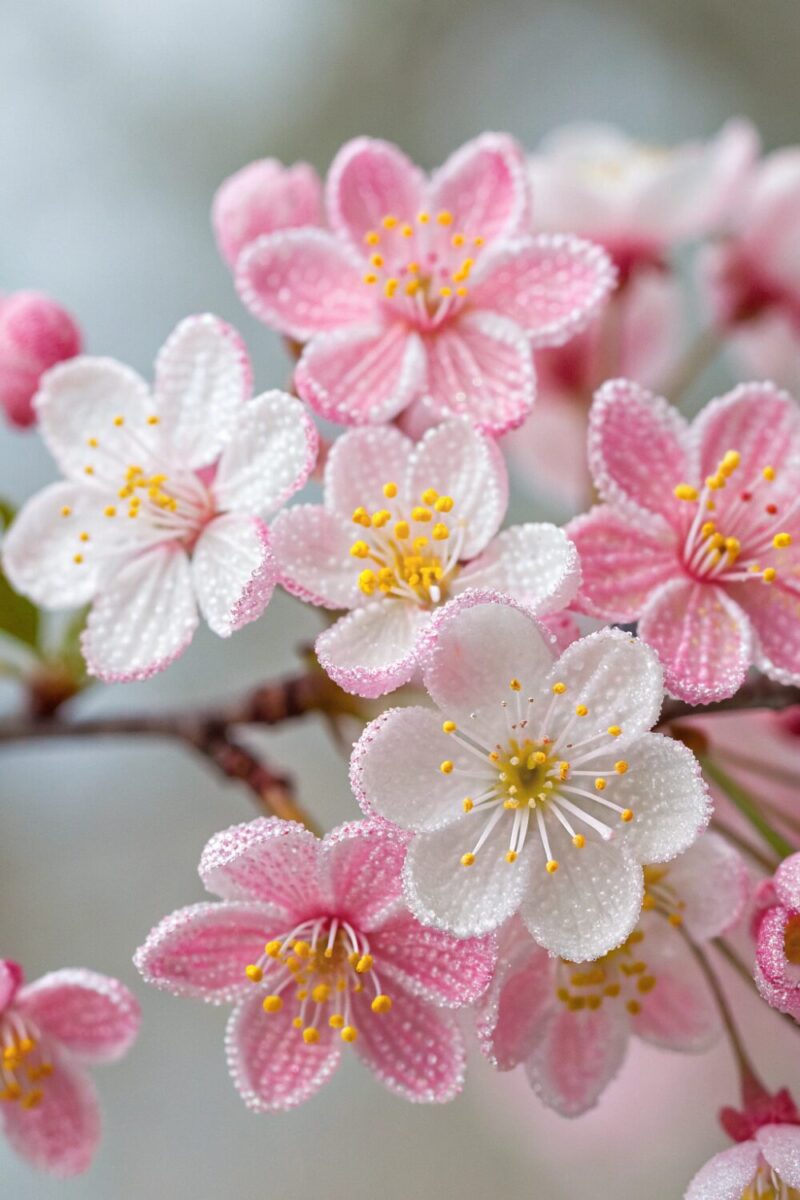
3. Delicate Cherry Blossoms
Cherry blossom patterns capture the ephemeral beauty of spring in permanent form. These delicate flowers typically use the continuous loop technique for petals, creating the five-petaled structure characteristic of cherry blossoms. The continuous loop method involves making small loops of beads along a central wire, then arranging these loops into flower shapes. This technique works quickly once mastered, allowing crafters to produce the multitude of small blooms needed for authentic-looking branch arrangements. Pink and white seed beads in various shades create depth and realism, while tiny yellow or gold beads form the centers. Many patterns include instructions for creating the gnarly branches that make cherry blossom arrangements so visually striking.
4. Bluebonnets and Wildflower Clusters
Wildflower patterns like bluebonnets demonstrate how beading techniques can be adapted to capture specific regional blooms. These patterns often use the continuous wrap-around loop technique to create the clustered flower heads typical of wildflowers. Texas bluebonnets, for example, feature deep blue and white beads arranged in distinctive spikes, with each tiny floret represented by small bead loops. The pattern typically creates multiple flower spikes at varying stages of bloom – some fully opened, others still in bud – for authentic appearance. These wildflower patterns work wonderfully for crafters who want to celebrate their regional flora or create personalized gifts with local significance.

5. Sunflowers with Personality
Sunflower patterns bring cheerful, bold color into beaded flower repertoires. These larger blooms use the basic frame or petal frame technique for the characteristic ray petals, typically in golden yellow or orange seed beads. The distinctive dark center requires creative approaches – some patterns use continuous loops in brown and black, while others incorporate larger beads or unique techniques for texture. The size and boldness of sunflowers make them excellent statement pieces, whether displayed individually in small vases or grouped in arrangements. The leaves are substantial as well, using green beads in the basic frame technique to create the large, heart-shaped foliage.

6. Three-Dimensional Flower Magnets
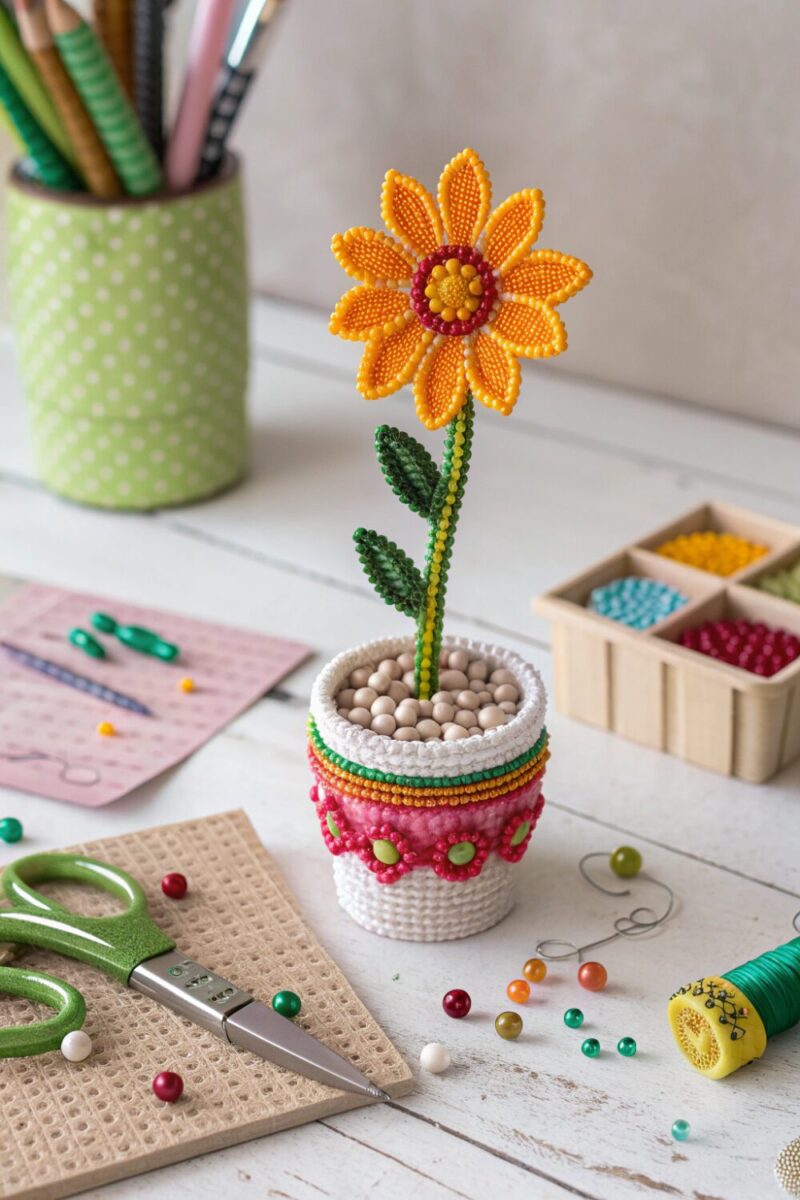
Contemporary beaded flower artists have developed innovative three-dimensional techniques perfect for creating wearable or decorative accessories. These patterns differ from traditional flat French beading by building flowers with depth and structural stability. The 3D aspect often involves creating flower parts separately, then assembling them into dimensional blooms. These miniature masterpieces make charming refrigerator magnets, typically standing about three inches tall in tiny decorative vases. The compact size requires fine motor control and attention to detail but produces remarkably cute results. Crafters experiment with various flower types – daisies, roses, pansies, and more – adapting patterns to the three-dimensional format.
7. Lavender with Aromatic Inspiration
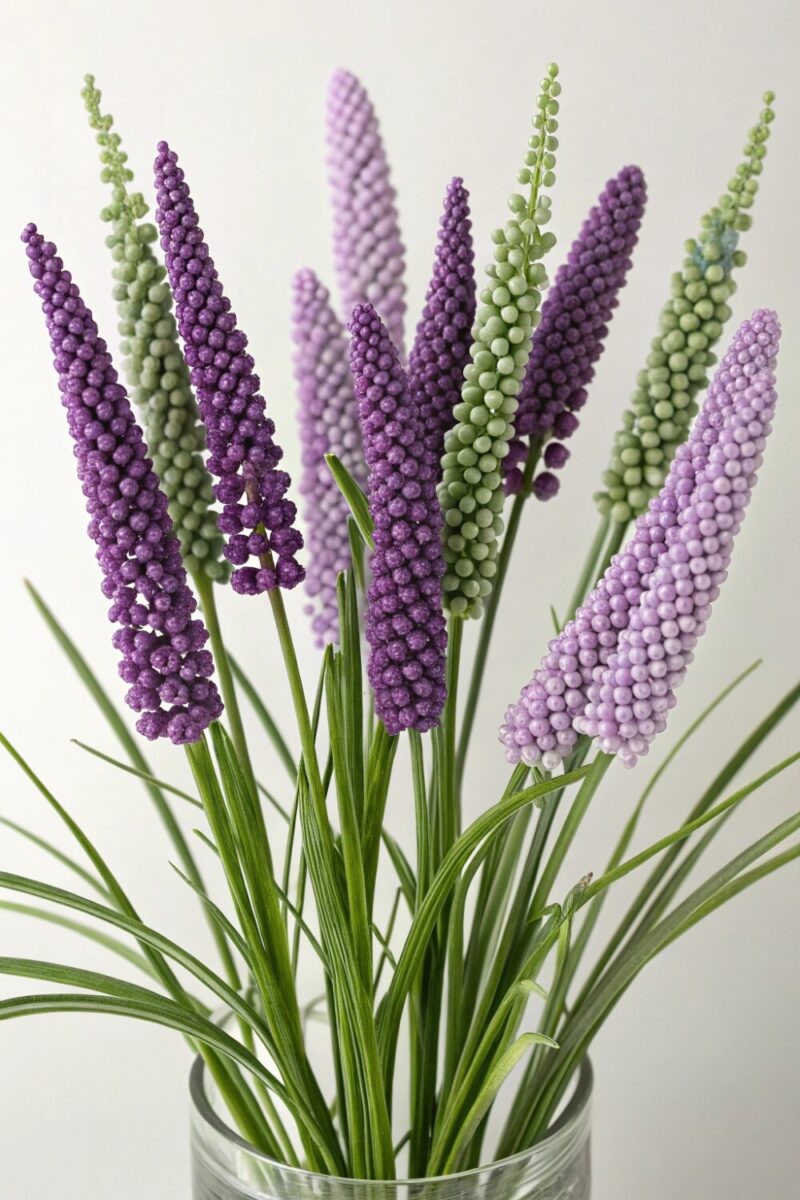
Lavender patterns capture the distinctive spike-like flower heads through specialized techniques. These patterns typically teach continuous loops combined with specific shaping methods to create the elongated flower clusters. Purple and lavender beads in varying shades create depth and realism, with some patterns incorporating green-tinted beads near the base where real lavender transitions from flower to stem. The narrow, grass-like leaves use simple techniques that beginners can master quickly. Many crafters bunch multiple lavender stems together, creating fuller arrangements reminiscent of Provence fields. Some even add a drop of lavender essential oil to their finished pieces for multi-sensory appeal.
8. Daisy Chains and Simple Blooms
Classic daisy patterns provide perfect projects for absolute beginners while remaining delightfully charming. These straightforward designs typically use continuous loops for white or colored petals radiating from yellow centers. The simplicity of daisies allows new beaders to focus on mastering fundamental techniques without overwhelming complexity. Once comfortable with basic daisies, crafters can experiment with variations – Gerbera daisies with multiple petal layers, Shasta daisies with slightly different petal formations, or wildflower daisies with more irregular arrangements. The versatility of daisy patterns makes them endlessly adaptable to different color schemes and sizes.
9. Exotic Orchids for Advanced Crafters
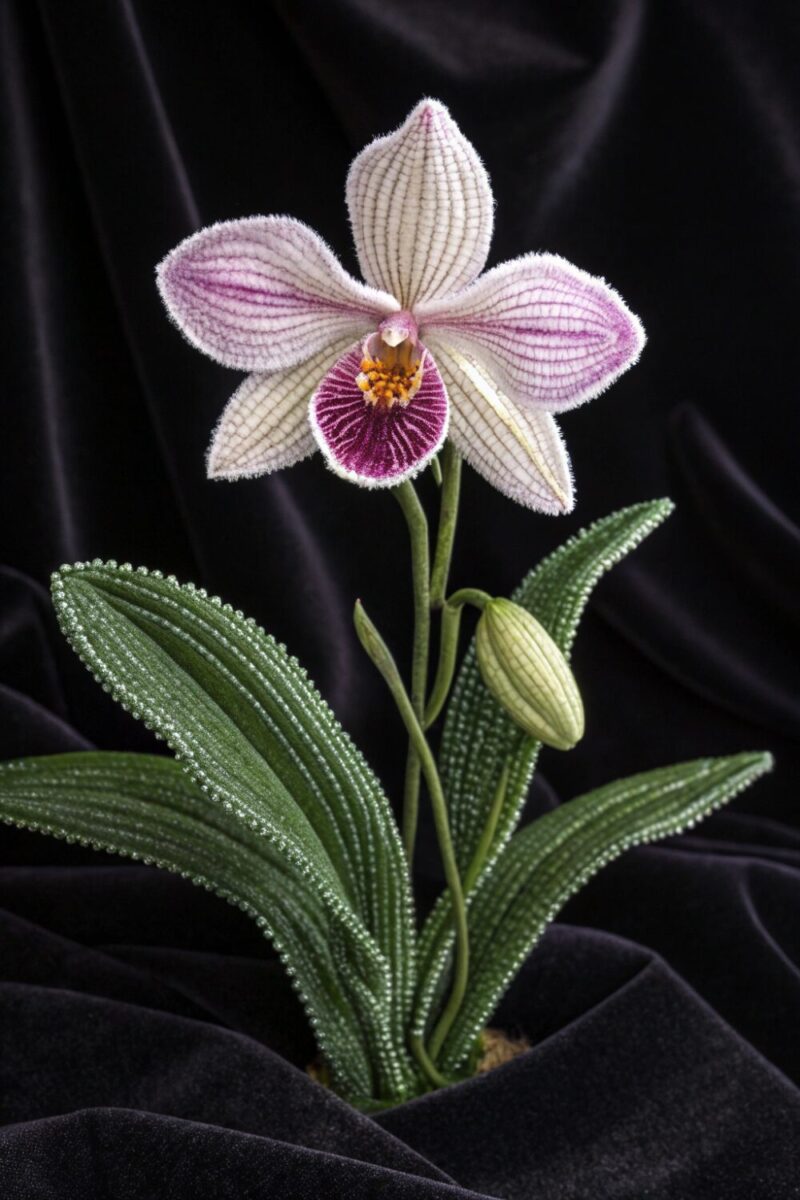
Orchid patterns challenge experienced beaders with complex shapes and sophisticated color work. These patterns often combine multiple techniques – basic frames, petal frames, and specialized shaping methods – to capture orchids’ distinctive appearance. The characteristic lip petal requires careful construction and often incorporates color gradients or contrasting colors. Patterns typically provide detailed instructions for authentic orchid varieties like Phalaenopsis, Cattleya, or Dendrobium. The exotic appearance and technical complexity make finished orchid pieces impressive display items that showcase advanced skills. Some patterns include instructions for creating entire plants with multiple blooms, buds, and characteristic thick leaves.
10. Mixed Bouquet Compositions
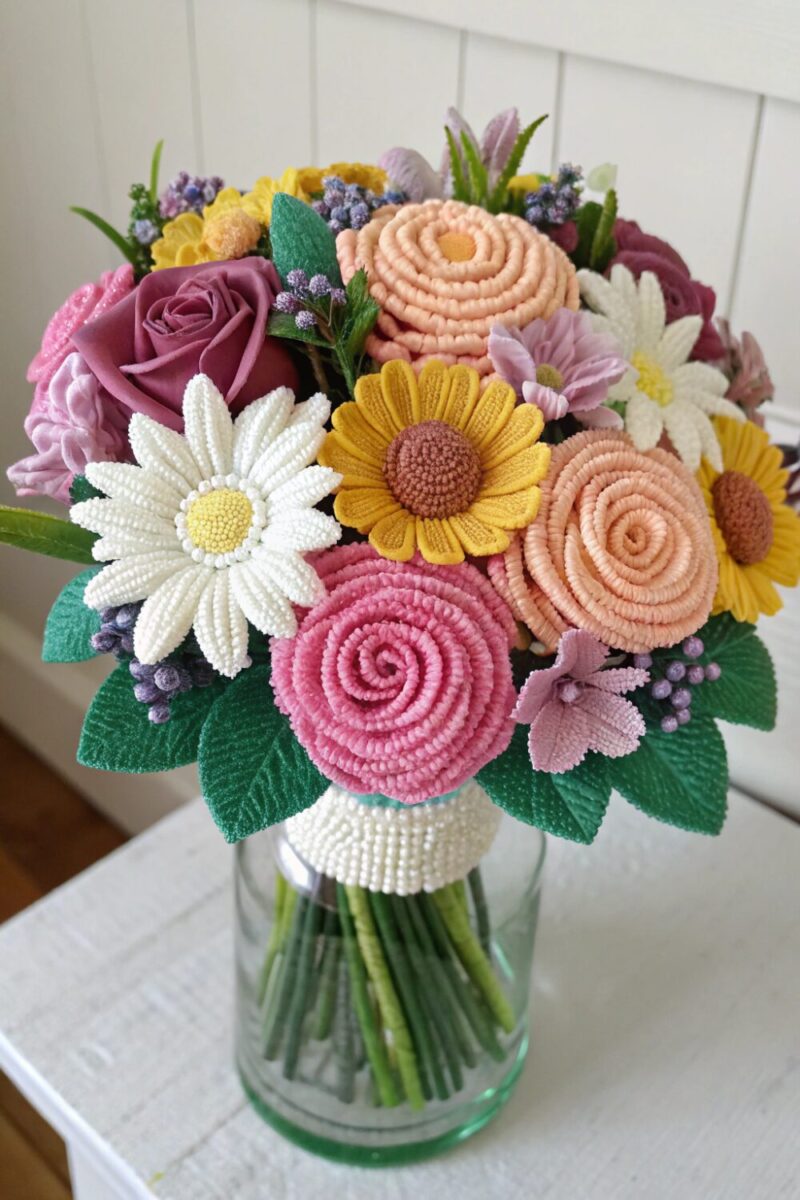
Rather than focusing on a single flower type, mixed bouquet patterns teach crafters to create harmonious multi-flower arrangements. These comprehensive patterns typically include several complementary flowers – perhaps roses, filler flowers, and greenery – with instructions for assembling them into professional-looking bouquets. The pattern guides color selection, proportion planning, and arrangement techniques that create balanced compositions. Many crafters create these elaborate bouquets for special occasions – weddings, anniversaries, or gifts – producing keepsakes that last forever. Learning to combine different flower patterns into cohesive arrangements represents an advanced skill that transforms individual flowers into complete artistic statements.
Essential Materials and Getting Started
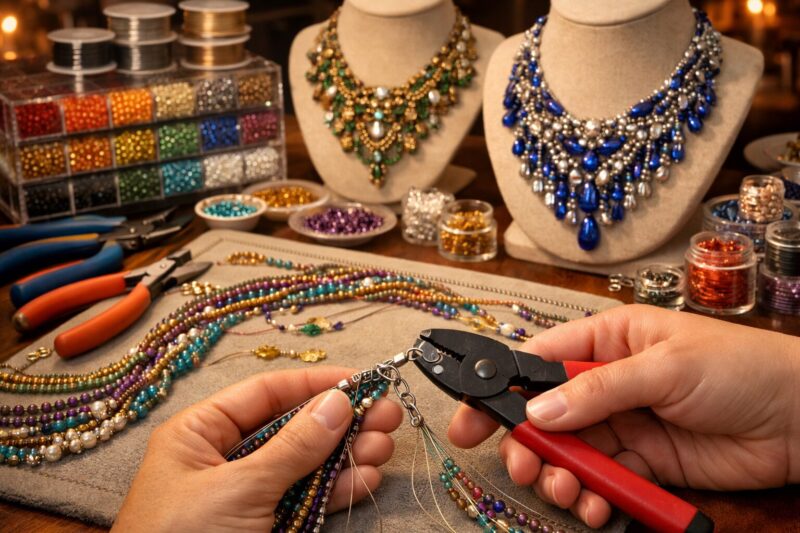
Beginning your beaded flower journey requires minimal investment. Seed beads in various colors form your palette – 11/0 size works best for most patterns, though some designs call for different sizes. Wire in multiple gauges (24, 26, 28, and sometimes 30 or 34 gauge) provides structure and flexibility. Basic tools include wire cutters, needle-nose pliers, and scissors. As you advance, you might add floral tape for finishing stems, silk or cotton floss for wrapping, and specialty beads for centers or accents.
The learning curve for beaded flowers varies by technique, but most crafters find the basics accessible with patient practice. Online communities offer tremendous support, with experienced beaders sharing tips, troubleshooting advice, and pattern recommendations. Video tutorials provide invaluable visual instruction, showing hand positions and techniques that written instructions alone can’t fully convey. Many beaders recommend starting with simple patterns that teach one or two fundamental techniques before progressing to complex multi-technique projects.
Lacing and Finishing Techniques
One technique that elevates beaded flowers from good to exceptional involves lacing – running fine wire between the rows of petals. This process serves multiple purposes: it holds bead rows in position, prevents gaps from forming, and makes petals remarkably pliable for natural shaping. Lacing uses 28-gauge to 30-gauge wire threaded carefully through existing rows without showing on the front. While time-consuming, lacing transforms the stability and professional appearance of finished flowers.
Finishing techniques also significantly impact final results. Properly wrapped and taped stems create professional appearances and durability. Some crafters paint their finished flowers with clear sealant to add subtle shine and protect against dust. Others leave beads natural, preferring their matte finish. Assembly techniques matter tremendously when combining multiple flower elements into complete plants or bouquets.
The Meditative Joy of Beading
Beyond creating beautiful objects, many crafters describe beaded flower making as deeply meditative and satisfying. The repetitive nature of threading beads and forming consistent loops or frames creates a rhythm that quiets busy minds. Unlike fast crafts that finish in minutes, beaded flowers require sustained attention over hours or days, fostering patience and presence. The tangible progress – watching petals take shape, seeing colors interact, building something beautiful bead by bead – provides genuine satisfaction in our increasingly digital world.
Sharing and Selling Your Creations
As skills develop, many beaders consider sharing their work more broadly. Craft markets provide venues for selling beaded flowers, with items like magnets, brooches, and small arrangements proving popular. Custom wedding bouquets and anniversary flowers command premium prices, combining artistic skill with emotional significance. Some crafters develop signature styles or specialize in specific flower types, building reputations within the beading community. Whether you create purely for personal enjoyment or explore commercial possibilities, beaded flowers offer rewarding creative expression that produces lasting beauty from simple materials.
These ten pattern ideas barely scratch the surface of possibilities in beaded flower crafting. Each pattern opens doors to variations, experimentations, and personal interpretations. As you develop skills and confidence, you’ll find yourself envisioning new flowers to attempt, new color combinations to explore, and new ways to push the boundaries of this timeless craft. The journey from beginner to accomplished beaded flower artist unfolds one bead, one wire, one petal at a time – and the destination proves just as rewarding as the creative process itself.

A Teacher with 5 years of experience. Our Expertise, is reliable to meet your full Academic development needs . Worked on many crafts and construction projects offering services from design to development to deployment over the years. You will find many of my works in my business portfolio on request.