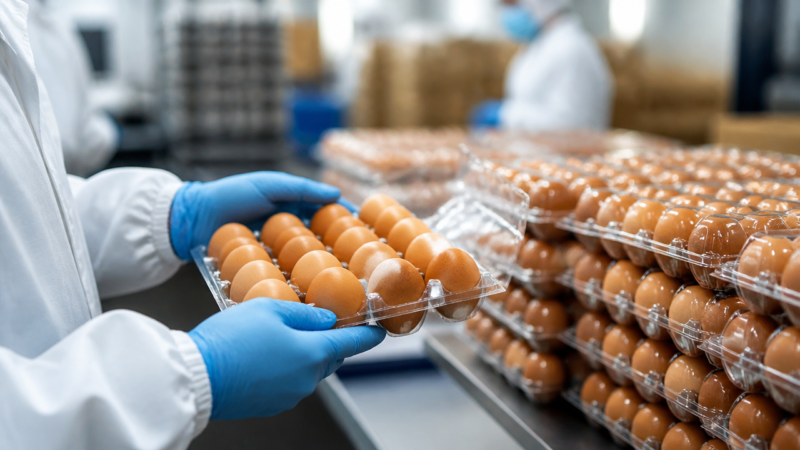

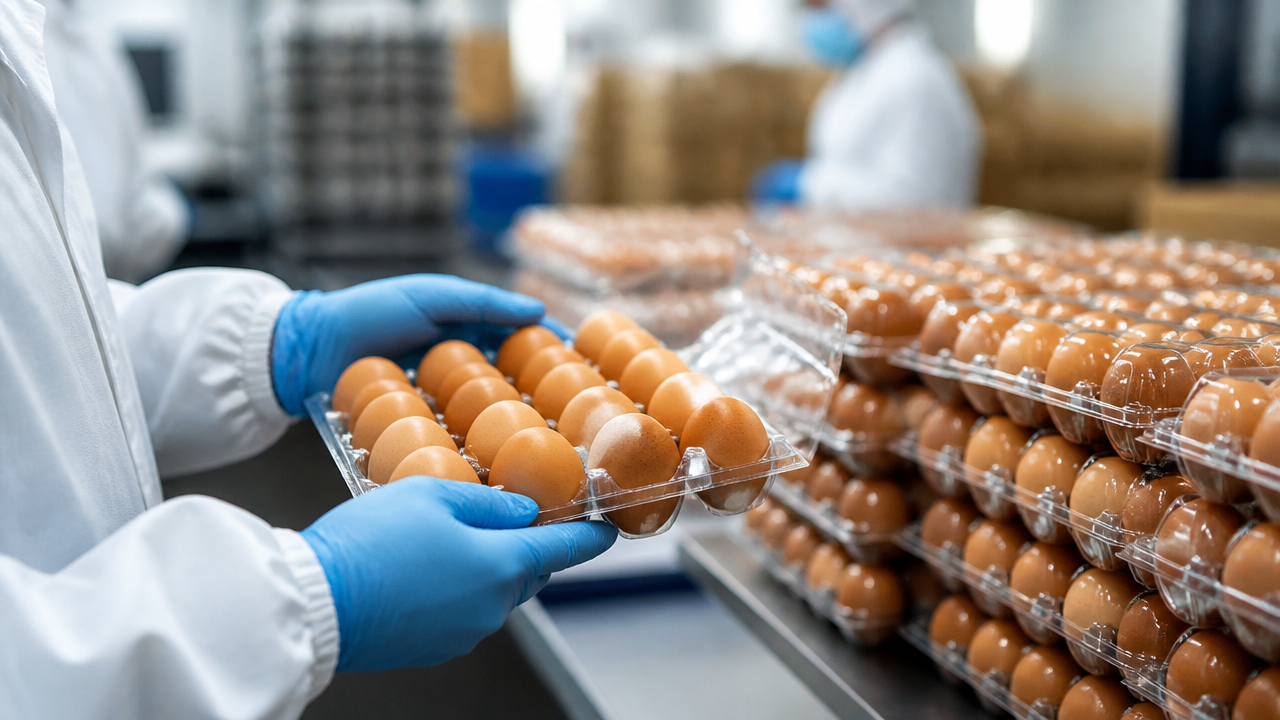
Breaking news about egg recalls often lands on your morning news feed, so how do you know which ones actually impact your kitchen? Major egg brands face safety checks when Salmonella enters the supply chain during production. Whether you are planning a holiday brunch or a quick weekday breakfast, identifying affected products keeps your table safe. Recent egg recall events span multiple retailers and packaging types across the nation. Checking plant codes remains key before you crack open a carton at any store. Let’s walk through what these notifications mean for your grocery basket.
Quick Questions and Answers
Question: What eggs were recently recalled in the United States? Answer: Recent recalls have included Midwest Poultry Services eggs sold under brands such as Kroger, Simple Truth, Brookshire’s, Country Morning, and Sunups, plus earlier 2025 recalls from August Egg Company, Country Eggs, and Black Sheep Egg Company. The most recent FDA notice covers 1,589,577 dozen eggs tied to possible Salmonella Enteritidis contamination. Carton codes, dates, and packer information are the safest way to confirm whether a carton is affected.
Question: Why are egg recalls usually issued? Answer: Egg recalls are usually issued because the eggs may be contaminated with Salmonella, including Salmonella Enteritidis. The FDA says this bacterium can cause serious and sometimes fatal infections, especially in young children, older adults, and people with weakened immune systems. Recalls are meant to remove potentially contaminated eggs before more people become ill.
Question: How do I know if my egg carton is recalled? Answer: Check the brand, carton code, plant code, and sell-by or best-by date printed on the package. In the provided results, examples include carton code CA 7695 for Country Eggs and plant codes such as P-1950 or 0840962 for the Midwest Poultry recall. Because brands can be repacked, the code details are more reliable than the brand name alone.
Egg Recalls: Understanding the Triggers and Public Health Impacts
Egg recalls occur when regulatory bodies, such as the FDA, identify potential Salmonella Enteritidis contamination, often prompted by either routine testing or multi-state illness outbreaks. These events lead to the removal of millions of units from retail shelves to prevent the consumption of products that could potentially be in peoples’ homes. Salmonella poses elevated health risks to vulnerable groups, including children, the elderly, and individuals with weakened immune systems.
According to the Centers for Disease Control and Prevention, Salmonella infection can lead to gastrointestinal illness and severe outcomes. The bacteria often survive on shells or inside eggs during the processing phase. When testing catches elevated bacterial levels, the manufacturer initiates a withdrawal. This proactive step helps contain the spread before widespread cases appear.
Anatomy of Recent Major Recalls
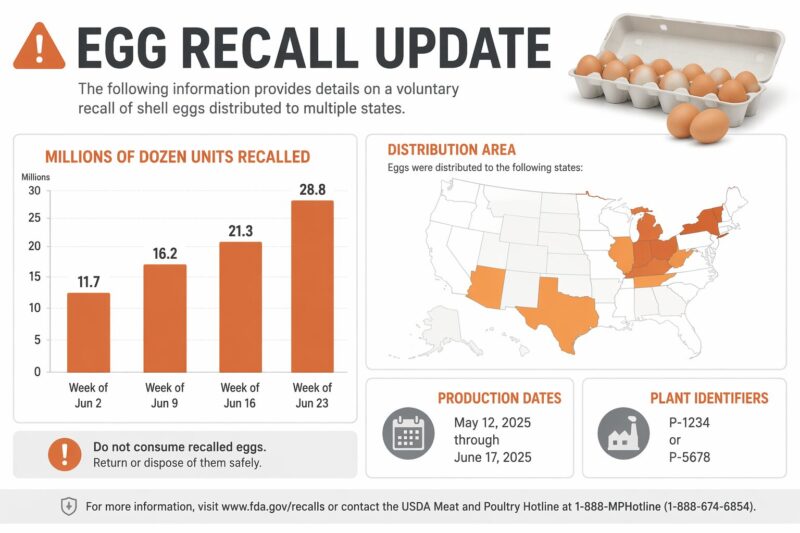
In July 2026, Midwest Poultry Services, L.P. voluntarily recalled 1,589,577 dozen shell eggs due to potential contamination; affected products were sold under brand names including Kroger, Brookshire’s, Country Morning, Simple Truth, and Sunups. The 2026 Midwest Poultry recall spanned six states and included eggs produced between June 6 and July 3, 2026, with best-by dates ranging from July 20 to August 17, 2026. This volume represents a significant logistical operation to pull inventory from distribution centers and store shelves simultaneously.
The June 2025 outbreak involving August Egg Company led to 134 reported infections across 10 states, resulting in the recall of 1.7 million dozen brown cage-free and organic eggs. Supply chain complexity is evidenced by cases like Kenz Henz, which recalled eggs that had been sourced from the Black Sheep Egg Company, illustrating how a safety issue at one farm impacts multiple retail entities.
A report from the Food and Drug Administration states that the August Egg Company eggs were processed in California before distribution. Kenz Henz later recalled 12-count packages of Grade AA Large Pasture Raised eggs received from Black Sheep. These instances show how a single production line error ripples through various packaging labels and retailers.
Identifying Recalled Products Beyond Brand Names

Relying on brand names is insufficient because many retailers sell eggs sourced from the same production facilities under various private labels; identification requires checking specific plant codes and sell-by dates. For example, the 2025 Country Eggs, LLC recall specifically identified affected products using the carton code CA 7695 for ‘sunshine yolks’ and ‘omega-3 golden yolks.’ Consumers should look for printed plant codes and shelf-life dates on the carton itself to cross-reference with official FDA recall notices.
Public health agencies stress a ‘Clean, Cook, Chill’ protocol to manage Salmonella risks, including chilling perishables within 2 hours of purchase. This method ensures that eggs remain safe even if minor contamination slips through inspection. You need to trust the numbers printed on the box more than the logo on the front. That specific code ties the product back to its origin point in the supply chain.
The recall notices often focus on avoiding consumption, but the CDC emphasizes hygiene and refrigeration to limit further spread. If possible, keep the carton details in case public-health officials need them. Tracking the code helps you verify safety without throwing away perfectly good food by mistake.
Essential Consumer Safety and Handling Procedures
When a recall is announced, the standard FDA guidance is clear: “Consumers, restaurants, and retailers should not eat, sell, or serve recalled eggs.” Affected items should be returned to the place of purchase for a full refund, as instructed by the manufacturer’s recall notices. The CDC recommends adhering to the “Clean, Cook, Chill” method to minimize cross-contamination risk: wash hands and surfaces thoroughly after handling eggs.
Perishable foods must be refrigerated within 2 hours of purchase, or within 1 hour if the ambient temperature is above 90°F, to suppress the growth of pathogens. This step is crucial for preventing bacterial multiplication on the surface of the shell or inside the contents.
| Procedure | Action Required | Reason for Safety |
|---|---|---|
| Clean | Wash hands and surfaces with hot soapy water | Removes potential bacteria transfer |
| Cook | Use a food thermometer to check internal temp | Kills Salmonella bacteria effectively |
| Chill | Refrigerate within 2 hours (1 hour if hot) | Stops bacterial growth in food |
If you are unsure about a product’s safety, checking your local news or official agency bulletins is better than guessing. You might find information about other items in your pantry that require similar attention. For instance, checking milk recalls might also be relevant if you store dairy products near egg storage areas. Semi-Skimmed Milk Recalls: Health Risks and How to Spot Them provides further context on dairy safety protocols for comparison.
Returning recalled items often requires just the box and a receipt, but some programs accept the product alone. Keep the original packaging if you suspect illness, as officials may need to test the sample. Always check the best-by dates carefully when you buy eggs during a recall window. That small window in the date line holds the key to your safety.
FAQ
Q: Can I still eat eggs after a recall notice?
If your eggs match the recall details, do not eat them. FDA and CDC guidance says to return recalled eggs for a refund or throw them away if you cannot verify the original packaging. If the eggs touched surfaces, wash and sanitize those surfaces to reduce cross-contamination risk. Consuming recalled items puts you at risk of illness, so strict adherence to disposal protocols protects your household immediately.
Q: How dangerous is Salmonella in eggs?
Salmonella can cause gastrointestinal illness and, in severe cases, serious or fatal infections. The FDA specifically warns that young children, frail or elderly people, and people with weakened immune systems are at higher risk. The risk is why egg recalls are treated as public-health alerts rather than ordinary product returns. These outbreaks can lead to hospitalization, especially for vulnerable populations with compromised health conditions.
Q: What should I do if I already ate recalled eggs?
Monitor for symptoms such as diarrhea, fever, and stomach cramps, and seek medical advice if symptoms are severe or if you are in a high-risk group. The recall notices in the provided results focus on avoiding consumption, but the CDC and FDA also emphasize hygiene and refrigeration to limit further spread. If possible, keep the carton details in case public-health officials need them to track the source of infection.
Q: Are store-brand eggs often included in recalls?
Yes. The Midwest Poultry recall included store and house brands such as Kroger and Simple Truth, showing that the same production batch can appear under multiple labels. Store-brand recalls are common because a single producer may supply many retailers. This practice means that national chains often share the same egg supply, so you must check dates and codes regardless of the brand displayed on the package.
Q: What cleaning steps are recommended after handling recalled eggs?
FDA and CDC guidance says to wash hands, utensils, and surfaces with hot, soapy water and to carefully clean and sanitize any containers or surfaces that touched the eggs. CDC also advises cooking food to a safe internal temperature and chilling perishables within 2 hours, or within 1 hour if the temperature is above 90°F. These steps help prevent cross-contamination and reduce the chance of illness in your kitchen.
Q: Why do egg recalls sometimes affect many brands at once?
Many brands can come from the same producer, processor, or repacker, so one contamination issue can spread across several labels. The provided results show this clearly: Midwest Poultry eggs were sold under several brands, and Kenz Henz later recalled eggs it had received from Black Sheep Egg Company. That is why public notices often list codes, plants, and dates instead of only one brand name.
Q: When is an egg recall considered over?
A recall is usually considered over when the contaminated product is no longer on the market and public-health agencies decide the immediate risk has passed. For the June 2025 egg outbreak, the FDA says CDC declared the outbreak over. Even then, agencies may still advise checking homes for any product that could have been stored before the notice. Vigilance remains necessary for weeks after a recall is officially concluded by health authorities.
My Experience With Recent Egg Recall Brands and Safety Procedures Explained
I handle egg cartons every week in the kitchen, so these updates land differently when you know the specifics. Remembering to scan that plant code before cracking the eggs feels like a chore, but it saves stress later. I once thought I skipped a recall by accident because the brand looked familiar, but the code told a different story. It is a small detail that separates safety from risk.
The supply chain complexity hits home when you realize your favorite brand might share a farm with a generic store label. This overlap keeps me checking dates religiously, especially during high-heat summer months. I always wash my hands immediately after handling shells, even if I think they are clean. It is a simple habit that pays off when safety protocols go into effect. Did you catch your recent grocery batch codes before heading to the counter?
Conclusion
Recent events highlight the critical need for vigilance during egg purchases and storage. Public health agencies provide clear guidance to help consumers navigate these risks efficiently. Checking dates and codes ensures that unsafe products do not end up in your meal prep. Staying informed protects your family from unnecessary illness and keeps your kitchen safe.
References
- Centers for Disease Control and Prevention. (2025, August). Salmonella Outbreak Linked to Eggs. CDC. https://www.cdc.gov/salmonella/outbreaks/eggs-08-25/index.html
- Food and Drug Administration. (2026, July). Midwest Poultry Services, L.P. Recalls Shell Eggs Due to Possible Salmonella Enteritidis Contamination. FDA. https://www.fda.gov/safety/recalls-market-withdrawals-safety-alerts/midwest-poultry-services-lp-recalls-shell-eggs-due-possible-salmonella-enteritidis-contamination
- Fox Business. (2026, July). FDA says 1.5 million dozen eggs recalled over possible salmonella contamination. Fox Business. https://www.foxbusiness.com/lifestyle/more-than-1-5-million-dozen-egg-cartons-recalled-over-possible-salmonella-contamination.amp
- Food and Drug Administration. (2025, June). Outbreak Investigation of Salmonella: Eggs (June 2025). FDA. https://www.fda.gov/food/outbreaks-foodborne-illness/outbreak-investigation-salmonella-eggs-june-2025
- Food and Drug Administration. (2025, August). Recalled Black Sheep Egg Company Eggs – FDA. FDA. https://www.fda.gov/food/alerts-advisories-safety-information/fda-advises-consumers-retailers-and-distributors-not-eat-sell-or-serve-recalled-black-sheep-egg

A Teacher with 5 years of experience. Our Expertise, is reliable to meet your full Academic development needs . Worked on many crafts and construction projects offering services from design to development to deployment over the years. You will find many of my works in my business portfolio on request.