How to Determine the Value of Your Diamond Ring Correctly
Learn how to value your diamond ring accurately using the 4Cs, comparable market data, and professional appraisals. Discover resale value, retail markups,
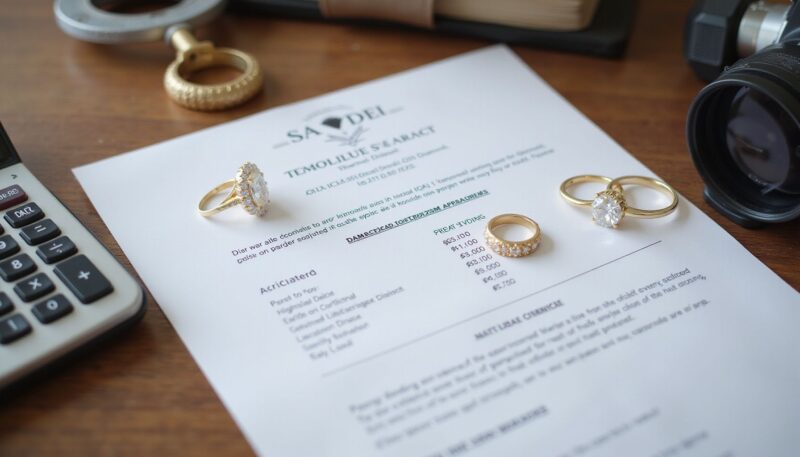
Wondering what your diamond ring is actually worth in today’s market? The gap between what you paid and what a buyer will offer can feel shocking, but it’s entirely predictable once you understand how diamond pricing works. Whether you’re insuring the ring, planning to sell it, or simply curious about its value, knowing the right valuation method makes all the difference.
Quick Questions and Answers
Question: Why is my diamond ring worth less than I paid for it?
Diamond rings typically resell for 20% to 60% of their original retail price because resale values reflect current market demand rather than retail markup. Engagement rings specifically often sell second-hand for 30% to 50% of the purchase price. The final amount depends on the diamond’s quality, the brand name, and where you sell it.
Question: Can I get an accurate diamond ring value online without an appraiser?
Online calculators can estimate your diamond’s worth by comparing its 4Cs (carat, cut, color, clarity) against current market databases to provide a ballpark figure. However, these tools give estimated retail or wholesale price ranges rather than precise valuations. For a more accurate assessment, especially if selling, consulting a professional appraiser is recommended.
Question: Do diamond ring values depend on the metal band quality?
Yes, a diamond ring’s total value includes the metal band’s worth in addition to the diamond’s price. The band’s value is calculated by multiplying its weight by purity percentage and the current gold price, then applying a 60% to 80% factor. The final formula is the value of the diamonds plus the value of the band.
What You Need
Item
Purpose
Notes
GIA, AGS, or EGL certification report
Provides exact 4C grades (carat, cut, color, clarity) for accurate comparison
If your ring lacks certification, take it to a lab for grading before valuation
Online diamond price calculator or AI appraisal tool
Generates market value estimates based on your stone’s specifications
Tools like StoneAlgo and Jewelry Identifier parse photos and generate price ranges
Jeweler’s loupe (10x magnification)
Helps inspect hallmarks, stamps, and visible inclusions on the band and stone
Useful for manual verification if you’re comparing against your lab report
High-resolution camera or smartphone
Captures clear photos of the ring for AI identification and documentation
Multiple angles (top, side, band detail) improve accuracy of photo-based appraisals
Access to online diamond listings
Allows you to compare your ring’s 4Cs against similar stones currently for sale
Sites like Rapaport and James Allen show real-time pricing for comparable diamonds
Professional appraiser contact information
Required for formal replacement value appraisals needed for insurance or legal purposes
Look for American Society of Appraisers (ASA) certified appraisers in your area
Step 1: Identify Your Diamond’s 4Cs
The foundation of any accurate diamond valuation starts with understanding the 4Cs: carat, cut, color, and clarity. These four dimensions determine roughly 95% of your stone’s value, so getting them right is non-negotiable.
Carat weight is the easiest measure—it’s simply the weight of your diamond. One carat equals 200 milligrams. Your diamond’s carat weight might be printed on a lab report, or you can have a jeweler weigh the loose stone. If your ring is set, the jeweler can usually weigh the stone without removing it using a scale calibrated for precision.
Cut quality refers to how well the diamond was shaped and faceted to reflect light. According to the Gemological Institute of America, cut grades range from Excellent to Poor. A diamond with an Excellent cut will sparkle visibly more than a Good cut of the same carat weight, color, and clarity—and this difference directly affects price. Cut is subjective in a way the other Cs are not, so understanding your stone’s specific cut grade from its lab report matters enormously.
Color is graded on a scale from D (colorless) to Z (light color). The difference between a D-color diamond and an H-color diamond might seem subtle to the naked eye, but the price gap can be 20-40% depending on carat weight. Higher grades (D through F) command premium prices because true colorless diamonds are rarer.
Clarity measures the presence of internal inclusions or external blemishes. The scale runs from Flawless (FL) down through VVS1, VVS2, VS1, VS2, SI1, SI2, and down to I3. Most diamonds sold have some inclusions—that’s normal. A VS1 stone might look eye-clean to you but cost significantly less than a VVS1 because a trained gemologist can spot the difference under magnification.
If your diamond came with a grading report from GIA, AGS, or EGL, pull it out now—all four Cs are printed right there. If you don’t have a report, schedule an appointment with a certified appraiser or gemologist to have one issued before moving forward.
Step 2: Gather Comparable Market Data
The most straightforward way to figure out the market value of a diamond is to check the prices of stones with the same carat weight and of the same clarity, cut, and color grades. This is how professional appraisers build their valuations.
Start by searching online diamond listings for loose diamonds that match your stone’s exact specifications. Fine Things Jewelry recommends looking up a number of loose diamonds with the exact same characteristics and averaging their prices. For example, if your stone has G color, VS2 clarity, Good cut, and weighs 0.75 carats, search for multiple listings with those exact specs—then average their asking prices.
Sites like James Allen, Brilliant Earth, and Rapaport publish current pricing for loose diamonds. You’ll find a range because different sellers mark up differently, but averaging 5 to 10 comparable stones gives you a realistic ballpark for retail value. Write down the prices you find—you’re building your own data set.
Don’t rely on a single jewelry store’s quote. Different retailers use vastly different pricing models, and some deliberately inflate their estimates. Shopping at 3 to 5 different online vendors takes 15 minutes and protects you from anchoring on an inflated number.
Step 3: Use AI-Powered Appraisal Tools
Modern technology has made preliminary valuations faster and more accessible. AI-powered jewelry appraisal apps can analyze a photo of your ring and estimate its value based on comparable market data.
Jewelry Identifier, for example, lets you snap a photo of your diamond ring and the AI identifies the stone type, estimates carat size, reads any stamps or hallmarks on the band, and provides a value range based on comparable market data. The app’s computer vision technology scans the stone’s proportions and sparkle patterns to estimate carat weight, then cross-references current market pricing.
These tools won’t replace a certified gemologist’s formal appraisal, but they’re genuinely useful for getting a quick estimate without paying an appraisal fee upfront. Upload your clearest photos (good lighting, multiple angles) and let the algorithm run. Most apps take 2 to 5 minutes to generate a report.
The value range these tools provide is typically within 15-25% accuracy compared to a professional appraisal. If your AI estimate comes back at $8,000, the actual value might be $7,000 to $9,200—that’s useful directional information even if it’s not exact.
Step 4: Account for Metal Band Value
While the diamond carries the bulk of the ring’s worth, the precious metal setting—gold, platinum, or silver—adds measurable value to the total package. Understanding this matters if you’re planning to sell.
The metal value is calculated by multiplying the band’s weight by its purity percentage (stamped on the inside as 14K, 18K, 10K, or Plat), then multiplying by the current spot price for that metal. Current gold prices fluctuate daily, so check a reliable spot price source (London Bullion Market Association or a major jewelry supplier) for today’s rate.
For a rough example: if your ring’s band weighs 3 grams of 18K gold (75% pure) and gold is trading at $65 per gram, your calculation is: 3 grams × 0.75 = 2.25 grams of pure gold × $65 = $146.25 for the metal alone. That’s a modest contribution, but it adds up.
The challenge is that jewelry buyers don’t pay full spot price for used metal. They typically pay 60% to 80% of spot price to cover refining costs and their own margin. So that $146 of gold might get you $90 to $120 if you’re selling to a refiner.
When comparing your total ring value, add your estimated metal value to your diamond value. If your diamond is worth $7,500 and your band’s metal is worth $100, your total ring value is roughly $7,600 at retail, or $3,000 to $3,800 if selling secondhand (30-50% of retail).
Step 5: Understand Replacement Value vs. Resale Value
Here’s where most people get confused: there’s a massive difference between what an appraiser says your ring is worth for insurance and what you’ll actually receive if you sell it.
Replacement value is the cost to replace your exact ring with a new one at current retail prices. This is what insurance companies care about. An appraiser might say your ring has a replacement value of $10,000, meaning that’s what you’d need to spend to get an identical (or very similar) new ring from a jeweler.
Resale value is what a buyer will actually pay you for your used ring. This is typically 30% to 50% of replacement value, according to diamond market data. So if your replacement value is $10,000, expect to receive $3,000 to $5,000 when selling it.
This gap exists because retail jewelers build in overhead for marketing, store rent, showroom displays, sales commissions, customer service, return policies, and profit margins. When you sell secondhand, you’re not paying for any of that, so the price drops accordingly. Understanding this psychologically prepares you for the reality of resale.
If you’re getting your ring appraised for insurance purposes, ask the appraiser explicitly for “replacement value.” If you’re preparing to sell, ask for a “fair market value” or “wholesale value” estimate instead—those terms are closer to what you’ll actually receive.
Step 6: Get a Professional Appraisal (If Needed)
A formal appraisal from a certified gemologist or American Society of Appraisers (ASA) member provides an official, documented value that’s accepted by insurance companies and courts. You’ll need this if you’re insuring the ring, using it as collateral for a loan, or settling an estate.
The appraiser will physically examine your diamond under magnification, verify all 4Cs, inspect the metal band for hallmarks and damage, and document everything in a formal report. This typically costs $150 to $400 depending on the ring’s complexity and your location.
During the appraisal, ask the appraiser specifically what type of value they’re providing—replacement value or fair market value. Also ask if they can provide both, since they serve different purposes. A replacement value is higher and intended for insurance; a fair market value is closer to what you’d receive selling the ring.
Don’t go to a jeweler who sold you the ring in the first place for an appraisal. You want an independent, neutral third party. Look for someone certified by ASA or the National Association of Jewelry Appraisers (NAJA). Check their credentials before booking.
Common Mistakes to Avoid
Assuming the original receipt represents the current value. Jewelry prices change constantly, and what you paid five years ago has no bearing on what it’s worth today. Market conditions, metal prices, and demand all shift. Your receipt is a historical artifact, not a valuation tool.
Comparing your ring to retail store prices. Walking into a jewelry store and seeing a similar ring priced at $12,000 doesn’t mean yours is worth $12,000. Retail stores mark up inventory significantly. That $12,000 ring probably cost the jeweler $5,000 to $7,000 wholesale. Compare against online prices and comparable loose diamonds instead.
Ignoring the difference between the diamond and the setting. The metal band genuinely does add value, even if it’s small. A platinum setting is worth more than gold, and an ornate designer setting might carry brand premium. Account for it rather than assuming the diamond value is the entire ring value.
Trusting a single appraiser’s estimate without a second opinion. Even certified appraisers bring their own judgment to valuation. Get two independent appraisals if the ring is valuable. If one comes in at $8,000 and the other at $6,500, you know the true value sits somewhere in that range.
Forgetting that lab-grown diamonds have different resale markets. If your diamond is lab-grown (synthetic), its resale value is significantly lower than a natural diamond of the same specs. Make sure any appraisal specifies whether your stone is natural or lab-created, because this detail transforms the valuation entirely.
Troubleshooting Valuation Problems
Your diamond lacks a lab report. This is actually common with older rings. If you inherited your grandmother’s diamond or bought from a vintage seller without documentation, take it to a qualified appraiser or certified gemologist to perform a formal evaluation. A fresh GIA or AGS report costs $100 to $250 but establishes your stone’s identity and grade, making resale far easier. Without it, buyers will demand a discount because they can’t verify the specs themselves.
Your online estimate seems too high or too low compared to other sources. Make sure you’re comparing apples to apples. Online calculators sometimes quote retail prices, while some appraisers quote wholesale. Also verify that the stones you’re comparing are genuinely identical—a “Very Good” cut looks different from an “Excellent” cut even at the same carat weight. Search for loose diamonds specifically (not finished rings with settings), because settings add markup.
You found your exact specs online but the prices vary wildly. Price variance usually comes from retailer markup differences, not differences in the actual diamonds. High-end branded jewelers mark up more aggressively than online-only sellers. Average the 5 to 10 most comparable listings and ignore the outliers (the highest and lowest prices). The middle 60% of prices typically represents fair market value.
The appraiser said replacement value but you need resale value. Call them back and ask for a separate fair market value estimate. Don’t try to calculate resale value yourself by taking 40% of the replacement value—that’s too crude. A professional can give you both numbers, and they’re worth knowing separately.
Tips for Maximizing Your Ring’s Value If Selling
Clean your ring thoroughly before getting it appraised or photographed for sale. A dirty diamond looks dull, and appraisers and buyers view cloudy stones with suspicion. Use warm soapy water and a soft brush, or have a jeweler professionally clean it. A clean stone photographs better and sells faster.
Get a fresh lab report if your diamond’s existing report is more than 5 years old. Grading standards have evolved, and a newer report reassures buyers that the specs are current and reliable. This costs $100-250 but often pays for itself by adding buyer confidence.
Gather any documentation you have—original receipt, any prior appraisals, the original box or packaging. Buyers and appraisers view documentation as a sign of legitimacy and authenticity. If the ring has a brand name or designer mark, that heritage can add premium value, so have that visible.
Consider where you’ll sell. Online platforms like Worthy and Diamonds by Lauren specialize in secondhand fine jewelry and often pay more than local pawn shops because they reach a national audience. Local jewelers might offer convenience but lower prices. Getting quotes from 2 to 3 different buyers protects you from accepting the first (usually lowest) offer.
FAQ
Q: Are GIA certificates necessary to determine my diamond’s worth?
A GIA certificate is the best source for determining value because it lists exact carat weight, color, clarity, and cut grades. If your diamond lacks certification, you can have a gem lab like GIA or AGS evaluate its quality and issue a grading report. This report establishes the stone’s identity and is essential for accurate valuation.
Q: How much does a diamond ring usually sell for second hand?
In the secondhand market, engagement rings typically sell for about 30% to 50% of their original retail price. Some sellers may expect roughly 20% to 45% depending on the ring’s specific components and the sales channel used. A reliable valuation is a defensible range based on current comparables, not a single fixed number.
Q: What are the 4 Cs that determine a diamond’s price?
A diamond’s value is determined by its four major quality characteristics known as the 4Cs: carat weight, color, clarity, and cut. Carat measures weight, color ranges from D (flawless white) to Z, clarity grades inclusions from Flawless to I3, and cut evaluates how well the stone reflects light. These dimensions form the basis for all appraisals.
Q: When should I get a professional appraisal for my ring?
You should get a formal written appraisal for estate planning, insurance coverage, or loan applications where liquidation risk matters. For resale purposes, ask what similar rings are trading for currently rather than seeking the highest possible number. The best valuation conversation starts by clarifying what kind of value you actually need, such as market, insurance, or loan value.
Q: Is my diamond ring worth more than the gold it contains?
Usually, the diamond’s value far exceeds the metal band’s worth unless the diamond is very small or low quality. You calculate the gold content by dividing the hallmark number by 24 to find purity percentage, then multiply by weight and current gold price. The total ring value combines the diamond’s 4C value plus this calculated band value.
Q: Where can I find prices for similar diamonds to compare values?
The easiest way to estimate value is to check prices of stones with the same carat weight, clarity, cut, and color grades from online and local jewelers. You can research online and calculate an average price to serve as an estimate. Online diamond price calculators also compare your specifications to current market data for estimated retail or wholesale prices.
Q: Will fluorescence or treatments affect my diamond’s resale value?
Yes, fluorescence can impact a diamond’s value, and any treatments on the stone will significantly lower it. Always verify that the stone independently matches its lab report by checking color, clarity, cut quality, and treatments. Many stones do not match their reports, which causes problems and reduces value, so independent verification is crucial.
My Experience With How to Determine the Value of Your Diamond Ring Correctly
I’ve learned the hard way that diamond valuation is less romantic than retail jewelers want you to believe. When I first tried to sell an inherited diamond ring, I naively brought it to the store where my mother had purchased it years ago. The appraiser quoted me $4,200, and I nearly accepted. Then I got curious and pulled the original GIA report, verified the 4Cs myself, and found comparable loose diamonds online. Same specs, average price around $7,800 retail. That single hour of digging revealed the store’s quote was wildly low.
Here’s the sharp insight nobody mentions: appraisers working inside jewelry stores have a financial incentive to value your ring low if they’re buying from you. It’s not conspiracy—it’s just economics. Always get independent quotes, especially if you’re selling. The 30-minute effort of searching online comparables and contacting 2-3 buyers typically translates to an extra $1,000 to $3,000 in your pocket.
The one part that still catches me is the metal value calculation. People assume gold is gold, but a 10K band is 42% pure while 18K is 75% pure. That hallmark stamp actually matters. My ring’s platinum setting? Worth significantly more than if it were gold at the same weight. Reading that tiny stamp inside the band revealed I’d been underestimating the total value by $200.
What surprised you most when you valued your own ring—was the resale gap as stark as expected?
Conclusion
Determining your diamond ring’s value requires you to separate sentiment from data. The 4Cs—carat, cut, color, and clarity—drive the valuation, and honest market comparisons beat retail store estimates every time. Armed with your diamond’s lab report, a few minutes of online research comparing similar stones, and an understanding of the gap between replacement value and resale value, you’ll know exactly where your ring stands.
If you’re insuring the ring, get a formal appraisal. If you’re selling, gather multiple quotes from independent buyers. If you’re simply curious, an AI appraisal tool provides a solid ballpark in under five minutes. The difference between an educated guess and a real valuation is the time you’re willing to invest.
A Teacher with 5 years of experience. Our Expertise, is reliable to meet your full Academic development needs . Worked on many crafts and construction projects offering services from design to development to deployment over the years. You will find many of my works in my business portfolio on request.