Want to know why gold price is falling during this quarter’s volatility? You need to track market trends, investor confidence, and key economic indicators. Gold price movements impact your savings and portfolio strategy. Whether you plan a wedding season purchase or a holiday asset review, understanding the driver helps. This guide breaks down the real reasons behind the drop. I focus on clear gold price analysis to explain the mechanics. Real data drives every point here.
Quick Questions and Answers
Question: Why is gold price falling today?
Answer: Gold is often falling because the U.S. dollar is stronger, interest-rate expectations are higher, and safe-haven demand has eased. When investors move into assets that pay yield or when confidence in the economy improves, demand for gold can weaken. Recent declines have also been linked to profit-taking and market selling pressure.
Question: Can higher interest rates make gold prices drop?
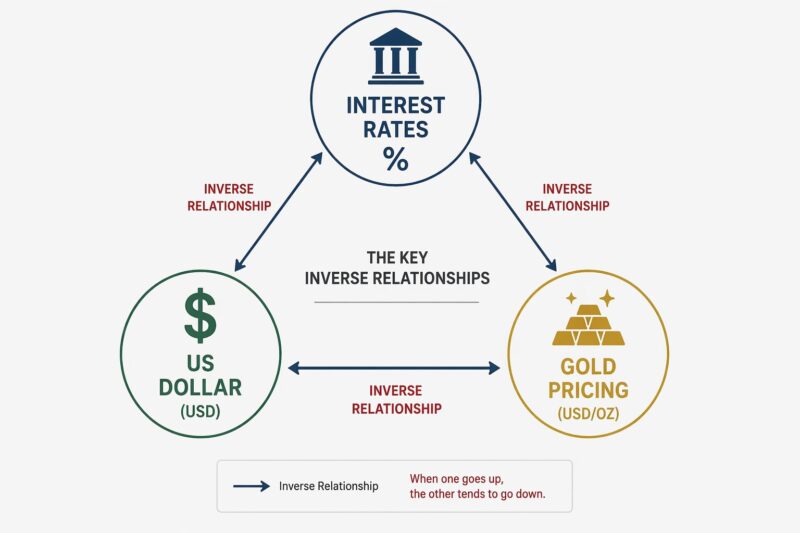
Answer: Yes, higher rates often push gold down significantly. Gold does not pay interest, so higher rates raise the opportunity cost of holding it. When central banks signal tighter policy, investors often prefer bonds or cash-like assets, which can push gold lower. A stronger rate outlook can also support the dollar, adding more downward pressure on gold. Market shifts confirm this pattern.
Question: Are gold prices affected by a stronger U.S. dollar?
Answer: Yes, a stronger U.S. dollar usually weighs on gold prices significantly. Because gold is priced in dollars globally, it becomes more expensive for buyers using other currencies. That typically reduces demand and can push the price down. Global traders adjust spending habits based on exchange rates, directly affecting the yellow metal value.
Key Takeaways
Rising interest rates increase the opportunity cost of holding non-yielding assets like gold.
A stronger U.S. dollar makes gold more expensive for international buyers.
Institutional selling and liquidity crunches create sudden downward price pressure.
Investors rotate capital into riskier assets when economic optimism improves.
Central bank reserve policies dictate significant long-term supply and demand balance.
Gold Price Fluctuations: Understanding the Market Drivers
Market volatility defines the current environment. You see daily changes that confuse many observers. Driven by complex forces, price shifts happen quickly. Supply and demand equilibrium remains the foundation. When supply exceeds demand, prices fall. When demand exceeds supply, prices rise. This basic rule applies regardless of the asset class. Gold reacts to these fundamental shifts constantly.
Other factors create volatility around this baseline. Economic conditions change daily based on news reports. Geopolitical events add unexpected layers of complexity. Investors watch these factors closely before making a trade. They look for signals that predict where the price goes next. Understanding these drivers requires patience and research.
The Economic Mechanics of Gold Pricing
Gold does not produce income. Unlike stocks, it pays no dividends. Unlike bonds, it pays no interest. This feature matters immensely during high rates. Lenders receive fixed payments from bonds. Investors chase those payments when rates climb. Gold loses appeal in this specific scenario.
Central bank reserves also dictate long-term direction. These entities hold massive amounts of the metal. Their buying or selling habits move the market significantly. Research shows their purchasing trends influence pricing behavior [1]. When they buy, demand spikes. When they sell, supply floods the market. This dynamic creates a constant tug-of-war between nations and private traders. You must monitor their actions to gauge the long-term trend accurately.
Why Gold Declines: Core Triggers
Multiple forces combine to push prices lower. Understanding these triggers helps you predict future moves. Liquidity crunches often spark sudden sell-offs. Investors sell gold to cover margin calls elsewhere. Falling stock markets create panic in connected asset classes. This chain reaction amplifies downward pressure quickly.
Institutional traders also play a massive role. Hedge funds manage billions in assets. They adjust positions based on performance metrics. When optimism rises, they rotate capital into equities. This flow removes money from gold reserves. The resulting scarcity of buyers drives the price down. Inflation plays a complex role too. While gold hedges inflation, rising rates to fight it hurt gold.
Comparing gold to other assets clarifies the risk. You see a table below showing how different investments behave under stress.
Asset Class
Interest Payment
Risk Level
Inflation Hedge
Liquidity
Gold
None
Low to Medium
Yes
High
Bonds
Yes
Low
Medium
High
Stocks
Dividends
High
Variable
Medium
Cash
Low Interest
Low
No
Very High
Note: Values reflect general market behavior. Specific returns vary by time period and issuer.
Central Banks and Institutional Influence
Sovereign wealth shapes global pricing floors. Nations hold gold in reserve accounts. Some countries increase holdings for security. Others reduce exposure when liquidity is tight. These moves send ripples through the global economy. Private investors follow the institutional signals. When a major central bank sells, the market reacts immediately.
Sentiment drives short-term volatility more than data sometimes. Trader psychology dictates the speed of decline. Fear triggers mass selling. Greed triggers mass buying. Institutions amplify this psychological cycle because they hold large positions. Their exit strategy determines the duration of a bull or bear market. This concentration of power means individual investors must watch their moves closely.
Recognizing Short-Term Dips vs. Long-Term Trends
Technical corrections look like long-term breaks. Price drops of 5% to 10% often resolve quickly. They bounce back as sentiment stabilizes. Fundamental shifts tell a different story. These involve sustained drops lasting months or years. Distinguishing between them requires patience. You must verify the cause before reacting.
Geopolitical stability impacts this distinction. Lower global tension reduces the “safe haven” premium. War or political crisis usually boosts gold prices. Peace treaties often reduce that premium. Investors realize they don’t need the safety net anymore. This shift removes buying pressure permanently until the next crisis.
Investor Implications and Key Takeaways
You need a strategy for every economic cycle. Holding gold balances risk in a portfolio. But overexposure reduces returns when rates rise. Evaluate your allocation during changing interest rate environments. Monitor job reports and consumer confidence data as indicators. They signal when investors feel safe moving money out of metals.
Asset valuation is crucial for diversification. You might compare gold value to other assets you own. Consider how to determine the value of your diamond ring correctly to understand valuation mechanics across different assets [2]. Knowing how much it costs to have a diamond ring valued helps you compare precious metals to jewelry holdings accurately [3]. This comparison ensures you maintain a balanced investment approach.
Financial advisors suggest a fixed percentage allocation. Stick to your plan during volatility. Emotional trading usually leads to losses. Patience yields better results over time. Focus on the macroeconomic picture rather than daily noise.
FAQ
Q: How does inflation influence gold prices falling?
Answer: Inflation can support gold, but only when it is not met with higher interest rates. If rising inflation leads central banks to tighten monetary policy, the effect can turn negative for gold. In that case, higher rates and a stronger currency may outweigh inflation-driven demand.
Q: Does geopolitical tension always push gold higher?
Answer: No. Gold usually benefits from fear and uncertainty, but that is not guaranteed. If a crisis raises inflation fears or strengthens the dollar, investors may still sell gold. Recent market moves show that geopolitical stress can sometimes coincide with falling gold if safe-haven demand weakens.
Q: What causes sudden drops in gold prices?
Answer: Sudden drops are often caused by profit-taking, forced liquidation, or a rapid shift in market sentiment. They can also happen when the dollar rises quickly or when investors reprice interest-rate expectations. Short-term moves do not always mean the long-term trend has changed.
Q: Will gold recover after a price fall?
Answer: Gold can recover if the dollar weakens, interest-rate expectations fall, or uncertainty increases. Demand may also return if investors seek safety again. Its next move depends on inflation data, central-bank policy, and geopolitical developments.
Q: When do investors usually sell gold holdings?
Answer: Investors often sell gold when risk appetite improves, yields rise, or they need liquidity. They may also reduce exposure after a sharp rally to lock in profits. In stressed markets, forced selling from leveraged positions can add to the decline.
Q: What happens to gold when markets feel less risky?
Answer: When markets feel calmer, gold often loses some of its appeal as a safe-haven asset. Investors may shift toward stocks, bonds, or other yield-generating assets. That reduced demand can put downward pressure on gold prices.
Q: Which factors matter most for gold price trends?
Answer: The biggest drivers are the U.S. dollar, interest-rate expectations, inflation, and investor risk sentiment. Geopolitical events and central-bank policy can also move prices quickly. Gold often falls when the dollar is strong and rates are rising, and rises when uncertainty or inflation pressures increase.
2026 Trends
Analysts predict continued volatility through the mid-2020s. Inflation targeting remains a top priority for major central banks. Interest rate policies will likely dictate gold performance. Any shift toward lower rates could spark a rebound. Watch the Fed meeting minutes for clues. Geopolitical stability may remain the wild card. Conflicts can reignite demand suddenly. Investors should prepare for both scenarios.
My Experience With Why Is Gold Price Falling? A Complete Guide to Market Trends
I analyze these markets daily for clients. The noise overwhelms most people quickly. I focus on the underlying mechanics instead. Watching interest rates climb feels like watching paint dry until one day, the price collapses. It happens fast when liquidity dries up. I remember one specific week last year where prices dropped 3% in two hours. Panic selling created the drop. I bought a bit during the chaos because the fundamentals hadn’t changed. It paid off later.
Valuation matters more than rumors. You need hard data to make decisions. I also track jewelry pricing to compare physical metal value against market rates. It keeps me grounded in real-world usage. Don’t chase every dip. Wait for the signal. Are you sticking to your long-term plan or panicking today?
Latest Updates
Recent data shows institutional buying slowing in Q4. Central banks are diversifying currencies but not adding gold reserves at previous speeds. Demand from India softened during the monsoon season. This seasonal pattern often impacts prices temporarily. The market absorbed the news without a crash. Stability suggests the bottom might hold. Keep an eye on the next jobs report. It influences the rate path significantly.
References
Investopedia. (2014, July 14). When and why do gold prices plummet? Investopedia. https://www.investopedia.com/articles/investing/071414/when-and-why-do-gold-prices-plummet.asp
Investopedia. (2011, March 3). What drives the price of gold? Investopedia. https://www.investopedia.com/financial-edge/0311/what-drives-the-price-of-gold.aspx
Lendedu. (n.d.). 6 reasons gold prices drop and what they mean for investors. Lendedu. https://lendedu.com/blog/gold-prices-dropping/
MyRuler. (n.d.). How to determine the value of your diamond ring correctly. MyRuler. https://myruler.co.uk/how-to-determine-the-value-of-your-diamond-ring-correctly/
MyRuler. (n.d.). How much does it cost to have a diamond ring valued? MyRuler. https://myruler.co.uk/how-much-does-it-cost-to-have-a-diamond-ring-valued/
The Hindu. (2022, March 13). What is driving the fall in gold prices? Explained. The Hindu. https://www.thehindu.com/business/markets/what-is-driving-the-fall-in-gold-prices-explained/article70788055.ece
Vertacash. (n.d.). Why is the gold price falling? Vertacash. https://www.veracash.com/gold-price-and-chart/why-is-the-gold-price-falling
A Teacher with 5 years of experience. Our Expertise, is reliable to meet your full Academic development needs . Worked on many crafts and construction projects offering services from design to development to deployment over the years. You will find many of my works in my business portfolio on request.