How much does it cost to have a diamond ring valued?
Learn the exact cost to have a diamond ring valued, including appraisal fees, insurance needs, and market factors affecting your jewelry's price today.
How much does it cost to have a diamond ring valued? Finding a fair price for your jewelry investment often involves comparing appraisal rates, insurance requirements, and resale estimates. Many people wonder when they need a professional appraisal or exactly how much does it cost to have a diamond ring valued. Whether you are planning a family celebration or securing assets for an estate, understanding this process matters. You need concrete numbers to protect your wealth. This guide breaks down the real numbers so you can make informed decisions. You will save time and money by knowing where to look.
Quick Questions and Answers
Question: How much does a professional diamond ring appraisal cost?
Answer: Independent appraisers typically charge between $50 and $150 per piece for a formal written appraisal. It is crucial to find someone who charges a flat fee rather than a percentage of the appraised value to avoid incentives for overvaluation. Jewelers may often provide informal estimates for free, but these are not suitable for insurance purposes.
Question: Is there a free way to get my diamond ring valued?
Answer: Many jewelers will provide informal estimates for free, often hoping to buy the piece or earn future business. Additionally, AI appraisal apps can analyze photos of your ring to provide instant, ballpark estimates within seconds. Online diamond buyers may also evaluate your diamond remotely and sometimes provide free quotes.
Question: Why do insurance appraisals differ from resale values?
Answer: Insurance appraisals and resale values are two completely different numbers because they serve different purposes. An insurance appraisal estimates the cost to replace your ring with a new, comparable item, which is often higher than retail to account for future costs. Resale value reflects what a buyer in the secondary market is willing to pay, typically 20% to 60% of the original price.
Key Takeaways
Professional appraisals generally range from $50 to $150 for a written document.
Jewelry store estimates often lack the legal standing required for insurance claims.
Insurance covers replacement cost, while resale value drops significantly in secondary markets.
Independent appraisers charge flat fees to prevent overvaluation bias.
Updating your appraisal every few years keeps insurance coverage accurate.
Diamond Ring Appraisal Pricing: Typical Costs and Factors
The price you pay for an appraisal depends heavily on who performs the work and where they are located. My analysis suggests that independent gemologists generally charge between $50 and $150 for a standard piece. This fee reflects the time required to examine the gemstones and set the metal under a loupe or microscope. Some experts charge an hourly rate, while others stick to a flat per-piece fee to make budgeting easier for you.
Complexity plays a major role in the final bill. A simple solitaire diamond might cost less to appraise than an antique piece with dozens of smaller stones. If your ring features unique designs or mixed materials, the appraiser needs more time to document each component accurately. Credentials also affect the price tag. A certified appraiser with designation from the American Gem Society (AGS) often charges more than a general jeweler. You pay for that expertise.
I recommend asking for a quote before you book an appointment. Some services offer a free initial consultation to help you decide if the cost fits your needs. Avoid pricing that is based on a percentage of the ring’s value, as this creates a conflict of interest. They would have an incentive to inflate your numbers to increase their own fee.
Core Definition of a Diamond Appraisal
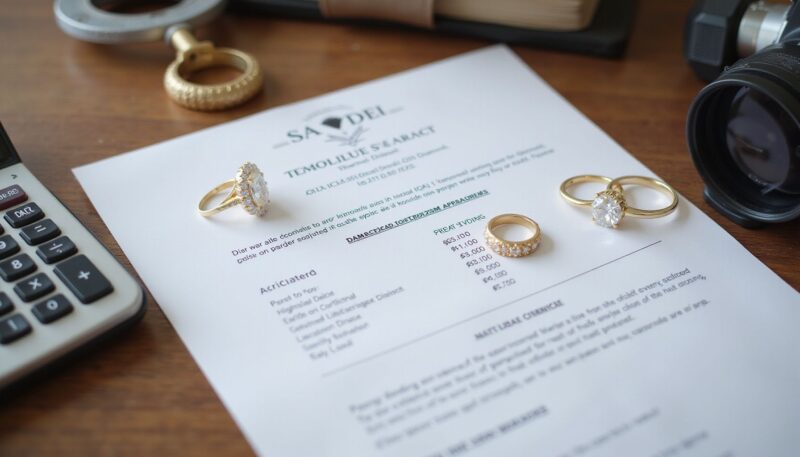
A formal appraisal acts as a legal document describing the item’s physical features and market value. It is not just a verbal opinion given by a salesperson. The report contains detailed specifications about the diamond itself, such as color, clarity, and cut grade. These details match those found on the grading report from an organization like the Gemological Institute of America (GIA).
Beyond the stone, the document records the metal composition of the band, usually specifying whether it is 14k gold, platinum, or another alloy. This level of detail ensures that if your jewelry ever gets lost or stolen, the description is precise enough for law enforcement or insurance adjusters. The appraisal serves as the baseline proof of ownership and worth.
Professional reports also include high-quality photographs of the ring. These images capture unique hallmarks, engraving, or specific design elements. Photographs serve as the final piece of evidence needed for a replacement or recovery process. You should always check that the report contains a unique serial number.
Why Appraisals are Essential for Insurance and Estate Planning
Insurance providers mandate an official appraisal to establish the monetary value needed to issue a policy. Without this document, a carrier might not know how much coverage to offer, leaving you vulnerable during a loss. You need the full financial investment to be protected should your ring ever be lost, stolen, or damaged. This rule applies to most homeowners and renters insurance policies.
Insurance appraisals are necessary for estate planning as well. When passing down jewelry to heirs, a clear valuation eliminates disputes among family members about the asset’s worth. The document acts as a verified record for potential resale, helping owners understand the difference between retail replacement value and actual market resale value.
It is important to keep the appraisal in a secure location, separate from the jewelry itself. If you store the paper with the ring, a loss destroys both items simultaneously. A safe deposit box or a secure digital cloud account works well for storage.
Understanding the Need for Periodic Updates
Diamond and precious metal market trends fluctuate frequently, making it critical to refresh appraisals every 2 to 3 years. A ring appraised five years ago may reflect outdated prices that are lower than current replacement costs. Updating an appraisal ensures the insured value of the ring matches current retail market rates.
A current appraisal protects you against inflation in the jewelry market. This ensures you can purchase a replacement piece if your ring is lost or stolen today without paying the difference out of pocket. Retail values for diamonds shift based on international demand and mining output. You need a document that reflects today’s reality, not yesterday’s numbers.
According to research from Diamonds Pro, appraisals are necessary for an insurance company to begin a policy. They require this documentation to verify the value. Failure to update your policy and appraisal can result in underinsured claims.
What to Look for in a Certified Appraiser
Seek out independent appraisers who do not have a vested interest in buying, selling, or repairing the jewelry they are reviewing. A conflict of interest compromises accuracy. For example, a jeweler who wants to buy rings for resale might undervalue them to lower the purchase price. Conversely, they might overvalue them to sell a new piece.
Verify professional designations like Certified Gemologist Appraiser (CGA) or similar credentials from recognized gemological societies. These credentials prove the person has the required training to distinguish between high-quality and lower-grade stones. Ensure the appraiser provides a document that includes their signature, the date of inspection, and a clear methodology of how the final value was derived.
Feature
Professional Appraisal
Store Estimate
Online Calculator
Document Depth
Detailed, written, signed
Verbal or simple note
Automated estimate only
Insurance Accepted
Yes, typically
No, rarely
No, for insurance
Cost
$50 – $150
Free or Low
Free
Accuracy
High, certified methodology
Variable, sales-focused
Low, generic data
Re-evaluation
Every 2-3 years
One-time only
Instant updates
I found that getting two opinions is often wise if their numbers differ by more than 20%. A third opinion then resolves the discrepancy.
Final Takeaways for Owners of High-Value Jewelry
An appraisal is an investment in the long-term security of your asset. Do not view it merely as a service fee to be avoided. Always prioritize professional documentation over informal verbal estimates. Only written appraisals are legally recognized by insurance providers in a claims dispute.
Store the original appraisal document in a safe or digital cloud account. Provide a copy to your homeowner’s or renter’s insurance provider immediately upon receipt. This ensures the insured value reflects current market rates. If you move or change providers, update the policy number with the insurance carrier.
You should get a professional opinion for any stone over a carat with decent grades. The fee pays for itself in accuracy. For stones under 0.5 carats or costume-quality settings, the appraisal fee might exceed the actual worth of the piece. A formal written appraisal is best needed when you require a replacement cost for insurance.
My Experience With How much does it cost to have a diamond ring valued?
I remember the first time I had to appraise an older heirloom piece. I assumed my local jeweler would simply glance at it and call me back with a number. The process was slower than I expected, taking about 45 minutes of detailed work. I learned that value is not an instant calculation. It involves weighing stones against the setting and checking for wear that affects durability.
I also tried some online apps to get a quick estimate before heading in. They said my ring was worth 20% more than the formal appraisal later claimed. This gap annoyed me, but it showed how algorithms lack nuance. I eventually found an appraiser who used a microscope and compared the stone to the GIA report line-by-line. Precision matters, whether you are measuring a Open Golf Cut Line or a diamond carat.
Later, when researching insurance, I realized that “replacements” are the keyword for coverage. You don’t get the market value if you sell; you get the cost to buy it back new. It is a crucial distinction. If you have recently had a ring professionally inspected, what surprised you about the process?
FAQ
Q: What factors determine the value of a diamond ring?
The value of a diamond ring is determined by the 4Cs of the diamond: Carat, Cut, Color, and Clarity. The price also includes the value of the metal in the band and the estimated value of the design and setting. Certification details, such as a GIA report, are essential for establishing the diamond’s specific quality grades. These combined elements create the final monetary assessment you see on paper.
Q: How do I calculate the resale value of my diamond ring?
A reasonable estimate for selling a diamond is typically 10% to 30% of its original retail price. If you sell the stone directly to the public through classifieds or auctions, you might achieve between 30% and 60% of the retail value. Engagement rings specifically often resell for 30% to 50% of their original purchase price. Retail pricing includes margins that secondary buyers do not pay.
Q: When should I get a professional appraisal for my ring?
You should get a professional opinion for any stone over a carat with decent grades, as the fee pays for itself in accuracy. For stones under 0.5 carats or costume-quality settings, the appraisal fee might exceed the actual worth of the piece. A formal written appraisal is best needed when you require a replacement cost for insurance. Timing these assessments ensures you remain adequately covered.
Q: What documents do you need before valuing a diamond ring?
Begin by gathering certification first, as a grading report like a GIA certificate establishes what the diamond is. Past paperwork, including old appraisals and receipts, can add background context even if they don’t set the current value. Photos and measurements are also helpful when requesting preliminary opinions remotely from buyers or appraisers. This paperwork creates a clear history for the piece.
Q: Are online diamond calculators accurate for valuing rings?
Online calculators provide a ballpark figure in minutes by comparing your diamond’s 4Cs to current market data. They offer an estimated price range based on wholesale or retail data, which helps you understand potential value before buying, selling, or insuring. However, for a precise valuation, especially if selling, consulting a professional appraiser is recommended. They offer precision you cannot get from a screen alone.
Q: Does the brand of my diamond ring affect its value?
Yes, the final resale amount depends on the diamond’s quality, the brand, and current market demand. Retail value includes branding, overhead, and merchandising costs, which makes it much higher than what the secondary market will pay. In the secondhand market, even branded rings typically sell for about 30% to 50% of the original retail price. Designer premiums rarely transfer fully to owners.
Q: How can I find a reliable independent appraiser for my ring?
You should find an independent appraiser who charges a flat fee, not a percentage of the appraised value, to ensure they have no incentive to overvalue your piece. Get at least two opinions, and if their numbers differ by more than 20%, you should get a third opinion to ensure accuracy. Look for someone who specializes in your specific type of jewelry. Verification is key to avoiding fraud.
Latest Updates
The jewelry market continues to show volatility in 2024 and 2026. Platinum and gold prices fluctuate based on global economic trends, impacting the metal component of your ring’s value. Additionally, lab-grown diamonds have entered the market in significant ways. These stones often appear on appraisal reports to lower the overall value of pieces that contain them. Buyers and sellers need to distinguish between natural and lab-grown stones to determine accurate pricing.
Appraisal technology is also evolving. Some modern tools allow for remote scanning to provide preliminary values, though a physical inspection remains the gold standard. This shift helps owners estimate their costs before visiting an appraiser. It is becoming easier to get a preliminary understanding of your ring’s worth.
I track these trends regularly to ensure my advice stays current. Knowing these changes helps you protect your investment better. If you are considering updating your policy, verify with your carrier how lab-grown stones will be treated. Their rules are changing faster than the appraisal fees.
Conclusion
Understanding how much to spend on a valuation protects your jewelry. You can expect to pay between $50 and $150 for a standard report. This cost secures your ability to replace the item if it is lost. It pays off when you need to file an insurance claim.
Prioritize written documentation from certified professionals over quick verbal estimates. Keep your records updated every few years to match market rates. This step ensures your coverage remains valid and sufficient.
A Teacher with 5 years of experience. Our Expertise, is reliable to meet your full Academic development needs . Worked on many crafts and construction projects offering services from design to development to deployment over the years. You will find many of my works in my business portfolio on request.