
The best 14 cricut projects for beginners are simple, low-risk crafts that teach one skill at a time, like vinyl decals, labels, cards, stickers, and basic iron-on designs. If you’re new to Cricut, start with projects that use cheap materials, need little measuring, and don’t require advanced layering or tricky surfaces.
Key Takeaways
- The easiest beginner Cricut projects use vinyl, cardstock, or iron-on.
- Start with flat surfaces like jars, notebooks, and cards before trying curved items.
- Labels, decals, stickers, and gift tags are usually the fastest wins.
- Choose permanent vinyl for mugs and jars, removable vinyl for walls, and HTV for fabric.
- A test cut can save material and frustration.
- Simple one-color designs are better than layered designs when you’re learning.
- Beginner projects usually need only a mat, blade, weeding tool, scraper, and transfer tape.
- If cuts look messy, the problem is often the material setting, dull blade, or mat grip.
- Cricut projects are great for hobby crafters, gifts, and home organization, but not every project is beginner-friendly.
- The smartest way to learn is to make a few small projects, then repeat them with different materials.
What are the best 14 Cricut projects for beginners?
The best 14 cricut projects for beginners are projects that are easy to cut, easy to weed, and easy to apply. These projects help you build confidence fast without wasting expensive supplies.
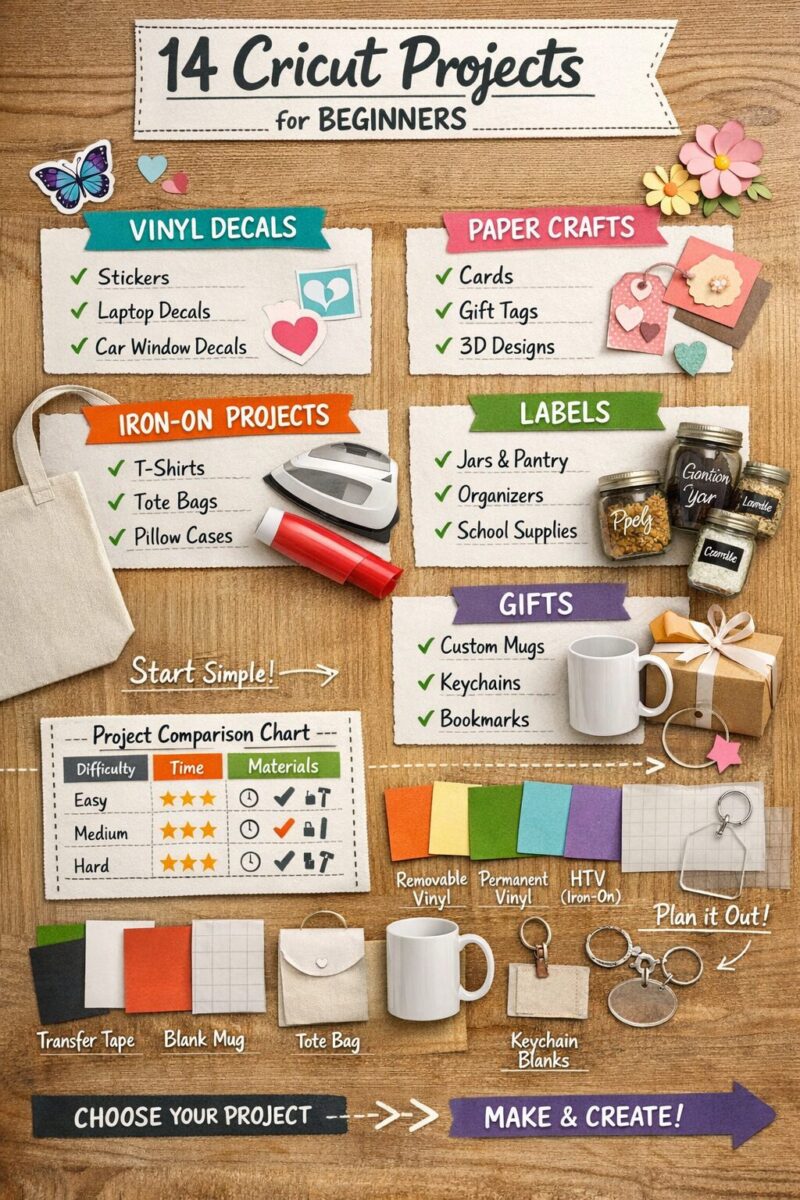
Here are 14 solid starter ideas:
- Vinyl water bottle decals
Great for learning basic cut-and-transfer steps. - Pantry jar labels
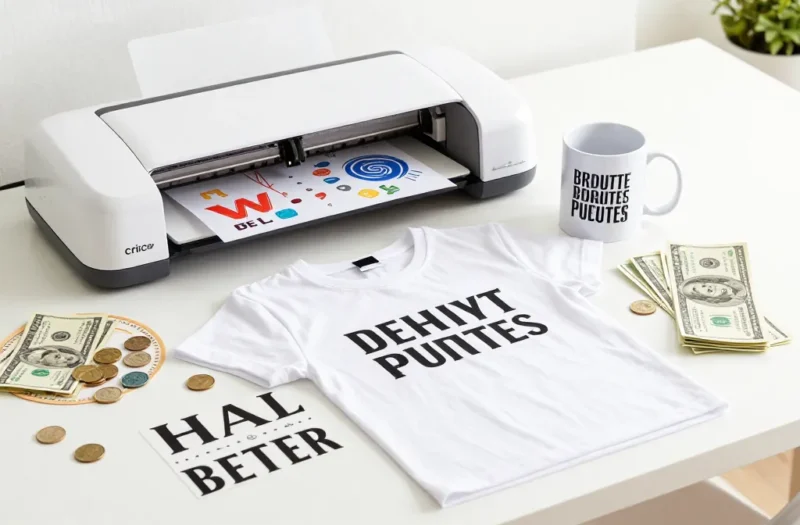
A practical first project with clean shapes and simple text. - Custom mug decals
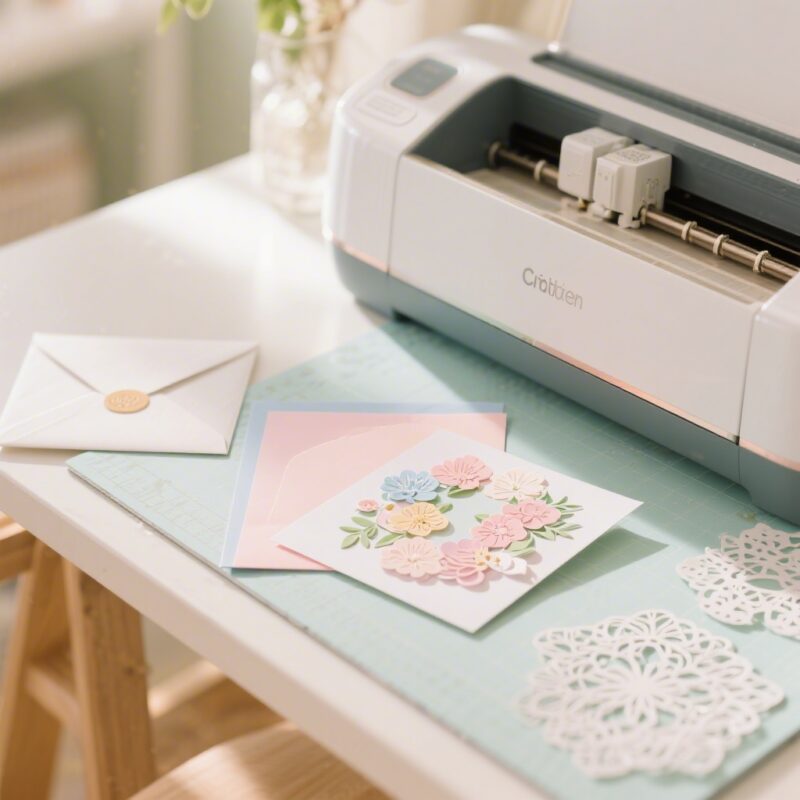
Best with permanent vinyl and simple words or icons. - Greeting cards
A good entry point for cardstock cutting and writing features. - Gift tags
Fast, cheap, and easy to personalize. - Notebook covers
Add a name or quote with adhesive vinyl. - Sticker sheets
Good for beginners with a Cricut that supports print then cut. - Iron-on tote bags
A simple fabric project with big payoff. - Baby onesies with HTV
Small, cute, and ideal for one-color heat transfer vinyl. - Wall decals
Use removable vinyl for low-risk home decor. - Bookmarks
Try cardstock, faux leather, or laminated paper. - Recipe cards
Great for gifts and paper crafting practice. - Acrylic keychains
Use vinyl on blanks for a polished finished piece. - Simple party cupcake toppers
Easy layered paper crafting without much waste.
My rule: if a project uses one material, one color, and one transfer step, it’s usually beginner-friendly.
Which Cricut projects should beginners start with first?
Beginners should start with projects that have flat surfaces, large shapes, and one-color designs. The easiest first picks are labels, decals, gift tags, and cards because mistakes are easier to fix.
A good first-project order looks like this:
- Pantry labels
- Water bottle decals
- Notebook covers
- Gift tags
- Greeting cards
- Simple tote bag iron-on
Choose based on your goal
- Choose vinyl labels if you want quick results and less stress.
- Choose cards or tags if you want to practice paper cutting.
- Choose iron-on tote bags if you want to learn HTV without working on stretchy fabric.
- Skip layered shadow boxes at first, because alignment and depth can get frustrating.
Common mistake
A common beginner mistake is picking a tiny, detailed design. Thin script fonts and intricate flowers look nice, but they are hard to weed and transfer when you’re just starting.
What supplies do you need for these 14 Cricut projects for beginners?
You only need a small set of tools to make most of these 14 cricut projects for beginners. A basic machine setup, the right mat, and a few materials will cover almost everything on this list.
Basic supplies
- Cricut machine
- Fine-point blade
- StandardGrip mat
- LightGrip mat for paper
- Weeding tool
- Scraper or burnishing tool
- Transfer tape
- Adhesive vinyl
- Heat transfer vinyl (HTV)
- Cardstock
- Blank items like jars, mugs, tote bags, notebooks, and keychain blanks
Material guide
| Material | Best for | Beginner difficulty | Note |
|---|---|---|---|
| Permanent vinyl | Mugs, jars, keychains | Easy | Best for long-term use |
| Removable vinyl | Walls, temporary decor | Easy | Easier to remove cleanly |
| HTV / iron-on | Tote bags, shirts, onesies | Medium | Must mirror design |
| Cardstock | Cards, tags, toppers | Easy | Use LightGrip mat |
| Printable sticker paper | Sticker sheets | Medium | Needs print then cut |
Decision rule
Use adhesive vinyl for hard surfaces, HTV for fabric, and cardstock for paper crafts. If you follow that one rule, you’ll avoid a lot of beginner errors.
How do you make beginner Cricut projects step by step?
Most beginner Cricut projects follow the same basic process: choose a simple design, cut the right material, weed the excess, and apply or assemble carefully. Once you learn that pattern, you can make dozens of beginner crafts with less guesswork.
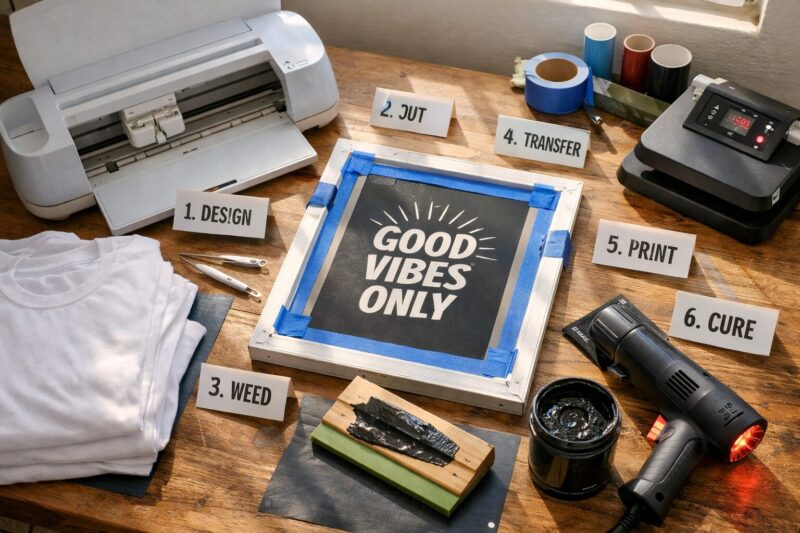
Basic Cricut workflow
- Pick a simple design
Start with bold letters, clean icons, or basic shapes. - Size the design correctly
Measure your blank item before you cut. - Choose the right material setting
Match the cut setting to vinyl, cardstock, or HTV. - Do a test cut if needed
This matters more with unfamiliar materials. - Cut the design
- Weed the excess material
- Apply transfer tape if using adhesive vinyl
- Position and burnish the design
- Peel slowly
- Press with heat if using HTV
Quick example: pantry label
- Create a text label in Design Space
- Cut permanent vinyl
- Weed extra vinyl
- Add transfer tape
- Align on clean, dry jar
- Burnish and peel
That’s one reason labels stay popular. They look polished, but the process is simple.
How much do beginner Cricut projects cost and how long do they take?
Beginner Cricut projects are usually affordable if you keep the designs small and simple. Small vinyl decals, labels, cards, and tags often use only a little material, while tote bags and mugs cost more because you also buy blanks.
What changes the cost?
- Type of material
- Size of design
- Whether you need a blank item
- Whether you make one item or a batch
Time expectations
For most beginners:
- Labels and decals: short sessions
- Cards and gift tags: short to medium sessions
- Tote bags and onesies: medium sessions
- Sticker sheets: medium sessions because print alignment adds steps
I’d keep your first project under an hour from setup to finish. Long projects can feel harder than they really are.
Good budget picks
If you want low-cost practice, choose:
- Gift tags
- Pantry labels
- Notebook decals
- Cupcake toppers
What mistakes do beginners make with Cricut projects?
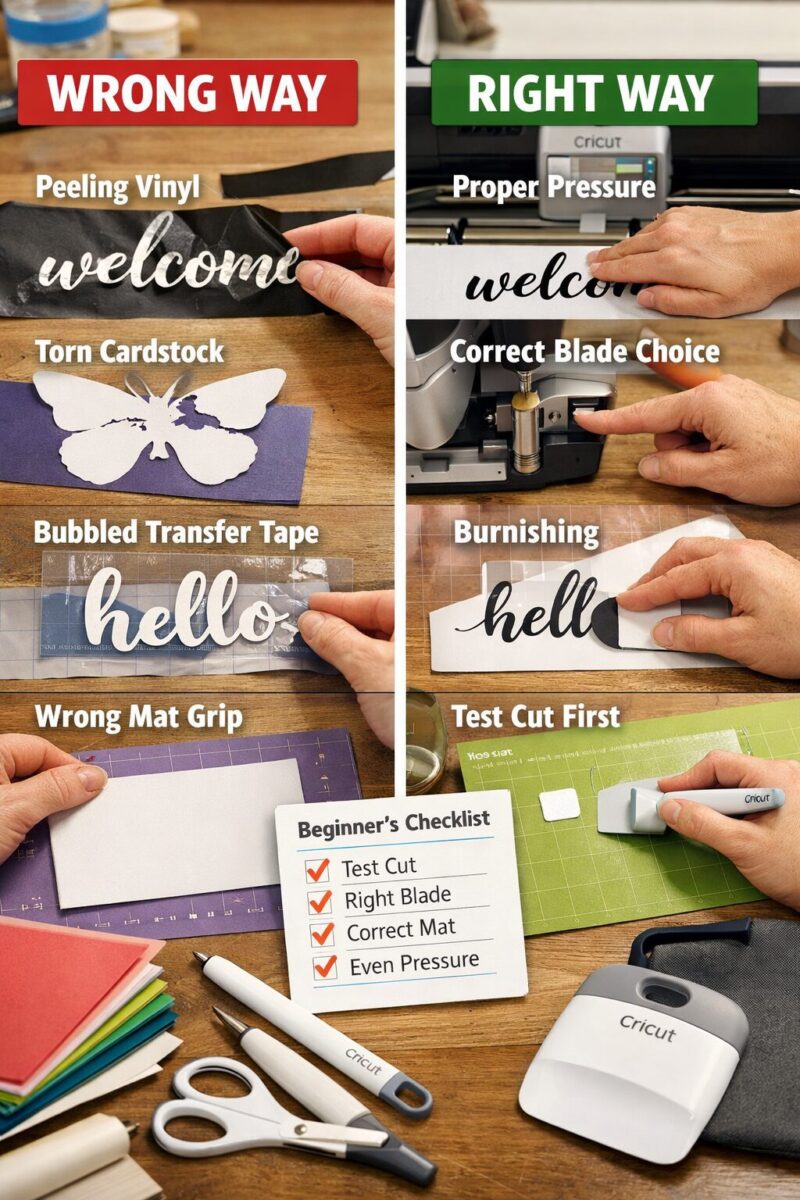
Most beginner Cricut problems come from using the wrong material setting, skipping test cuts, or choosing designs that are too detailed. The fix is usually simple: simplify the design, match the material, and slow down during transfer.
Common mistakes and fixes
- Vinyl won’t stick well
Clean the surface first and use the right vinyl type. - Cardstock tears when cutting
Use a LightGrip mat, cleaner blade, and correct setting. - HTV design looks backward
Mirror the design before cutting. - Transfer tape pulls up the whole design badly
Burnish more and peel slower at a sharp angle. - Letters look crooked
Use alignment guides or low-tack tape before final placement. - Mat won’t hold paper
Clean or replace the mat.
Edge case to watch
Curved surfaces like tumblers and mugs can be harder than they look. Start with small decals instead of large wraps because big designs wrinkle more easily.
Are these 14 Cricut projects for beginners good for gifts, selling, or home use?
Yes, many of these 14 cricut projects for beginners work well for gifts and home use, and some can also become starter products for small shops. Labels, tote bags, mugs, cards, and keychains are especially useful because they solve everyday needs and feel personal.
Best uses by project type
- For gifts: mugs, onesies, tote bags, keychains, recipe cards
- For home: pantry labels, wall decals, notebook covers
- For events: cupcake toppers, gift tags, cards
- For small-scale selling: sticker sheets, decals, keychains, tote bags
Choose carefully if selling
Choose easy repeatable items if you plan to sell. Sticker sheets and labels are easier to batch than complex layered crafts.
How do you choose the right project from these 14 Cricut projects for beginners?
Choose a project based on your material, machine confidence, and purpose. If you match the project to the skill you want to learn, you’ll improve faster and waste less material.
Simple project picker
- Want the easiest first win? Choose pantry labels.
- Want to learn transfer tape? Choose water bottle decals.
- Want to learn paper cutting? Choose greeting cards.
- Want to learn HTV? Choose a tote bag.
- Want a gift? Choose a mug or keychain.
- Want party decor? Choose cupcake toppers.
Mini checklist before starting
- Is the design one color?
- Is the surface flat?
- Is the material easy to replace?
- Can you finish it in one sitting?
If the answer is yes to most of those, it’s a good beginner project.
FAQ
What is the easiest Cricut project for a beginner?
Pantry labels are one of the easiest Cricut projects for a beginner because they use simple text, flat surfaces, and basic vinyl application.
Can beginners use Cricut without designing from scratch?
Yes, beginners can use ready-made designs or simple text in Design Space and still learn the core cutting and application skills.
Which Cricut material is easiest to start with?
Adhesive vinyl is often the easiest starting material because it cuts cleanly and works on many hard surfaces.
Is iron-on vinyl hard for beginners?
Iron-on vinyl is manageable for beginners if the design is simple and you remember to mirror it before cutting.
How do I avoid wasting vinyl?
Use small test designs, measure your blank first, and avoid intricate cuts until you’re comfortable with weeding and transfer.
What Cricut projects sell well for beginners?
Simple decals, sticker sheets, tote bags, and keychains are beginner-friendly products because they are easier to repeat consistently.
Can I make stickers with any Cricut machine?
Sticker-making depends on your machine features, especially print then cut support, so check your model before buying sticker paper.
What should I not make as my first Cricut project?
Avoid tiny layered designs, large tumbler wraps, and advanced shadow boxes as your first Cricut project because alignment and detail can be frustrating.
Conclusion
The best 14 cricut projects for beginners are the ones that teach one skill at a time and give you a quick win. If I were starting today, I’d begin with pantry labels, a notebook decal, and a simple tote bag, because those three projects cover vinyl cutting, transfer, and basic iron-on.
Your next steps are simple:
- Pick one project from this list.
- Use a one-color design.
- Match the right material to the surface.
- Do a quick test cut.
- Finish the project before moving to a harder one.
That small approach builds skill fast. Once you’ve done two or three of these beginner Cricut crafts, you’ll have the confidence to try layered designs, larger gifts, and more custom work.

A Teacher with 5 years of experience. Our Expertise, is reliable to meet your full Academic development needs . Worked on many crafts and construction projects offering services from design to development to deployment over the years. You will find many of my works in my business portfolio on request.