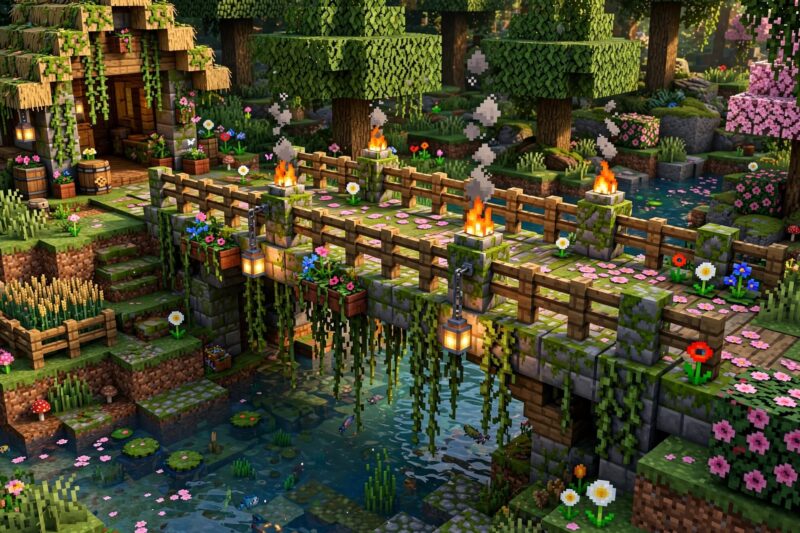

Every Minecraft world starts the same way. You spawn with nothing, the sun starts going down, and you need a safe place to sleep before zombies show up. But your first house does not have to be a boring dirt box. This list covers 12 house ideas that work for brand new players and for people who already have stacks of stone and glass sitting in a chest. Some are quick builds you can finish before your first night ends, and others are bigger projects for once you have more resources. Each one lists the blocks you need, how hard it is to build, and a simple tip that makes it look better without much extra work on your part.
Quick Answer
The best Minecraft house ideas for most players are the Survival Farmhouse, the Treehouse, and the Mountain Hobbit Hole. They are cheap to build, easy to defend from mobs, and work in almost any biome. If you want something fancier once you have more resources, a Modern Villa or a Japanese Cherry Blossom House gives your base a real style upgrade.
| House Idea | Difficulty | Best Biome |
| Starter Wood Cabin | Easy | Forest, Plains |
| Survival Farmhouse | Easy | Plains |
| Treehouse | Medium | Forest, Jungle |
| Underground Dugout | Easy | Any |
| Mountain Hobbit Hole | Medium | Mountains, Hills |
| Japanese Cherry Blossom House | Hard | Cherry Grove |
| Modern Glass Villa | Hard | Plains, Beach |
| Medieval Stone Cottage | Medium | Forest, Village |
| Desert Sandstone House | Medium | Desert |
| Snowy Taiga Chalet | Medium | Snowy Taiga |
| Overwater Beach House | Hard | Beach, Ocean |
| Mushroom Fairy House | Medium | Mushroom Fields, Forest |
Build time (in-game hours, rough estimate)
1. Starter Wood Cabin
The Starter Wood Cabin is the fastest safe house you can build on your first night. All you need is oak or spruce logs, planks, a door, and a few torches. Set your walls out as a 7×7 square, raise them four blocks high, and put a simple pitched roof on top using stairs. This shape works because it only needs one type of wood and no crafting beyond a basic set of tools.
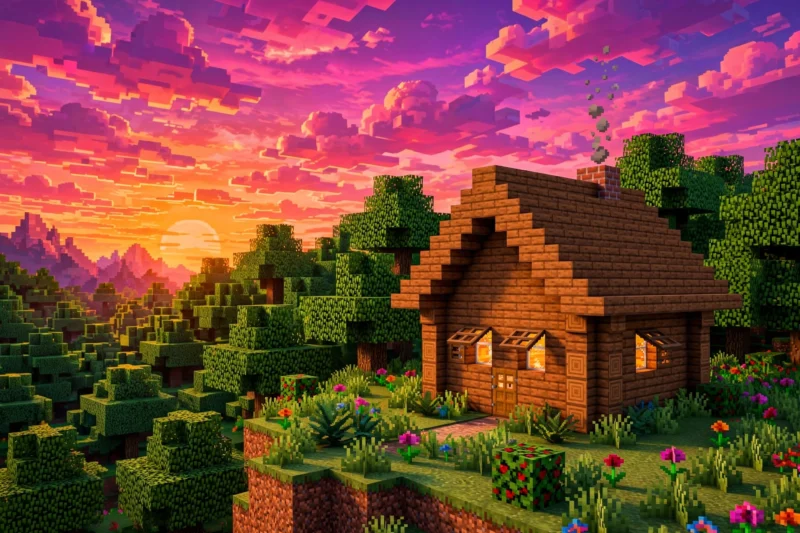
New players like this build because it uses whatever tree is closest to spawn. You do not need to explore, mine, or trade for anything special. Sportskeeda’s beginner house roundup points out that most new players only have wood and cobblestone in their inventory in the first hour, so a design that only needs logs and planks gets you indoors before dark.
The payoff is simple. A finished cabin means no zombies at your door and a bed to skip the night. Add trapdoors as shutters on your windows and a fence around a small yard, and the cabin already looks better than a plain box, even though it took less than an hour to build.
2. Survival Farmhouse
The Survival Farmhouse is a wood and stone house built right next to a small crop field, so food and shelter sit in one spot. Build the main structure with spruce logs and cobblestone, then fence off a 9×9 plot beside it for wheat, carrots, and potatoes, with water running through the middle to keep the soil wet.
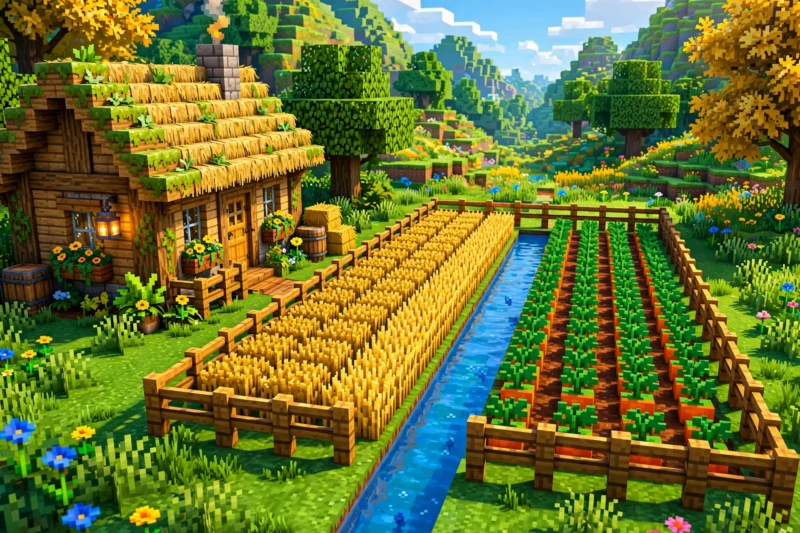
This layout works because it solves two problems at once: shelter and hunger. A recent house guide roundup lists the Survival Farmhouse as one of the top picks specifically because it comes with a built-in farm, which means you are not running back and forth across the map for food while mobs are out.
Once your farm is producing steady food, you can add a small barn or a chicken pen nearby. This is normally the second house most survival players build, right after their emergency shelter, because it turns a house into an actual base you can live off for the rest of the game.
3. Treehouse
A Treehouse is a wooden platform and cabin built up in the branches of a large tree, connected to the ground with a ladder or a spiral staircase. Pick the tallest tree you can find, clear a flat platform partway up, and build your walls from the same wood type so the house blends into the tree instead of standing out.
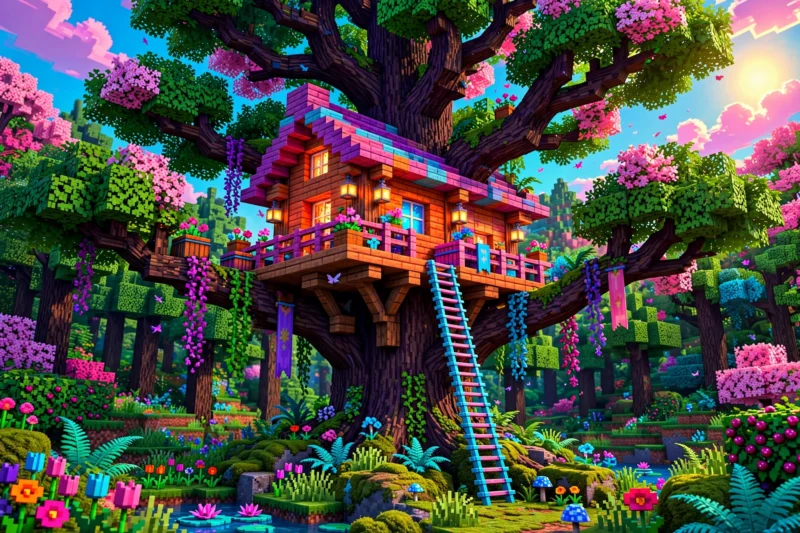
Building above the ground is one of the best ways to cut down on mob problems. Most hostile mobs cannot path up to a platform that is only reachable by ladder, so a treehouse acts like a natural mob-proof base without you needing to build walls or a moat.
The view is the other reason players like this build. From a treehouse you can see zombies and skeletons coming from a distance, which gives you time to grab a bow or just wait them out until morning. Add a rope bridge to a second tree once you want to expand.
4. Underground Dugout
An Underground Dugout is a house carved straight into a hillside or dug beneath the surface, using dirt or stone walls with a wooden door as the only entrance. Find a small hill, dig a short tunnel in, then hollow out a room big enough for a bed, a crafting table, and a furnace.
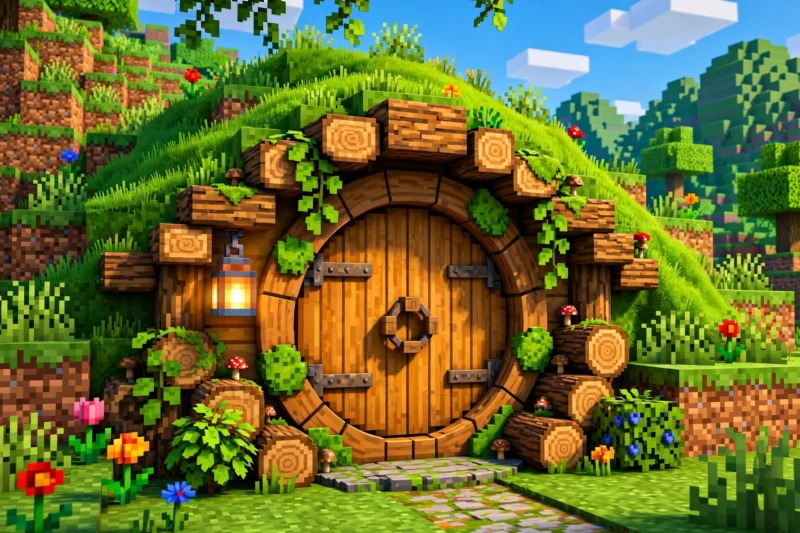
This is the fastest shelter in the whole list because it needs almost no building materials. A house-idea roundup that covers beginner builds specifically calls out dirt dugouts as needing minimal materials while still giving you a base you can expand later once you have more resources.
To keep it from feeling like a cave, add a glass panel or skylight above your crafting area so daylight gets in. Many players use the dugout as a temporary first-night shelter, then dig sideways later to connect it to a bigger base once they have proper stone tools.
5. Mountain Hobbit Hole
The Mountain Hobbit Hole is a round wooden door built straight into a hillside, with a stone or dirt exterior that makes the house look like it grows out of the mountain. Dig into a hill, frame the doorway with logs and a fence gate turned sideways to fake a round shape, then hollow out rooms behind it.
Sportskeeda’s list of traditional house designs lists spruce, dark oak, and birch as the main wood types for this build, paired with stone bricks for the base structure. The mix of wood trim against stone gives the entrance a warm, cozy look instead of a plain hole in a hill.
Because most of the house sits inside the mountain, it is naturally protected from mobs and weather. This design also saves you from needing a roof, since the mountain itself covers the whole structure. It is a good pick if you are already living near hills or mountains.
6. Japanese Cherry Blossom House
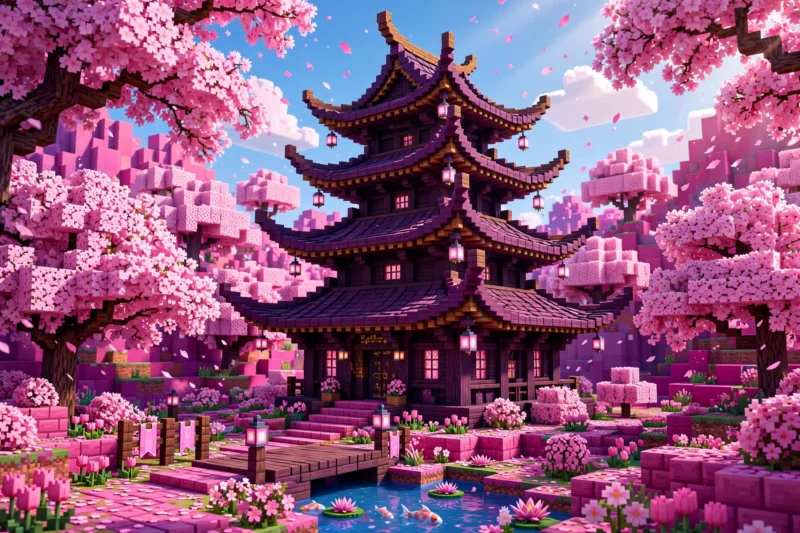
The Japanese Cherry Blossom House uses dark wood beams, paper-style white walls made from white concrete or quartz, and a curved roof shape, usually built near or inside a Cherry Grove biome. Frame the structure with dark oak logs, fill the walls with light blocks, and stack stairs in layers to fake the curved pagoda roofline.
This style has become one of the most requested looks in the building community. A roundup of coolest house ideas specifically calls Japanese-themed builds a popular choice for players who want a calm, tranquil home and like cherry blossom trees or Japanese architecture, and notes bigger versions of the build can include multiple bedrooms and storage rooms.
The pink cherry blossom leaves against the dark wood beams give this house a strong color contrast without needing rare blocks. If you cannot find a Cherry Grove biome naturally, you can plant cherry saplings around a regular house to get a similar effect.
7. Modern Glass Villa
A Modern Glass Villa is a flat-roofed house built from white or gray concrete with large glass window walls, usually shaped in clean straight lines instead of a pitched roof. Frame the walls in quartz or smooth concrete, cut in oversized glass panels, and finish the roof flat with a small lip of stairs around the edge.
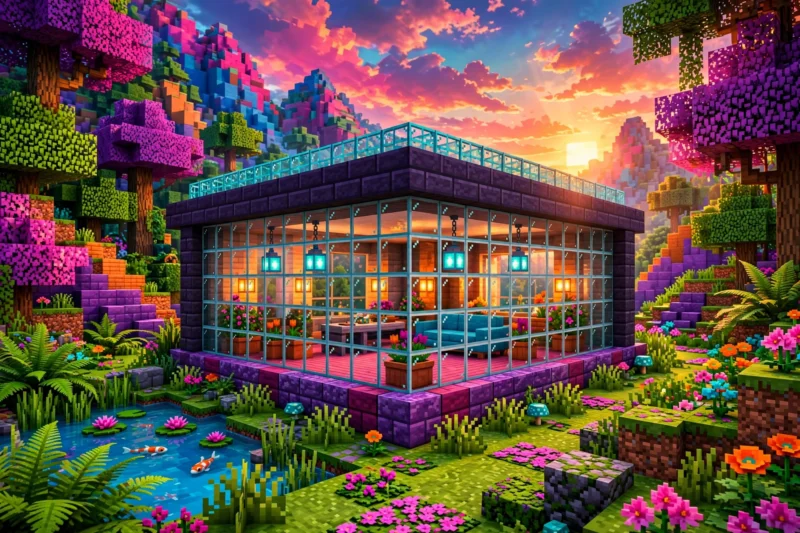
This build takes more resources than the wood cabin builds on this list, since concrete needs sand, gravel, and dye, and glass needs sand smelted in a furnace. A building guide focused on style categories groups modern builds as sleek contemporary designs with clean lines, glass walls, and minimalist architecture, which is exactly the look you get once the concrete and glass are in place.
The same guide warns that a white modern villa looks great on a flat plains shore but wrong jammed into a snowy taiga, so pick an open, flat spot near water or plains before you start. That single choice of location makes or breaks how good the finished villa looks.
8. Medieval Stone Cottage
The Medieval Stone Cottage mixes cobblestone or stone brick walls with dark wood beams and a steep thatched-look roof, usually made from stairs in a warm color like orange or brown. Build the base out of stone, add exposed timber framing on the outside walls, and cap it with a tall, steep roof to get the classic village look.
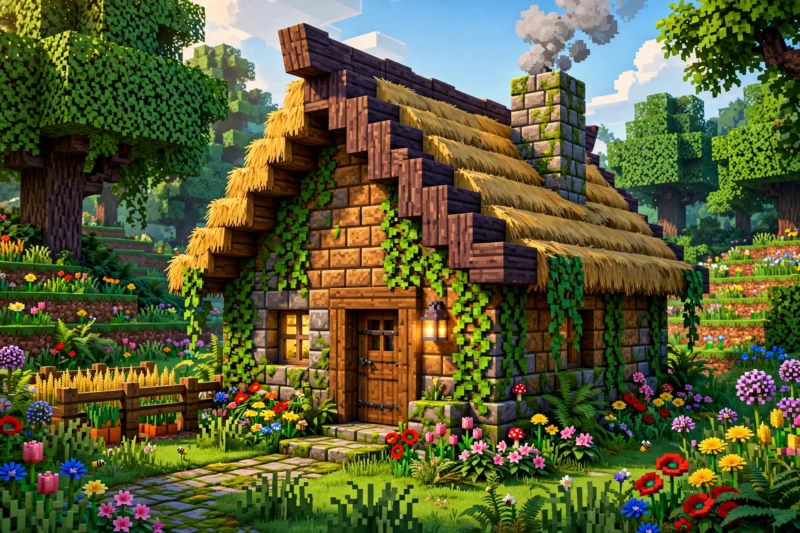
This style is one of the most common categories in Minecraft building guides because it fits naturally next to villager villages, which already use a similar mix of stone and wood. A style breakdown of medieval builds describes them as classic medieval village homes, keeps, and stone structures, which makes the cottage feel like it belongs even if you drop it into an existing village.
Add a small chimney with a fence post and a lantern, plus a wood plank fence around a tiny garden, and the cottage looks finished without much extra effort. This is a solid middle-ground build for players who have moved past their starter cabin but are not ready for a full castle.
9. Desert Sandstone House
The Desert Sandstone House uses sandstone and cut sandstone blocks for the walls, with a flat roof and small window openings to fit the hot, dry desert setting. Build the walls in layered sandstone, cut in narrow windows instead of large glass panels, and keep the roof flat since deserts rarely need steep angles for snow.
This design works because it uses the exact material the biome hands you for free. A building style guide points out that before you start any build, you should look at the blocks your biome gives you, and desert biomes are full of sand and sandstone, which means you barely need to travel to gather what you need.
Small window openings also keep out the heat and give the house a fortress-like look. Add a small oasis with a water source and a few acacia trees nearby, and the house looks like it was built by people who actually live in the desert rather than dropped in from a different biome.
10. Snowy Taiga Chalet
The Snowy Taiga Chalet is a dark spruce wood cabin with a steep snow-covered roof, built to match the cold, tree-covered biome it sits in. Use spruce logs for the frame, spruce planks for the walls, and a steep A-frame roof made from stairs so snow does not pile up and glitch through the blocks.
Matching your house material to your biome is one of the most repeated tips in building guides, and a snowy taiga is one of the clearest examples, since spruce trees already grow there naturally and match the cold color palette of gray stone and white snow.
Add a small covered porch and a stack of firewood logs by the front door for a lived-in look. A stone chimney with smoke particles from a campfire block is a small touch that makes the whole chalet feel warm against the snow around it.
11. Overwater Beach House
The Overwater Beach House sits on wooden stilts above shallow ocean or beach water, connected to shore with a long dock made from planks and fences as railings. Place support posts down into the seabed, build a flat platform on top, then frame the house with light wood and lots of windows to catch the ocean view.
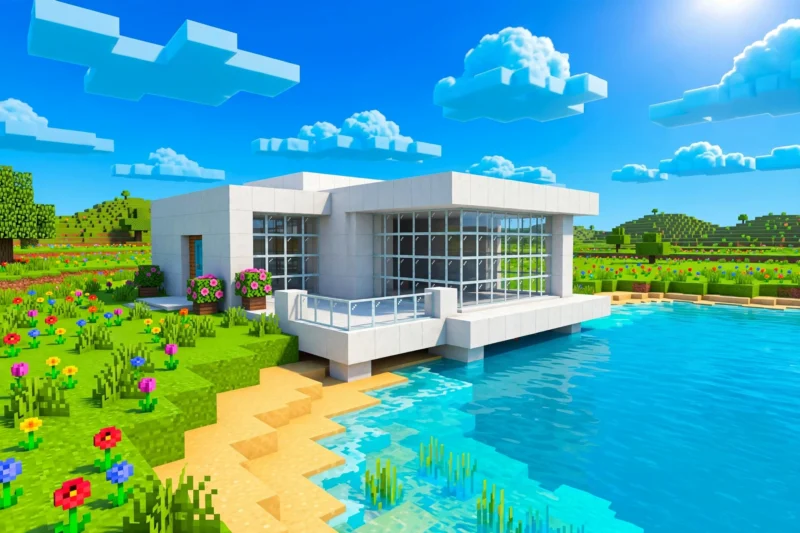
This is one of the more resource-heavy builds on the list because it needs enough wood for both the stilts and the dock, plus glass for all the windows. A house idea guide notes that if you are willing to gather more material, you can even build an underwater house as a more extreme version of this same water-based idea.
The dock connecting your house to land is a good spot for a small boat and a fishing platform. Because the house sits over water, most land mobs cannot reach it, which makes it one of the safer advanced builds on this list even without extra fencing.
12. Mushroom Fairy House
The Mushroom Fairy House uses giant red or brown mushroom blocks shaped into a curved cap roof over a small round base, giving the house a whimsical, storybook look. Build a short cylinder base from wood or stone, then cap it with mushroom blocks shaped into a dome, using stripped logs as the stem-like support underneath.
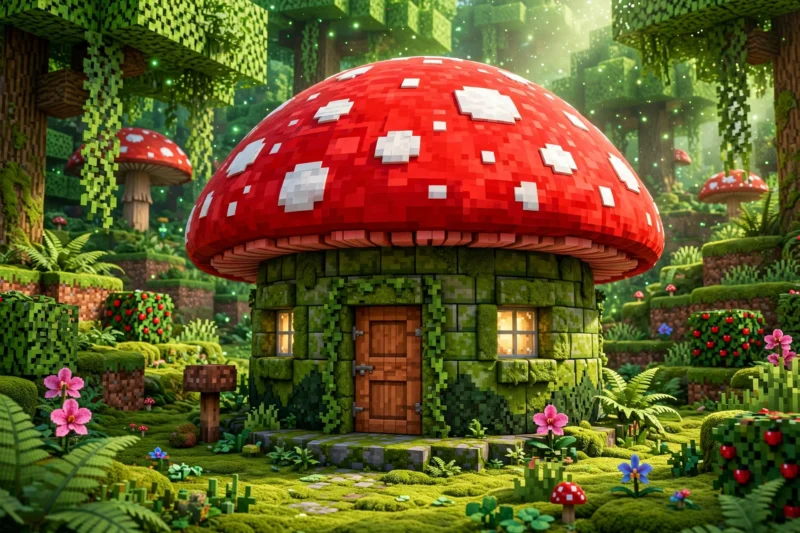
A style guide covering fantasy builds groups mushroom houses alongside hobbit holes and other whimsical structures, describing them as magical, enchanted-feeling homes rather than practical survival bases. That fantasy feel is exactly why players build them, even though mushroom blocks take some farming to gather in bulk.
Small round windows and a curved wooden door finish the look. This build works best as a second or third house once you already have a proper survival base, since it leans more toward decoration than defense or storage space.
How do you build a Minecraft house step by step?
You build a Minecraft house by picking a flat spot, marking the outline, raising the walls, adding a roof, and then lighting the inside so mobs cannot spawn. Here is the basic order most builders follow, no matter which style from this list you pick.
- Pick a flat area near water and trees so you have easy access to wood and drinking supplies.
- Mark the outline of your house on the ground using a different block than your main material.
- Build the corner posts first, then fill in the walls between them.
- Cut in door and window openings before you close up the walls completely.
- Add a roof shape that matches your style, flat for modern builds, steep for cabins and chalets.
- Place torches or lanterns inside and around the house so hostile mobs cannot spawn near it.
- Add small details last, like flower pots, item frames, or a fence yard, to finish the look.
FAQ
What is the easiest Minecraft house to build?
The Starter Wood Cabin and the Underground Dugout are the easiest builds on this list. Both only need basic wood or dirt, so a brand new player can finish either one before the first night ends.
What size should a starter Minecraft house be?
A good starter house is around 7×7 blocks with 4-block high walls. That size is small enough to build fast but big enough to fit a bed, a crafting table, and a furnace without feeling cramped.
Which biome is best for a Minecraft house?
Plains and forest biomes are the easiest for a first house since they give you flat ground and plenty of wood. More advanced builds usually pick a biome that matches their style, like a taiga for a snowy chalet or a desert for a sandstone house.
Do Minecraft house designs work on both Java and Bedrock Edition?
Yes, every design on this list works on both Java Edition and Bedrock Edition, including PC, PlayStation, Xbox, Nintendo Switch, and Mobile. Block names are the same across editions, so the same steps apply no matter which version you play.
How do I stop my Minecraft house from clashing with the biome around it?
Check what blocks your biome naturally gives you before you start building. A white modern villa looks great on a flat plains shore but looks out of place jammed into a snowy taiga, so match your material choice to the landscape around you.
References
- Beebom, “25 Best Minecraft House Ideas (Easy, Survival, Modern and More)” (2026)
- NameHero, “The Coolest Minecraft House Ideas to Build In 2026” (2026)
- Plarium, “67 Creative Minecraft House Ideas for 2026” (2026)
- Playbattlesquare, “Minecraft House Ideas: 50+ Creative Builds to Transform Your World in 2026” (2026)
- BuildingGuide.app, “50+ Minecraft House Ideas 2026 (Step-by-Step) Building Guide for Minecraft” (2026)
- Sportskeeda, “40 best Minecraft house ideas in June 2025” (2025

A Teacher with 5 years of experience. Our Expertise, is reliable to meet your full Academic development needs . Worked on many crafts and construction projects offering services from design to development to deployment over the years. You will find many of my works in my business portfolio on request.