
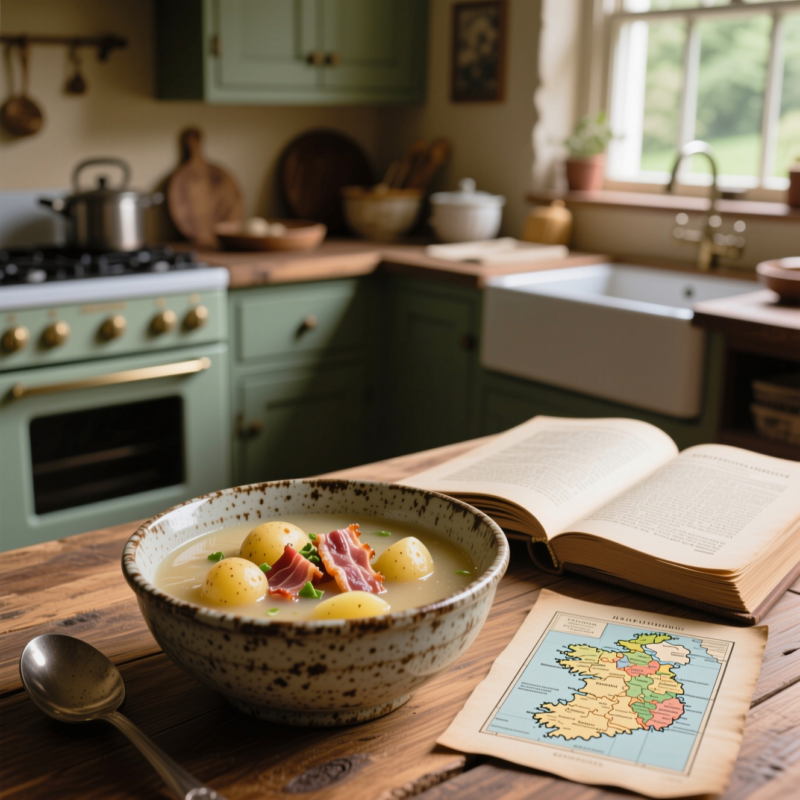

Irish potato and bacon soup is the kind of comfort food that tastes like home on a cold day. When I need something hearty, simple, and deeply satisfying, this is the recipe I reach for first.
Potatoes, bacon, and a creamy finish come together in a way that feels both rustic and reassuring. It also stretches pantry staples into a full meal, which is great when you want big flavor without a lot of fuss. If you’re cooking for family, meal-prepping, or planning a cozy St. Patrick’s Day dinner, this soup fits beautifully. Best of all, you can keep it traditional and minimal, or customize it with cabbage, cheddar, or even Guinness for extra depth. Let’s make it the easiest, most delicious way so you can serve a bowl everyone asks for again.
Key Takeaways
- Irish potato soup is built around simple core ingredients: potato, onion, butter, stock, cream, salt, and pepper.
- Bacon is a key flavor-maker; cook it until evenly browned (about 10 minutes) before adding it to the soup.
- The best texture is usually a mix of creamy and chunky: lightly blend part of the soup and keep tender potato cubes.
- You can finish with heavy cream for richness, then adjust thickness to your liking.
- This soup is naturally meal-prep friendly and often yields about 8 servings, making scaling easy.
Quick Answer
To make Irish Potato and Bacon Soup, cook bacon until evenly browned, sauté onion in butter, add diced potatoes and stock, simmer until potatoes are tender, then lightly blend part of the soup for creaminess. Stir in heavy cream, season with salt and pepper, and serve hot with optional toppings like shredded cheddar or fresh herbs.
What You Need
| Item | Purpose | Notes |
|---|---|---|
| Bacon | Adds savory, smoky flavor | Cook until evenly browned, about 10 minutes |
| Potatoes (Yukon Gold or similar) | Main body of the soup | Dice into even cubes for even cooking |
| Yellow onion | Builds aroma and sweetness | Sauté in butter for a flavorful base |
| Butter | Creates a rich foundation | Use to sauté onion and start flavor |
| Stock (chicken or vegetable) | Liquid base | Use enough to cover potatoes comfortably |
| Heavy cream | Finishing richness | Stir in at the end for best texture |
| Salt | Controls seasoning | Add gradually and taste as you go |
| Black pepper | Adds warmth | Freshly ground tastes extra good |
| Optional: cabbage | Adds texture and a classic Irish twist | Chop and simmer until tender |
| Optional: cheddar cheese | Makes it extra savory | Stir in near the end until melty |
| Optional: Guinness | Adds deep, slightly roasted flavor | Add with stock and simmer gently |
Step 1: Know where this soup comes from
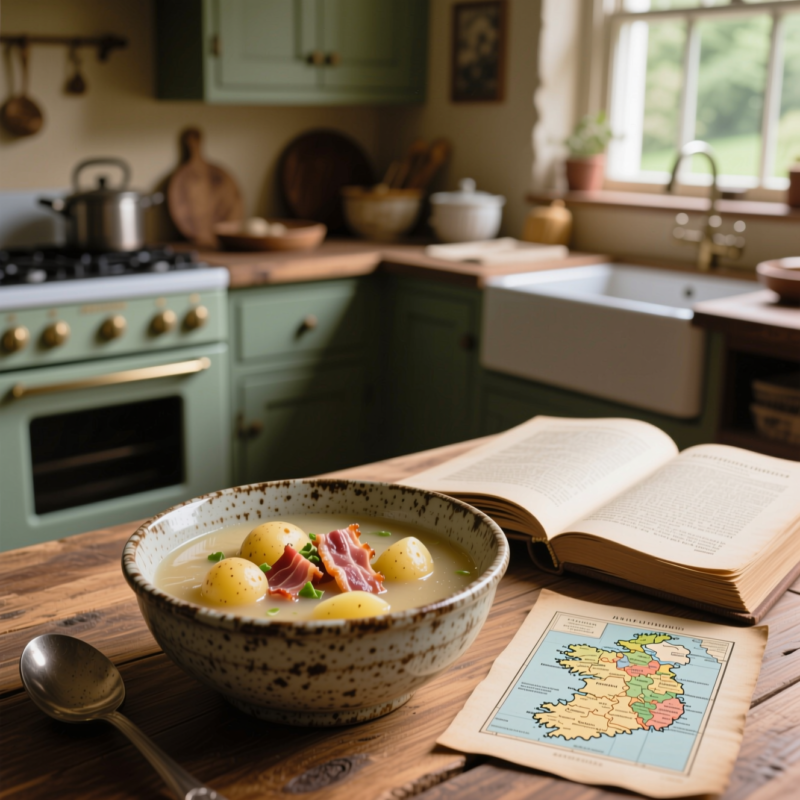
Irish potato soup is rooted in rural Ireland, where potatoes were a staple and meals often relied on what people could grow locally. Research from Irish-American home cooks and recipe histories points out that traditional versions keep ingredients limited to what was available, especially potatoes and onions, with dairy and stock used to make it creamy and filling. For example, IrishAmericanMom highlights how simple traditional Irish potato soup can be with a small set of core ingredients.
What matters for you today is this: because the foundation is so simple, the flavor payoff is all about technique. The bacon browning, the simmer time, and the texture (creamy with chunky potato pieces) are what make it taste right.
Step 2: Gather your core ingredients (and decide your style)
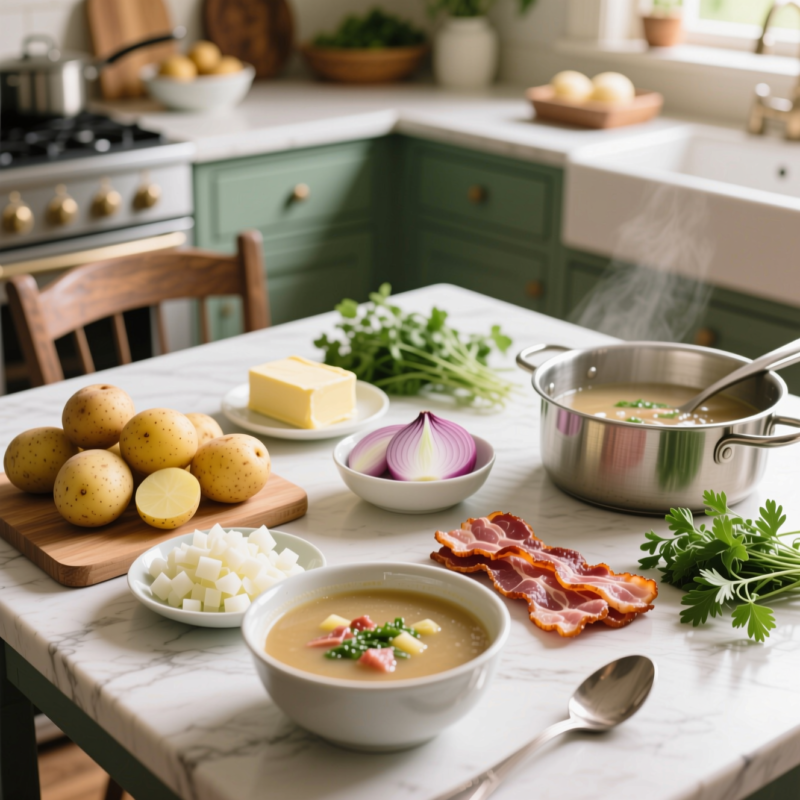
A traditional Irish potato soup tends to use seven core ingredients: potato, onion, butter, stock, cream, salt, and pepper. That simple ingredient list is echoed in sources like IrishAmericanMom, which emphasizes just those basics for an “easy” traditional approach.
Before you start cooking, choose your style:
- Traditional and simple: stick to the core seven, maybe with extra black pepper.
- Chunky and creamy balance: lightly blend part of the soup, keeping potato cubes intact.
- Modern comfort upgrade: add cabbage, cheddar, and sometimes Guinness for a deeper flavor.
According to Allrecipes’ Irish potato soup recipe, bacon is cooked first in a deep skillet, then incorporated into the soup for a strong savory base. That step is a big deal for flavor.
Quick ingredient tip
- Try Yukon Gold or a similar yellow potato for a creamy texture.
- Dice potatoes into even cubes so they all get tender at the same time.
Step 3: Cook and brown the bacon
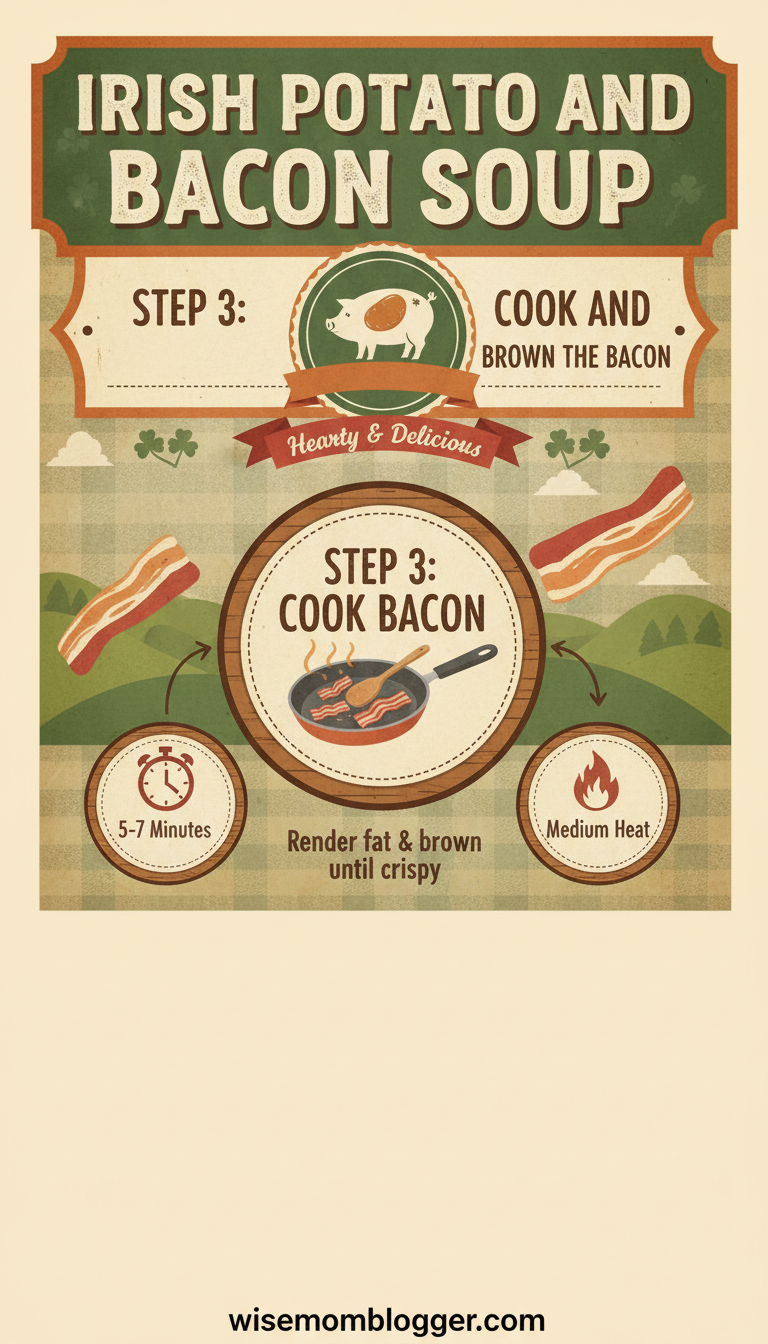
Set a large, deep skillet (or pot) over medium-high heat. Place the bacon in the pan and cook until it’s evenly browned, typically about 10 minutes, stirring occasionally. This timing and technique shows up clearly in Allrecipes’ instructions for browning the bacon before it goes into the soup.
Once it’s nicely browned:
- Remove some bacon bits for topping (optional).
- Leave the rest in the pan so those browned bits and rendered fat flavor the rest of the soup.
Why you’ll love this step: bacon that’s just browned tastes richer and less “greasy,” which keeps your soup tasting clean and hearty.
Step 4: Build the flavor base with butter and onions

Add butter to your pot (or use the bacon-rendered fat plus butter if you want extra flavor). Sauté diced or sliced onions until they turn soft and slightly translucent. This is where the soup starts to smell like a real comfort meal.
You’re aiming for tender onions, not deep browning. Over-browning can make onions taste sharper instead of sweet.
As you stir, scrape up any browned bits from the pan. Those bits are flavor you do not want to waste.
Step 5: Simmer the potatoes until tender

Add your diced potatoes to the pot, then pour in stock until the potatoes are covered by liquid (or nearly covered, depending on your preference for thickness).
Bring it to a gentle boil, then reduce to a simmer and cook until the potatoes are tender.
Here’s the texture trick:
- Keep simmering only until the potatoes are soft enough to break easily.
- If you cook them too far, they can turn the whole soup mushy instead of chunky.
Many home-style recipes lean into a “comfort creamy” approach by using potatoes as the thickening body and finishing with cream. For example, SoupAddict specifically describes a balance between creamy and chunky textures and even notes a lightly blended base with plenty of tender potato cubes.
Step 6: Create the creamy-chunky texture (light blending)
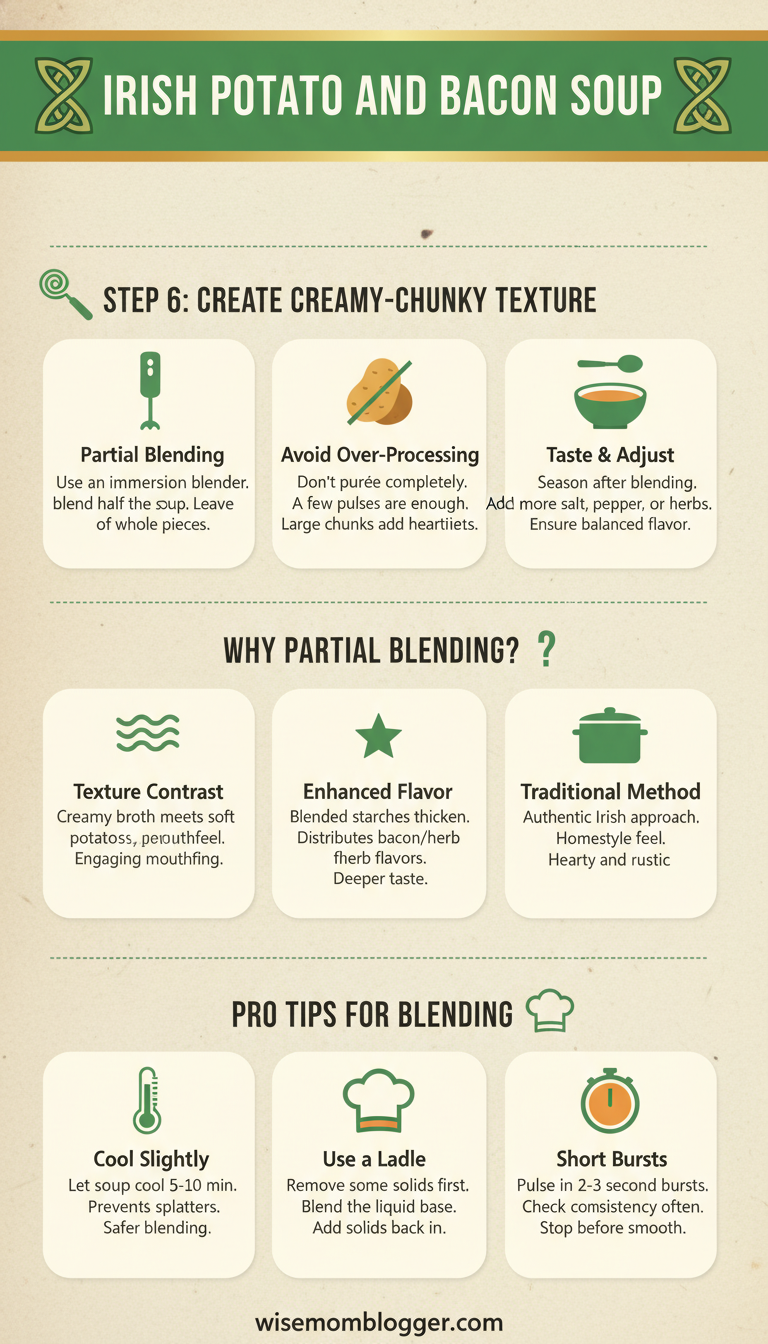
Now for the part that makes this soup special.
You’ll create a creamy base without losing the hearty potato texture:
- Use a ladle to scoop out a portion of the soup.
- Blend it until smooth.
- Stir the blended portion back into the pot.
Then add any potato cubes you want to keep extra chunky by leaving the rest of the soup unblended.
This “lightly blended base” idea is emphasized in sources like SoupAddict, which focuses on creamy-with-chunks consistency and rich finishing notes. If you love a thicker, creamier soup, blend a bit more. If you prefer it rustic and spoonable, blend a bit less.
Step 7: Finish with heavy cream and season to taste
Lower the heat so the soup doesn’t boil aggressively. Stir in heavy cream and let it warm through gently.
Then taste and season with:
- salt
- black pepper
Add salt gradually. Bacon and stock can already bring saltiness, so you want to balance instead of overshooting.
Analida’s Ethnic Spoon describes a traditional-style approach and highlights that potato soup can be adapted while still keeping the core comfort feel. This is also the best time to adjust your thickness:
- If it’s too thick, add a splash of stock or hot water.
- If it’s too thin, simmer a bit longer to reduce.
Step 8: Add optional upgrades (cabbage, cheddar, Guinness)
If you want to level up your soup, these add-ins are popular and easy:
- Cabbage: Chop and add it during the simmer phase so it turns tender. Cooking Chat includes cabbage in its Irish potato soup with bacon and cheddar ideas, which gives a more textured bite.
- Cheddar cheese: Stir in near the end, lower heat, so it melts smoothly.
- Guinness: If you like a deeper roasted flavor, add Guinness with the stock and simmer gently. Cooking Chat notes Guinness as part of a richer flavor profile.
Want my practical take? Keep the upgrade that matches your mood:
- Want “classic cozy”? add cabbage.
- Want “cheesy indulgent”? add cheddar.
- Want “bold and Irish-inspired”? add Guinness.
Step 9: Serve it right (and make it even better)
Ladle soup into bowls while it’s hot and creamy. If you saved extra bacon bits, sprinkle them on top for crunch and extra flavor.
Optional serving ideas:
- shredded cheddar (if you didn’t already add it)
- chopped green onion or parsley
- extra black pepper
SoupAddict describes this kind of hearty, soul-warming bowl that feels like pantry basics turned into a meaningful meal, which is exactly why it works so well for weeknights and holidays alike.
If you want to impress without extra work, warm your bowls first. It keeps the soup from cooling too fast, especially if you’re feeding a group.
Step 10: Plan for leftovers and scaling
A typical Irish potato and bacon soup recipe often yields about 8 servings, which is convenient for feeding a family or having leftovers for lunches. When scaling up or down, remember:
- Keep the potato-to-liquid ratio similar so the soup thickens the same way.
- Adjust seasoning after scaling, since bacon and stock contribute salt differently each time.
Meal-prep strategy
- Store soup in airtight containers in the fridge.
- Reheat gently on the stovetop or microwave, stirring to keep the texture even.
- If it thickens too much after cooling, add a splash of stock while reheating.
Tips
- Dice potatoes evenly for consistent tenderness.
- Don’t rush the bacon browning. Even browning (about 10 minutes) gives deeper flavor.
- Blend lightly for creamy texture without losing the chunky soul of the soup.
- Add cream at the end and warm gently to avoid a grainy texture.
- Season at least twice: once after the potatoes simmer and again after you add cream.
- Choose your thickening method: potatoes naturally thicken, while blending lets you steer how creamy you want it.
- If you add cabbage, simmer until tender but still pleasantly bitey, not falling apart.
FAQ
Can I make Irish potato and bacon soup without heavy cream?
Yes. You can substitute with a dairy-free creamer or a lighter milk, but the soup will be less rich and less creamy. If you skip cream entirely, blending more of the soup (instead of relying on cream) helps keep it satisfying. Keep in mind that bacon and stock still add a lot of body and flavor.
What kind of potatoes are best for this recipe?
Yellow potatoes like Yukon Gold work great because they tend to stay tender and contribute a creamy texture when simmered. Dice them into similar-sized cubes so they cook evenly.
How do I prevent the soup from getting too thick?
Start by adding enough stock to nearly cover the potatoes. After blending, check the thickness and adjust with additional hot stock if needed. If leftovers thicken, stir in liquid during reheating.
Can I use turkey bacon or a lower-fat option?
You can, but expect flavor differences. Turkey bacon browns differently and may not render as much fat. You may want to add a little extra butter for the sauté step, since butter plus sautéed onion creates the classic base flavor.
How long does it keep in the fridge?
In general, cooked soups keep well in the refrigerator for several days. For best quality, reheat until steaming hot and store in sealed containers. If it smells off or tastes sour, discard it.
Is Guinness necessary?
No. Guinness is optional for a deeper, roasted flavor, and it’s only needed if you want that extra Irish-inspired complexity. If you prefer a classic version, stick to stock and cream, and let the potatoes and bacon do the heavy lifting.
Latest Updates or ## 2026 Trends
In recent years, a clear “comfort classics with modern flexibility” trend has stayed strong in home cooking: people want traditional flavors but also enjoy customizing textures and depth with add-ins like cabbage, cheese, and Guinness. That lines up with how modern Irish potato soup variations are presented in many home recipe sources, where the base stays potato-forward while toppings and flavor boosters help you personalize the bowl.
For you, the practical takeaway in 2026 is simple: keep the core method the same, then swap one add-in at a time so you can control what you taste most.
Conclusion
Irish potato and bacon soup is one of those recipes that just makes sense: potatoes thicken naturally, bacon brings savory depth, and cream makes it feel extra cozy. The best part is that it’s flexible. You can keep it close to traditional Irish potato soup with core ingredients like potato, onion, butter, stock, cream, salt, and pepper, or you can make it more modern with cabbage, cheddar, or Guinness.
If you follow the method—brown the bacon well, simmer until tender, blend lightly for creamy-chunky texture, then finish with cream and season carefully—you’ll end up with a bowl that feels like comfort food heritage. Make it once, and you’ll probably find yourself craving it again when the weather turns chilly.
References
- Allrecipes. (n.d.). Irish Potato Soup Recipe. Allrecipes. https://www.allrecipes.com/recipe/213398/irish-potato-soup/
- SoupAddict. (n.d.). Irish Potato Soup. SoupAddict. https://soupaddict.com/irish-potato-soup/
- Cooking Chat. (n.d.). Irish Potato Soup Recipe with Bacon and Cabbage. Cooking Chat. https://cookingchatfood.com/irish-potato-cabbage-soup/
- IrishAmericanMom. (n.d.). Traditional Irish Potato Soup. IrishAmericanMom. https://www.irishamericanmom.com/traditional-irish-potato-soup/
- Analida’s Ethnic Spoon. (n.d.). Irish Potato Soup – Traditional Creamy Soup Recipe. Analida’s Ethnic Spoon. https://ethnicspoon.com/irish-potato-soup-recipe/

A Teacher with 5 years of experience. Our Expertise, is reliable to meet your full Academic development needs . Worked on many crafts and construction projects offering services from design to development to deployment over the years. You will find many of my works in my business portfolio on request.