
Quick answer: Small pantry organization works best when you maximize vertical space, use the back of the door, and swap round containers for rectangular ones that fit tighter together. Zoning by category and doing a monthly reset also keeps a tiny pantry from sliding back into clutter.
A small pantry does not have to mean a cramped, chaotic one. Reach in closets and narrow cabinets can hold just as much as a bigger space once you use the right tricks for tight square footage. This guide covers 12 small pantry organization tips that make the most of every shelf, corner, and door, no matter how little room you are working with.
| Small Space Factor | Best Approach |
| Vertical space | Standard |
| Door space | Standard |
| Container shape | Rectangular preferred |
| Custom shelving install | Higher investment |
| Monthly maintenance reset | Standard |
| Tip | Best For |
| Remove original packaging | Dry goods |
| Use shelf risers | Canned goods |
| Mount a door rack | Small items |
| Zone by category | Whole pantry |
| Add a step stool | Tall pantries |
| Use turntables in corners | Awkward corners |
| Label overstock bins | Backstock |
| Choose rectangular containers | Shelf storage |
| Hide bulky appliances | Small kitchens |
| Replace wire shelving | Higher budget |
| Keep a chip clip system | Bagged snacks |
| Set expiration reminders | Whole pantry |
Where Small Pantries Lose the Most Space
Unused door
space
Wasted
corners
Air gaps
between round bins
What is the single biggest mistake in a small pantry?
The biggest mistake is only using the shelves and ignoring every other surface in the space, especially the back of the door. That single panel is one of the most overlooked storage opportunities in a small pantry, and skipping it means giving up a meaningful amount of potential storage before you even start.
A heavy duty rack mounted to the door interior can hold spice jars, small bottles, or snack packets, freeing up your main shelves for bulkier items like bins and appliances. This one change alone often does more for a tight pantry than rearranging the shelves themselves.
The second most common mistake is sticking with round containers out of habit. Round shapes leave gaps between each container that add up fast on a narrow shelf, while rectangular containers sit flush against each other and use the same footprint far more efficiently.
Is it worth replacing wire shelving in a small pantry?
It can be, especially if your builder grade wire shelving is bowing under weight or letting small items fall through the gaps. Solid shelving or track shelving tends to be more practical for a small reach in pantry, since it gives you a flat, stable surface for containers of any size.
That said, this upgrade is not required to get organized. Plenty of small pantries stay perfectly functional with their original wire shelving, especially once you add the right containers and door storage. Treat a shelving swap as a nice to have improvement rather than a first step.
If cost is a concern, inexpensive track shelving is a middle ground worth considering before jumping to a full custom install. It costs less than built in cabinetry but still solves the sagging and gap issues that come with standard wire shelves.
What are the best small pantry organization tips?
The best small pantry tips focus on space you are currently wasting, like doors, corners, and vertical clearance, rather than trying to force more storage out of your existing shelves alone. Below are 12 tips to help you get more out of even the tightest closet.
1. Remove original packaging
Cardboard boxes waste a surprising amount of volume in a slender cabinet, so remove all original packaging and decant contents into slim, uniform containers instead. This single habit change frees up real shelf space almost immediately, since boxes are rarely shaped efficiently for tight storage to begin with. It also gives you a visual inventory of exactly what you have on hand, which helps prevent overbuying duplicate items at the store. If a full bag will not fit into a container, secure it with a sturdy chip clip and store it in a labeled basket instead of leaving it loose.

2. Use shelf risers
Add tiered shelf risers to create multiple levels on a single shelf, so shorter items sit in front while taller items stay visible just behind them instead of hiding completely out of sight. This trick maximizes vertical space without requiring any permanent changes to your pantry, making it one of the easiest upgrades on this entire list. Canned goods in particular benefit from risers, since every label stays visible instead of just the front row. Risers also reduce the need to move items around just to see what is stored behind them.

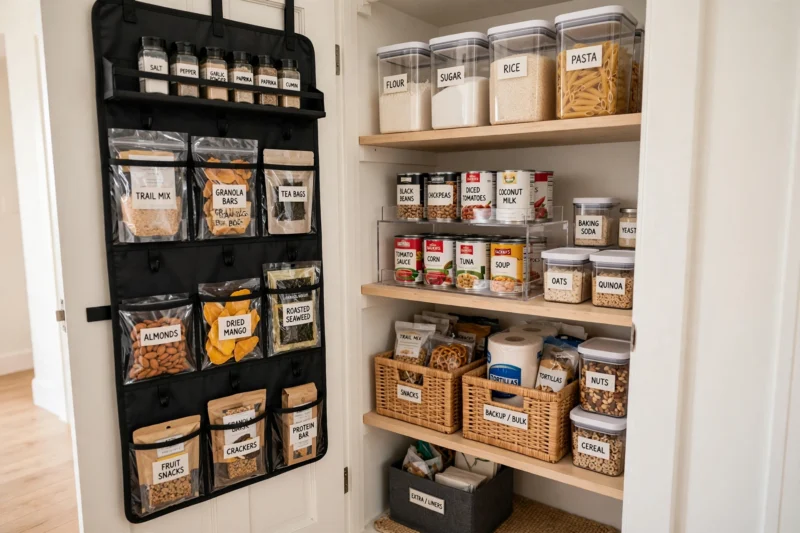
3. Mount a door rack
Install a heavy duty wire or metal rack on the inside of your pantry door to unlock storage space that most small pantries never use at all. Spice jars, condiment bottles, cleaning supplies, or small snack packets all work well here, freeing your interior shelves for larger items like bins and appliances. This is often the single highest impact change you can make in a small space, since it adds an entirely new storage surface without shrinking the room itself. Just measure the depth of the rack against your shelf spacing first to make sure the door still closes properly once loaded.
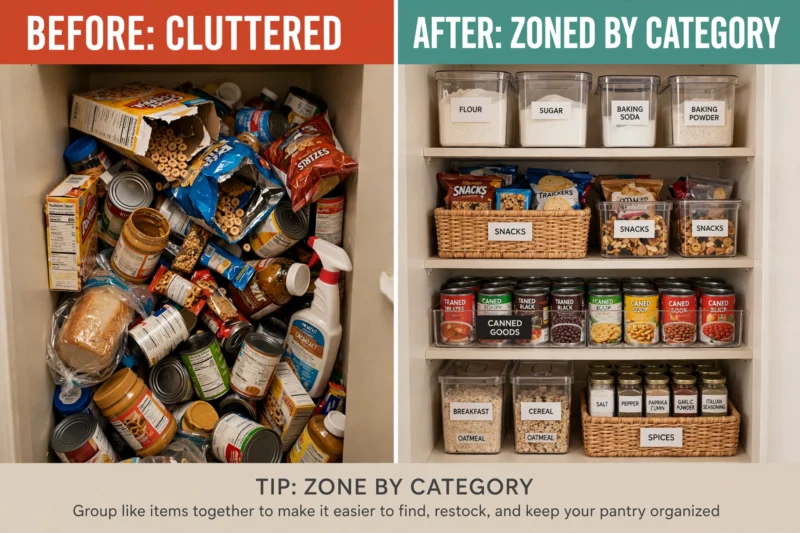
4. Zone by category
Group items by category, like baking, snacks, canned goods, and breakfast, so everything has one defined home instead of ending up wherever there happened to be room. Zoning is especially important in a small pantry, since a tiny space with no system gets messy far faster than a larger one would. Once zones are set, it becomes obvious what needs a dedicated container or bin and what can share space with something else. This approach also makes restocking groceries faster, since you already know exactly where each new item belongs before you even open the pantry door.

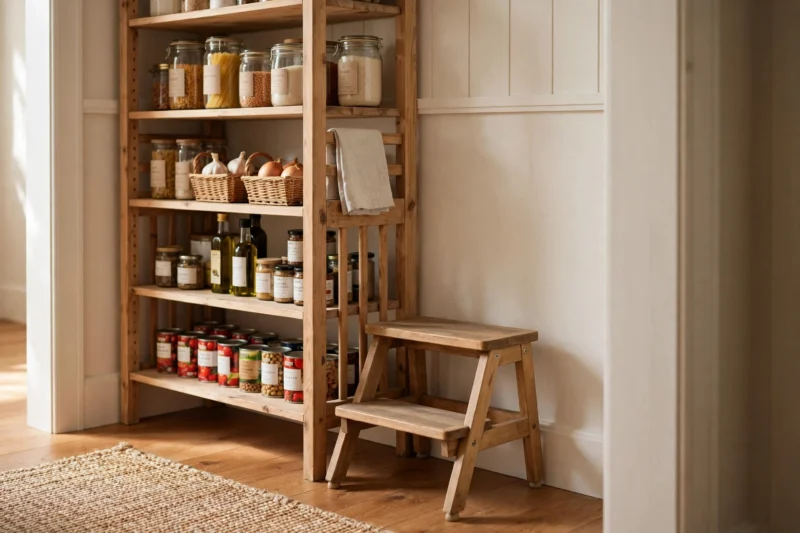
5. Add a step stool
Keep a sturdy, easily accessible step stool nearby if your small pantry has any tall or narrow vertical shelving, since a tight footprint often means building storage upward rather than outward. High shelves that are hard to reach tend to get ignored over time, which wastes valuable space that a stool would make instantly usable again. Choose a stool that folds flat or slides easily under a shelf so it does not take up permanent floor space itself. This tip pairs especially well with narrow closet pantries that rely heavily on their top shelves for overflow storage.
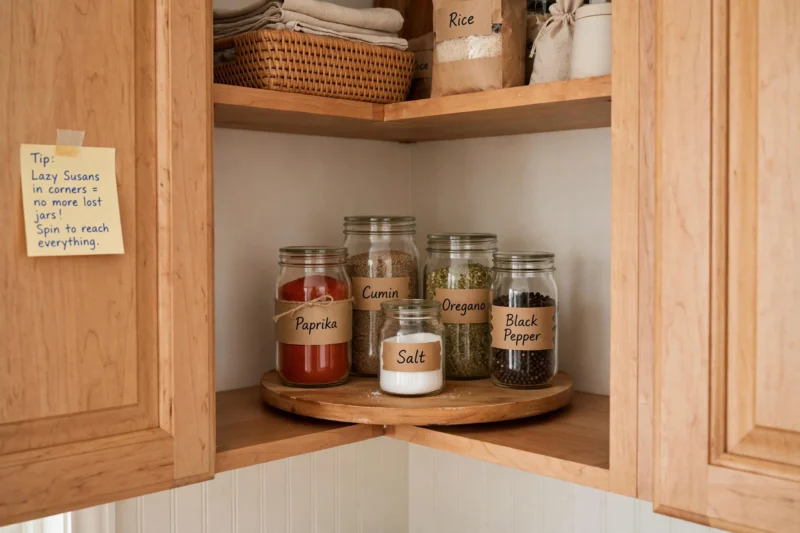
6. Use turntables in corners
Place a small lazy Susan turntable in any awkward corner of your pantry to make that dead space usable, since anything set flat in a tight corner tends to get lost from view almost immediately. Even a single 12 inch turntable can hold a surprising number of bottles or jars while keeping every item visible with a simple spin. This trick works especially well in small pantries, where corner space is often the only unused area left once the main shelves are full. Two smaller turntables placed side by side can outperform one large one in the same footprint.

7. Label overstock bins
Keep a couple of clearly labeled bins at the bottom of the pantry for backstock items, like extra bags of chips or a second box of cereal, so overflow does not compete for space with your everyday rotation. A simple clip on tag naming the bin’s contents makes it easy to check what backstock you already have before buying more at the store. This is especially useful in a small pantry, where there is rarely room to store duplicates of everything on the main shelves. Keeping backstock separate and out of the way also makes the primary shelves easier to keep tidy day to day.
8. Choose rectangular containers
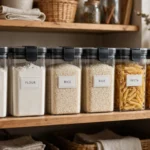
Swap round containers for rectangular ones wherever possible, since narrow closets choke standard round containers and waste space that rectangular shapes would use efficiently instead. Rectangular containers line up edge to edge like books on a shelf, while round ones leave small gaps between each container that add up fast in a limited footprint. This shape choice alone can meaningfully increase how much a small pantry is able to hold without adding a single extra shelf. Look for slim, stackable rectangular options specifically designed for narrow cabinets if your pantry is unusually tight.
9. Hide bulky appliances
Store bulky countertop appliances, like an air fryer or toaster, inside the pantry on a sturdy shelf instead of leaving them out on limited kitchen counter space. Small kitchens especially benefit from this trick, since freeing up the counter often makes the entire kitchen feel more spacious even if the pantry itself did not grow. A raw wood or reinforced shelf can support heavier appliances without sagging over time. This approach turns a small pantry into a more complete storage solution, handling both food and equipment in one dedicated space.
10. Replace wire shelving
Consider swapping out flimsy builder grade wire shelving for solid shelving or inexpensive track shelving if small items keep slipping through the gaps or shelves are visibly sagging under weight. Wire shelving looks fine on paper, but it tends to hide food in the back and let smaller jars tip over in real daily use. Track shelving in particular is a practical, budget friendly upgrade that gives you a flat, stable surface without the cost of full custom cabinetry. This upgrade is optional, but worth prioritizing if your current shelving is actively working against your organization efforts.
11. Keep a chip clip system
Keep a small stash of sturdy chip clips on hand for bagged snacks that are too awkward or bulky to decant into a rigid container, then file the clipped bags into a labeled basket so they stay visible and easy to grab. This system solves a common gap that a strict decanting rule leaves behind, since not every snack bag fits neatly into a matching canister. It also saves the extra step of transferring product into a new container every time you restock. A clear or labeled basket keeps this informal system from turning into a junk drawer of loose bags.
12. Set expiration reminders
Set a recurring reminder on your phone to check expiration dates and toss expired food, since a small pantry fills up fast and outdated items take up space you genuinely need. Labeling containers with expiration dates as you fill them makes this check even faster, since you will not need to dig through packaging to find printed dates buried on the bottom of a box. This habit prevents the slow buildup of forgotten items that eventually turns a well organized small pantry back into a cluttered one. A quick monthly check is usually enough to keep on top of it.
FAQ
How do I organize a pantry with no shelves at all?
Start with inexpensive track shelving or a freestanding shelving unit to create usable levels, then apply the same zoning and container tips used for any small pantry. A door rack and floor baskets can also add storage before shelving is installed.
Should I hire a professional organizer for a small pantry?
It is not necessary for most households, since these tips can be done as a DIY weekend project. A professional may be worth it if you are short on time or dealing with an especially awkward or oddly shaped layout.
What size containers work best in a narrow pantry?
Slim, tall rectangular containers work best, since they use vertical space efficiently without eating up shelf depth. Avoid wide, short containers in a narrow pantry, as they tend to waste usable shelf width.
How do I keep a small pantry from becoming cluttered again?
A monthly reset is the most reliable way to prevent clutter from creeping back in. Check expiration dates, rotate stock, and return any items that migrated to the wrong zone back to their assigned spot.
Can I apply small pantry tips to a walk-in pantry too?
Yes, most of these tips scale up just as well. Zoning, rectangular containers, and monthly resets work at any size, though a larger pantry will not need to rely as heavily on the door or step stool.
References
- Homedit – 20 Small Pantry Organization Ideas for 2026 – https://www.homedit.com/small-pantry-organization-ideas-for-2026/
- placeideal.com – 35 Pantry Organization Ideas 2026 to Transform Small Kitchens, Closets and Walk-In Spaces – https://placeideal.com/35-pantry-organization-ideas-2026-to-transform-small-kitchens-closets-and-walk-in-spaces/
- Caitlin Marie Design – 10 Easy Small Pantry Organization Ideas for 2026 – https://caitlinmariedesign.com/small-pantry-organization-ideas/
- Love and Renovations – Small Pantry Organization Ideas – https://www.loveandrenovations.com/small-pantry-organization/
- The Model Home – Practical Small Pantry Organization Ideas for Maximum Space – https://www.themodelhm.com/small-pantry-organization-ideas
- Just a Pretty Space – 7 Smart Organization Strategies for a Smooth Summer – https://justaprettyspace.substack.com/p/7-smart-organization-strategies-for

A Teacher with 5 years of experience. Our Expertise, is reliable to meet your full Academic development needs . Worked on many crafts and construction projects offering services from design to development to deployment over the years. You will find many of my works in my business portfolio on request.