
This tutorial on How to Draw Simple Doodle Flowers is a process i have tested from my experience over the years.
You will learn how to picked up a pen to draw a simple doodle flower. What comes out may look more like a wonky circle with stick-like things poking out of it! But that’s exactly where we all start, and I’m here to tell you that drawing doodle flowers is one of the most rewarding and relaxing creative activities you can dive into. Over the years, I’ve discovered that anyone—and I mean anyone—can create beautiful floral doodles with just a few simple techniques.
Why I Fell in Love with Doodle Flowers
There’s something magical about doodle flowers that I didn’t expect when I first started. Unlike realistic botanical drawings that require precise measurements and detailed observation, doodle flowers are forgiving, expressive, and incredibly therapeutic. I often find myself mindlessly drawing petals and leaves during phone calls or while watching TV. It’s become my go-to stress reliever, and I’ve filled countless journals with these little botanical gems.
What I love most about flower doodles is that there’s no “wrong” way to do them. Each flower becomes a unique expression of your creativity, and the imperfections actually add character and charm.
Getting Started: My Essential Supplies
Before we dive into the actual drawing techniques, let me share what I keep in my doodle toolkit. The beauty of this art form is that you don’t need expensive supplies—I’ve created some of my favorite pieces with just a basic ballpoint pen!
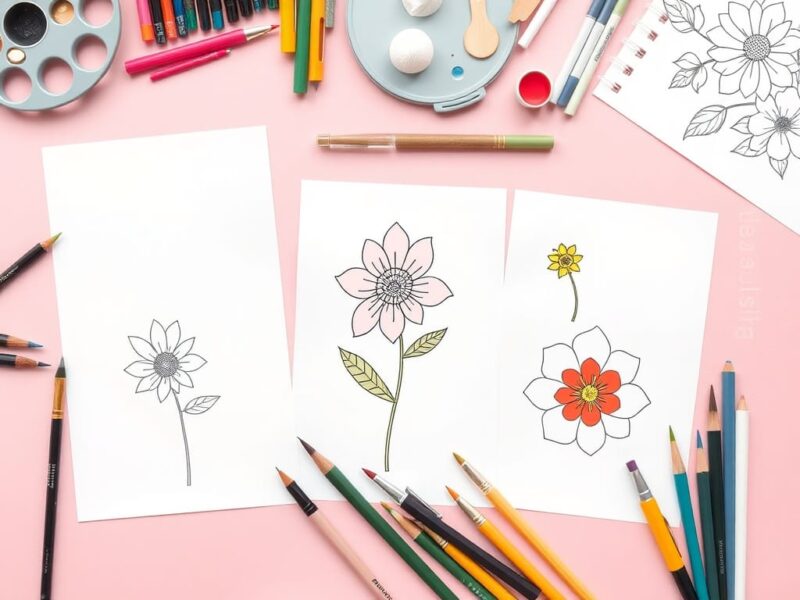
Here’s what I recommend:
- Pens: I prefer fine-tip black pens (0.3mm to 0.7mm) for clean lines
- Paper: Any smooth paper works, but I love using dot grid journals
- Pencils: Just for light initial sketches if you prefer
- Colored pencils or markers: Optional, but great for adding pops of color
The most important thing I’ve learned is that the tools don’t make the artist—your creativity and practice do.
My Favorite Basic Flower Shapes
Let me walk you through the fundamental flower shapes that I return to again and again. These form the foundation of more complex designs, and mastering them will give you confidence to experiment.
The Classic Five-Petal Flower
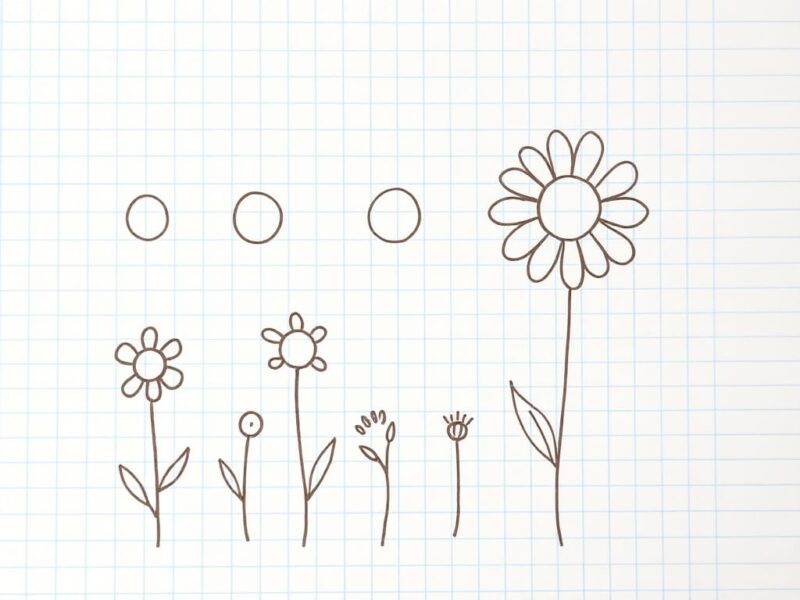
This is where I always start with beginners because it’s simple yet satisfying. Here’s my step-by-step approach:
- Start with the center: Draw a small circle or dot—this will be your flower’s heart
- Add the first petal: Draw a rounded petal shape extending from the center, like a teardrop lying on its side
- Continue around: Add four more petals, spacing them evenly around the center
- Refine the shape: Don’t worry if they’re not perfect—I actually prefer when they’re a bit wonky!
- Add details: Draw small lines or dots in the center, or add texture to the petals
The Daisy Chain Method
I discovered this technique when I was feeling particularly playful, and it’s become one of my favorites for filling space:
- Create the center: Draw a small circle
- Surround with petals: Instead of individual teardrop shapes, draw elongated oval petals that touch each other
- Vary the lengths: Make some petals longer and others shorter for a natural look
- Add a stem: Draw a simple curved line extending downward
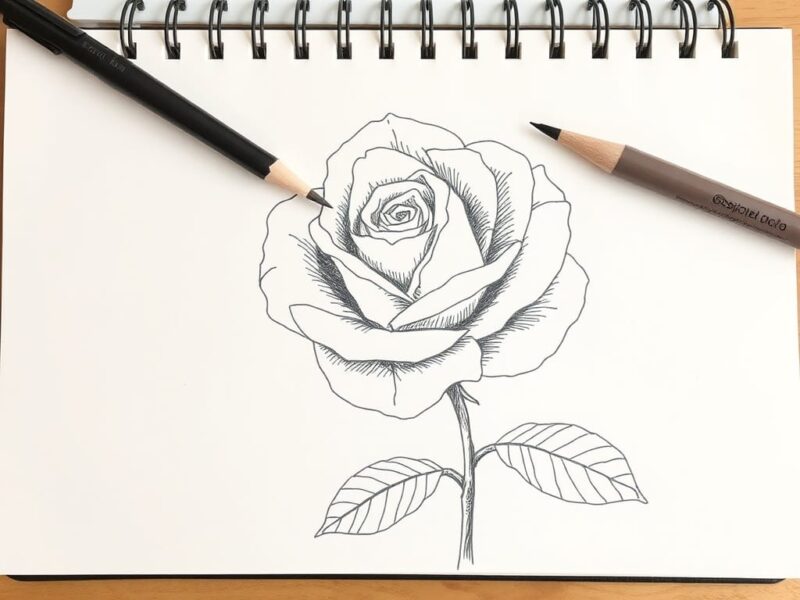
The Rose Spiral
Roses intimidated me for the longest time until I learned this simple spiral method:
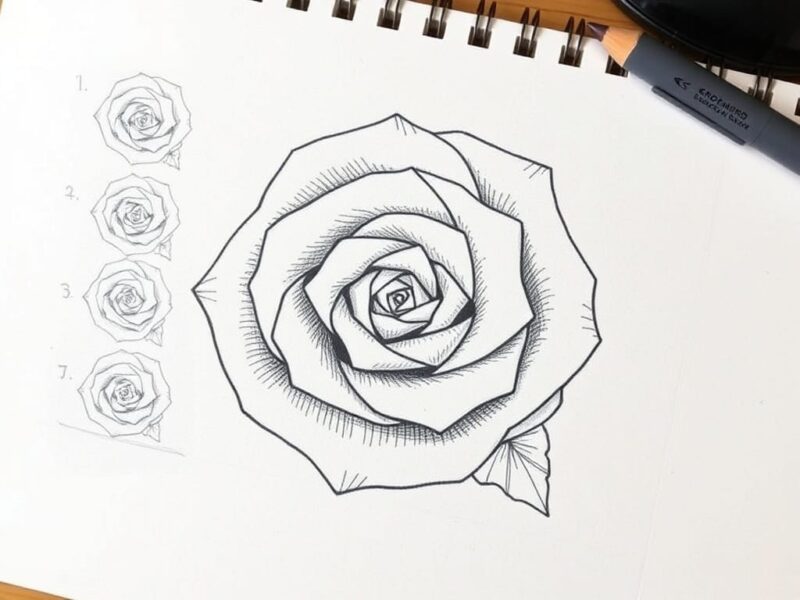
- Start with a spiral: Draw a loose spiral in the center—imagine a cinnamon roll!
- Add outer petals: Draw curved lines around the spiral, creating layers of petals
- Keep it loose: The key is not to overthink it—let the pen flow naturally
- Add depth: Darken some areas between petals to create shadow and dimension
Building Flower Combinations
Once you’re comfortable with individual flowers, I encourage you to start combining them. This is where the real magic happens, and where your personal style begins to emerge.
Creating Flower Clusters
I love grouping flowers of different sizes together. Try drawing a large focal flower, then add two or three smaller flowers around it. Vary the types—maybe combine a rose with some simple five-petal flowers and a few small buds.
Adding Foliage and Stems
Leaves and stems bring your doodles to life. I keep my approach simple:
- Simple leaves: Draw elongated oval shapes with a center line for the vein
- Curved stems: Use flowing, organic lines rather than straight ones
- Small details: Add tiny leaves or buds along the stems
My Step-by-Step Process for a Complete Doodle
Let me walk you through how I typically approach a full flower doodle page:
- Start with placement: I lightly mark where I want my main flowers to go
- Draw the focal flowers: Usually 2-3 larger flowers that will be the stars
- Add supporting flowers: Smaller blooms to fill in around the main ones
- Connect with stems: Draw flowing lines to connect some of the flowers
- Fill with foliage: Add leaves and small decorative elements
- Final details: Go back and add textures, patterns, or shading
Adding Personality to Your Flowers
What makes doodle flowers special is how they reflect your personality. Here are some ways I like to add character to my drawings:
Patterns and Textures
- Add dots, stripes, or crosshatching to petals
- Create different center patterns—spirals, grids, or radiating lines
- Experiment with different line weights for variety
Color Choices
When I add color, I often use unexpected combinations. Don’t feel limited to realistic colors—purple roses and blue daisies can be absolutely stunning!
Stylistic Variations
- Try angular, geometric petals for a modern look
- Experiment with very loose, flowing lines for a dreamy effect
- Mix realistic elements with fantastical additions
Learning from Video Tutorials
I’ve found that watching other artists work can be incredibly inspiring and educational. Here are two excellent video resources that have helped me refine my technique:
9 Simple Floral Doodles | How to Draw Flowers Step By Step – This tutorial by Shayda Campbell is perfect for beginners. She demonstrates nine different flower types with clear, easy-to-follow instructions. What I love about her approach is how she breaks down each flower into manageable steps while keeping the process relaxed and enjoyable.
16 Super Easy Flower Doodles Anyone Can Do! – Joanne Grant’s tutorial takes you through 16 different flower styles in a fun, encouraging way. Her use of watercolor backgrounds adds an extra dimension that I’ve started incorporating into my own work.
Common Challenges I’ve Overcome
Every artist faces obstacles, and I want to share some challenges I’ve encountered and how I’ve worked through them:
Perfectionism Paralysis
Early on, I’d get stuck trying to make every petal identical. I learned that embracing imperfection actually makes the flowers more charming and organic-looking.
Repetitive Designs
Sometimes I’d find myself drawing the same flower over and over. To break this pattern, I started challenging myself to try a new variation every few flowers—different petal shapes, center designs, or stem arrangements.
Composition Struggles
Learning how to arrange multiple flowers on a page took practice. I now start with larger elements and work my way down to smaller details, which helps create better balance.
Making It a Daily Practice
Drawing doodle flowers has become part of my daily routine, and I encourage you to find ways to incorporate it into yours. I keep a small sketchbook with me and draw during coffee breaks, while waiting in line, or as a way to unwind before bed.
Start small—even five minutes of doodling can be incredibly satisfying and beneficial for your mental well-being. I’ve found that this practice not only improves my drawing skills but also serves as a form of meditation.
Your Journey Starts Now
The most important thing I want you to remember is that every expert was once a beginner. My early flower doodles were simple and awkward, but each one taught me something new. Your first attempts might not look exactly like you envision, and that’s perfectly okay—it’s all part of the journey.
Grab a pen, find a comfortable spot, and start with just one simple flower. Don’t worry about making it perfect; focus on enjoying the process. As you practice, you’ll develop your own style and discover techniques that work best for you.
Remember, there’s no timeline for improvement, no competition, and no judgment in the world of doodle flowers. It’s just you, your pen, and the endless possibilities that flow from your imagination. Happy doodling!

A Teacher with 5 years of experience. Our Expertise, is reliable to meet your full Academic development needs . Worked on many crafts and construction projects offering services from design to development to deployment over the years. You will find many of my works in my business portfolio on request.