
Cheer pictures do not need to be complicated to look great. Most poses that show up again and again in team photos and yearbook spreads are simple to learn and easy to repeat once you know the shape your body needs to make. This list covers 15 cheer poses for pictures, from classic lineup stances to action shots and candid moments. Along with each pose, you will find a quick tip for getting it right the first time, since a pose that looks easy on paper can still take a few tries in front of a real camera. Practice a few of these before your next photoshoot so you are never standing in front of the camera with no idea what to do with your hands.
Quick answer: The best cheer poses for pictures mix classic stances like the high V and T pose with action shots like the toe touch jump, plus a few seated and candid poses for variety. A strong photo set has at least one calm pose, one action pose, and one candid moment.
| Pose | Type | Difficulty |
| High V | Stance | Easy |
| Toe touch jump | Action | Hard |
| T pose | Stance | Easy |
| Herkie jump | Action | Hard |
| Pom pose | Stance | Easy |
| Seated pose with poms | Ground | Easy |
| Kneeling pose | Ground | Easy |
| Pom burst | Action | Medium |
| Over the shoulder glance | Candid | Medium |
| Laughing candid | Candid | Easy |
Time to Practice Each Pose (approximate)
High V
5 sec
Seated
8 sec
Candid
15 sec
Toe Touch
30 sec
1. High V
Arms go up and out at an angle to form a wide V shape. This is one of the most recognizable cheer motions there is, and it lines up cleanly across a whole team, which is why it shows up in almost every group photo.
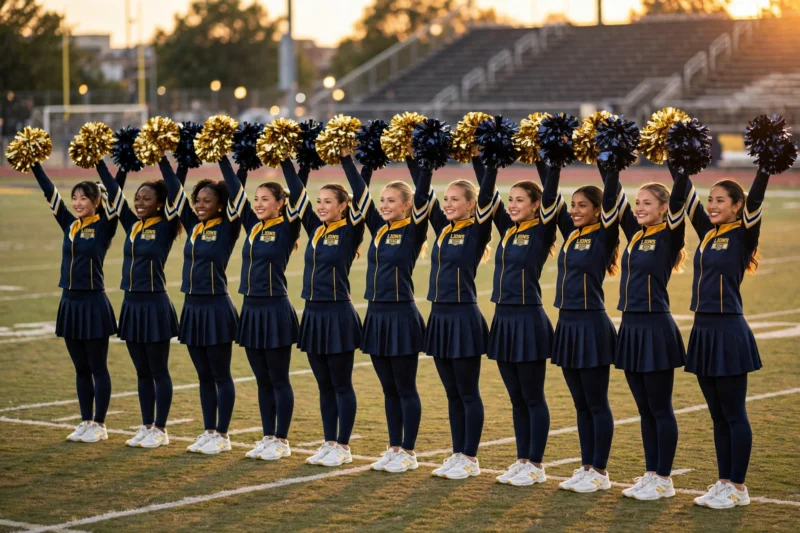
The trick to a sharp high V is keeping your elbows locked and your fists tight, since a loose or bent arm reads as sloppy in a still photo even if it feels fine in motion. Have someone check your angle from the front before the camera comes out, since a high V that feels even from the inside can look lopsided from a distance. If you are lining up with teammates, count out loud together so every arm snaps up at the same moment.
2. T Pose
Arms stretch straight out to the sides at shoulder height. Like the high V, this is a basic cheer motion, and it photographs well in a lineup because every teammate’s arms sit at the same height at the same time.
Keep your shoulders down instead of scrunched up toward your ears, since tension in the shoulders is one of the first things a camera picks up on. A slight lean forward from the hips can also make the pose look more dynamic instead of flat, especially in a solo shot where there is no lineup to add visual interest around you.
3. Pom Pose
Hands rest on hips with poms facing outward. It is a relaxed, confident stance that works for both team rows and solo shots, and it is one of the easiest poses for beginners to get right on the first try.
Give your poms a quick shake right before the shot so they look full instead of flat, since poms that have been sitting still for a while tend to droop. Angle your elbows slightly forward rather than pinning them straight back, which keeps your arms from disappearing behind your body in the frame.
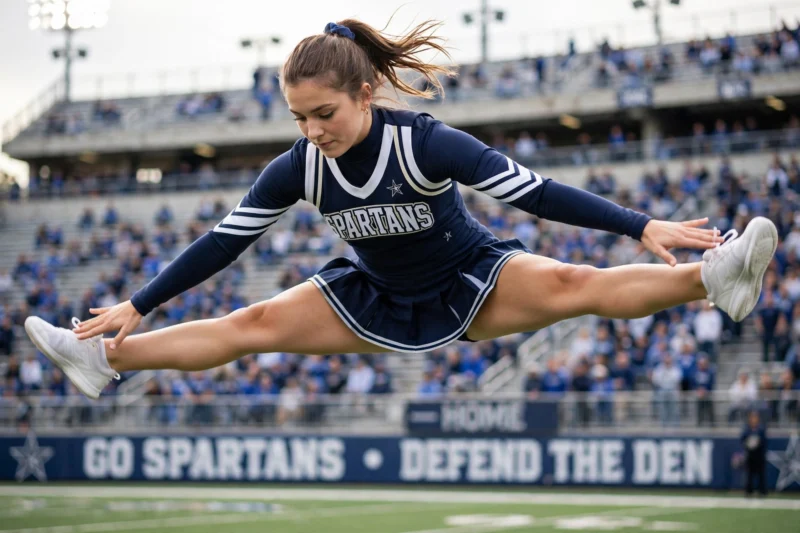
4. Toe Touch Jump
Jump straight up, kick both legs out to the sides, and reach toward your toes at the peak. Sports photography guides note that mid-air poses like this need a fast shutter speed and careful timing to catch the height of the motion, so plan on a few practice jumps before the real shot.
Warm up your hips and hamstrings first, since a cold toe touch tends to come out lower and less clean than one done after a proper stretch. Tell the photographer how many jumps you plan to do so they can get their timing ready, and try to jump on a consistent count like “5, 6, 7, 8” so the peak lands at a predictable moment every time.
5. Herkie Jump
One leg extends straight out while the other bends behind you, arms punched into a strong shape. This is a more advanced jump, so warm up first and make sure the photographer is ready to catch the exact peak.
Because a herkie is asymmetrical, it tends to photograph better from a slight side angle rather than straight on, since a front-facing shot can flatten the shape of the jump. Point your extended toe hard and keep your bent knee tucked, since a lazy leg position is the first thing that stands out in the final photo.
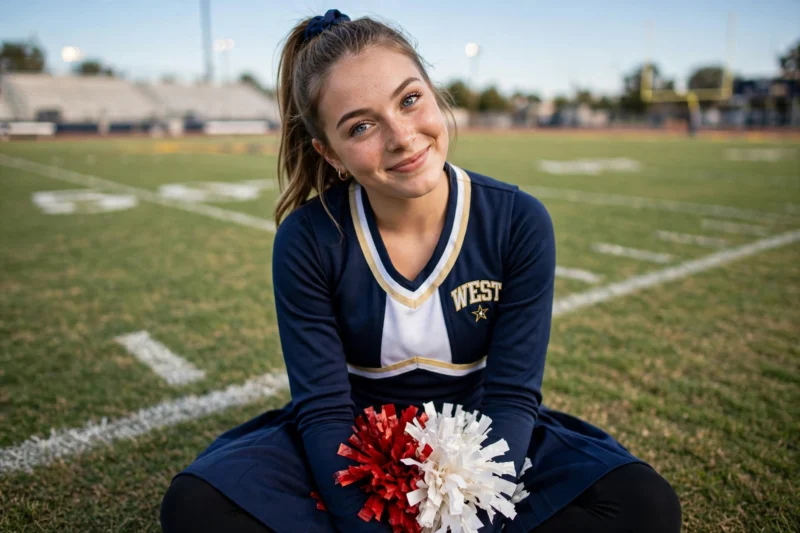
6. Seated Pose With Poms
Sit cross-legged on the field or track with poms resting in your lap. This pose is a favorite among cheerleaders because a cross-legged sitting pose with poms on the field always looks great and works from several different angles.
Sit up tall through your spine instead of slouching forward, since a rounded back is easy to miss in the moment but obvious in the photo afterward. This pose is also a good one to repeat with small changes, like tilting your chin up, resting your elbows on your knees, or looking off to the side instead of straight at the camera, so you end up with several different shots from one setup.
7. Kneeling Pose
Kneel on one knee with poms crossed in front or held out to the side. It is a softer alternative to the standing stances and adds variety to a photo set without needing any extra flexibility or strength.
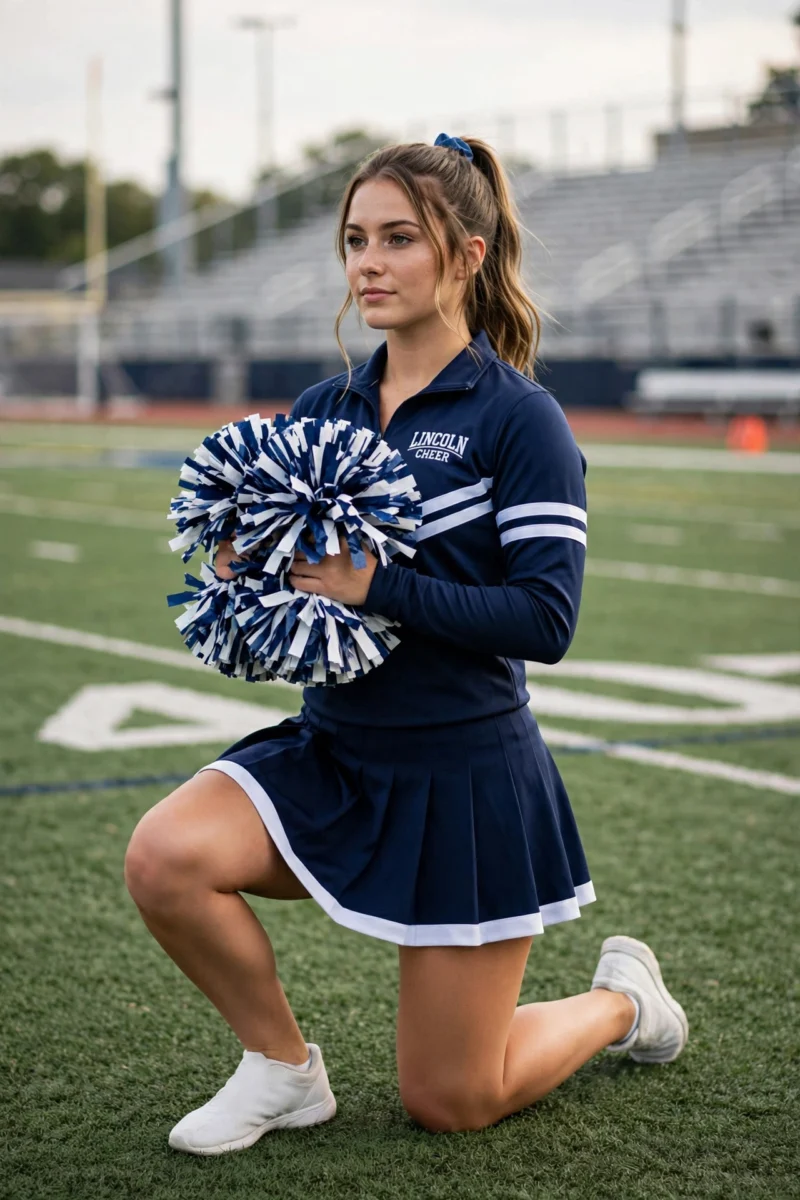
Check the ground before you kneel, especially on turf or gravel, so you are not distracted mid-shot by discomfort. This pose also pairs nicely with a lower camera angle, since shooting slightly upward at a kneeling cheerleader can make the pose feel more powerful instead of small.
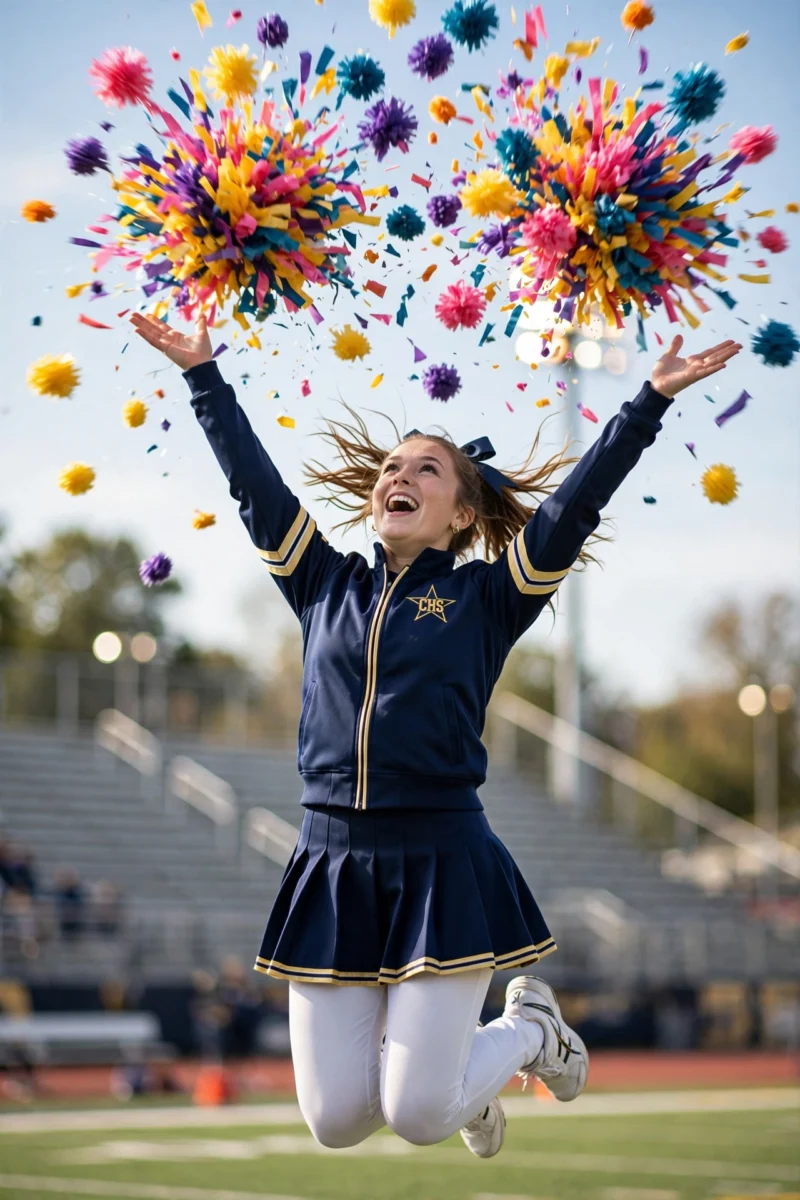
8. Pom Burst
Toss both poms upward right as the photo is taken, creating a burst of color around you. This pose has become a media day favorite because it adds motion and energy to what would otherwise be a still shot.
Timing is everything here, so agree on a countdown with the photographer before you toss, like tossing on the word “three” rather than guessing when the shutter will click. It usually takes two or three tries to line up the toss with the shot, so do not be discouraged if the first attempt looks messy in the preview.
9. Over The Shoulder Glance
Turn your body away from the camera, then look back over one shoulder. Small changes in angle like this can make a familiar pose feel new, and it works well paired with a seated or standing pose.
Turn from your waist rather than just twisting your neck, since a natural-looking glance uses the whole upper body instead of just the head. This pose also gives your uniform’s back design a moment in the spotlight, which is easy to forget about when most poses face forward the whole time.
10. Laughing Candid
Let the camera catch a real laugh or reaction with teammates instead of a posed smile. Photographers who work with sports teams say that a relaxed, encouraging environment helps athletes feel comfortable, which shows through in the final photos.
The easiest way to get a real laugh on camera is to keep talking and joking with your teammates between the posed shots instead of going stiff the second the “official” pose ends. Ask your photographer if they shoot a few extra frames right after each pose, since that gap is usually where the best candid moments happen.
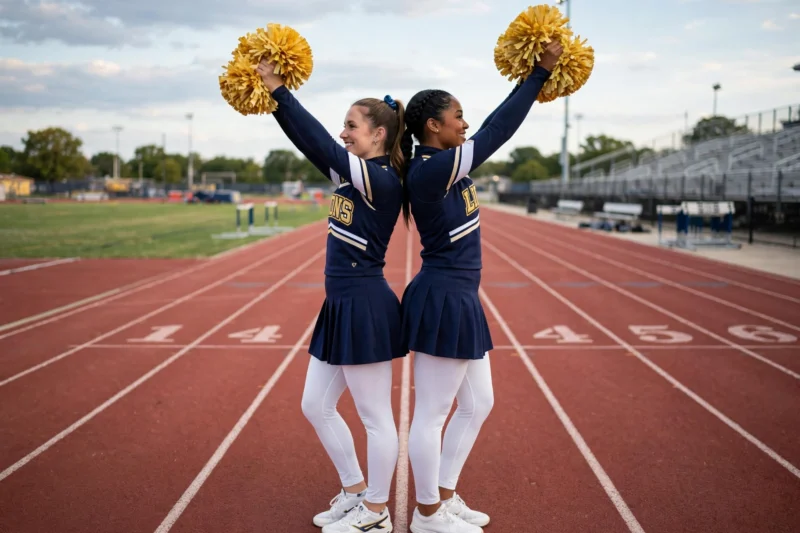
11. Back-To-Back Pose
Stand back-to-back with a teammate, arms crossed or poms held up. This simple partner pose adds balance to a photo set and works well for duo shots or senior photos with a close friend.
Try to match your height in the frame by adjusting your stance rather than standing on your toes, which can look awkward once the photo is reviewed. If you and your partner have different heights, standing on slightly different ground, like one of you a step ahead, can help even out the shot.
12. Jump With Poms Overhead
A basic straight jump with both poms raised above your head. It is less demanding than a toe touch or herkie, which makes it a good action pose for beginners who still want an energetic shot.
Bend your knees before you jump to get more height, and keep your poms directly above your head rather than out to the sides, since arms held straight up read cleaner in a still photo. This pose is also forgiving if your timing is slightly off, since even a jump caught a beat early or late still looks intentional.
13. Sassy Stance
One hip popped out, chin slightly down, a confident or playful look instead of a big smile. Mixing a sassy pose into your set adds variety and shows off personality beyond just smiling shots.
A common mistake with this pose is over-thinking the expression, which can end up looking forced. Instead, try popping your hip first and let your face relax into whatever feels natural, since a slightly playful or amused look almost always reads better than a serious stare that was planned too hard.
14. Walking Pose
Captured mid-stride, poms swinging naturally at your sides. Cheerleaders who share their own photoshoot tips point out that a simple path with trees or buildings in the background can make a great backdrop for a walking pose, giving the photo a more natural feel.
Walk past the camera a few times at a normal pace rather than stopping mid-step on command, since a natural stride is almost impossible to fake on cue. Let your photographer shoot several frames during each pass, then pick the one where your stride and expression line up best afterward.
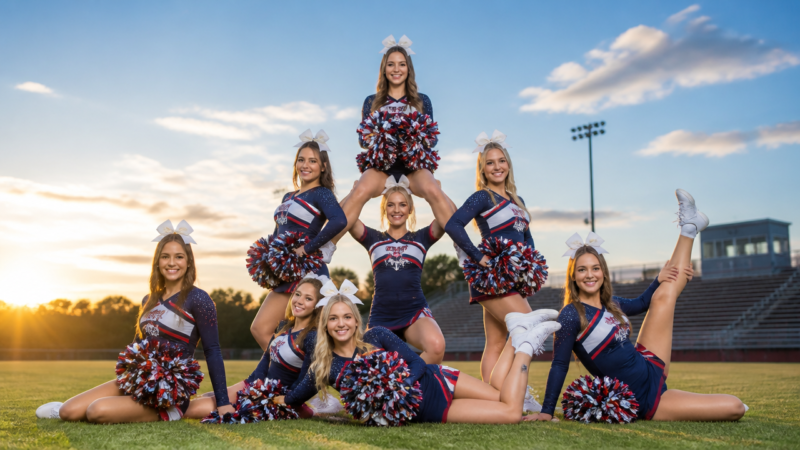
15. Full Team Pyramid Stance
The whole squad forms a simple standing or kneeling formation, front row lower, back row higher. This pose is a go-to for banners and posters because it fits the whole team into one frame while still showing individual faces clearly.
Put your shortest teammates in the front row and your tallest in the back so no one is blocked, and stagger the spacing slightly rather than lining everyone up in a perfectly straight row, which can look stiff in a wide group shot. Give the photographer a minute to check that every face is visible before locking in the final pose.
Frequently Asked Questions
What is the easiest cheer pose for beginners?
The easiest cheer pose for beginners is the high V, since it only takes holding both arms up and out at an angle. It needs no jumping or flexibility, which makes it a safe starting point for anyone new to posing in front of a camera.
How many poses should you know before a photoshoot?
You should know at least three to five poses before a photoshoot, including one stance, one action pose, and one candid or seated option. Having a small set ready means you are never stuck when the photographer asks for something new.
Do you need poms for every cheer pose?
No, you do not need poms for every cheer pose, though many classic poses like the pom pose or pom burst are built around them. Poses like the herkie jump or sassy stance work just as well without poms in hand.
How do you avoid blurry jump photos?
You avoid blurry jump photos by warming up and repeating the jump a few times so the photographer can time the shutter to the exact peak of your motion. A fast shutter speed paired with a strong, steady jump keeps the shot sharp.
Should team poses all match exactly?
Yes, team poses like the high V or T pose should match exactly across the group, since these lineup shots are meant to look uniform. Candid or solo poses have more room for individual style and do not need to match.
What should you do if a pose does not look right in the preview?
If a pose does not look right in the preview, ask to try it again with a small adjustment, like a different arm angle or a slight shift in weight. Most photographers expect a few retakes, so do not feel like the first attempt has to be the final one.
References
- GotPhoto, “Top Cheer & Dance Photography Tips for Action Shots” (2025)
- Lemon8, “20+ Cute Cheer Poses: Team & Solo Picture Ideas for High School” (2025)

A Teacher with 5 years of experience. Our Expertise, is reliable to meet your full Academic development needs . Worked on many crafts and construction projects offering services from design to development to deployment over the years. You will find many of my works in my business portfolio on request.