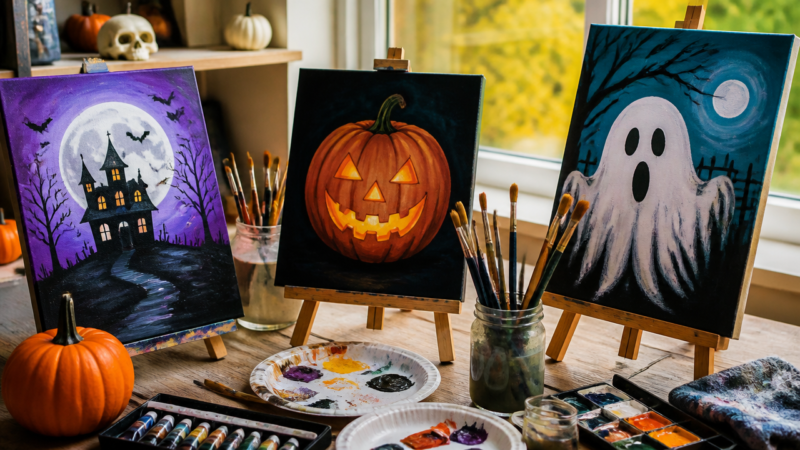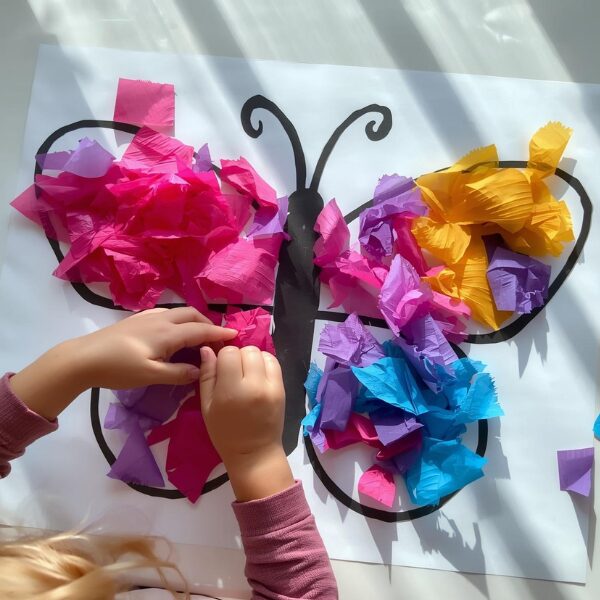

This Toddler Painting Ideas on Canvas is an east art painting projects for kids to do. Encourage them painting in christmas, birthday and valentine. This is a detailed toddler painting article.
Key Takeaways
- Toddlers ages 18 months to 3 years can create meaningful canvas art for Christmas, Halloween, and birthdays using simple techniques like handprints, finger painting, and stamping
- Non-toxic acrylic or tempera paint works best on pre-primed canvas boards sized 8×10 or 11×14 inches for toddler projects
- Handprint and fingerprint techniques require minimal skill but produce keepsake-quality artwork perfect for gifts or seasonal decor
- Preparation is critical: use drop cloths, smocks, and have wet wipes ready before starting any toddler canvas painting session
- Most toddler canvas projects take 15-30 minutes of active painting time, though drying requires 24-48 hours
- Simple holiday themes (Christmas trees, pumpkins, birthday balloons) work better than complex designs for toddler attention spans
- Canvas paintings become treasured keepsakes that families display year after year, making them more valuable than paper crafts
Quick Answer
These 10 toddler painting ideas on canvas transform simple handprints, fingerprints, and basic stamping into holiday and birthday keepsakes. Each project uses non-toxic paints and takes 15-30 minutes, making them perfect for short toddler attention spans. The techniques work for children 18 months to 3 years old and create frameable art for Christmas, Halloween, birthdays, and other special occasions.
What Makes Canvas Painting Perfect for Toddlers?
Canvas painting offers toddlers a sensory-rich creative experience that produces durable, displayable artwork. Unlike paper, canvas doesn’t tear when wet and holds up to enthusiastic toddler painting techniques like pressing, stamping, and layering paint.
Pre-stretched canvas boards provide a sturdy surface that won’t buckle or warp. The texture of canvas gives toddlers interesting tactile feedback as they paint, which supports sensory development. Most importantly, finished canvas paintings look polished enough to frame and display, turning toddler art into home decor or meaningful gifts for grandparents.
Why canvas beats paper for toddler projects:
- Durability: Canvas withstands multiple paint layers and heavy-handed application
- Professional appearance: Finished pieces look gallery-ready without additional matting
- Long-term preservation: Canvas paintings last decades when properly sealed
- Texture engagement: The woven surface provides sensory input that smooth paper lacks
- No framing required: Stretched canvas can hang as-is or slip into simple frames
Choose canvas boards (canvas glued to cardboard backing) over stretched canvas for toddlers. They’re more affordable, lie flat during painting, and won’t puncture if a toddler pokes too hard.
10 Toddler Painting Ideas on Canvas for Every Celebration
These canvas painting projects use age-appropriate techniques that let toddlers succeed while creating meaningful keepsakes. Each idea includes the occasion, technique, and approximate time needed.
1. Christmas Tree Handprint Canvas
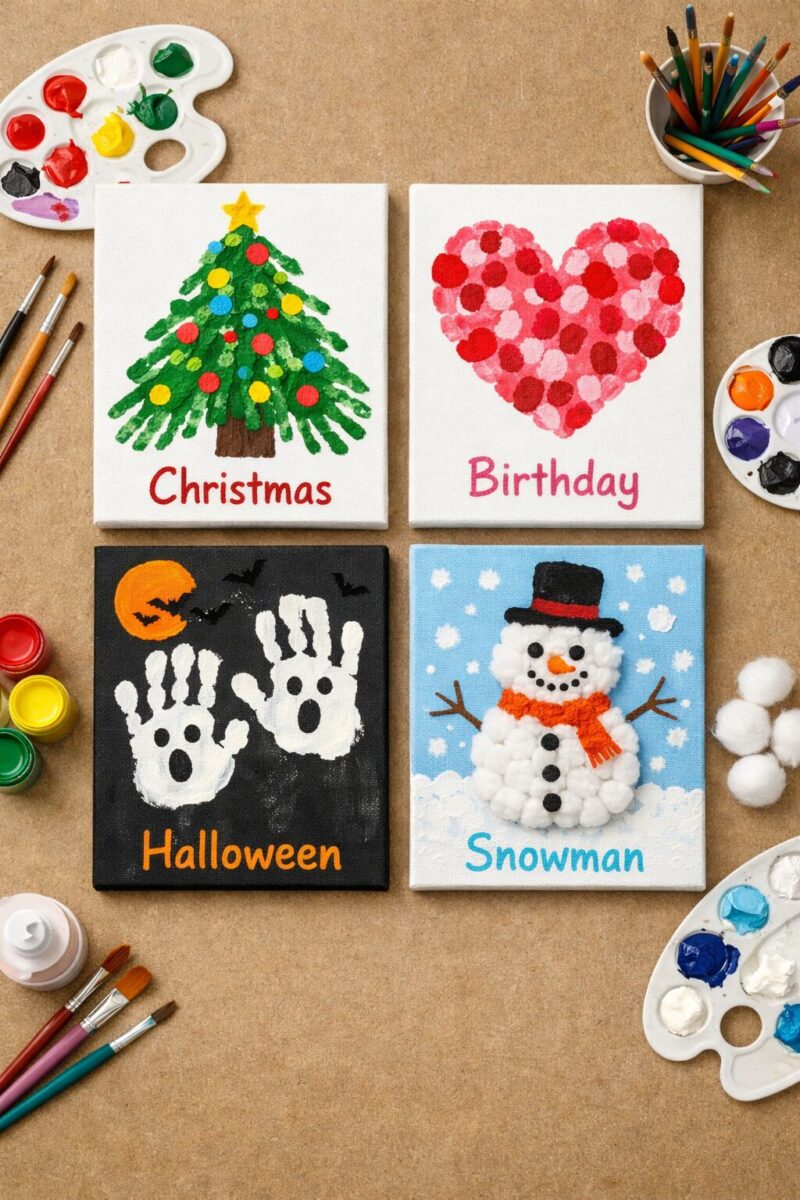
Press your toddler’s hand in green paint and stamp it multiple times in a triangular tree shape on a white or light blue canvas. Once dry, add fingerprint “ornaments” in red, gold, and silver, then top with a yellow star handprint or sticker.
Best for: Christmas gifts for grandparents
Time needed: 20 minutes plus drying
Skill level: Perfect for first-time canvas painters
This project works beautifully because the tree shape emerges naturally from overlapping handprints. I’ve found that using 3-4 shades of green (forest, lime, emerald) adds visual interest without complicating the process.
2. Halloween Pumpkin Patch
Create a pumpkin patch by having your toddler press orange handprints in a row across the canvas. Add green thumbprints for stems and use a brush to paint simple vines connecting them. Optional: add a black cat silhouette using a stencil.
Best for: Halloween decor
Time needed: 15 minutes
Skill level: Easiest project on this list
The repetitive handprint motion keeps toddlers engaged, and the orange-on-white contrast makes the pumpkins pop visually.
3. Birthday Balloon Bouquet
Use different colored paints to create balloon shapes by pressing your toddler’s fingertips in circles across the upper portion of the canvas. Once dry, parents can add simple string lines with a thin brush or marker leading down to a painted “hand” holding the bouquet.
Best for: Birthday party decor or birthday child’s room
Time needed: 25 minutes
Skill level: Intermediate (requires some parental finishing)
Choose your child’s favorite colors or match party theme colors. This becomes a yearly tradition for some families, creating a collection that shows hand size growth.
4. Reindeer Handprint Portrait
Turn a brown handprint upside down into Rudolph by using the fingers as antlers. Add googly eyes (glue after paint dries), a red pom-pom nose, and a simple smile. Paint the background light blue or leave it white for a winter scene.
Best for: Christmas cards or gifts
Time needed: 20 minutes plus embellishment time
Skill level: Easy with parent help for details
This works exceptionally well on 8×10 canvases. The single handprint centers the composition perfectly, and the added embellishments give it a crafted, finished look.
5. Rainbow Fingerprint Arc
Create a rainbow by having your toddler press fingerprints in arcing rows, starting with red at the top and working through orange, yellow, green, blue, and purple. Add cotton ball clouds at each end (glued after drying).
Best for: Birthday celebrations or nursery decor
Time needed: 30 minutes
Skill level: Requires patience for multiple colors
This project teaches color order and creates a cheerful piece suitable for any occasion. Use it as birthday art or general room decoration.

6. Halloween Ghost Handprints
Press white handprints onto a black or dark purple canvas to create floating ghosts. Once dry, add simple black dot eyes and “o” shaped mouths with a marker or small brush. Optional: add orange fingerprint pumpkins at the bottom.
Best for: Halloween party activity
Time needed: 15 minutes
Skill level: Very easy
The high contrast makes this visually striking. It’s also one of the quickest projects, perfect for toddlers with shorter attention spans.
7. Birthday Cupcake Creation
Paint the bottom two-thirds of the canvas in a cupcake wrapper color (pink, blue, or rainbow stripes). Let your toddler create “frosting” by pressing white or pastel handprints across the top third. Add fingerprint “sprinkles” in multiple colors and a small candle painted by parents.
Best for: Birthday gifts or party craft
Time needed: 25 minutes
Skill level: Easy
This project combines painting and printing techniques. The layered approach (wrapper, then frosting, then sprinkles) helps toddlers understand sequencing.
8. Winter Snowman Family
Create three white circles (small, medium, large stacked vertically) using sponge stamps or circular objects dipped in paint. Let your toddler add fingerprint buttons, stick arms (painted lines), and simple faces. Paint a blue background and add white fingerprint snowflakes.
Best for: Christmas or winter decor
Time needed: 30 minutes
Skill level: Intermediate
This teaches size relationships and stacking concepts while creating seasonal art. Families with multiple children can create a snowman for each child.
9. Fall Handprint Tree
Paint a simple brown tree trunk and branches (parents can do this part). Let your toddler create autumn leaves by pressing fingerprints in red, orange, yellow, and brown around and below the branches. Some prints on the branches, some “falling” below.
Best for: Thanksgiving or autumn birthdays
Time needed: 20 minutes
Skill level: Easy
The random placement of fingerprint leaves actually enhances the natural look. This is forgiving and hard to mess up.
10. Birthday Age Number
Paint or tape off a large number representing your child’s age (1, 2, or 3) in the center of the canvas. Let your toddler fill the number with handprints, fingerprints, or random paint dabs in their favorite colors. Remove tape if used, revealing a clean number shape.
Best for: Birthday milestone keepsake
Time needed: 20 minutes
Skill level: Easy with prep
This creates a yearly tradition. By age 10, you’ll have a collection showing artistic development. Use painter’s tape to create clean number outlines if your toddler tends to paint outside boundaries.

What Supplies Do You Need for Toddler Canvas Painting?
Gathering the right supplies before starting prevents mid-project chaos. For these 10 toddler painting ideas on canvas, you’ll need basic materials that prioritize safety and easy cleanup.
Essential supplies:
- Canvas: 8×10 or 11×14 inch pre-primed canvas boards (buy multi-packs for better value)
- Paint: Non-toxic washable tempera or acrylic paint in primary colors plus white and black
- Protection: Plastic drop cloth or old shower curtain, toddler smock or old oversized t-shirt
- Application tools: Small paint cups or palette, wet wipes, paper towels
- Cleanup: Bowl of warm water, soap, designated paint towels
Optional but helpful:
- Sponge stamps in various shapes
- Painter’s tape for creating clean edges
- Embellishments (googly eyes, pom-poms, glitter glue)
- Clear acrylic sealer spray for preserving finished pieces
Cost breakdown: Expect to spend $25-40 for enough supplies to complete all 10 projects. Canvas boards typically cost $1-3 each when bought in packs. A basic set of washable paints runs $8-15.
Choose washable tempera paint over acrylic for toddlers under 2. It’s easier to clean from skin and clothes, though it requires sealing to prevent smudging once dry. For toddlers 2-3 years old, non-toxic acrylic paint creates more durable results and doesn’t need sealing.
How Do You Set Up a Toddler Canvas Painting Station?
Proper setup makes the difference between an enjoyable creative session and a stressful mess. Set up your painting station before bringing your toddler to the area.
Step-by-step setup process:
- Choose your location: Kitchen table, outdoor patio, or garage work best (avoid carpeted areas)
- Lay protection: Cover the entire work surface and floor beneath with drop cloths or plastic sheeting
- Position the canvas: Place canvas on table at toddler’s seated height or use a small easel
- Prepare paint: Pour small amounts (2-3 tablespoons) of each color into separate cups or palette sections
- Dress your toddler: Put on smock before bringing them to the painting area
- Set boundaries: Explain that paint stays on the canvas and show them where to wipe hands
Common setup mistakes to avoid:
- Pouring too much paint (leads to waste and bigger messes)
- Forgetting to remove jewelry or watches from toddler’s hands
- Not having cleanup supplies within arm’s reach
- Setting up in an area where you’ll stress about mess
I recommend setting a timer for 15-20 minutes. This gives toddlers a defined creative period and prevents overstimulation or loss of interest.

When Is the Best Time to Paint with Toddlers?
Timing significantly impacts your toddler’s engagement and the project’s success. Schedule canvas painting when your toddler is well-rested, fed, and typically in a good mood.
Ideal timing windows:
- Mid-morning (9-11 AM) after breakfast and before lunch
- Early afternoon (1-3 PM) after nap time
- Avoid late afternoon when toddlers are often tired and cranky
Seasonal project timing:
For holiday-themed canvases, start projects 2-4 weeks before the occasion. This allows time for:
- Drying (24-48 hours)
- Sealing if needed (add 24 hours)
- Framing or wrapping for gifts (1 week before giving)
For birthday paintings, create them 1-2 weeks before the party so they’re ready to display at the celebration.
Duration expectations: Most toddlers stay engaged for 10-20 minutes of active painting. Don’t force longer sessions. If your child wants to stop after 10 minutes, the painting is finished. Toddler art is about the process, not perfection.
How Do You Preserve and Display Toddler Canvas Art?
Finished canvas paintings need protection to last for years. The preservation method depends on the paint type you used.
For tempera paint:
- Let dry completely (24 hours minimum)
- Spray with clear acrylic sealer in a well-ventilated area
- Apply 2-3 light coats, allowing 30 minutes between coats
- Let cure for 24 hours before handling
For acrylic paint:
- Let dry completely (24-48 hours)
- Optional: Apply acrylic varnish for extra protection
- Ready to display or frame
Display options:
- Hang canvas boards directly using command strips or small nails
- Place in simple black or white frames (no glass needed)
- Lean on shelves or mantels for casual display
- Create a gallery wall of multiple holiday canvases
Storage tips: If rotating seasonal art, store canvases flat in a dry location, separated by tissue paper. Avoid attics or basements where humidity fluctuates.
Label the back of each canvas with your child’s name, age, and date. This information becomes precious as years pass and you can’t remember exactly when each piece was created.
What Are Common Challenges When Painting with Toddlers?
Even with perfect preparation, toddler painting sessions come with predictable challenges. Knowing what to expect helps you respond calmly.
Challenge 1: Paint mixing
Toddlers love mixing colors, which often results in brown or muddy tones.
Solution: Embrace it or use the “one color at a time” approach, washing hands between colors.
Challenge 2: Loss of interest
Your toddler walks away after 5 minutes, leaving the canvas incomplete.
Solution: The painting is finished. Don’t force completion. Abstract toddler art has its own appeal.
Challenge 3: Paint eating attempts
Some toddlers try to taste paint despite it being labeled non-toxic.
Solution: Use edible paint alternatives (yogurt mixed with food coloring) for persistent tasters, or supervise extremely closely.
Challenge 4: Overwhelming mess
Paint ends up everywhere despite precautions.
Solution: Lower your expectations. Mess is part of the process. Focus on the memory being created.
Challenge 5: Wanting to paint everything
After finishing the canvas, your toddler wants to paint the table, floor, or themselves.
Solution: Have a transition activity ready (washing hands can become a water play activity that redirects energy).
Choose projects that match your current stress tolerance. If you’re having a rough day, skip the canvas painting. These should be enjoyable for both of you.
FAQ
What age can toddlers start painting on canvas?
Toddlers can start canvas painting around 18 months old with close supervision. At this age, use handprints and simple stamping rather than brush techniques. By age 2-3, most toddlers can handle brushes and more complex projects.
What type of paint is safest for toddlers?
Non-toxic washable tempera paint or children’s acrylic paint labeled AP certified non-toxic are safest for toddlers. Avoid craft acrylics not specifically marked for children. Always supervise to prevent ingestion.
How long does toddler paint take to dry on canvas?
Tempera paint dries to the touch in 30-60 minutes but needs 24 hours to fully cure. Acrylic paint dries faster (1-2 hours) but also benefits from 24-48 hours before handling or sealing.
Can you wash toddler painted canvases?
No, you cannot wash painted canvases. Seal tempera paint with acrylic spray to prevent smudging. Acrylic paint is water-resistant once dry. Dust gently with a dry cloth only.
What size canvas works best for toddlers?
8×10 inch or 11×14 inch canvas boards work best for toddlers. These sizes are large enough for handprints and small enough to complete in one sitting. Avoid canvases larger than 16×20 inches.
How do you get toddlers to keep paint on the canvas?
Use painter’s tape to create a border, clearly defining the painting area. Demonstrate keeping paint “inside” and praise when they do. Accept that some paint will go off-canvas, especially with younger toddlers.
Should you use brushes or hands for toddler canvas painting?
Hands, fingers, and stamps work better than brushes for toddlers under 2. The direct sensory experience is more engaging and developmentally appropriate. Introduce brushes around age 2.5-3 when fine motor skills improve.
How do you clean paint off toddler hands?
Wipe excess paint with dry paper towels first, then use wet wipes or wash with warm soapy water. For stubborn acrylic paint, use a small amount of baby oil on a cloth before washing with soap.
Can toddlers paint on canvas outdoors?
Yes, outdoor canvas painting is ideal for minimizing indoor mess. Choose a shaded area to prevent paint from drying too quickly and avoid windy days that might blow debris onto wet paint.
How much does a toddler canvas painting project cost?
Individual projects cost $3-6 each including canvas and paint. Initial supply investment runs $25-40 but covers multiple projects. Canvas board multi-packs offer the best value.
What do you do with finished toddler canvas paintings?
Display them as seasonal decor, give them as gifts to grandparents, create a rotating gallery wall, or store favorites in a memory box. Many parents photograph canvases before storing to preserve the memory digitally.
How do you make toddler canvas paintings look professional?
Use simple, bold designs with good color contrast. Add parent-drawn details after the toddler portion dries. Frame finished pieces in simple black or white frames. Seal properly to prevent smudging.
Conclusion
These 10 toddler painting ideas on canvas turn messy play into treasured keepsakes that celebrate Christmas, Halloween, birthdays, and other special moments. The simple techniques—handprints, fingerprints, and basic stamping—work perfectly for toddlers ages 18 months to 3 years while producing artwork worthy of display.
Start with whichever project matches your next celebration. Gather your supplies (canvas boards, non-toxic paint, and protection), set up your painting station, and give yourself permission to embrace the mess. The paint washes off, but the memories and artwork last forever.
Your next steps:
- Choose one project from this list that fits your upcoming occasion
- Purchase canvas boards and washable paints (start with a 6-pack of 8×10 canvases)
- Schedule your painting session for a time when your toddler is well-rested
- Set up completely before bringing your toddler to the painting area
- Take photos during the process and of the finished canvas
- Let the painting dry for 24-48 hours before sealing or displaying
Remember that the goal isn’t perfection. The goal is creating together, exploring textures and colors, and producing tangible memories you’ll cherish for decades. Your toddler’s first canvas paintings mark a moment in time that passes quickly—capture it while you can.

A Teacher with 5 years of experience. Our Expertise, is reliable to meet your full Academic development needs . Worked on many crafts and construction projects offering services from design to development to deployment over the years. You will find many of my works in my business portfolio on request.