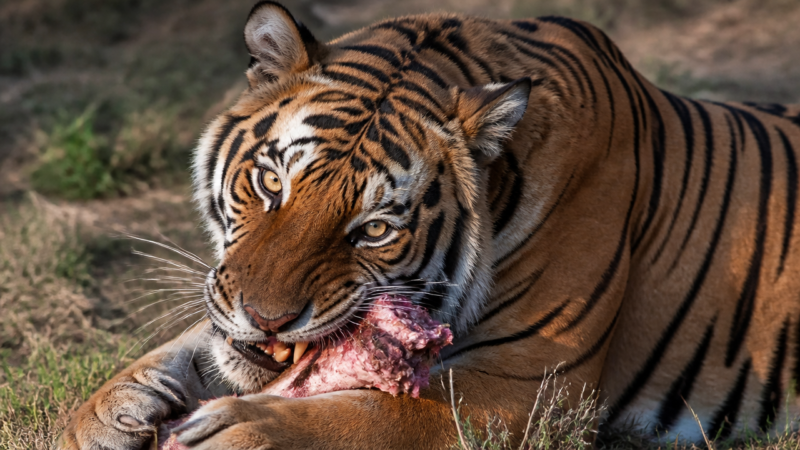
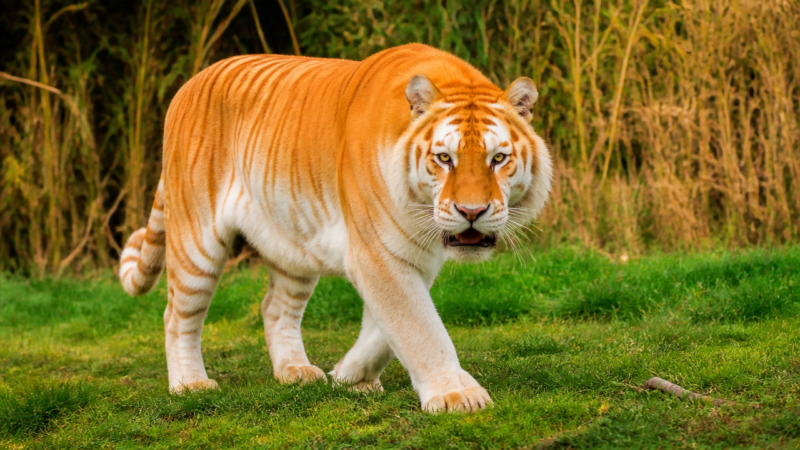

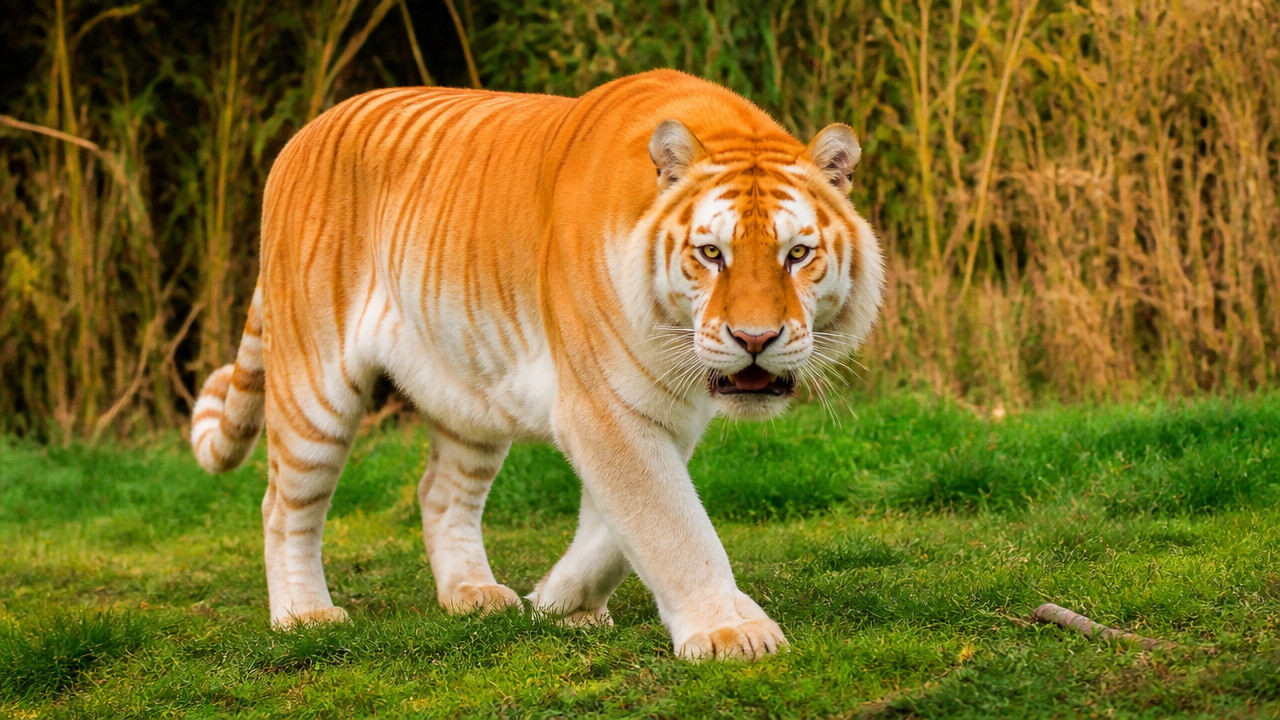
What makes a golden tabby tiger so strikingly different from the orange tigers you see in zoos and wildlife documentaries? These rare felines possess a pale-golden or strawberry-blonde coat with soft reddish-brown stripes instead of the bold black markings typical of standard Bengal tigers. The golden tabby tiger exists nowhere in nature—only in carefully managed captive environments where selective breeding has preserved this unusual color variation. Understanding what causes this distinctive appearance requires looking deeper into recessive genetics and the specific mutations that shape tiger coloration. Whether you’re curious about big cat genetics or simply fascinated by rare animal phenomena, the story of golden tabbies reveals surprising truths about how genes control appearance in top predators.
Quick Questions and Answers
Question: Why are golden tabby tigers so rare in the world? Golden tabby tigers are extremely rare because their coloration requires inheriting a recessive wideband gene from both parents. Fewer than 30 exist globally, all in captivity, since this gene occurs only through selective breeding. The limited gene pool and necessity of breeding two carriers means wild populations never develop this trait.
Question: Can golden tabby tigers survive in the wild? Golden tabby tigers cannot survive in the wild as they exist exclusively in captive breeding programs. No golden tabbies have ever been documented in nature, and their survival depends entirely on human-managed facilities. Conservation experts raise concerns about breeding for color morphs rather than genetic diversity.
Question: Are golden tabby tigers a separate species from regular tigers? No, golden tabby tigers are not a separate species but a color variation of the Bengal tiger caused by a recessive gene. They possess the same genetics, size, and behavior as standard orange tigers—only their pigmentation differs. Like white tigers, they represent a phenotypic variation rather than a distinct subspecies.
Core Definition and Identity

A golden tabby tiger is fundamentally an orange tiger carrying an extra recessive genetic mutation. The Zoological Wildlife Foundation defines it as a color morph caused by a recessive gene found only in captive populations. This tiger shares the same species classification as standard Bengal tigers—Panthera tigris tigris—yet displays blonde or pale-golden fur with coppery-red stripes instead of the familiar orange coat with black markings.
These tigers earn several common names: golden tiger, golden tabby tiger, or strawberry tiger. The strawberry reference comes from their unique coloration, which resembles the warm pinkish-blonde of ripe strawberries blended with deep cinnamon tones. No official taxonomic designation exists for this color form, so informal names dominate wildlife and zoo documentation.
Visually, golden tabbies are unmistakable once you see one. Their base coat appears almost blonde compared to standard orange tigers, and their stripes look faded or washed out—ranging from rusty red to dusty brown rather than jet black. Observers often describe them as softer or more ethereal than typical tigers, though this is purely a matter of perception shaped by their diluted pigmentation.
Genetic Mechanisms Behind the Coat
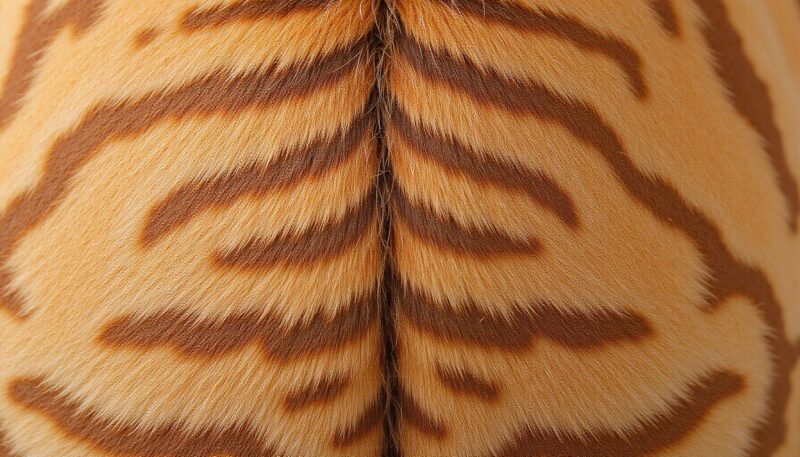
The golden tabby coloration stems from a single recessive mutation in the CORIN gene. Genetic research has confirmed that all golden and stripeless white tigers sampled in scientific studies were homozygous for this specific mutation—meaning they inherited identical recessive alleles from both parents. By contrast, standard orange tigers carry the wild-type version of this gene, though some do carry the recessive variant without displaying the golden phenotype.
The wideband mutation affects how black pigment develops during the hair growth cycle. Instead of depositing dark pigment across the entire hair shaft, this recessive variant reduces black pigment production, creating a lighter base coat. The result is a striking visual difference: the same stripes that appear jet-black on a standard tiger look dusty or cinnamon-colored on a golden tabby.
Interestingly, the wideband gene operates independently of the gene responsible for white tiger coloration. This means a tiger can be white, golden, or show other combinations depending on which recessive genes it inherits. Researchers have identified that ghost-striped white tigers—those white tigers with barely visible stripes—result from the same wideband mutation combined with the white gene.
The CORIN gene is just part of the genetic picture. Studies also point to mutations in SLC45A2, another gene involved in pigment regulation, suggesting that golden coloration results from multiple genetic factors working together. The primary driver remains the wideband mutation, but these secondary genes may fine-tune the exact shade and pattern intensity.
Breeding and Captivity Context

Golden tabby tigers exist solely because of captive breeding and intensive inbreeding programs. In the wild, the wideband gene would likely disappear because it offers no survival advantage and requires both parents to carry the recessive allele—an extremely rare occurrence in wild populations with healthy genetic diversity. Captive breeders, however, deliberately select for this trait, crossing golden tigers together or breeding carriers to produce the desired color morph.
The first documented golden tabby tiger was born at Adriatic Animal Attractions in Florida in 1983, marking the beginning of selective breeding for this rare variation. Many existing golden tabbies trace their lineage back to a white tiger named Bhim, who carried the wideband gene. This narrow genetic foundation means most modern golden tabbies share substantial ancestry, limiting genetic diversity within the population.
Current captive lineages often display mixed genetics, incorporating Bengal tiger ancestry alongside Amur or Siberian tiger heritage. This admixture occurred as zoos and private facilities crossbred different tiger subspecies without rigid genetic tracking—a practice that has created complex family trees difficult to untangle today.
Recessive inheritance explains why producing golden tabbies is challenging. If one parent is golden (homozygous recessive) and the other is a standard orange tiger (homozygous dominant), all offspring will be carriers but appear orange. Only when two carriers breed, or two golden tigers breed, does the recessive trait emerge visibly. This genetics lesson illustrates why golden tabbies remain rare: the probability works against spontaneous occurrence.
| Tiger Color Morph | Base Coat | Stripe Color | Genetic Basis | Population Status | Occurrence |
|---|---|---|---|---|---|
| Standard Orange | Bright orange | Black | Wild-type CORIN gene | Common in wild and captivity | Natural and captive |
| Golden Tabby | Pale golden or blonde | Reddish-brown | Recessive wideband mutation (CORIN homozygous) | Fewer than 30 known | Captive only |
| White Tiger | White | Black or faint | Recessive white gene (independent of wideband) | Rare in captivity | Captive only |
| Stripeless White | White | Nearly invisible | Recessive white + wideband genes combined | Extremely rare | Captive only |
Latest Genetic Updates and Research
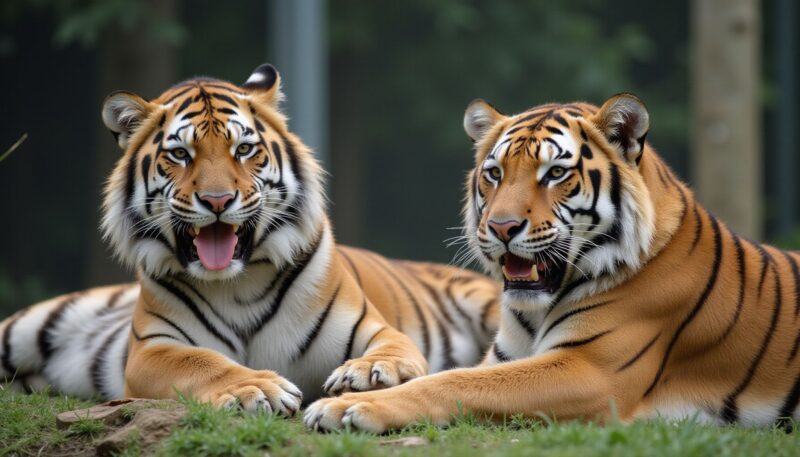
Recent genomic research has clarified the molecular basis of golden tabby coloration. Scientists using genetic sequencing on captive tiger populations identified the specific mutations responsible for both golden and stripeless white phenotypes. The findings confirmed that homozygous mutations in the CORIN gene (p.H587Y) directly correlate with the golden appearance, while orange and striped white tigers possess the wild-type allele at that locus—though some carry the recessive mutant version without expressing it.
The Wikipedia entry on golden tigers notes that the mutation likely originated in Bengal tiger populations, though genetic mixing with Amur tigers in captivity has complicated the ancestry of modern specimens. Researchers continue investigating whether other genetic modifiers influence the exact shade or pattern intensity of golden coloration.
Studies from organizations like the Zoological Wildlife Foundation remain focused on understanding the stability and viability of golden morph populations in captive settings. These investigations address conservation concerns raised by animal welfare advocates, who argue that breeding for rare color forms diverts resources from protecting genuinely threatened wild tiger populations and may introduce genetic complications from excessive inbreeding.
Comparison with Other Tiger Morphs
Golden tabbies sit within a broader spectrum of tiger color variations caused by recessive mutations. Standard wild-type orange tigers represent the typical phenotype—bold orange coats with jet-black stripes. These tigers carry the dominant alleles at both the CORIN and white-gene loci, meaning they will always display this classic appearance.
White tigers occupy a different genetic niche. They result from a recessive gene unrelated to the wideband mutation, causing loss of orange pigment while retaining black stripes. A white tiger and a golden tabby could theoretically produce offspring displaying neither the white nor golden phenotype—depending on which recessive genes combine. Some white tigers also carry the wideband mutation, creating ghost-striped variants with barely visible striping.
The key distinction: golden tabbies are orange tigers with an additional recessive modifier, while white tigers are genetically distinct at the pigment-suppression locus. Both are captive-only morphs, both result from inbreeding, and both represent human-driven selection rather than natural evolution. Yet they arise from different genetic mutations working through separate inheritance pathways.
Frequently Asked Questions
Q: How do golden tabby tigers differ from normal Bengal tigers?
Golden tabbies display a distinctive pale-golden or strawberry-blonde coat with reddish-brown stripes instead of the bright orange coat and black stripes of standard Bengals. The wideband mutation reduces black pigment production during hair growth, creating this faded appearance. Many observers note that golden tabbies appear larger and possess softer-textured fur than their orange relatives, though this may reflect breeding bias or individual variation rather than a genetic difference.
Q: Does breeding golden tabby tigers cause health problems?
Intensive inbreeding necessary to produce golden tabbies often leads to health complications and birth defects. The limited gene pool means reduced genetic diversity, increasing susceptibility to recessive genetic diseases. Organizations like the Association of Zoos and Aquariums have called for ending breeding programs focused on color morphs due to animal welfare concerns, as these programs contribute little to species conservation while potentially harming individual animals through inbreeding depression.
Q: When was the first golden tabby tiger born in captivity?
The first recorded golden tabby tiger emerged in 1983 at Adriatic Animal Attractions in Florida. This birth marked the beginning of deliberate selective breeding for the wideband mutation. Many of today’s golden tabbies descend from a white tiger named Bhim, who carried the recessive wideband gene. This ancestry explains why the global population remains so small and genetically similar.
Q: Why are golden tabby tigers called strawberry tigers?
The strawberry tiger nickname reflects their distinctive coloration—a blend of pale golden and strawberry-blonde tones with warm reddish-brown stripes. The term captures the unique shade that distinguishes them from both standard orange tigers and white tigers. No official scientific name has been designated, so strawberry tiger remains an informal but widely recognized reference used by zoos and wildlife facilities.
Q: Are golden tabby tigers more aggressive than other tigers?
Temperament in golden tabbies is shaped by individual personality and upbringing, not coat color. No credible evidence suggests that the wideband mutation influences behavioral traits or aggression levels. Golden tabbies possess the same power, hunting instincts, and potential danger as any Bengal tiger—their rarity and unusual appearance can create an illusion of docility, but this reflects human perception rather than biological reality.
Q: Which gene causes the golden tabby tiger color variation?
The recessive wideband gene is the primary driver of golden tabby coloration. This gene affects black pigment production during hair growth, resulting in the pale-golden base coat and reddish-brown stripes. Genetic research points to the CORIN gene as the molecular location of this wideband mutation. The same gene contributes to stripeless white tigers when inherited in specific genetic combinations with other mutations.
Q: Will the number of golden tabby tigers increase in the future?
Population growth among golden tabbies faces significant barriers. Lower fertility rates in this morph compared to standard Bengal tigers limit breeding success. Ethical concerns about breeding for novelty color forms have prompted many facilities to halt or reduce such programs, prioritizing genetic diversity and conservation of wild tiger populations instead. The number of golden tabbies will likely remain stable or decline as facilities shift breeding priorities toward supporting threatened wild populations.
My Experience With Golden Tabby Tiger: Rare Facts and Genetic Origins
When I first started researching golden tabby tigers, I expected to find mysterious creatures shrouded in myth. Instead, what I discovered was something equally fascinating but far more sobering: a cautionary tale written in genetics. These tigers are real, documented, and living in captive facilities around the world—yet they represent an almost perfect example of how human fascination with rarity can clash with conservation principles.
The most striking realization came when I learned there are fewer than 30 golden tabbies alive. That’s not rare. That’s a crisis waiting to happen. Every single one traces back through a network of breeding programs designed to preserve or reproduce a cosmetic trait rather than secure the survival of a species. The genetic bottleneck is so severe that every offspring shares nearly identical DNA with tigers living decades ago. Compare that to Bengal tigers in the wild, which still maintain legitimate genetic diversity despite population pressures, and the contrast becomes uncomfortable.
What genuinely impressed me, though, was the precision of the science. The CORIN gene doesn’t just cause a pretty color—it fundamentally alters how melanin deposits during hair growth. That’s not magic or mystery. That’s biology, testable and repeatable. It’s also a reminder that when we prioritize appearance over fitness, genetics respond in ways we don’t always anticipate or want. The wideband mutation offers no survival advantage. It never would, outside of human-curated environments.
Have you ever looked at a golden tabby tiger photograph and felt conflicted—drawn to the beauty but uneasy about what that beauty cost?
Conclusion
Golden tabby tigers represent a striking intersection of genetics, captive breeding, and human fascination with rarity. These animals are not separate species, not hybrids, and certainly not animals destined for wild survival. They are Bengal tigers carrying a specific recessive mutation affecting pigment production—a mutation that exists nowhere in nature and would disappear instantly without human intervention.
The science is clear: the wideband gene reduces black pigment during hair growth cycles, creating pale-golden coats with reddish-brown stripes. This mutation arose through captive breeding, most likely emerging from a white tiger named Bhim in the 1980s. Today, fewer than 30 golden tabbies survive globally, all in managed facilities with genetically limited populations.
The ethical debate surrounding golden tabbies touches on fundamental questions about why we breed animals in captivity. If the goal is conservation—preserving tigers as a species—golden tabby programs rarely contribute meaningfully to that mission. If the goal is education or public engagement, then golden tabbies serve that role well, drawing crowds and sparking curiosity about tiger genetics. The tension between these goals remains unresolved, with organizations like the Association of Zoos and Aquariums increasingly questioning whether color-morph breeding aligns with modern conservation standards.
Moving forward, the future of golden tabbies likely hinges on facility decisions about breeding priorities and genetic management. Some facilities may continue maintaining these animals as living examples of recessive genetics and selective breeding outcomes. Others may phase them out in favor of programs supporting wild tiger conservation. Either way, the golden tabby tiger’s story reminds us that rarity alone does not equal value—and that the most beautiful animals sometimes carry the heaviest genetic costs.
References
- Wikipedia. (n.d.). Golden tiger. https://en.wikipedia.org/wiki/Golden_tiger
- Zoological Wildlife Foundation. (n.d.). Golden tabby tiger. https://zoologicalwildlifefoundation.com/visit/animals/golden-tabby-tiger/
- MessyBeast. (n.d.). Mutant big cats – golden tigers. http://messybeast.com/genetics/tigers-golden.htm
- HandWiki. (n.d.). Biology: Golden tiger. https://handwiki.org/wiki/Biology:Golden_tiger
- MessyBeast. (n.d.). Mutant big cats. http://messybeast.com/genetics/tigers-genetics.htm
- Know Animals. (n.d.). Is there a golden tiger? Exploring the rarity and reality. https://knowanimals.com/is-there-a-golden-tiger/
- Grokipedia. (n.d.). Golden tiger. https://grokipedia.com/page/Golden_tiger

A Teacher with 5 years of experience. Our Expertise, is reliable to meet your full Academic development needs . Worked on many crafts and construction projects offering services from design to development to deployment over the years. You will find many of my works in my business portfolio on request.